
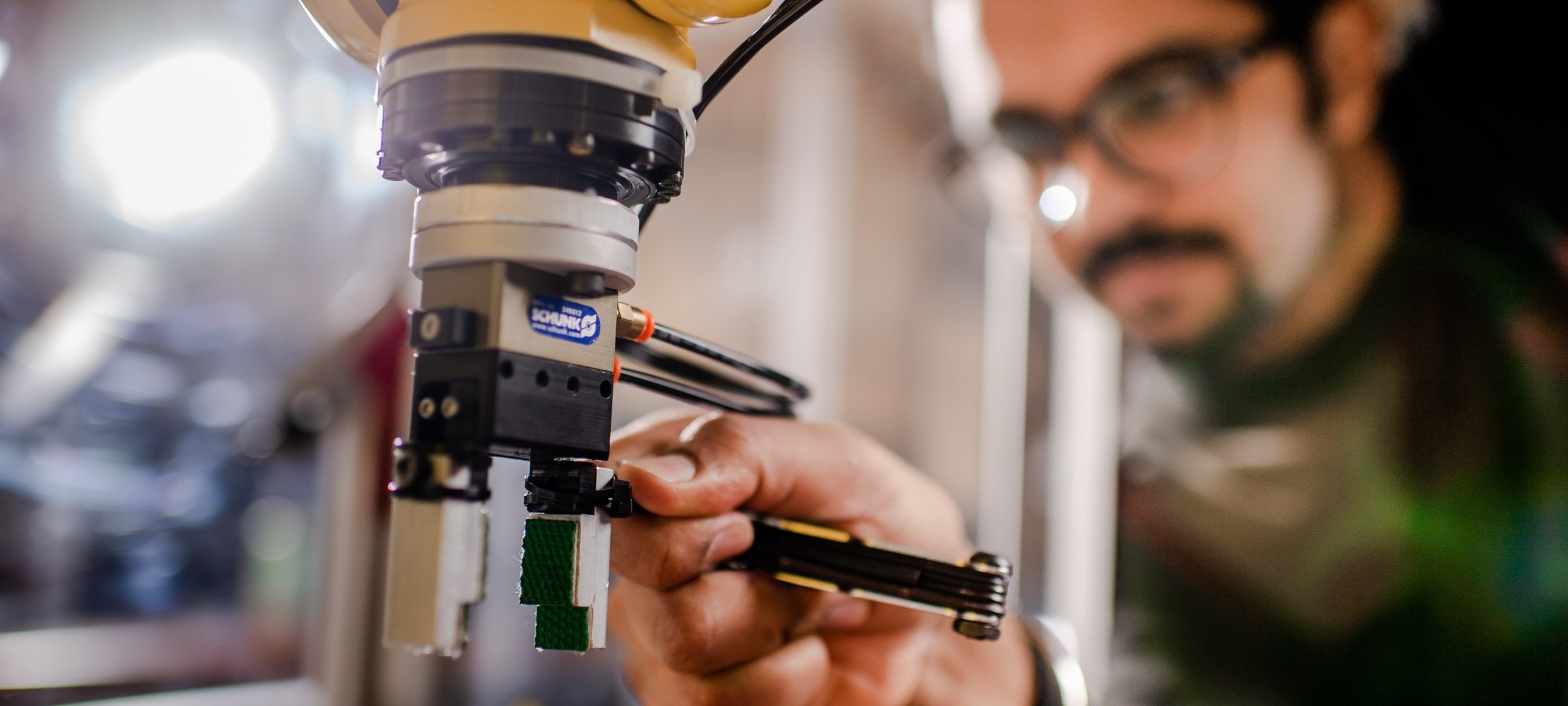
What makes a robot move, sense its surroundings, and respond intelligently? The answer is Mechatronics. This interdisciplinary field combines mechanical engineering, electronics, computing, robotics, and control systems.
Michigan Tech's MS in Mechatronics brings together the College of Computing's Department of Applied Computing and the College of Engineering's Department of Manufacturing and Mechanical Engineering Technology (MMET). In this program, you'll build advanced knowledge of how mechanical and electronic components work together to create sophisticated, responsive systems, which are central to the advanced manufacturing of Industry 4.0.
The Accelerated Master's Program is available for current Michigan Tech students.
Who Is This Program For?
Fascinated by the technologies that power automated machines and robotic systems? This interdisciplinary degree may be a good fit if you want to build on a background in engineering, engineering technology, or computing. Whether you're interested in industrial robotics, automated production, intelligent control systems, or the integration of hardware and software, you'll develop specialized knowledge that connects these fields.
What You'll Study
Learn how to design, integrate, and evaluate systems that combine mechanical components, electronics, sensors, and computer-based controls. Your graduate studies will address real-time robotics, programmable logic controllers (PLCs), automation, and industrial safety. Depending on your chosen courses, you can investigate robotic vision, autonomous systems, motion control, embedded computing, and the dynamics of robotic platforms.
Benefit from a practical curriculum shaped by input from industry advisory board members and other industry professionals. You'll connect mechanical and electrical engineering principles with programming and system integration, developing the knowledge and skills to work with automated technologies and meet the evolving demands of advanced manufacturing.
Where You'll Apply Your Knowledge and Skills
Put your mechatronics expertise to work in industries such as automotive manufacturing, aerospace and defense, robotics, electronics, and consumer-product development. Apply your knowledge to the design, integration, testing, and improvement of automated equipment, control systems, and intelligent devices. Depending on your technical background and experience, you could pursue careers in robotics engineering, automation and controls, manufacturing systems integration, or technical research and development.
-
Delivery Options
- Accelerated: MS
- On-Campus: MS
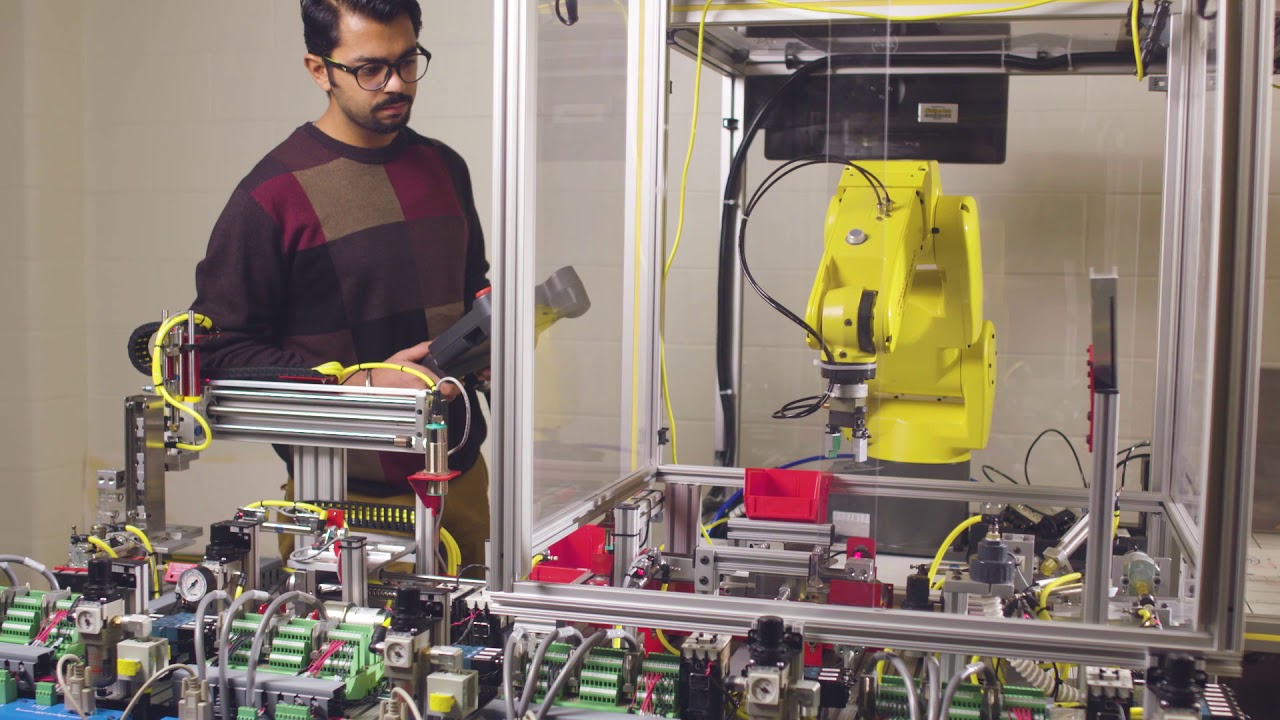
STEM Students Specialize in Mechatronics
Mechatronics Program Details
Choose a specific degree option or delivery type to learn more about the mechatronics program at Michigan Tech. For international students, Mechatronics is a designated STEM program.
On-Campus Programs
Additional Program Information
Want to learn more about mechatronics at Michigan Tech? Visit the department for more information:
Sample Areas of Interest
Select areas of interest to help customize your Mechatronics MS. Sample areas include:
- Artificial Intelligence
- Industrial Robotics
- Robotics
- Microcontrollers