
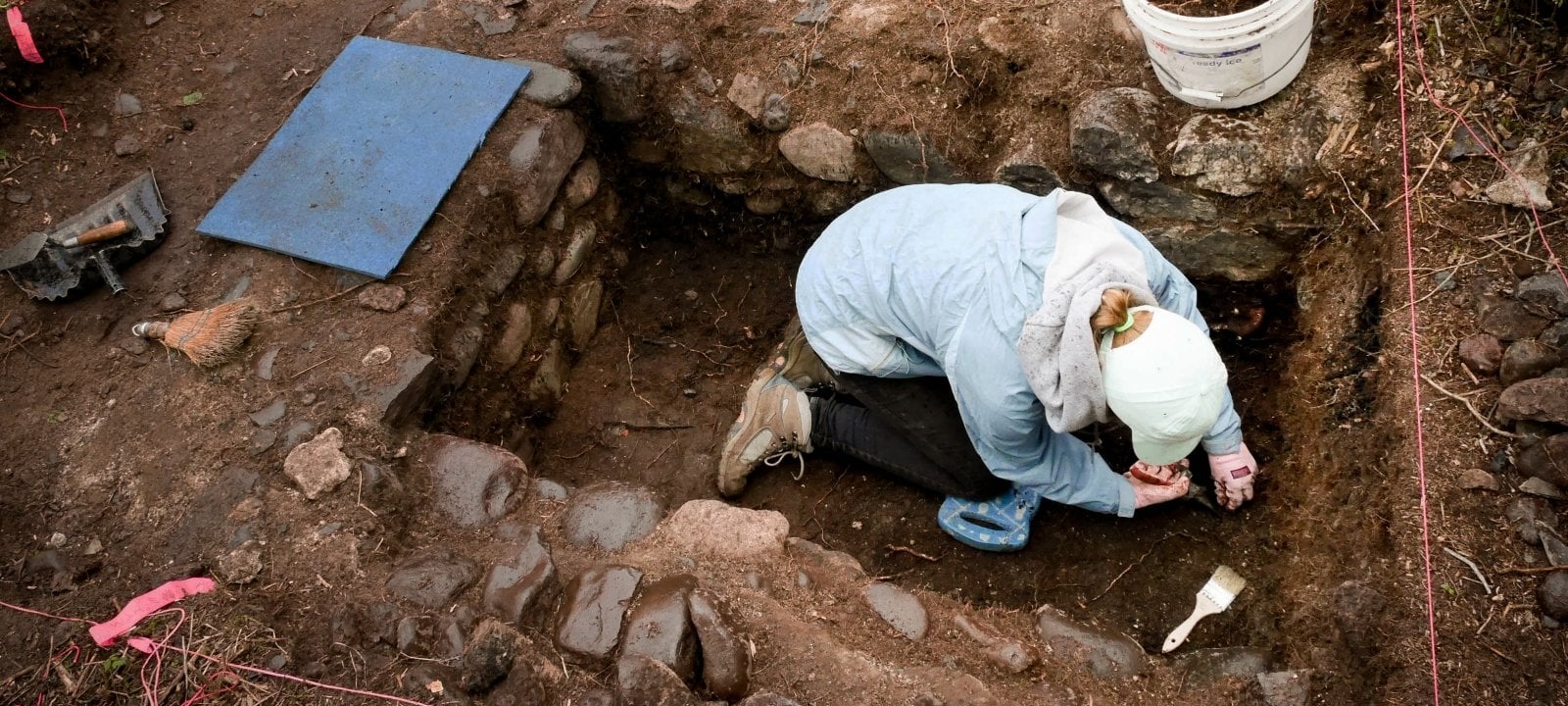
Old factories, mining landscapes, and industrial artifacts hold stories about work, technology, and community life. Those stories are told by industrial archaeologists. They study the physical remains of industrial societies—including artifacts, systems, sites, documents, traditions, and landscapes—within their cultural, ecological, and historical contexts.
In Michigan Tech’s MS and PhD in Industrial Heritage and Archaeology, you'll study how industry reshaped places—and what remains worth documenting and preserving. Enjoy the challenging but rewarding work of helping communities to interpret, document, educate citizens, while answering significant historical questions that pertain to industrialization and its often complex consequences.
The Accelerated Master's Program is available for current Michigan Tech students.
Who Is This Program For?
If you’re curious about industrial landscapes and the people who lived and worked within them, this degree may be for you. Consider the master's or doctoral degree in industrial archaeology if you want to investigate industrial sites, artifacts, and communities; combine archaeological evidence with historical or cultural interpretation; or examine preservation and the consequences of industrial change. If you are driven by a passionate curiosity for industrial communities, landscapes, technology systems, or workplaces, come to MTU to unearth and preserve our collective heritage.
What You'll Study
You'll analyze artifacts, buildings, technologies, work sites, historical records, and industrial landscapes in their social and ecological settings. And research and document how industry affected communities, labor, the environment, and cultural heritage. Learn to responsibly apply archaeological and historical methods that connect the physical remains of industrial activity with the experiences and changes they represent. If you are interested in pursuing interdisciplinary, innovative research that focuses on postindustrial regions and communities struggling with the social and material consequences of industrial decline, this program is for you. And you can get an early start, too, by attending summer field school prior to your first fall semester.
Where You'll Apply Your Knowledge and Skills
Industrial sites, machinery, buildings, and artifacts hold evidence about past work and community life. You can apply archaeological and historical methods to documenting these places, evaluating their cultural significance, and interpreting how industrial change affected workers, landscapes, and the environment. This work can inform cultural-resource documentation, historic-preservation projects, museum and archive research, and public-history interpretation.
The master's or doctoral degree in industrial archaeology positions you to work at a cultural resource management firm, an archive or museum, for government agencies like the park or forest service, or for non-profit heritage organizations.
-
Delivery Options
- Accelerated: MS
- On-Campus: MS, PhD
Industrial Heritage and Archaeology Program Details
Choose a specific degree option or delivery type to learn more about the industrial heritage and archaeology program at Michigan Tech. For international students, Industrial Heritage and Archaeology is a designated STEM program.
On-Campus Programs
Additional Program Information
Want to learn more about industrial heritage and archaeology at Michigan Tech? Visit the department for more information:
Sample Areas of Interest
Select areas of interest to help customize your industrial heritage and archaeology MS and PhD. Sample areas include:
- Anthropology
- Archaeology
- Architectural History
- Industrial Communities