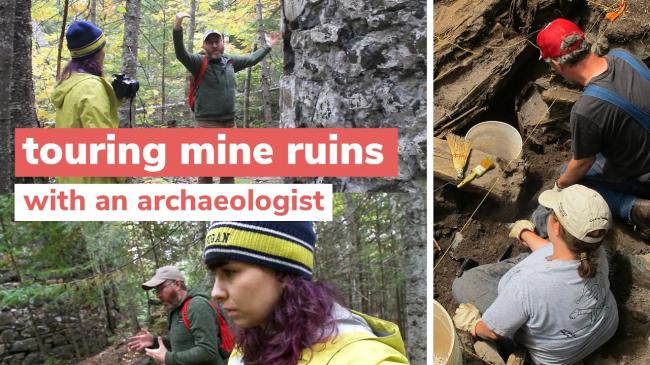
Shape the future of how humanity understands itself. At Michigan Tech, graduate students work alongside professionals in the field through partnerships with sponsors like the National Park Service, United States Forest Service, Amtrak, National Museum Wales, and the European Union. Sponsors present real-world problems and invite Michigan Tech students to be part of the solution.
Pursue transdisciplinary, innovative, and independent research that focuses on industrial and postindustrial heritage and communities struggling with the social and material consequences of industrial decline. Increasingly, student research explores sustainable and equitable futures of these communities using creative methodologies and technologies.
Pursue Research That Interests You
Learn through in-depth courses and modules while crafting a thesis advised by an interdisciplinary faculty. Formulate original research projects in consultation with a faculty committee; secure financial support; define rigorous data collection and analytical schemes; and generate solutions that satisfy preestablished procedures.
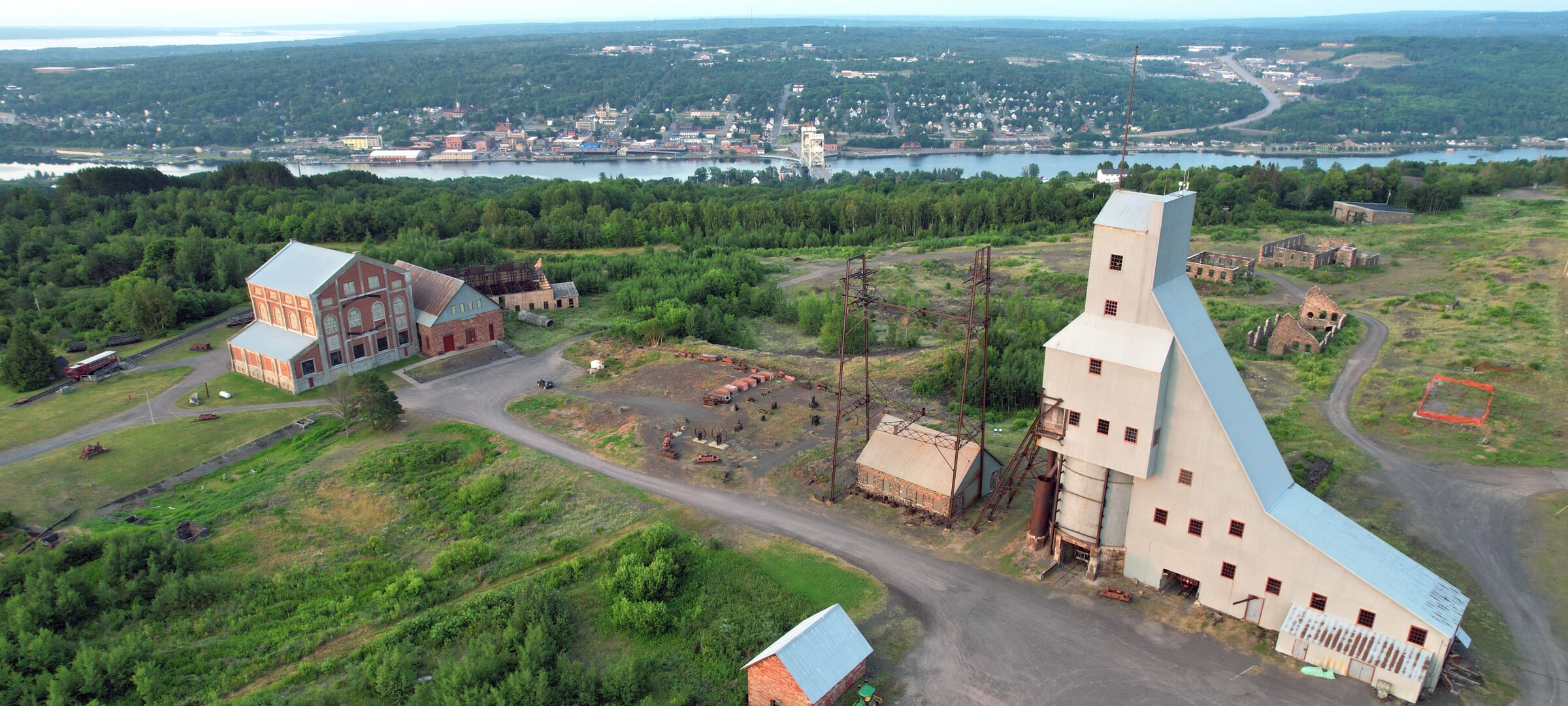
And do it in a place that is the headquarters of both the Society for Industrial Archaeology (SIA) and The International Committee for the Conservation of the Industrial Heritage (TICCIH). Our faculty serve national and international leadership roles in the Critical Heritage Studies Association, Vernacular Architecture Forum, and the Society for Historical Archaeology, among many others. Work with local organizations such as the Keweenaw National Historical Park, Isle Royale National Park, and Keweenaw Bay Indian Community to address critical questions.
Get the Career You Want

We prepare our MS students for diverse professional careers. They work in both the private and public sectors in fields such as heritage and cultural resource management, education, preservation, and government service.
In addition to those seeking appointment to academic professorships, many of our doctoral students currently work across the United States in private, local, state, federal, and tribal positions. Globally, students and alumni have joined national heritage organizations and private companies.
Receive Funding and Work with Partners
Financing is a critical part of higher education, and our Social Sciences programs prioritize support opportunities. Master's students receive up to two years of tuition waivers. Most students in our program fund their education with a variety of sources, including work study, graduate research, student loans, fellowships, and grants. MS students can also work with faculty on funded research projects. PhD students receive up to three years of funding via assistantships that cover the costs of tuition and provide a stipend.
Get involved in the critical business of proposal writing, sponsor negotiations, and budget generation.
Bachelor's + 1 Year = Master's Degree
Our accelerated master's degree program is a faster, easier way for Michigan Tech students to earn a master's degree. Up to nine approved credits from your bachelor's degree can be applied towards your accelerated master's degree. Consult your graduate program director for your individualized plan. If you're thinking about pursuing a master's following your bachelor's program, this option may be the right choice for you.
Program Requirements
Progressing Through the Program
Once admitted to the program, students will be expected to meet the following requirements:
- Complete 30 credits of coursework.
- Identify a research supervisor by the end of the second semester in residence. Together with their research supervisor, students will construct an advisory committee including at least one faculty member from outside the department.
- Pass an oral and written research proposal examination before proceeding to dissertation research. Students must prepare a written research proposal, present it in a public forum, and defend it in a meeting with their advisory committee.
- Conduct significant research and write and defend a dissertation as a final product.
- MS students draft a research proposal as part of their Research Design course, write a thesis with faculty support, and pass a thesis defense to graduate.
- PhD students pass a written and oral qualifying examination following the completion of all coursework. Students must demonstrate competency in three selected subfields and within the subject area of their dissertation. Qualifying exams are usually scheduled early in the third year of study; however, the examination can be held sooner for an advanced student.
MS Course Requirements
Required Core Courses
| Course | Course Title | Credits |
|---|---|---|
| SS 5220 | Archaeological Thought and Society | 3 |
| SS 5420 | Critical Heritage and Memory | 3 |
| SS 5600 | Industrial and Historical Archaeology | 3 |
| SS 5900 | Cultural Resource Management | 3 |
| SS 6002 | Research Design | 3 |
Total Credits: 3
Additional Courses (Choose 4)
| Course | Course Title | Credits |
|---|---|---|
| SS 5049 | GIS Applications for the Graduate Researcher |
3 |
| SS 5050 | Advanced GIS Methods and Projects* | 3 |
| SS 5230 | Archaeological Analysis and Interpretation | 3 |
| SS 5501 | Industrial Communities | 3 |
| SS 5551 | Global Industrial History | 3 |
| SS 5503 | Material Culture Studies | 3 |
| SS 4530 / 5530 | Deindustrialization & Urban Environments | 3 |
| SS 5550 | Global Environmental History | 3 |
Total Credits: 12
Field Methods (Choose 1)
| Course | Course Title | Credits |
|---|---|---|
| SS 5700 | Archaeological Field Methods | 3 |
| SS 5800 | Documentation of Historic Structures | 3 |
Total Credits: 3
*Check pre-requisites / permissions
PhD Course Requirements
Required Core Courses
| Course | Course Title | Credits |
|---|---|---|
| SS 5220 | Archaeological Thought and Society | 3 |
| SS 5420 | Critical Heritage and Memory | 3 |
| SS 5551 | Industrial and Historical Archaeology | 3 |
| SS 5900 | Cultural Resource Management | 3 |
| SS 6002 | Research Design | 3 |
Credit Total: 18
Electives Requirements
12 Credits of Approved Electives