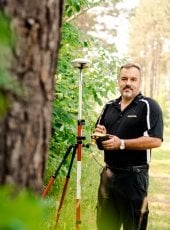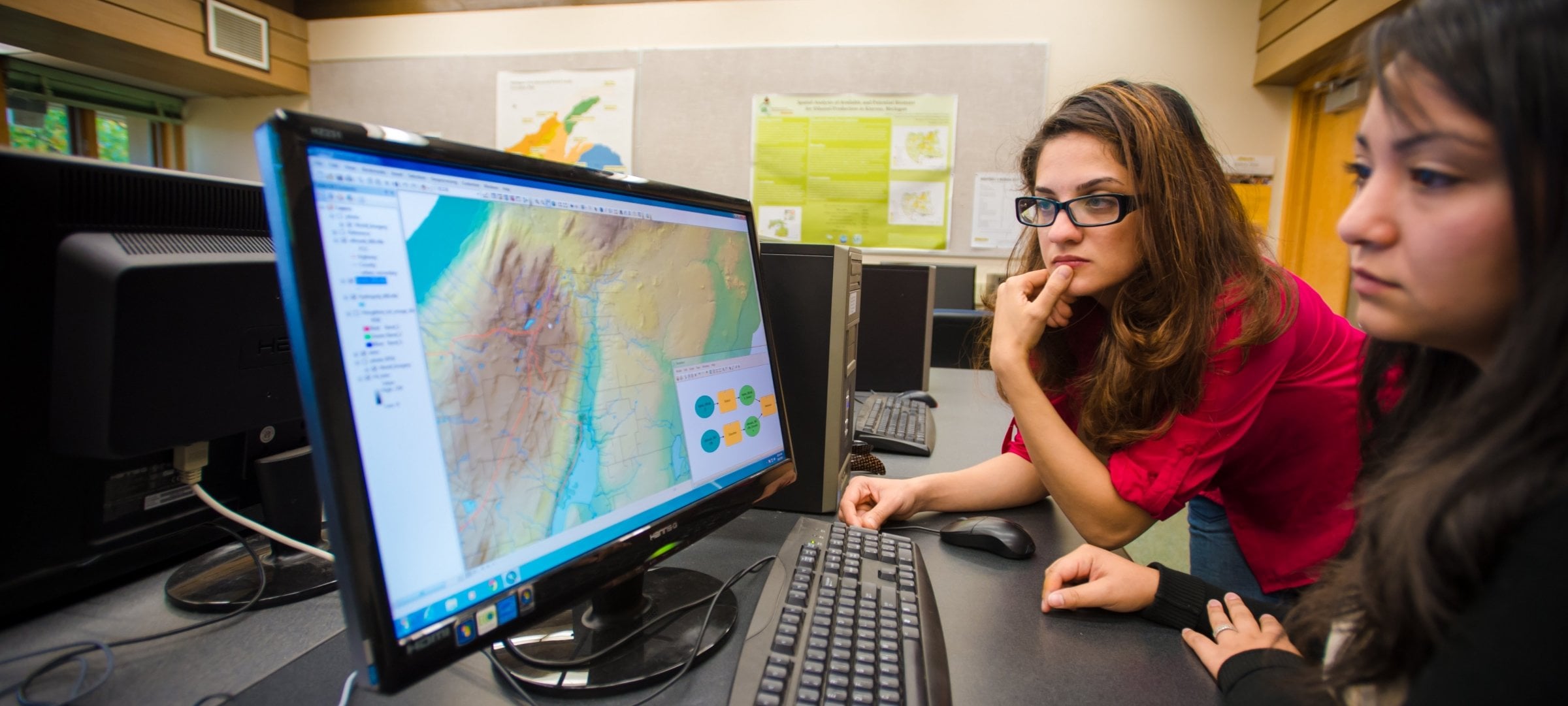
A map can show you where something is. But geographic information science helps you investigate why location matters. Interdisciplinary by nature, Geographic Information Science combines spatial data, geographic information systems (GIS), remote sensing, and analysis to reveal patterns across places and environments. In a field that’s growing at a rate of 10 percent per year, skilled geospatial workers are increasingly in high demand. Follow the coordinates to MTU and earn your Master of Geographic Information Science.
The Accelerated Master's Program is available for current Michigan Tech students. Explore our Online Master's Program.
Who Is This Program For?
Consider the MGIS if you want to use location-based information to study environmental or human systems, strengthen your geospatial capabilities, or broaden a background in natural resources or another applied field. Its interdisciplinary focus may be especially useful for people interested in mapping, remote sensing, and spatial decision-making.
What You'll Study
Build a foundation in geospatial principles and analysis in our master of geographic information science program. Then, explore digital image processing, spatial modeling, and remote sensing. Your interdisciplinary studies will connect these methods and tools with statistics, communication, environmental policy, and business. Apply geographic information systems (GIS)—technology that combines hardware, software, and geographically referenced data—to identify spatial patterns, interpret relationships, and communicate findings that support informed decisions.
Where You'll Apply Your Knowledge and Skills
When location matters, geospatial information can reveal patterns that a conventional spreadsheet cannot. You can apply GIS, remote sensing, and spatial analysis to mapping wildlife habitat, assessing natural hazards, planning infrastructure, or examining changing land use and forest resources.
These methods also have applications in emergency planning, agriculture, land-records management, and location-based business decisions. Whatever your workplace, you'll use your MGIS degree to help transform geographically referenced data into maps and analyses that planners, resource managers, and other decision-makers can use.
-
Delivery Options
- Online: MGIS
- Accelerated: MGIS
- On-Campus: MGIS
Geographic Information Science Program Details
Choose a specific degree option or delivery type to learn more about the geographic information science program at Michigan Tech. For international students, Geographic Information Science is a designated STEM program.
On-Campus Programs
Online Programs
Additional Program Information
Want to learn more about geographic information science at Michigan Tech? Visit the department for more information:
Sample Areas of Interest
Select areas of interest to help customize your Geographic Information Science MGIS. Sample areas include:
- Digital Image Processing
- Geographical Information Systems
- Remote Sensing
- Spatial Modeling