

Sunday (05/03)
9:30 - 10:00 a.m.
Conference and Whole-Day Field Trip Check-In
- Location: Lot 27 near MUB
10:00 a.m. - 5:00 p.m.
Whole Day Field Trips
- Location: Porcupine Mountains, Keweenaw Exploration, and Ford Center/Forest
Monday (05/04)
7:30 - 8:30 a.m.
Conference Check-in
- Location: Check-in table outside of Ballroom A, 3rd floor of MUB
8:30 - 8:45 a.m.
General Conference Welcome
- Location: Ballroom A
8:45 - 9:30 a.m.
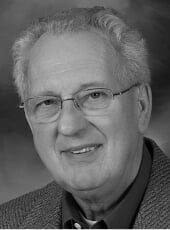
Keynote and Discussion 1, Terry Sharik
- Location: Ballroom A
The Biennial Conference on Undergraduate Education in Natural Resources (BCUENR) was launched with the inaugural meeting at Penn State University in 1996. We assembled all the agendas from the sixteen BCUENR meetings and used AI to look for themes that emerge based on the titles, and to see how the prevalence of themes varied over time. The five most common themes from the titles of the presentations in order of frequency were:
- Pedagogical Innovation
- Technology and Digital Learning
- Curriculum Design and Program Structure
- Experiential Learning and Workforce Preparation
- Diversity, Inclusion, and Social Context.
A finer temporal analysis reveals that the evolution of the conference titles is not gradual but punctuated, with clear inflection points driven by technological disruption, institutional accountability pressures, and societal and equity concerns. Across the sixteen conferences, the topics transition from: instructional experimentation to programmatic optimization to systemic transformation. Additional themes were also examined, and it is hoped that the trends in how all the themes ebb and flow over time may be helpful in ensuring that we continue to address the key contemporary topics and themes in natural resources education.
9:30 - 9:45 a.m.
Coffee/Snack Break
9:45 - 11:45 a.m.
Session 1: Program Development (15 Minutes Each)
- Location: Ballroom B
9:45 - 10:00 a.m. — Online to Outdoors: Insights from 15 Years of OSU’s Fisheries, Wildlife and Conservation Sciences Ecampus Program, Cannon
In 2009, Oregon State University launched the nation’s first fully online Fisheries and Wildlife Sciences B.S. degree. Nearly two thirds of our students now complete the program entirely through Ecampus. In this presentation I will discuss key insights from the program’s first 15 years and how it has evolved to support students’ career goals and professional certification requirements. The most effective strategies have included providing intensive advising and flexible internship options, increasing academic support in online classes, and expanding access to department scholarships. With support from university partners and student associations, our online students now participate in leadership roles and professional development opportunities. Our ongoing efforts are focused on improving access to financial, academic, and social support systems to increase graduation rates and career readiness
10:00 - 10:15 a.m. — Science with a Soul: Cultivating Purpose in STEM Education, Nelson and Vucetich
STEM education excels at teaching skills but often neglects—or presupposes answers to—a deeper question: What is the purpose of the science we do? We explore why cultivating purpose matters and how it can be fostered among students. Drawing on environmental philosophy, ecological science, and decades of teaching experience, we identify common obstacles—naïve optimism, narrow professional focus, and unexamined outcome-dependence—that limit reflective engagement. We highlight strategies that help students articulate and examine purpose, and to imagine science as an ethical as well as technical endeavor. Attending to purpose shapes not only scientists’ character but also the science they produce. By cultivating purpose, we aim to support emerging practitioners of science and the public that relies on science to address complex social and ecological challenges. This talk invites reflection on what it means for science to serve a just and flourishing world.
10:15 a.m. - 10:30 a.m. — Peer mentoring effects on new forestry students: engagement and perceptions of success, Kidd
The “Careers and Competencies in Forestry” (CCF) course at Stephen F. Austin State University is the first course in the SAF accredited BS Forestry program’s core requirements. Each academic year approximately 120 new freshmen and transfer students to the BSF program typically take CCF in their first semester in the program. The three-credit lecture plus lab course introduces foundational concepts including history/policy, forest ecology and management, subdisciplines, and career options and trajectories. Due to the nature of the course and characteristics of incoming students, additional support resources have been developed to assist CCF students. Near-peer mentoring services are one type of these supports provided. An end-of-semester, self-report survey was designed to assess student access and engagement with peer mentors and respondents’ perceptions of its influence on their academic work associated with the course. Preliminary results from multiple semesters will be presented.
10:30 - 10:45 a.m. — Seeding Success: A framework for creating sustainable undergraduate research programs in natural resources, Schulz, Polinko, Bullard, Burger, Hendrix, Stokes
Undergraduate research and mentoring perform a critical role in preparing the next generation of natural resources professionals. Despite the recognized benefits, cultivating sustainable and impactful undergraduate research and mentoring programs in natural resources presents distinct challenges, ranging from inconsistent funding to constraints on faculty and student availability. We present a case study of an integrated undergraduate research pipeline in natural resources at a land-grant institution, including a discussion of desired short- and long-term outcomes of our undergraduate research programs and how we achieve these outcomes via College resources and activities that have been carefully cultivated over time. For other programs interested in developing and implementing their own undergraduate research programs, we consolidate our experiences that have helped us cultivate a culture of undergraduate research and mentoring and outline a framework for implementation.
10:45 - 11:00 a.m. — Evolution of the Environmental Sciences Degree (2011–2025), Champion
This presentation examines how student-selected focal areas within the Environmental Sciences (ES) degree at NC State University have evolved over time and what these choices reveal about trends in student interests and program design. Using data from 802 ES graduates between December 2011 and August 2025, we analyzed student-declared focal areas alongside graduation patterns. The dataset includes over 100 unique focal areas, reflecting the highly customizable nature of the ES program, in which students often combine minors, double majors, or specialized concentrations to satisfy their focal area requirement. Renewable Energy Assessment (Minor) emerged as the most popular focal area overall and was the leading choice in ten graduation terms, after 2016. Other commonly selected areas include Law and Policy, Geospatial Information Systems, Marine Sciences, Environmental Toxicology and Sustainable Design highlighting sustained interest in interdisciplinary, and applied pathways. Graduation numbers increased steadily over the past decade, peaking in 2020. These findings demonstrate how student choices mirror evolving environmental careers and societal needs, providing insights for designing flexible, and responsive ES programs.
11:00 - 11:15 a.m. — Responding to Challenges to Field Biology Education: A Work in Progress, Channell
Higher education in the United States faces many challenges: from declining enrollments and changing attitudes regarding the value of a college education, to technological innovation, political and policy expectations, financial sustainability, and evolving modes of delivery. Departments and programs focusing on education in the natural resources or field biology face additional challenges. In this presentation, I will discuss the history of the natural resource program at Fort Hays State University, the challenges it faces, and our recent attempts to address them. These attempts include integrating undergraduate research throughout the program, improving marketing, and reorganizing and updating the program's curriculum and advising. These strategies are not offered as a prescriptive solution but rather as part of a conversation to better address the challenges we, as natural resource educators, face collectively.
11:15 - 11:30 a.m. — Challenging Dominant Western Paradigms in the Teaching of Indigenous Ecology to Natural Resources Students, Barron
This presentation explores the design, implementation, and learning outcomes of Indigenous Ecology, an undergraduate and graduate level course at a regional public university. The course is geared toward wildlife and aquatic biology majors but is open to all students. Integrating Indigenous ecological knowledge with Western scientific frameworks, Indigenous Ecology challenges hierarchical, human centered models common in Western ecology by centering relational, responsibility based approaches rooted in Indigenous worldviews. Students engage with Indigenous research methodologies, treaty rights, and contemporary issues in natural resource management, while critically evaluating how Western ecological practices have reinforced inequity and power imbalances. This presentation examines students’ engagement with the curriculum over the course of a semester, with particular attention to how they navigated and critically reflected on concepts they perceived as being in tension with prevailing Western paradigms of natural resource management and conservation.
11:30 - 11:45 a.m. — Are the Foxes Guarding the Hen-house? Programmatic Assessment by Undergraduate Students, Crosby, J. Adams, H. Adams, Holley, Nan, Patterson, Yang
Student feedback of course instructors is often collected as a course assessment in higher education. In professional programs, many are turning to programmatic assessments to understand student perspectives on educational opportunities – the good, bad, and ugly – to determine the employment outlook for program graduates. The Forestry program at Louisiana Tech University has been performing these assessments for many years in the form of a Senior Exit Survey where graduating seniors have the option of completing both a written survey and a program review with the Director if they choose. We have collated surveys submitted by graduating seniors to assess the academic experience from their perspective. The survey contains questions on satisfaction relating to academics, advising, course content/instructional quality, student study habits, extracurricular activities, and a written response section. This presentation plans to “get into the weeds” of this survey and highlight student-perceived strengths and weaknesses and provide insights into changes made as a result of the surveys.
9:45 -11:45 a.m.
120 min Panel/Workshop
- Location: Alumni Lounge
From City Blocks to Rainforests: Rethinking Sustainability Education Through Partnership, Gersie, Bhatt, Flaspohler, Seigel, Oliver, Morris, LaReaux, Reed
This interactive two-part workshop and panel presents two complementary models of community-engaged, place-based natural resource education: the U.S.-based Detroit SEED (Student Experience in Education and Discovery) program and the international Mapping Sustainability in Suriname (UN3013, Spring 2026) course. While implemented in distinct geographic and cultural contexts, both initiatives are grounded in partnership, reciprocity, and experiential learning that position communities as co-creators of knowledge and stewards of natural resources.
The first part of the workshop focuses on the Detroit SEED program, a place-based, community engagement-driven model that leverages the ecological assets of the city of Detroit as a living laboratory for natural resource education. Middle and high school students engage in applied learning through GIS mapping, urban forestry, water quality assessment, and environmental monitoring across parks, waterways, and green infrastructure systems. By integrating these experiences with college readiness, family engagement, and community partnerships, SEED builds sustainable pathways into natural resource and environmental careers for historically underserved youth. This session will highlight program design, partnership structures, and evaluation approaches that align learning outcomes with community-defined environmental priorities.
The second part highlights the Mapping Sustainability in Suriname course, an international, ecologically focused field experience that emerged from a broader, in-country collaborative partnership. Suriname, a net-zero carbon country with approximately 90% tropical rainforest cover, provides a globally significant context for natural resource education. The course builds on sustained partnerships with Anton de Kom University of Suriname (ADEKUS), Polytechnic College Suriname (PTC), and the Center for Agricultural Research in Suriname (CELOS), alongside collaborations with NGOs and corporate entities. Students engage in immersive fieldwork across mangrove and tropical rainforest ecosystems, leveraging this environment as a living laboratory that both contrasts with and complements forest and freshwater systems in Michigan’s Upper Peninsula.
This comparative framework strengthens understanding of biodiversity, land use, and sustainability across ecological systems. The workshop concludes with a panel and facilitated discussion examining shared strategies for designing, implementing, and sustaining partnership-centered natural resource education across local and global contexts.
11:45 a.m. - 12:45 p.m.
Lunch
- Location: Ballroom A
12:45 - 2:30 p.m.
Session 2: Experiential/Hands-On Pedagogy (15 Minutes Each)
- Location: Ballroom B
12:45 - 1:00 p.m. — Embedding networked CUREs into mammalogy lab: student gains and lessons learned, Patrick
Organismal biology lab courses like mammalogy have traditionally focused on taxon identification and field skills. However, such courses have largely ignored science-process skills, such as data collection, statistical analyses, and communication. Embedding course-based undergraduate research experiences (CUREs) into lab courses offer a low-barrier opportunity for all students in the course to gain these and other job-readiness skills and have been shown to increase student retention in the major and graduation rates. I embedded two nationally networked CUREs into my mammalogy lab course: Squirrel-Net and Snapshot USA. These research modules allowed students to contribute data to national databases and use these databases to conduct a research project using data beyond what we could collect as a class. I will present student self-efficacy data and my lessons learned while balancing the modules with other course content.
1:00 - 1:15 p.m. — The Use of Drones for Higher Education in Natural Resources, Hung, Kulhavy, Unger, Zhang and Lu
Drones have become a powerful tool for landscape measurement. Integrating drone and its related technology in the curriculum within the Arthur Temple College of Forestry and Agriculture (ATCFA) at Stephen F. Austin State began in 2013. Starting with a simple drone for taking photos and videos, the use of drones has evolved into multiple facets with a fleet of over 80 drones with different flight time capacities and different sensor payloads. Applications with the use of drones at ATCFA range from tree value appraisal, measuring tree height, counting mistletoes, mapping giant salvinia, detecting alligator nests, 3D modeling, to generating aerial orthophoto mosaics, etc. Students are trained to safely and effectively operate a drone and accurately process data captured by the drone. With the college’s support, many of them have become a FAA 107 certified drone pilot that allows them to fly drones for commercial purposes. As technology advances and regulations change, the use of drones for higher education in natural resources will have to adapt to better prepare students for their future careers.
1:15 - 1:30 p.m. — Promoting Technology and Data Analysis in Natural Resources Through Field-based Assignments, Crosby
Understanding the practical application of classroom-delivered concepts is often accomplished through laboratory assignments where students practice a concept. Using Global Positioning Systems (GPS) for data collection is ubiquitous in natural resources assessment and error estimation and correction is often done in controlled exercises using real-time and post-processing methods. However, this seldom helps students understand the causes or potential impacts of errors on collected data. This presentation will focus on assessing GPS device errors using surveyed locations around campus at Louisiana Tech University. Students and a faculty member used various devices and operating system combinations with and without WiFi signal and assessed potential conflicts/multipath errors based on distance to objects and height. The students then assessed RMSE (root mean squared errors) of surveyed locations by performing various queries and analyses using the collected data. Students coordinated data collection times and were able to engage with a larger dataset and analyze a real-world problem in which they directly participated.
1:30 - 1:45 p.m. — 100% natural ingredients, learning through field activities, Cawley and Brown
The majority of the students in our programs will be employed by government agencies or companies that specialize in environmental concerns or companies who want to limit their environmental impact. Dr. Brown’s courses in geology, soil, and hydrology support the Earth and Environmental Science majors at the University of Virginia's College at Wise. Dr. Cawley’s courses in soils, botany and field botany, and various ecosystem systems courses support the Conservation Biology major at Lincoln Memorial University. Students participate in field studies/projects to provide them with hands-on experience at collecting data. Projects have been conducted on state lands (parks and preserves), our campuses, and sites within the community. One of our primary sites is The Cedars Natural Area Preserve (managed by VDCR). Dr. Brown’s students have been monitoring water quality in this karst region for a number of years. The Cedars utilizes burning as a management tool. Students from both institutions have sampled along transects in burned and unburned sites and later processed these samples. Smaller projects of shorter duration (surveys, invasive species, and over-night field trips) have also been incorporated into these courses. These projects are invaluable for teaching sampling and monitoring protocols to our students.
1:45 - 2:00 p.m. — A Course-Based Research and Teaching Experience, Thompson and Stewart
We designed a course to provide undergraduates with authentic and linked research and teaching experiences. Teams of students completed field ecology research projects and developed teaching activities based on their research. Our objectives for students were for them to learn practices of both scientific research and teaching while improving skills in collaboration, leadership and written, visual, and oral communication. Each student team completed a research proposal and project as well as a teaching activity proposal and lesson plan. Students conducted research and provided field-based ecology lessons for local school groups. They later shared their scholarship with faculty and community partners during a poster symposium. Teams used mentor feedback and their reflections on written drafts and practice sessions to improve their products. Self-reported gains in knowledge and skills based on pre- and post-course student questionnaires provided strong evidence of student learning.
2:00 - 2:15 p.m. — Building a Better Biology 2 using CUREs, Galliart and Patrick
We designed a new introductory biology lecture and lab course called “Diversity of Life” to meet curricular needs and better align with peer state institutions. This course was developed to be the first biology course that our wildlife, rangeland, and conservation students take in their program. We hope that this course will improve retention of our students and capture their excitement for the natural world while simultaneously building science process skills early in their program. The lab was designed around two embedded CUREs: Squirrel-Net behavioral module and a manipulative plant greenhouse experiment building on a faculty research program. These modules doubled students’ practice with the scientific method, twice walking them through hypothesis formation, data collection, statistical analysis, and communication of results. Here we will present student data and lessons learned through fresh development of a course focused on student retention and skill building.
2:15 - 2:30 p.m. — Deep Diving in the Western Pacific: Introducing students to natural resource management through experiential learning, Jolley
The University of Guam (UOG) is the only four-year institution in Micronesia, a region that spans 3,000,000 mi2 and over 2,000 small islands. But with student enrollment under 2,500 and few faculty, course offerings are limited and there are no courses offered in natural resource education. This has posed a barrier to graduates who want to work to help preserve their islands’ unique natural resources. Federal agencies are often forced to by-pass local graduates and recruit from the mainland, where new hires have little to no experience in tropical systems or cultural norms.
With funding from USDA National Institute of Food and Agriculture, UOG has been able to fill some of these educational gaps. We have partnered with institutions such as University of Florida, Utah State University, and the University of Hawaii to allow our students to take courses on-line or complete a semester away. The program has also allowed us to provide paid internships to students. Since the program started in 2023, approximately 50 students per semester have participated in internships or research experiences. With two and half years left in the grant, we expect this program to continue to grow and lead to many more qualified local professionals in natural resource management.
12:45 - 1:30 p.m.
45 min Panel
- Location: Alumni Lounge
Integrating Indigenous/Traditional Knowledge into University Natural Resource Education, Redeye-Desposito, Lowe, Kozich, Dowd, Dockry
1:30 - 2:30 p.m.
- Location: Alumni Lounge
60 min Workshop
Creating a Regional Silviculture OER Lecture Series, Stovall
There is currently no open access resource available to students and instructors in regional silviculture courses. Regional silviculture focuses on applied forest ecology and management in different states and provinces around North America and globally. Differences in ecological, economic, operational, and societal factors create great variability in how silviculture is practiced. Our goal is to leverage the existing silviculture instructors group within SAF to create a series of videos focused on silviculture across the different regions of North America. These will then be hosted on www.silvicultureinstructors.com, and freely available to students and instructors in regional silviculture courses. The purpose of this workshop is to exchange ideas and discuss best practices.
2:30 - 2:45 p.m.
Coffee/Snack Break
2:45 - 3:30 p.m.
Keynote and Discussion 3
- Location: Ballroom A

Getting Oriented: Connecting the Past, Present, and Future in Natural Resource Education, Curt Meine
Tuesday (05/05)
6:30 - 7:00 a.m.
Field Trip Check-In
- Location: Lot 27 near MUB
7:00 - 8:15 a.m.
Bird-Watching Walk - Morning Field Trip
8:30 - 8:45 a.m.
General Conference Welcome
- Location: Ballroom A
8:45 - 9:30 a.m.
Keynote and Discussion 3
- Location: Ballroom A
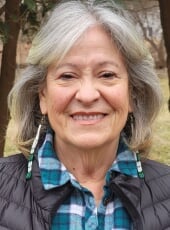
Ice Worlds: Climate Stories for a Changing Planet
Ice Worlds is a multi-faceted media project that focuses on climate change in North American Indigenous communities. It features a giant screen film that will be shown in theaters, television, online, and other informal settings in spring 2027. It also includes documentary shorts produced by Native American teenagers in four tribal communities. Project partners include the NSF-funded Study of Environmental Arctic Change (SEARCH); The Tribal Youth Media Workshop; Northwestern University; and a group of world-renowned museums. Project participant Dr. Patty Loew describes the ambitious project and shares excerpts from the main film and youth-produced climate stories.
9:30 - 9:45 a.m.
Coffee/Snack Break
9:45 - 10:30 a.m.
Session 3: Expanding Access (15 Minutes Each)
- Location: Ballroom B
9:45 - 10:00 a.m. — Faculty and Graduate Student Perspectives on a Master of Natural Resources Online Program, Swanson and Hall
The growth in distance education in natural resources creates both opportunities and distinct challenges for online students. This project reports on an assessment of the Masters in Natural Resources (MNR) program at Oregon State University; 74 students (52 alumni and 22 current students) completed a survey about their experiences in the program. For most students, the variety of courses and the ability to develop a personally relevant capstone project were key factors in choosing the program. While several obstacles are common to on-line students, many MNR students encountered challenges around finding an advisor and refining their project. Nevertheless, students reported gaining important skills from their capstone. Two-thirds reported that the MNR contributed to career advancement, and more than 80% reported improved critical thinking and interdisciplinary proficiency. Data show that specific coursework has a crucial impact on capstone projects, which carries implications for scaffolding in natural resource online programs.
10:00 - 10:15 a.m. — Is it in the DNA?: Undergraduate persistence and success in natural resources, Bishop
Early interest and attitudes towards natural resource career pathways and how education interventions shape students’ career outcomes are pivotal to overall success. Attendees will examine a recent longitudinal study evaluating factors influencing student recruitment, persistence, and academic success within Stephen F. Austin State University’s forestry program. Data was collected across multiple cohorts using pre-college, matriculation, and post-graduation measures to evaluate academic background, engagement, progression through key prerequisite coursework, and workforce outcomes. Results indicated that early exposure to natural resource education, combined with structured academic support, experiential learning, and student engagement, significantly increased persistence and degree completion. Key prerequisite courses emerged as stronger predictors of student success than demographic or academic background factors alone. Of the students who successfully completed these courses, 98% persisted to graduation, with the majority obtaining employment in natural resources within six months. Overall findings highlight the importance of targeted academic interventions and experiential learning opportunities in strengthening workforce pipelines, improving retention, and accelerating time to degree completion in natural resource education. These results provide a framework for universities seeking to enhance student success and workforce development in forestry and related disciplines.
10:15 - 10:30 a.m. — Expanding Access to Spatial Literacy: Building Online GIS Education for Natural Resource Professionals, Bhatt
As natural resource management becomes increasingly data-driven, spatial literacy is no longer optional—it is essential. Geographic Information Systems (GIS) and remote sensing now form the analytical backbone of modern conservation, forestry, ecology, and environmental decision-making. Yet access to high-quality, flexible training in these technologies remains a significant barrier for many students and working professionals.
This presentation explores the role of accessible online GIS education in advancing natural resources training. Over the past two years, College of Forest Resources and Environmental Science at Michigan Tech has developed and launched four specialized online GIS certificate programs, spanning foundational GIS and remote sensing to advanced spatial analysis and Python programming for geospatial applications. These programs were designed to serve both traditional students and professionals seeking to build technical capacity while balancing career and geographic constraints.
Drawing on the development and leadership of these programs, this 15-minute talk will highlight strategies for designing engaging online spatial curricula, approaches for overcoming common technical and pedagogical challenges in remote geospatial education, and methods for ensuring students gain practical, workforce-relevant skills. The presentation will also discuss lessons learned from delivering applied GIS training in a flexible online environment.
Ultimately, accessible online GIS education plays a vital role in democratizing technical expertise and preparing the next generation of natural resource professionals to address complex environmental challenges.
10:30 - 11:00 a.m.
Session Break/Networking Time
11:00 - 11:45 a.m.
Session 3: Expanding Access Resumes (15 Minutes Each)
- Location: Ballroom B
11:00 - 11:15 a.m. — Best Practices in Community Engaged Pedagogy: Mapping Sustainability in Suriname, Shtob
How can we assess community-engaged, experiential learning within international education programs? Using in-depth interviews, focus groups, and program observation, this project examines the outcomes, benefits, and challenges of Michigan Tech’s Mapping Sustainability in Suriname (MSS) program. Conducted in collaboration with Surinamese faculty and sustainability experts, MSS brought together U.S. and Surinamese students to explore tropical ecosystems, community-level sustainability, and human-environment interactions. As part of a broader monitoring and evaluation exercise, this project investigates how interdisciplinary socio-environmental instruction in ecology, sustainable resource management, and cultural stewardship can be enhanced through mutual engagement. By assessing these strategies as they unfold in a new arena featuring emergent partnerships, it supports future co-produced knowledge and tactics, guiding culturally sensitive program design across socio-ecological contexts.
11:15 - 11:30 a.m. — Women in the Woods: Increasing Female Participation in the Forestry Profession via Mentorship, Community Outreach, and Experiential Learning, Adams, Nan, Burnaman, Parker, Hill, Holland
Young women often do not consider forestry as a possible profession because they do not see other women in this field and often perceive foresters to be bearded men wearing flannel and carrying chainsaws. Experiential learning from female foresters, as well as the development of professional relationships with these women, will combat this stereotype and encourage future generations of women to become foresters. This is the goal of Louisiana Tech University’s Women in the Woods program. We invite Louisiana high school girls to a 3-day, 2-night annual workshop where they gain hands-on learning experience from women foresters. We create opportunities to educate children, especially young girls, about forestry, such as with Girl Scouts of America. We are also developing forestry-related teaching resources K-12 teachers in Louisiana may access online. We desire our program to be a model for others to increase female forestry involvement nationally and internationally.
11:30 - 11:45 a.m. — Collaborative Internship Pathways: Advancing Student Preparation Through University-Agency-Tribal Partnerships in Natural Resources, Brosi and Ovando-Montejo
Internships are a well‑documented, evidence‑based strategy for developing a highly skilled natural resources workforce. Utah State University has expanded this approach through formal partnerships with tribal organizations, including the Navajo Nation and the Ute Tribe, to place students in paid, mentored internships with nonprofit, federal, and state natural resource agencies. These internship experiences are scaffolded with pre‑ and post‑internship academic courses that integrate applied fieldwork with structured preparation for safety and readiness in field settings. Program assessment draws on multiple measures, including professional development artifacts and pre/post survey data evaluating students’ sense of belonging within natural resource fields, self‑efficacy, and emerging professional identity. This presentation will detail the program’s structure, evaluation findings, and effective practices for scaling high‑quality experiential learning. The model demonstrates how intentional university–tribal–agency collaboration can strengthen student preparation, document transformative experiences, and advance the future of natural resource education.
9:45 - 11:45 a.m.
120 min Workshop
- Location: Alumni Lounge
Teaching Climate Change Adaptation in Natural Resources, Janowiak, Bal, Burton, Abbotts, Handler
Session leads have developed climate adaptation tools to help resource managers integrate climate change into their work. These tools have been used by thousands of practitioners and students across natural resource disciplines. This training offers a fast-paced, interactive introduction to the Adaptation Workbook and associated resources, and participants will explore real-world climate challenges and adaptation options relevant to their work. A faculty panel will share experiences using these tools in undergraduate and graduate natural resources courses in different contexts, such as forest management, capstone planning, climate policy, and applied ecology. A moderated discussion will highlight how applied adaptation planning can strengthen student learning, build decision-making skills, and prepare graduates to address climate change in professional practice. Participants will be able to ask questions and discuss strategies for adapting these approaches to their own institutional settings.
11:45 a.m. - 12:45 p.m.
Lunch
- Location: Ballroom A
12:45 - 1:45 p.m.
60 min Panel/Workshop
- Location: Ballroom B
From Transactions to Relationships: Building a Strategic, Reciprocal Partnership between Michigan Tech and Tuskegee University, Gersie, Flaspohler, Bolden-Tiller, Atkinson
This workshop examines how Michigan Technological University (MTU) and Tuskegee University (TU) are building a strategic, long-term partnership grounded in reciprocity, co-creation, and trust rather than transactional exchanges. Guided by a shared logic model, the collaboration began with sustained dialogue, site visits, and faculty exchanges focused on student success, research capacity, and workforce pathways in natural resources. Early outcomes include jointly developed REU proposals, student exchanges, SEED program participation in Detroit, graduate recruitment initiatives, and reciprocal study abroad planning. The partnership integrates K–12 outreach, community-based learning, and experiential field education. Over the next 3–5 years, partners aim to expand forestry, GIS, public health, and workforce pipelines, formalized through an MOU. Long term, the goal is sustained co-funded research, joint graduate pathways, and an institutionalized, self-sustaining collaboration.
12:45 - 1:45 p.m.
60 min Discussion
- Location: Alumni Lounge
SAF Accreditation Standards Feedback and Discussion Session, Education Policy Review Committee of SAF, Storer
This session is hosted by the Education Policy Review Committee of SAF to gather feedback and discuss revisions to the SAF accreditation standards. This is an ongoing project to revise and update the Forestry Technology Standard, the Forestry Standard, the Natural Resources and Ecosystem Management Standard, and the Urban Forestry Standard. Stakeholder input into the revised standards will be important to ensure that they reflect feedback from colleges and universities that deliver these academic programs and from the forestry and natural resources industry that look to hire the next generation of natural resource professionals. In this session we will initiate the gathering of stakeholder input and identifying topics for further discussion during a series of webinars in summer 2026. This work will culminate in a roundtable that is planned at the SAF National Convention in Tacoma, Washington from October 6-9, 2026. Please join us for this BCUENR session for an interactive discussion and to take the opportunity to have your voice heard!
Zoom DiscussionPassword: 869651
1:45 - 2:45 p.m.
Keynote and Discussion 4
- Location: Ballroom A
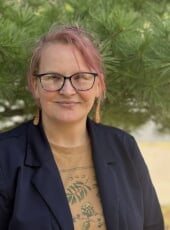
Back to the Future: Aligning Education with Tomorrow’s Natural Resource Challenges, Tara Bal
Natural resource education is facing rapid transformation. Today’s students are more diverse, career focused, and often balancing work and family, while the field is being reshaped by climate change, shifting ecosystems, and artificial intelligence. Yet many programs still emphasize stable systems and content mastery, creating a mismatch with real world demands. This talk argues for a shift from content delivery to capability building, prioritizing systems thinking, adaptability, and decision making under uncertainty. It also highlights integrating AI as a tool for critical thinking and problem solving. Ultimately, aligning education with tomorrow’s challenges requires embracing change and preparing students not just to understand natural systems, but to manage them in a dynamic, uncertain, and increasingly AI-enabled world.
2:30 - 2:45 p.m.
Conference Wrap Up
- Location: Ballroom A