
Kinesiology MS Degree Program

The Master of Science in Kinesiology at Michigan Tech provides an excellent education paired with advanced research opportunities in health and human movement, which add up to a competitive edge for graduates.

Do your interests lie in cardiac rehabilitation, strength and conditioning, fitness training and management, sports administration, or research/teaching in health and kinesiology? If you would like to pursue a career in any of these fields, allow us to prepare you for a high-impact profession.

Because kinesiology is a highly interdisciplinary field, our master’s students cross departmental borders and collaborate with faculty and students in areas such as biological sciences, human factors, and biomedical engineering.

Degree Options

Our program offers both a thesis option and a coursework option. The thesis option includes course work and research in exercise and integrative physiology, biomechanics, or human performance. The coursework option includes a more directed coursework plan that is capped with an extended internship experience in cardiac rehabilitation, strength and conditioning, or fitness training/management.

For more-detailed information, see Degree Requirements and our Graduate Student Handbook.

Courses

For a listing of required courses for thesis and coursework options, see Degree Requirements and our Graduate Student Handbook.

Research Opportunities

Kinesiology faculty are deeply engaged in teaching, mentoring, and research focusing on health and human performance. The department currently has two faculty externally funded by the prestigious American Heart Association Scientist Development Grant program.

Over the past five years, the department has received external research funding from national health organizations including:

  • National Institutes of Health
  • American Heart Association
  • American Physiological Society

Students conduct research in areas as diverse as:

  • Neural control of circulation
  • Molecular mechanisms involved in hypertension
  • Human biomechanics
  • Muscular fatigue and aging
  • Human performance in collegiate athletes

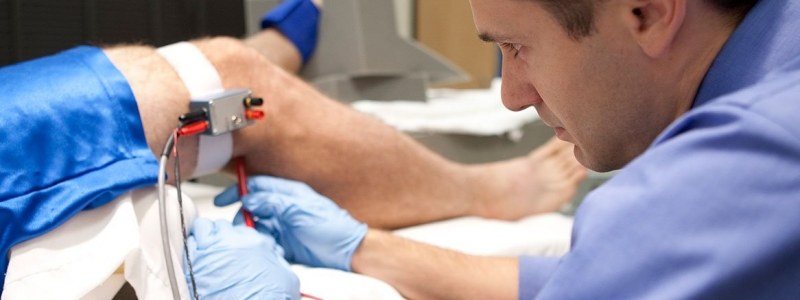
The department’s cutting-edge research facilities and equipment include:

  • Microneurography nerve traffic analysis system 
  • Electrocardiogram units and amplifiers
  • Lower-body negative-pressure chamber
  • Vicon motion-capture cameras
  • Metabolic cart for VO2 max
  • Venous occlusion plethysmograph for limb blood flow measurements (calf and forearm)

Kinesiology Accelerated MS

This accelerated degree plan allows you to combine the master’s degree with a bachelor’s degree from Michigan Tech in exercise science, sports and fitness management, biomedical engineering, or biological sciences (pre-professional option). Together, the two degrees will put you on the fast track to pursuing doctoral studies or gaining a competitive edge for a career in research or industry.

Requirements

  • In order to be accepted to the Kinesiology Accelerated Master’s program, students must apply to, and be accepted into, the Graduate School at Michigan Tech. Faculty in the Department of Kinesiology and Integrative Physiology will review all applications.
  • Students may apply for admission any time after they attain junior-level class standing (and up) until the time that they are awarded their bachelor’s degree.
  • Students will be considered undergraduates for the purposes of financial aid, tuition, and class standing until their undergraduate degree has been awarded. Once students are awarded their undergraduate degree, they will be considered graduate students. They will be expected to adhere to all policies and procedures related to graduate education at Michigan Tech.
  • Students already enrolled in a graduate degree program cannot retroactively apply to this accelerated program.
  • Additional requirements from the Graduate School.

Courses and Credits

Only approved graduate elective courses are eligible for consideration.

Kinesiology Accelerated Master’s students will be required to take 24 course credits for their graduate work (after applying 6 credits as outlined in the Credits section above) with the following requirements:

Required Core Courses (15–18 credits)

Two of the following three courses:

Both of the following courses:
A minimum of two graduate seminar credits is required.

At least one of the following statistics courses:

Elective Courses

A minimum of 12 elective course credits approved by graduate program director or department chair is required.

A list of approved elective courses within and outside the department is provided online. Courses not on this list, but deemed relevant and appropriate by the student and advisor, may be used if written approval is obtained from the graduate program director or department chair.

Credits

Application Process and Admissions Requirements

Applications are reviewed on an individual basis using a holistic approach. Fill out our free graduate application online to apply to any of our programs. Official transcripts and scores are not required for the initial application, although you will need to upload them later.

Accredited by HLC

Michigan Tech has been accredited by the Higher Learning Commission (HLC) since 1928. Our Graduate School offers over 125 certificates, master's, and PhD programs to provide our students and the world with what tomorrow needs.

Advance Human Performance and Health Through Graduate Study

The Kinesiology and Integrative Physiology (KIP) department at Michigan Technological University offers a dynamic graduate-focused academic environment that blends rigorous coursework with hands-on research and real-world applications in human health, movement science, and physiology. Graduate students pursuing the PhD in Integrative Physiology and the MS in Kinesiology work closely with faculty on interdisciplinary investigation and clinical applications that span from molecular physiology to biomechanics and performance science.

  • Faculty expertise: Graduate students in the KIP department have the opportunity to engage with faculty whose scholarship and mentorship span a broad array of areas, including cardiovascular and metabolic physiology, human performance, biomechanics, and exercise physiology. Faculty labs focus on translating research into health outcomes—from understanding cardiovascular regulation to improving human movement and rehabilitation strategies—which enriches the mentorship and training environment for both MS and PhD students.
  • Funding opportunities: Graduate students at Michigan Tech can access a range of financial support mechanisms, including graduate assistantships that provide a stipend and potential tuition support, internal and external fellowships that may include stipends and tuition benefits, and reduced-tuition programs for eligible students; these resources are administered through the university’s Graduate School and Financial Aid offices.
  • Career outcomes and networking: Graduates of the KIP graduate programs have pursued careers in academia, healthcare, industry, and clinical settings, and doctoral alumni often continue into post-doctoral research appointments or faculty positions. The department’s seminar series and collaborations with professionals across health and sports science fields help students build professional networks that support career advancement.
  • Research: Research is central to graduate study in KIP, with students participating in projects that address pressing health challenges such as hypertension, metabolic disease, aging, neuromechanics, and injury prevention. Both the MS and PhD programs support research or in-depth investigations, allowing students to contribute insights to the sciences of human physiology and movement.

College of Sciences and Arts

The College of Sciences and Arts is a community of faculty, staff, and students committed to excellence and driven by our passion for education, outreach, research, and creativity across the social and natural sciences, humanities, and the arts. Uniquely situated in the heart of Michigan's R1 flagship technological university, we specialize in human-centered potential and discovery-based learning designed to meet the challenges of today and tomorrow. Knowing that every student at Michigan Tech will pass through our doors, our college strives to be at the forefront of interdisciplinary collaborations that lead to breakthrough solutions.

Our students gain a profound understanding of social and cultural contexts through experiential learning and innovative research. We welcome you to be part of our caring, expansive college community, with 32 undergraduate and 24 graduate degrees to choose from.

The opportunities in Michigan Tech's College of Sciences and Arts are limitless. Transform into a civic leader ready to contribute to a sustainable future. Lead and participate in action-based experiences that are critical to the start of a fulfilling career. Job-shadow at a local hospital or veterinary clinic while preparing for a career in health. Design sound and lighting for a regional production. Conduct community forums on the implications of artificial intelligence. Work to purify vaccines. Study the impact of social media on society. Research the mysteries of space and galaxies beyond our universe. Explore transforming abandoned iron and copper mines into giant batteries. Understand freshwater ecosystem health. Document the nature of changes in cognitive function and motor behavior in aging and dementia.

At Michigan Tech, your academic growth is supported by a variety of learning centers, along with our Humanities Digital Media Zone and Writing Center. Model climate in the only cloud chamber of its kind. Take part in interdisciplinary health research in our state-of-the-art H-STEM Complex. Create amazing sights and sounds in our visual art, sound, and theatre performance spaces

Tomorrow Needs You

Supercharge your analytical skills to meet the demands of a technology-driven society at a flagship public research university powered by science, technology, engineering, and math. Graduate with the theoretical knowledge and practical experience needed to solve real-world problems and succeed in academia, research, and tomorrow's high-tech business landscape.