

Computer Science
Typing in Mid-Air
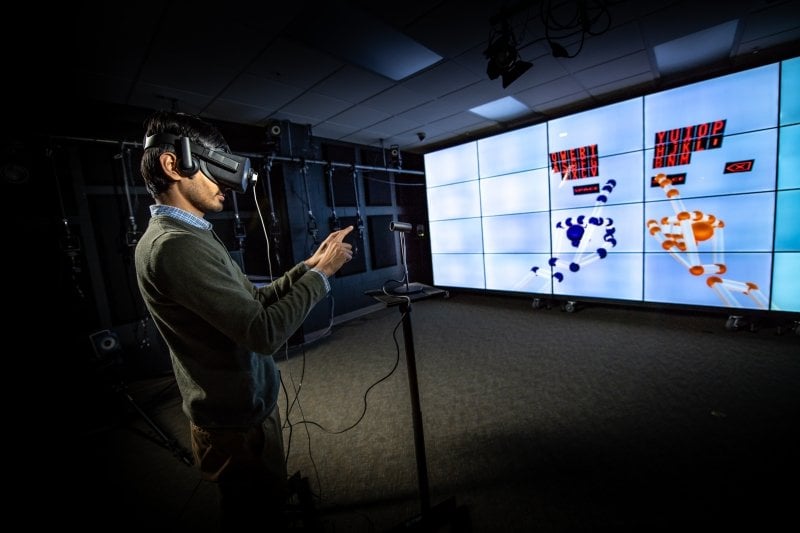
Dave House Associate Professor of Computing Keith Vertanen is working to create a new way to type: by using virtual reality to enable midair typing–without an accessory keyboard– that will still be able to autocorrect text. To enable typing in midair, Dr. Vertanen’s system uses virtual reality to track hand movements in real time via a head-mounted device.

Autonomous Coding Agents
Dr. Jie Wu defines true autonomous coding agents as “a system that can close the full loop on its own: take a goal, propose a change, execute it, read the result, judge whether it improved things, and decide what to do next, repeatedly, without a human in the loop on each step.”
Enhancing Cloud Storage
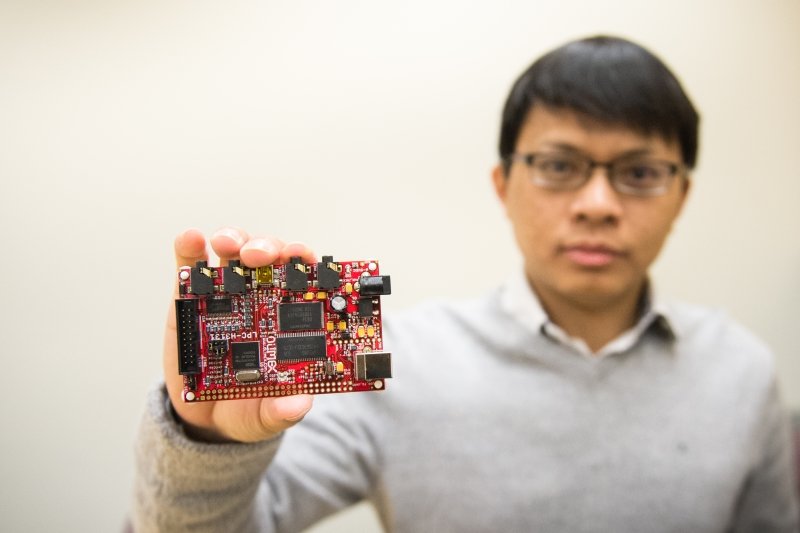
Dr. Bo Chen is pushing the boundaries of cloud computing security by developing next-generation decentralized storage systems that are safer, more scalable, and resilient against data corruption - a critical step toward making distributed cloud storage both practical and secure.
Applied Computing

Drones for Oil Spill Detection and Sampling
Future research by Dr. Amna Mazen in oil sampling and detection involves deploying automated drones for both detecting oil spills, and collecting samples, with specialized lab groups responsible for classifying the oil types.
Cybersecurity, AI, & Education
Dr. Yu Cai is shaping the future of cybersecurity and computing education by leading innovative programs that blend hands-on learning, AI integration, and workforce training - from national scholarship initiatives and student cyber competitions to AI-enhanced learning tools and next-generation curricula.
Electrical and Computer Engineering
Moonstep
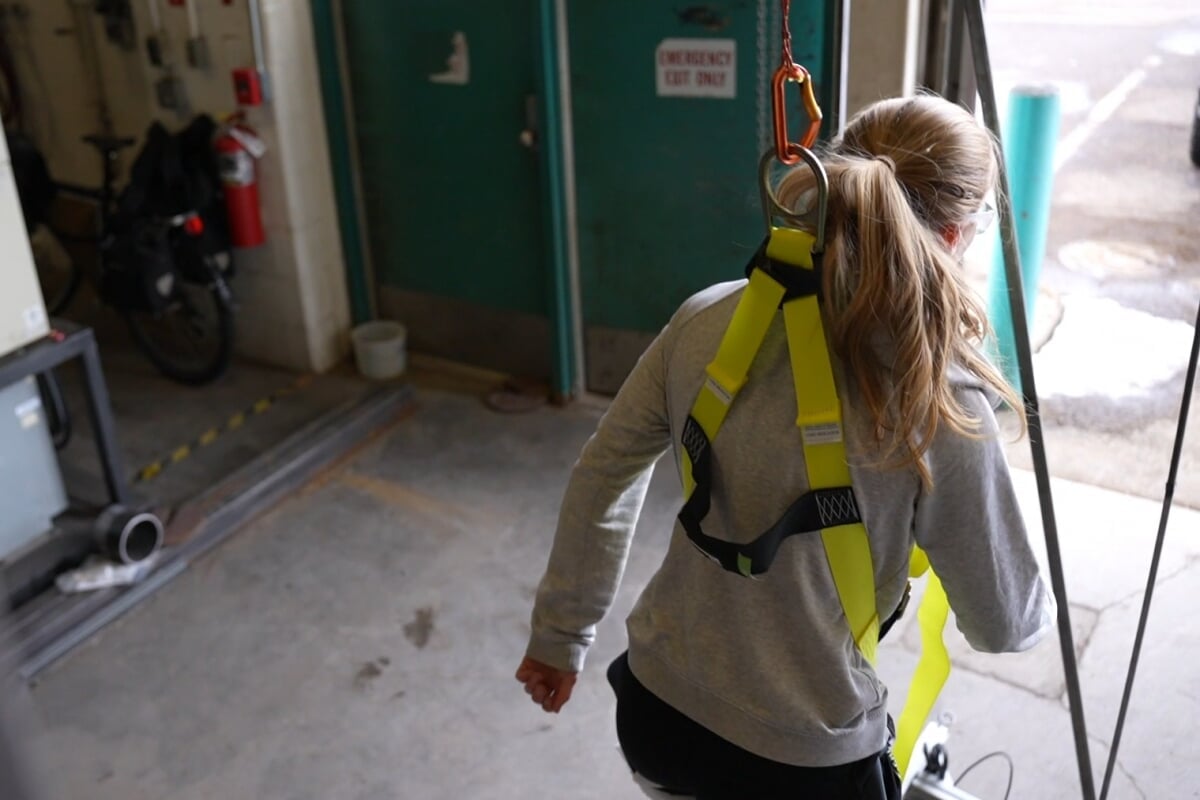
Inside the EERC, the RoLAC lab is home to MoonStep: A hypogravity simulator that enables volunteers to experience ‘reduced gravity’. During the 2024-2025 academic year, Danny Ezzo, Ingrid Halverson, and Parker Courte-Rathwell worked on brainstorming and manufacturing a functional prototype.
Psychology and Human Factors
Data and Cognitive Health
Dr. Kevin Trewartha is harnessing cutting-edge computational techniques to tackle one of neuroscience’s greatest challenges: distinguishing early, pre-clinical signs of Alzheimer’s disease from normal aging. From blending big data analytics with cognitive and motor behavior science to pioneering new paths in early detection, this work sits at the exciting crossroads of health and computation.
Civil, Environmental, and Geospatial Engineering

Generative AI in Construction
Generative AI as we know it is very prominent in daily life activities. Dr. Bo Xiao, a college of business faculty member specializing in Construction Informatics, AI Applications in Construction, and Construction Robotics research explores the ideas of Generative AI and its uses in the workspace.