
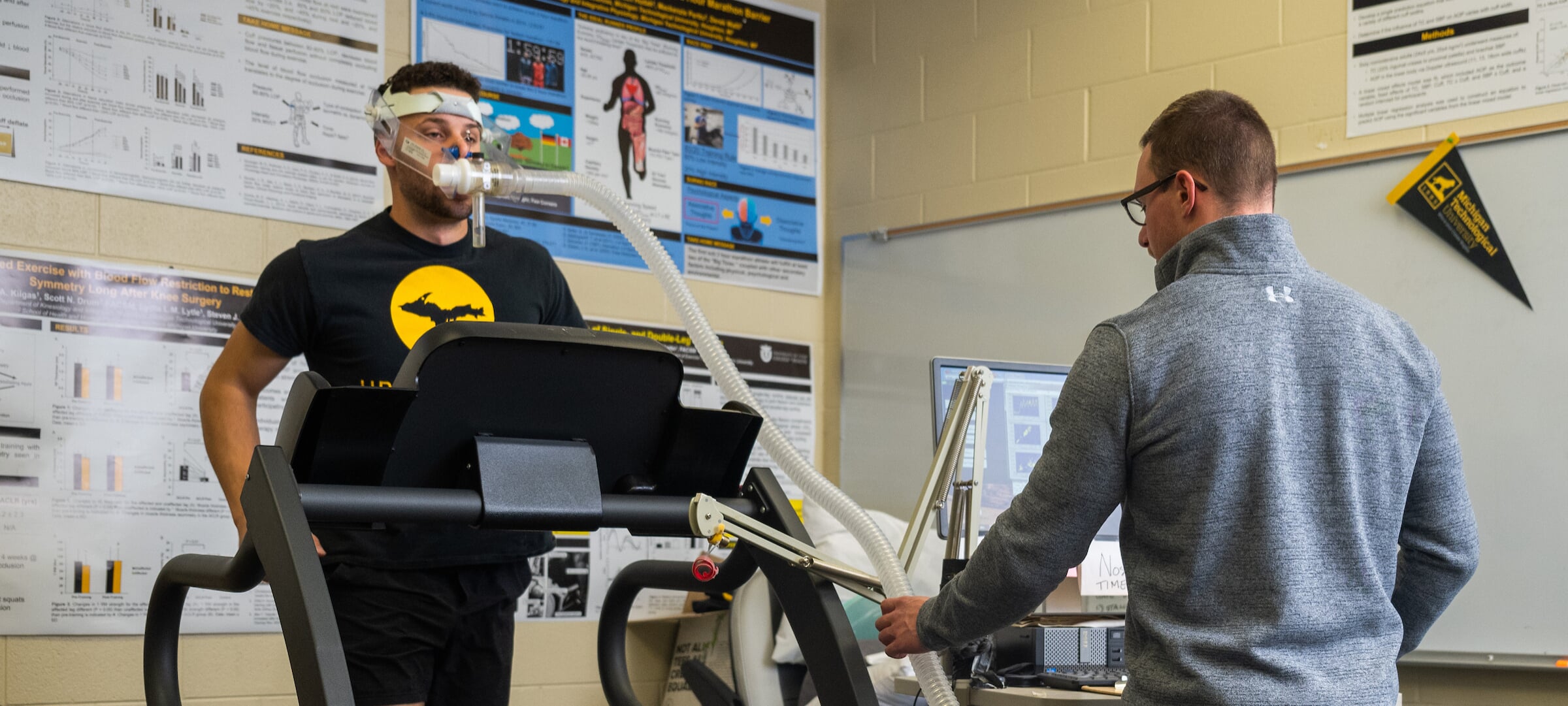
The School of Health, Human, and Biological Systems (SHHBS) at Michigan Technological University brings together Biological Sciences, Kinesiology and Integrative Physiology, and Psychology and Human Factors to advance education and research focused on improving human health and understanding complex biological systems.
Established within the College of Sciences and Arts, the school reflects Michigan Tech’s growing commitment to health-focused innovation and interdisciplinary collaboration. Faculty across these areas contribute expertise that connects foundational science with real-world applications. This creates opportunities for students to explore health from multiple perspectives while preparing for impactful careers and advanced study.
With a strong emphasis on rural healthcare, students develop an understanding of the unique opportunities and barriers facing rural communities while building connections with healthcare providers and organizations throughout the region. The school’s rigorous academic environment attracts students who are motivated to make a difference in the lives of others through science, healthcare, research, and community engagement.
As the school continues to grow, SHHBS is building deeper connections between its degree programs and faculty knowledge to provide students with both depth and breadth in health-related education. The school’s collaborative structure encourages interdisciplinary teaching, research, and mentorship, helping students understand the broader scope of health and the many career paths available within it.
SHHBS aligns with several major university initiatives, including: the
- H-STEM Engineering and Health Technologies Complex
- Chang K. Park Center for Student Wellness
- Health Research Institute (HRI)
Together, these partnerships create an environment where students gain hands-on experiences addressing today’s most pressing health challenges.
At Michigan Tech, students also benefit from the personalized attention and close faculty relationships that are difficult to find at larger institutions. This supportive environment empowers students to pursue meaningful experiences, develop a holistic understanding of health, and prepare to lead in an evolving healthcare landscape.