

Kari B. Henquinet
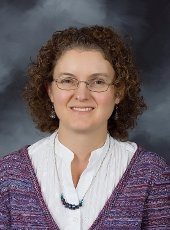
- Teaching Professor of Anthropology
- Social Sciences Department Undergraduate Studies Director
- Program Advisor for the Anthropology and the Sustainability Science and Society Majors
- Pronouns: she, her, hers
- PhD, Anthropology, Michigan State University, 2007
- MA, Anthropology, Michigan State University, 2003
- BA, Interdisciplinary Studies, Wheaton College, 1996
Areas of Specialization
Gender, Women's Rights, and Household Livelihoods in Niger
I apply my ethnographic experience and training as a West Africa area studies specialist
in the study of gender relations and women's rights by examining prominent transnational
aid institutions in Niger. This research highlights: 1) changes in gender roles and
access to resources connected to material and religious change in the Maradi Region,
2) ways in which women's rights, gender, and class are understood and applied in development
programs and among aid recipients, and 3) discourses of women's rights and Islamic
family law in the Maradi Region and in Niger. I extend this work with my students
by teaching undergraduate courses in international development, African Studies, and
anthropology, and by working closely with graduate students conducting research using
ethnography and examining topics such as social vulnerability and gender issues.
Historical Roots of North American Evangelical Aid and Development
Using archival data and oral histories, I use the case of World Vision in the 1950s
and 1960s to look at roots of private voluntary evangelical relief and development
work in an age of the "development consensus" and large-scale state-directed development.
This project consists of three papers: 1) the convergence and divergence of early
World Vision with U.S. work abroad in the Cold War, highlighting the common notion
of remaking vulnerable Third World Subjects and nations, yet distinct evangelical
approaches to social change; 2) evangelical interpretations of and responses to global
suffering with emphasis on temporal and ethical frames and tensions; and 3) the use
of child sponsorship as a successful fundraising tool in World Vision, which triggered
emotional and moral responses in North American evangelical donors. I integrate this
expertise in my teaching and advising of Peace Corps and study abroad students as
we examine the historical context of U.S. engagements abroad and development institutions.
Disaster Risk Reduction, Climate Change, and Social Vulnerability
As an anthropologist, I have contributed to several collaborative, interdisciplinary
projects on disaster risk reduction, climate change, and social vulnerability. In
El Salvador working with a geologist, we have examined social and geophysical vulnerability
in a disaster relocation program. With a broader a team of scientists, I co-taught
an IRES NSF field school in El Salvador for summer 2021 and 2022 on climate change
and water resources. I advise one Ph.D. student building on this work in El Salvador.
I have also co-advised three geology master's students who integrated ethnography
to research disaster risk in El Salvador and Jamaica, and water security in Senegal.
Finally, I have worked with a team researching fuel treatments and social vulnerability
to wildfires in the United States.
Intercultural, Service, and Experiential Learning
My own transformational experiences through guided cross-cultural and service-oriented
immersion as a student have sparked a passion to continue to develop these kinds of
programs for my students. As Director of Peace Corps Master's International (PCMI)
and Peace Corps Prep for many years, I have coordinated campus-wide efforts to prepare
our students for international service and for careers as global leaders in their
fields. I have also worked with community engagement programs in MTU's honors college,
including the Community Ambassadors to build linkages between Michigan Tech and the
local community through volunteer work. I often mentor undergraduate students in research
as well. I teach courses preparing students for cross-cultural immersion and project
work.
Areas of Expertise
- International and sustainable development
- Faith-based development and humanitarianism
- Gender
- Human rights
- Global service learning
- African studies (Niger)
- Disaster risk reduction and vulnerability
- Water Resources