


MTRI has developed remote sensing toolchains to support a NASA program to identify vernal pools around the Great Lakes region.
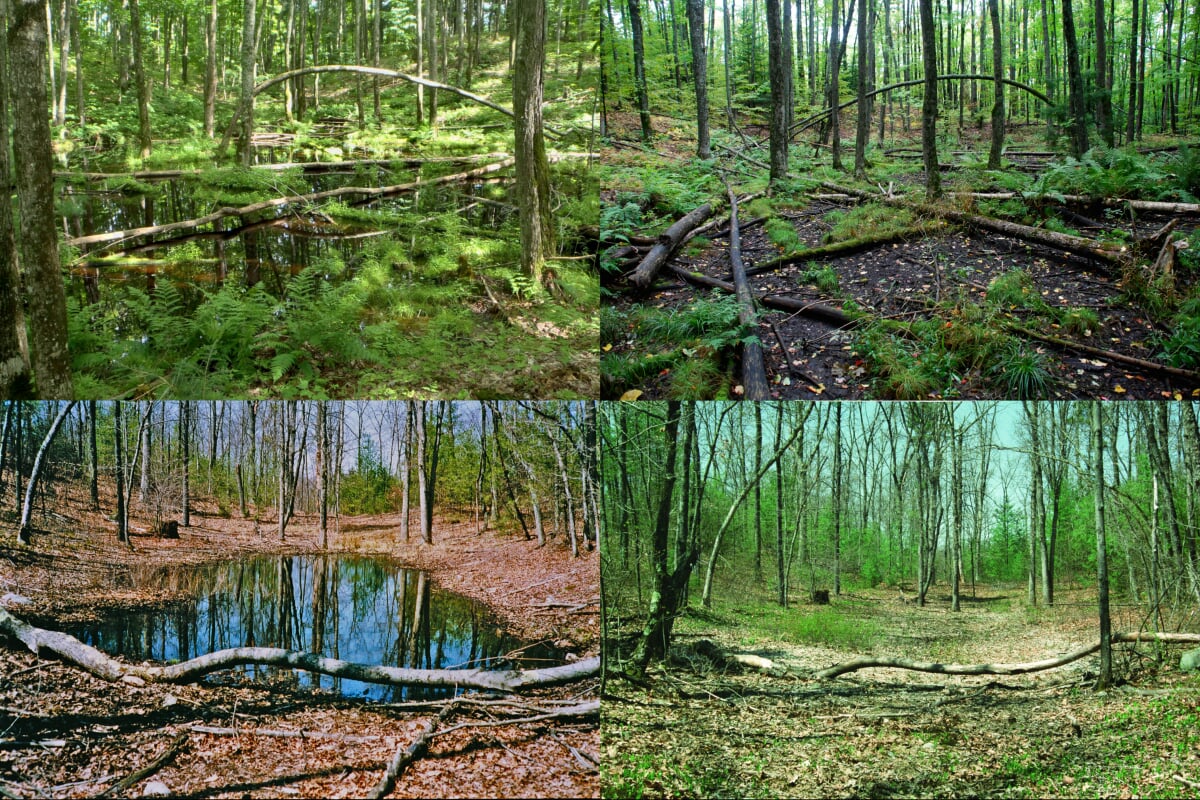
Vernal pools are small natural features of critical importance in the temperate forest region. Essential to maintaining healthy and resilient forest ecosystems, these small forested wetlands occur in depressions that fill seasonally with snowmelt or precipitation. They provide vital breeding, feeding, and sheltering habitat to an incredible diversity of species and support biogeochemical and hydrological processes.
Importantly, vernal pools play a significant role in maintaining forest ecosystem health and biodiversity across the 177-million-acre northern temperate forest region extending from Minnesota to Maine. Due to their short hydroperiod, vernal pools cannot sustain a permanent fish population. This significant lack of predation creates critical breeding habitat for forest-dwelling amphibians (i.e. spotted salamanders, blue spotted salamanders, and wood frogs) as well as certain macroinvertebrate populations (i.e. fairy shrimp).
Thus, vernal pools are prolific breeding habitats and act as "nature’s nurseries". Even though they are small natural features, they have a disproportionate ecological influence to their size. They play a key role in producing substantial amphibian and invertebrate biomass that supports food webs in adjacent upland ecosystems that would otherwise limit populations (Hunter Jr. et al., 2016). Pool breeding amphibians are both predator and prey in forest ecosystems, especially once they leave the pool following development. They contribute to forest nutrient cycling by predating on populations of soil invertebrates that are responsible for the breakdown of organic material and are prey themselves for snakes, turtles, birds, and small mammals (Maine Department of Inland Fisheries and Wildlife, Maine Department of Conservation, & Maine Forest Service, 2007). Windmiller (1990) reported that the total biomass of amphibians breeding in vernal pools exceeded the combined biomass of breeding birds and small mammals in the 50-acre upland forest surrounding his study site in Massachusetts.
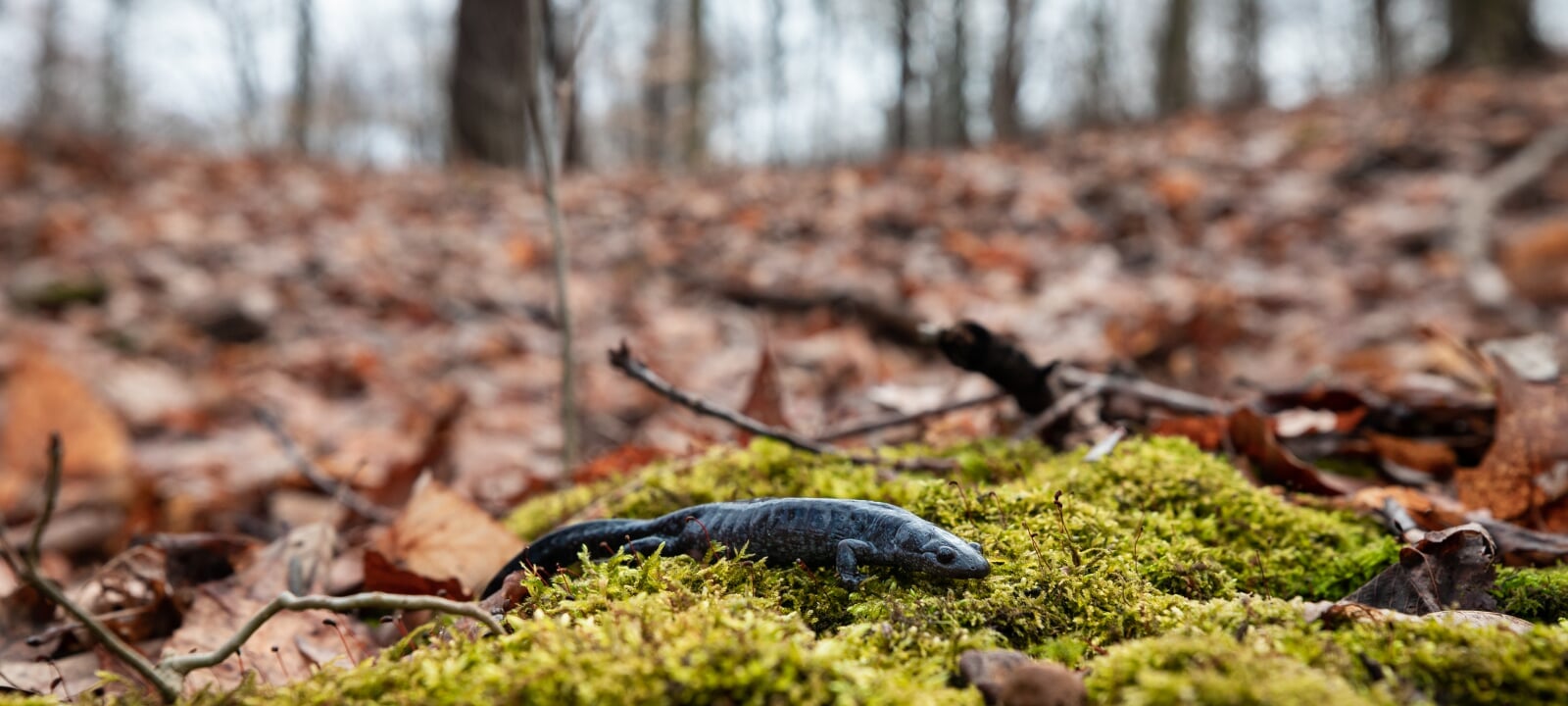
Blue spotted salamander captured during field work - photo courtesy of Michigan Nature Association
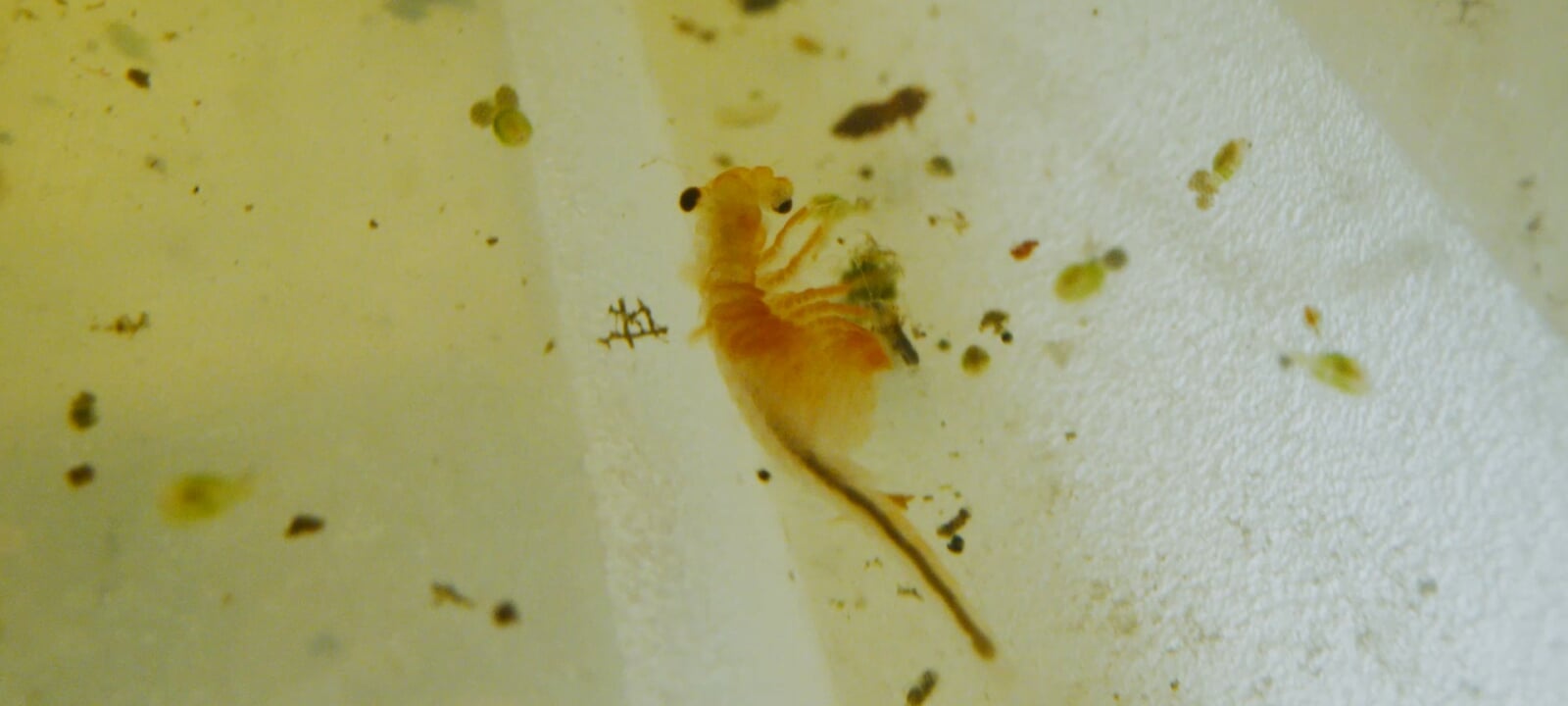
Fairy shrimp captured during field work - photo courtesy of Michigan Nature Association
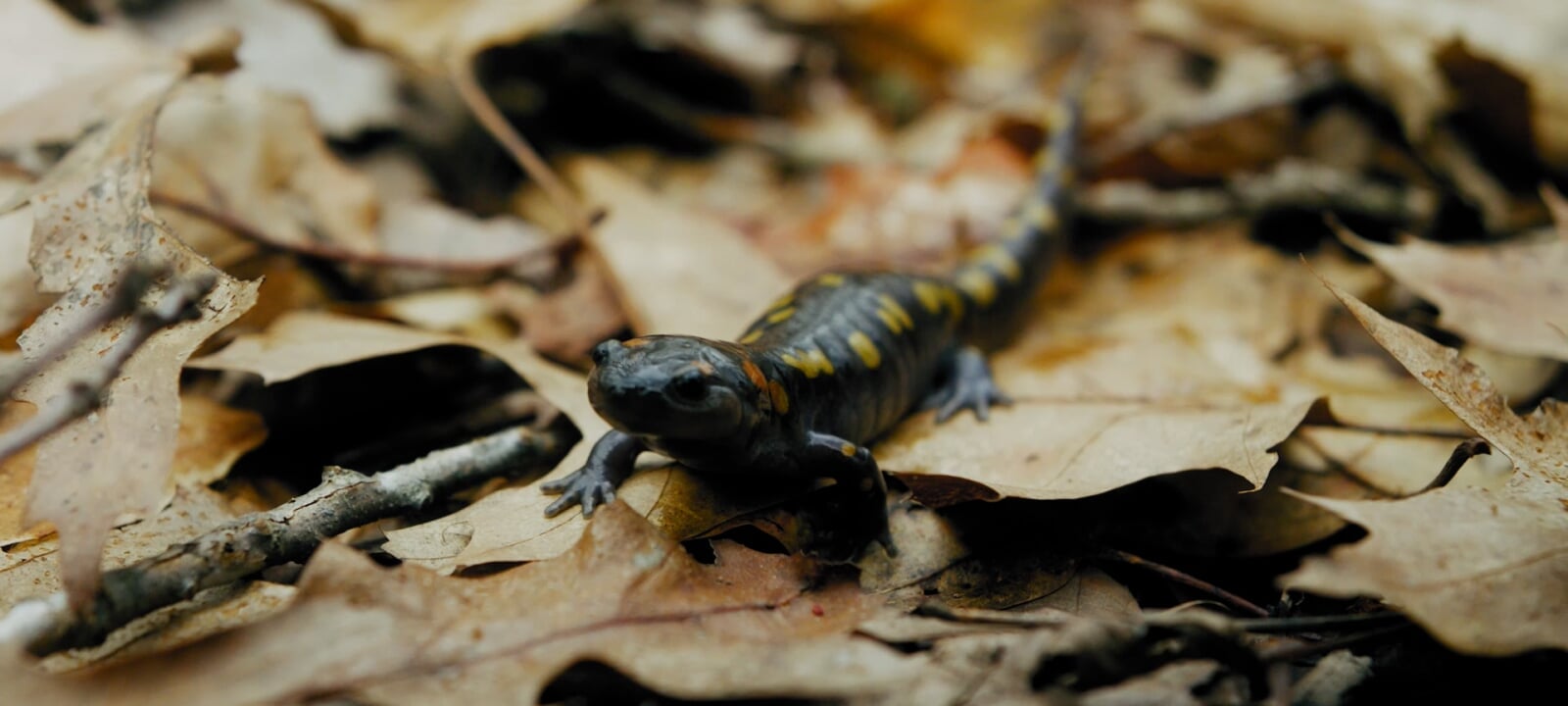
Spotted salamander captured during field work - photo courtesy of Michigan Nature Association
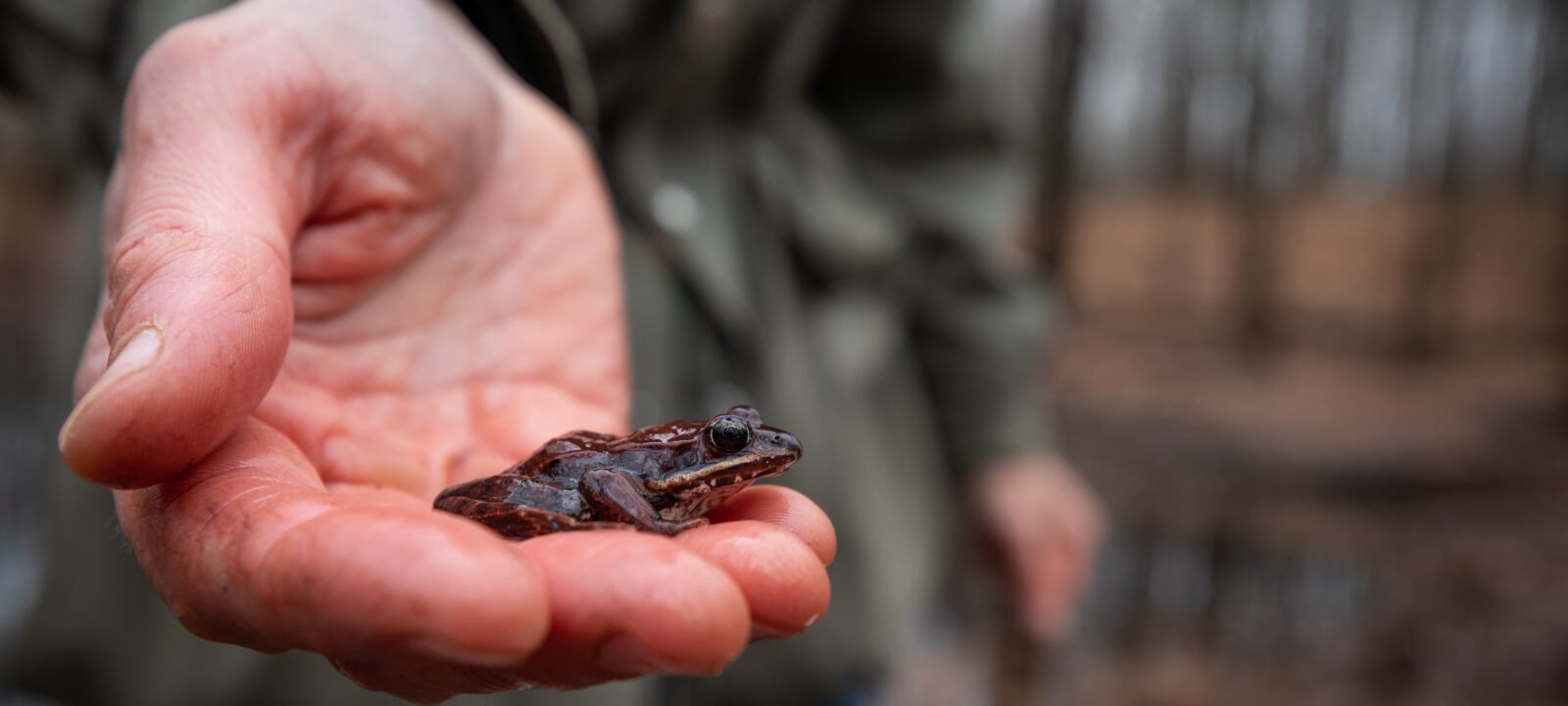
Wood frog captured during field work - photo courtesy of Michigan Nature Association
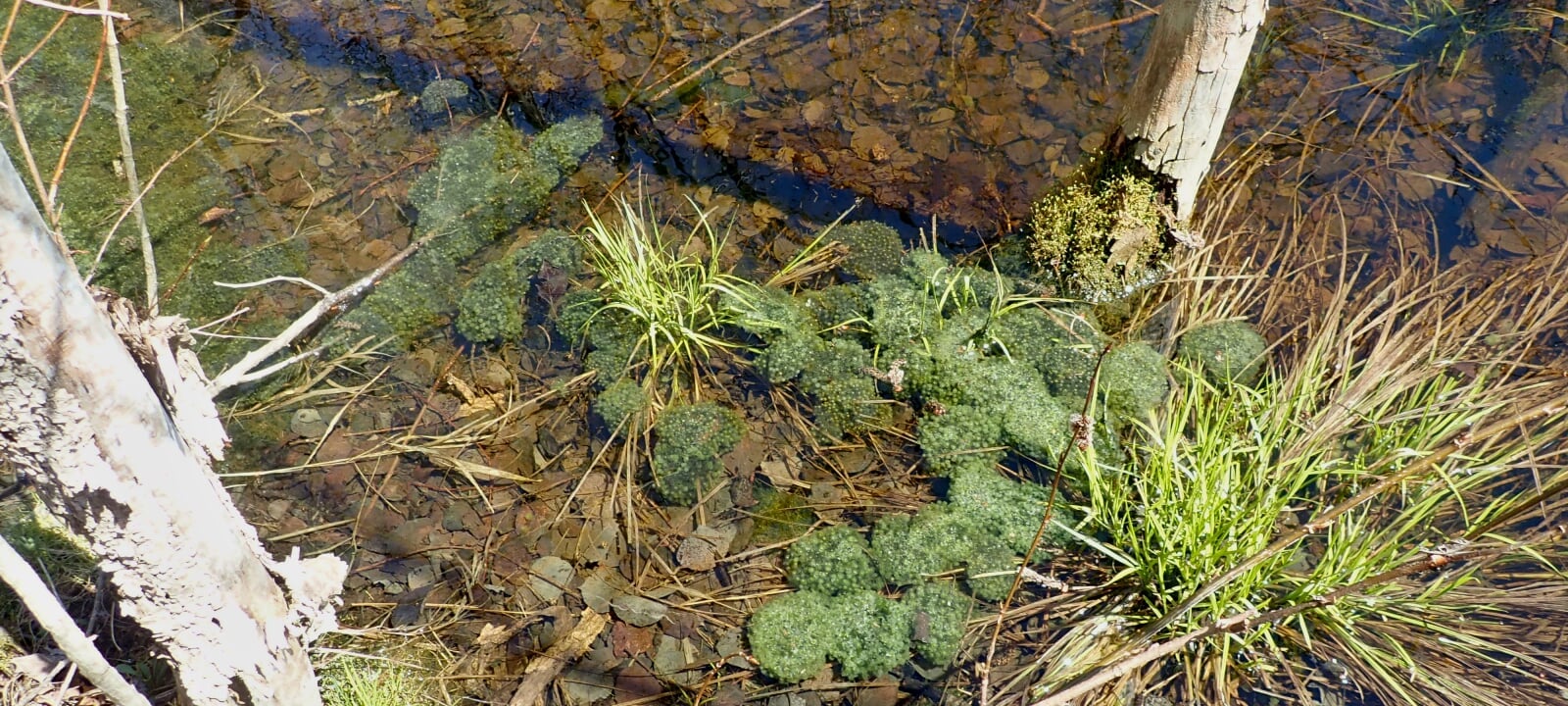
Frog egg masses in a vernal pool
These cryptic systems are not necessarily rare in a forested landscape, however, due to their small size, seasonal hydrology, and variable characteristics, they are often overlooked and may be negatively impacted in timber harvesting, road and trail construction, drainage and ditching. In more urban and suburban environments, they are most vulnerable to land use change. Given that vernal pools are hidden and difficult to locate, research has focused on detection, mapping and monitoring these systems to better understand their distribution, function and characteristics. This knowledge will provide needed information to develop conservation goals across a regional scale.
A multi-institutional team from Michigan Tech Research Institute (MTRI), Michigan State University, Michigan Nature Association, Wisconsin Department of Natural Resources, and New York Natural Heritage Program, were awarded a NASA project titled: Integrating Remote Sensing and Citizen Science to Support Conservation of Woodland Vernal Pools. The grant was awarded under The Citizen Science for Earth Systems Program (CSESP) of the NASA Earth Science Division (NASA grant #80NSSC25K7193).
The overall goal of the project is to design a regional vernal pool citizen science program and form a Northeast-Midwest Vernal Pools Collaborative (NMVPC) in order to map, monitor, and share information about vernal pools in the Midwest and Northeastern United States. You can visit the NMVPC website for more information.
Current vernal pool conservation efforts are highly inconsistent across the region, leaving many vernal pools vulnerable to destruction and degradation. The Northeast-Midwest Vernal Pools Collaborative was formed to address the unique challenges associated with vernal pool conservation, bringing together scientists, practitioners, and communities to elevate the importance of vernal pools and facilitate the learning exchange between researchers across the northern temperate forests. With this intention, the collaborative has been working on a common definition of a vernal pool across all states. This includes criteria for high quality vernal pools and common data collection standards methods for collaborative citizen science-based vernal pool mapping and monitoring efforts across the region. For more information, read the most recent definition from the collaborative. Using a shared definition and data collection protocol, the group works to raise the profile of vernal pools’ critical role leveraging partner contributions across the scope of the northern temperate forests. Data consistency across state boundaries will also allow for integration of field datasets to address overarching research questions about the distribution and diversity of vernal pools across the region. An interactive regional vernal pool database is under development with continued discussions on data quality control and assurance plans, biosecurity measures, volunteer recruitment, and management.
MTRI is leading the remote sensing, detection, and mapping of potential vernal pools that the collaborating states use in developing and expanding citizen science programs. MTRI researchers have developed remote sensing toolchains to support the NASA program to identify potential vernal pools around the Great Lakes study region. These citizen scientists are trained and provided tools to field check the potential vernal pools to verify their occurrence.
MTRI's approach is based on integrating multi-sensor remote sensing techniques. LiDAR digital elevation models (DEMs) and point clouds collected at the county level are used to detect small depressions that are not connected to other water bodies (identifying them as fishless systems). Next, long wavelength (24 cm) synthetic aperture radar (SAR) imagery (known as L-band) are used to detect water in the pools in spring and to check that they dry out in the summer. These systems send their own energy to the Earth’s surface, much like the LiDAR systems. L-band SAR is able to penetrate a forest canopy to detect water’s presence where strong signals are returned. In the dry conditions that typically occur in the summer, the signals returned are much lower.

This allows for the detection of the “hydroperiod” of a vernal pool which is nominally about two months of standing water. Other datasets are also used to detect the water in leaf off (spring) conditions including the LiDAR intensity and high resolution color infrared aerial photography obtained from the counties. The SAR data have been used from the ALOS-1 and ALOS-2 PALSAR sensors. The ALOS-1 data are available from the Alaska Satellite Facility, but ALOS-2 were obtained via a datagrant from JAXA (ALOS RA6 to PI#3120 and RA03 to PI No.: ER3A2N009, Bourgeau-Chavez). NASA’s new NISAR L-band system will collect an unprecedented amount of data every 12 days globally and will be freely available. Thus, we look forward to monitoring the hydroperiod of vernal pools with this dense time series of imagery to better capture hydroperiods.
For More Information
For more information on vernal pools and the mapping methods, check out our vernal pools storymap.
Please read this article about vernal pools published by Bridge Michigan. It contains information about how MTRI helped to map the vernal pools across Michigan. For more details about the Michigan Vernal Pools Partnership, visit their website linked here.
The database of vernal pools for registered viewers can be accessed here.

Michigan Nature Presents: Ephemeral
The Michigan Nature Association gives background on why vernal pools are important parts of our ecosystem.

Are These Creatures in Your Spring Puddles? | Vernal Pools
For more information about vernal pool research in national parks and lakeshores by MTU researchers and students, watch this video where Alexis Dalh discusses the ecology of vernal pools.
Hunter Jr, M. L., Acuña, V., Bauer, D. M., Bell, K. P., Calhoun, A. J., Felipe-Lucia, M. R., ... & Poschlod, P. (2017). Conserving small natural features with large ecological roles: a synthetic overview. Biological conservation, 211, 88-95.
Maine Department of Inland Fisheries and Wildlife, Maine Department of Conservation, & Maine Forest Service. (2007). Forestry habitat management guidelines for vernal pool wildlife. Maine Department of Inland Fisheries and Wildlife.
Windmiller, B. (1990). The limitations of Massachusetts regulatory protection for temporary pool breeding amphibians (Doctoral dissertation, Tufts University).