
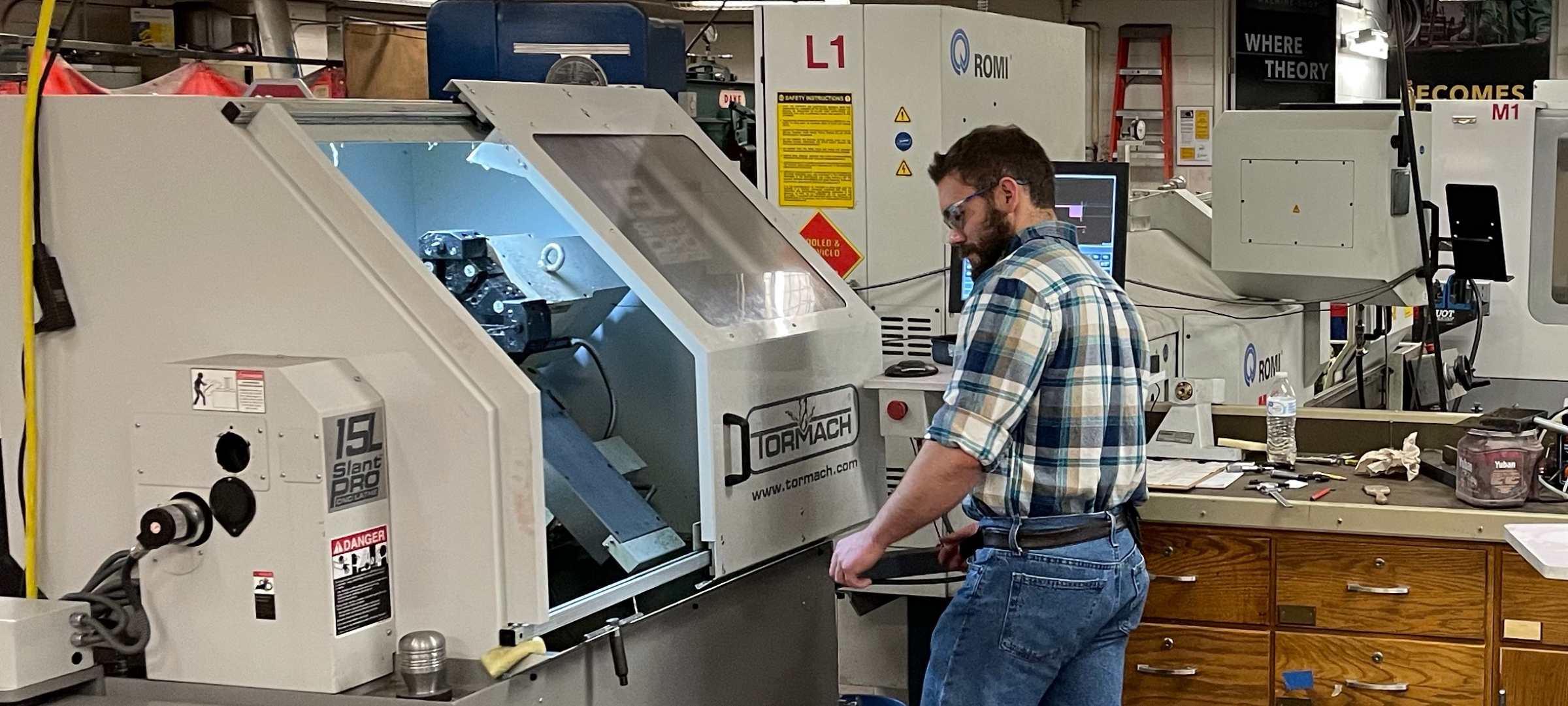
A great product depends on more than just a good design. Materials, processes, quality, equipment, and operations all have to work together. In Michigan Tech’s MS and PhD in Manufacturing Engineering, you'll use advanced technical study to assess how production systems are developed, evaluated, and improved. Prepare yourself and your organization for Industry 4.0.
Our Accelerated Master's Program is available for current Michigan Tech students. Explore our Online Master's and Doctoral Program.
Who Is This Program For?
These degrees are ideal for recent students and professionals who want to deepen their knowledge of how products are made and how production systems perform. These degrees might be a good fit if you want to study advanced manufacturing methods and materials; examine how manufacturing systems are integrated or optimized; or connect process-level engineering with production and operations decisions.
What You'll Study
In our master's or doctorate program in manufacturing engineering, you'll connect advanced manufacturing processes with the systems that make production possible. First, you'll take six core foundational courses for next-level manufacturing engineering. Then, select courses in four distinct areas of manufacturing emphasis: Additive Manufacturing, Manufacturing Systems and Operations, Advanced Materials and Manufacturing Processes, and Quality Engineering.
Depending on your focus, you may study statistical methods, safety, process improvement, and geometric dimensioning and tolerancing. You'll build the curriculum around your needs so it can take you where you want to go.
Where You'll Apply Your Knowledge and Skills
Manufacturing engineering comes into play when a production process must be made more capable, consistent, or efficient. You can apply your advanced manufacturing engineering knowledge to evaluating fabrication methods, investigating defects, comparing materials or tooling, and examining how automation and equipment interact with production systems.
These approaches support technical decisions about quality, process improvement, additive manufacturing, and manufacturing operations. They connect detailed engineering analysis with the practical performance of products and production systems.
Manufacturing Engineering Program Details
Choose a specific degree option or delivery type to learn more about the manufacturing engineering program at Michigan Tech. For international students, Manufacturing Engineering is a designated STEM program.
On-Campus Programs
Online Programs
Additional Program Information
Want to learn more about manufacturing engineering at Michigan Tech? Visit the department for more information:
Sample Areas of Interest
Select areas of interest to help customize your manufacturing engineering MS and PhD. Sample areas include:
- Industry 4.0
- Geometric Dimensioning and Tolerancing
- Quality Engineering
- Advanced Manufacturing