
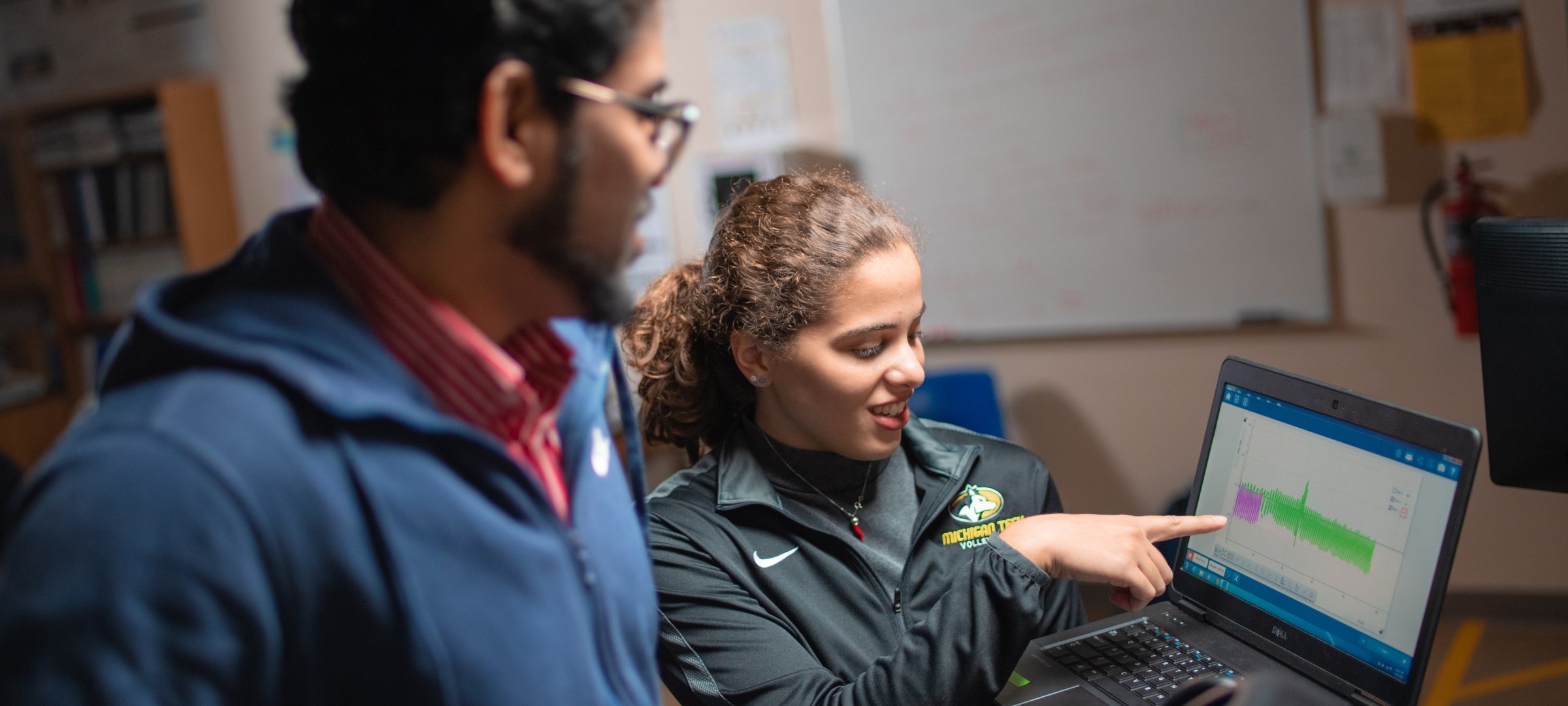
A dataset can reveal patterns, raise questions, and challenge assumptions—but only when you have the tools to interpret it. Michigan Tech’s multidisciplinary MS in Data Science combines computing, mathematics, engineering, and business perspectives so you can study how information becomes useful evidence across different fields. Whether researching machine learning, designing algorithms for forestry, or conducting computational social science, a Data Science degree is a smart investment in your future.
The Accelerated Master's Program is available for current Michigan Tech students.
Who is This Program For?
This interdisciplinary MS in Data Science is ideal for those who enjoy working with complex data and want to connect analytical methods with meaningful questions.
Consider this master's program if you like developing or evaluating computational approaches to data analysis; examining patterns in technical, scientific, or organizational information; and connecting data methods with an application area such as engineering, health, or business.
What You'll Study
In this flexible program, you'll bring together computing, quantitative analysis, business, engineering, and mathematical sciences to investigate complex datasets. Research sensors, develop pattern recognition algorithms, engineer intelligent machines, interpret medical data to determine risk, make predictions using data to improve the power grid, and more.
You'll learn how to apply the appropriate data-science method for the problem you're trying to solve.
Where You'll Apply Your Knowledge and Skills
Data science helps organizations move from a large collection of observations to a question they can investigate. You can use your degree to build and evaluate models, detect patterns in sensor or operational data, examine health-related risk information, or interpret complex energy and business datasets.
Data scientists often find employment in healthcare systems, technology companies, national laboratories, and financial services. The Mayo Clinic uses analytics and informatics in healthcare, IBM researches AI and data-intensive systems, and Argonne National Laboratory applies computational methods to science. Your degree focus, then, will shape your future workplace.
-
Delivery Options
- Accelerated: MS
- On-Campus: MS
Data Science Program Details
Choose a specific degree option or delivery type to learn more about the data science program at Michigan Tech. For international students, Data Science is a designated STEM program.
On-Campus Programs
Additional Program Information
Want to learn more about data science at Michigan Tech? Visit the department for more information:
Sample Areas of Interest
Select areas of interest to help customize your data science MS. Sample areas include:
- Bioinformatics
- Sensor Networks
- Statistics
- Biogeochemistry