More than 10 million scrap tires are produced annually in Michigan alone. Michigan Tech researcher Zhanping You is recycling those tires and turning them into new, more durable roads across the state, expanding the field of sustainable infrastructure.
When Zhanping You first came to Michigan Technological University as an assistant professor in 2005, using recycled rubber materials to improve roadways was considered something of a failed experiment.
"People tried using bigger pieces of scrap tires and most products did not work well," said You. "Naturally, there was a lot of reluctance to use this process on our roads."
Twenty years later, You, now recognized by Michigan Tech as a university professor of transportation engineering and director of the Michigan Tech Transportation Institute, said technology and processes have changed, making his research more viable.

With more than 300 million scrap tires produced annually in the United States and limited options for repurposing, tire waste has become a major environmental problem across the country. Pavement integrity is also a widespread issue. In Michigan and other cold-weather states, it's more susceptible to cracking and potholes, especially in rural counties where roads can be 30 to 50 years old.
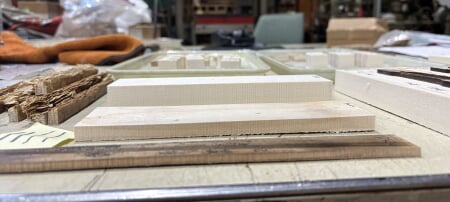
You believes he has a solution to both challenges using sustainable methods to create resilient infrastructure. He's developed three ways to utilize scrap tires. Larger tire pieces can help support new road construction by serving as a foundation underneath that keeps roads dry. Smaller, finer scrap tire powder can be used two ways: as chipseal maintenance and to make a unique rubber asphalt mixture used to pave new roads.
All three processes reuse tens of thousands of scrap tires per project. The additional bonus is that, when used as chipseal maintenance and rubber asphalt mixture, You's scrap tire powder creates more durable roads that require less maintenance.
"Rubber is a more elastic material, which makes the asphalt itself more elastic," explained You. That flexibility makes roads less prone to the cracks and potholes that form under cold, wet conditions.
"Anyone driving in Michigan knows potholes are unpleasant," he said. "With this work, we see more resistance to cracks and potholes."
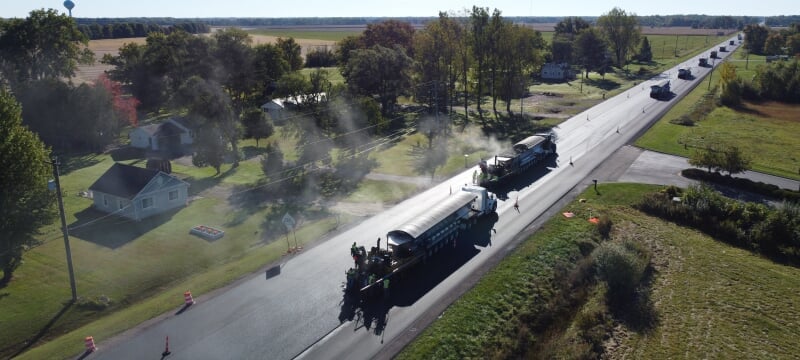
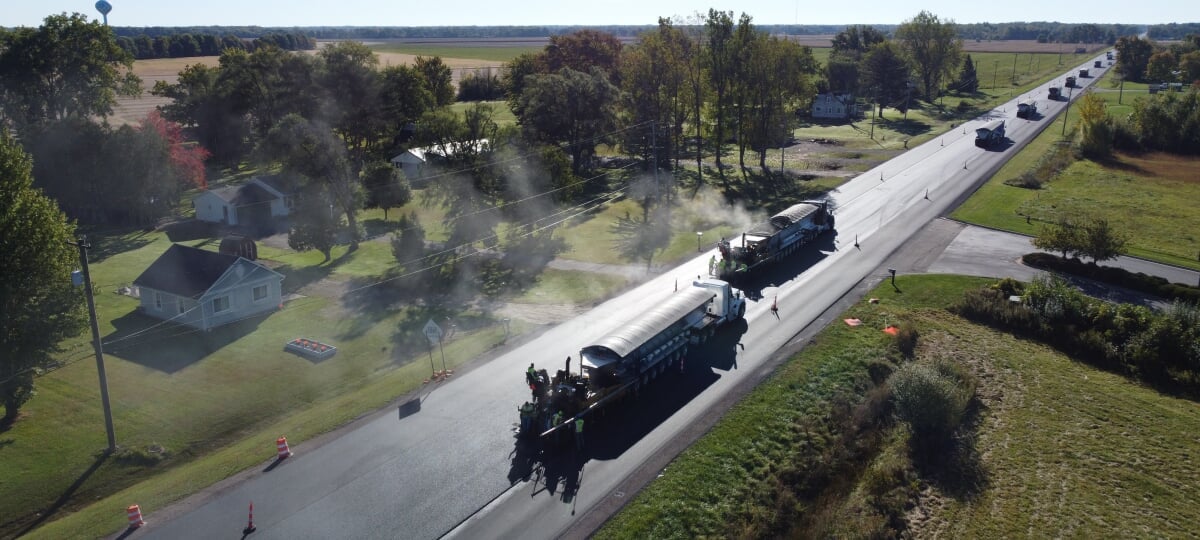
You's rubber chipseal maintenance is a pavement preservation strategy, applied to existing roads as a sealcoat to fill in existing cracks and prevent new ones, increasing road longevity.
"That process uses a lot of tires and roads last longer because of it," said You. "The conventional chipseal approach will last six to seven years, but using rubber asphalt chipseal will likely last twice as long."
While the process is relatively new, You and his team have already implemented it across a few hundred miles of Michigan roads.
The rubber asphalt pavement used to construct new roads makes them more durable from the start. The material reduces both the risk for cracking and the potential for ruts where vehicles frequently drive or idle, such as at stop signs and major intersections.
Though pricier than the chipseal option, You's rubber asphalt pavement uses a more significant amount of rubber to make roads four to eight inches thick and will recycle more material. Roughly 26,000 tires were used for a paving project in Saginaw County last year.
"If we keep going, we could use up all the tires in the country!" said You. "Or at least in Michigan."
Taking It to the Streets
You developed these processes in lab environments over many years. He's now putting his research into practice through approximately 30 complete or ongoing projects across the state of Michigan. Working directly with county and city agencies, You helps local governments determine what will work best for them given the resources they have.
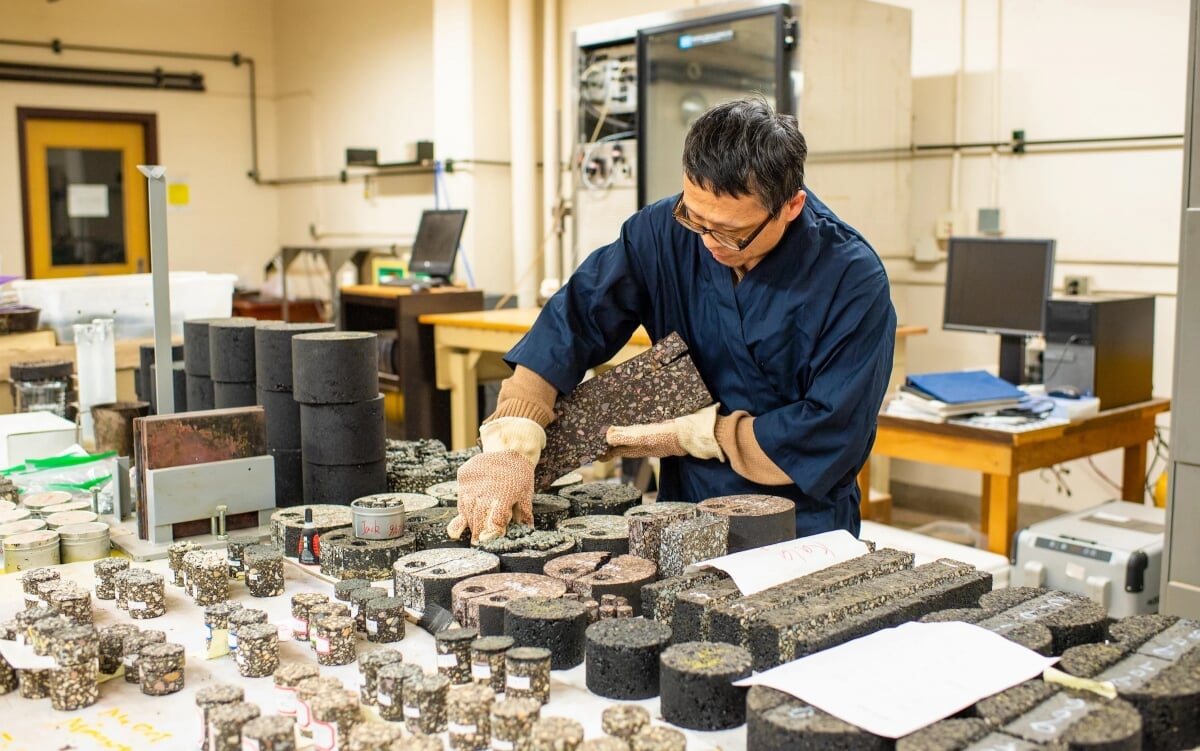
"A lot of times we hear, 'Well, we only have this much money,' and so we have to work within those constraints," said You. "Sometimes it's a hard decision. There's no right or wrong choice in some cases. It just depends on the resources they have."
You and his team have completed work in 20 counties in Michigan, including Bay, Dickinson and Kalamazoo. Researchers plan to expand to city streets in Ann Arbor and Detroit in the next year.
Working primarily with local agencies makes You's research application unique and positions Michigan Tech as an important resource for state infrastructure.
"I admire many of my colleagues here at Tech since they work primarily with federal agencies, but I work extensively with state and local governmental agencies," he said. "We work with local industries as well, material suppliers, manufacturers, contractors and transportation services. We've been able to build a strong local network across the state."
You's work also connects directly with drivers. That's led to important advancements in his research, simply from meeting people at construction sites.
"When we talk to local people, they are excited that these roads are going in their communities," he said. "The neighbors come to watch during construction and we can tell them which recycled materials are going into their roads."
"I think this work is a good ambassador for Michigan Tech and the College of Engineering. We work with so many people across many different backgrounds on these projects, from state engineers to part-time contractors. It's really cool to have all kinds of people involved on these projects."
Through conversations with local citizens, You and his team have begun testing for other effects of their road work.
"We knew rubber roads also reduced noise levels," said You. "That wasn't something we were necessarily testing for, but we knew about it because drivers told us that they could hear a difference. Now, we do tests for noise reduction."
You and his team are currently testing the chemical content of stormwater runoff from their rubber asphalt mixture, in large part due to community members voicing their concerns. You said this is an important part of their work, to make sure the roads actually meet the needs of their users. Thankfully, getting feedback is easy, he added.
"It's a very natural process," he said. "We don't have to schedule meetings with community members because they are there, at the construction site."
Road Work Ahead
You first became interested in developing ways to reuse scrap tires while working as an assistant professor at Texas A&M University-Kingsville in southern Texas, where tire waste was a major issue. In the early 2000s, there were few applications for scrap tires. In warm and sunny climates like Texas, tire fires that could release toxic chemicals into the air and pollute whole neighborhoods.
When You arrived at Michigan Tech, he got started on finding a solution. Though no use of scrap tires in road construction had yet proved viable, he was determined to keep working. Thanks to years of study and technological advancement, You was able to develop the novel processes currently being applied in Michigan.
However, because those earlier experiments tested nearly 25 years ago carried a high cost and became known for failure, You is still fighting against decades-old perceptions.
"Even today, with many successful projects already in the works, agencies are worried about trying it," You said. He understands their concern; any given project, even a small stretch of road, can cost nearly a half-million dollars.
"That's a lot of money for some of these local agencies," he said. "Failure is not an option for these counties because they wouldn't be able to repair the roads if they failed. That's something we are working against all the time."
But You said confidence is growing thanks to the network of Michigan Tech alumni working in local county and city agencies.
"In almost every project, we meet Michigan Tech alumni. Because of that, they trust the work we are doing. They know we will deliver. That means a lot."
That growing trust, not only in the rubber asphalt processors and suppliers but in You and his team, has led to bigger and bigger projects across the state.
"One project we are working on in Saginaw County will be more than 10 miles and cost more than $10 million," he said. "But they trust us to do that work."
You and his team are also working with the County Road Association of Michigan, the Michigan Department of Transportation and the Federal Highway Administration to develop guidelines to help road engineers widely adopt the use of recycled rubber in road construction.
"We are starting to draft guidelines for the state of Michigan," said You. "The goal is to have a draft of specifications ready for both the chipseal application and rubber asphalt mixture by next year. Hopefully then, people will be more willing to try it."
While Michigan has been the primary focus for You's work, the hope is to expand across the country. He has five active projects already in Minnesota, and works with collaborators in New York, Missouri, Illinois, Texas and beyond. Even in Michigan, there are plans to do more.
"There are still over 60 counties in Michigan we have not worked with yet," said You. "And with the 20 counties we work with now, we want to continue our work there."
You and his team are grateful for what they've been able to accomplish. But they're not resting on their laurels. Millions of old tires await reuse. The team is looking forward to more work that will help combat one of the country's most difficult environmental challenges.
"In our country, only about 5% of scrap tires are recycled into asphalt, so there's huge potential," said You. "We are always looking to expand our operations. We want to improve our facilities to be faster and more efficient."
Michigan Technological University is an R1 public research university founded in 1885 in Houghton, and is home to nearly 7,500 students from more than 60 countries around the world. Consistently ranked among the best universities in the country for return on investment, Michigan's flagship technological university offers more than 185 undergraduate and graduate degree programs in science, technology, engineering, mathematics, computing, forestry, business, health professions, robotics, psychology, social sciences, humanities, and the arts. The rural campus is situated just miles from Lake Superior in Michigan's Upper Peninsula, offering year-round opportunities for outdoor adventure.