More efficient use of lumber byproducts leads to more sustainable forest management. That's why Michigan Technological University researchers are developing a biomaterial lighter than steel and just as strong, made from leftover wood waste, that could revolutionize the lumber industry.
The process of logging, milling and building structures from trees generates a significant amount of wood waste in the form of sawdust, bark, slab wood and trim. Researchers in Michigan Tech's College of Forest Resources and Environmental Science are working to efficiently channel that waste back into the construction industry. Xinfeng Xie, associate professor of forest biomaterials, and his team have partnered with the Defense Advanced Research Projects Agency's Waste Upcycling for Defense (WUD) program to turn scrap wood into a strong, sustainable building material.
"The problem that we are solving is to find a true, environmentally friendly way to reconstruct wood into a much stronger material with strength properties comparable to but much lighter than metal materials," said Xie.
When former Tech faculty member Stephen Techtmann introduced Xie to the DARPA WUD program, Xie was instantly intrigued by the opportunity to develop a scalable green process to create super-strong wood with zero hazardous chemicals and minimal energy consumption.
"The concept was fascinating: partially remove lignin from wood and then densify the low-lignin material to greatly increase its strength," said Xie. "Both Steve and I immediately recognized that a biological approach would be the most sustainable solution for lignin removal."
"Wood is the only renewable industrial raw material that has a negative carbon footprint. I believe that it has an important role in our sustainable future."
The idea also fascinated sustainable bioproducts students Emily Costigan, Rachel Zurek and Aidan Bustos, all three of whom joined Xie's research team and have helped develop and test the process.
"The students are doing the real job," said Xie. "I'm just here to advise them and give them the freedom to explore. They already understand the theory of densifying fibers in the wood to make them stronger. This lets them confirm what they've learned in a very interesting way."
Bustos, who entered his senior year feeling unsure about where his career was headed after college, found direction and guidance in this hands-on application of his studies.
"It's very intertwined with the higher-level classes I'm taking this semester," said Bustos. "Often I head to the lab right after class, and we can apply topics we just talked about."
Costigan joined the team in 2023 after hearing about the project from Ph.D. student Randi Dodgson, the instructor for her Adding Value to Biomaterials class.
"I was extremely excited at the opportunity to be able to work in wood products research while going to school," said Costigan. "Joining this research team has allowed me to delve further into the wood processing industry and gain firsthand experience with the vital research that drives innovation in the field."
Materials Research that Grows Stronger Under Pressure
Led by Xie, students began by using a group of wood-decay fungi, also known as xylophagous fungi, to break down lignin, the tough, rigid structural polymer in plant cell walls. This biological approach leaves behind cellulose nanofibers that are stronger than steel, and its only byproducts are carbon dioxide and water.
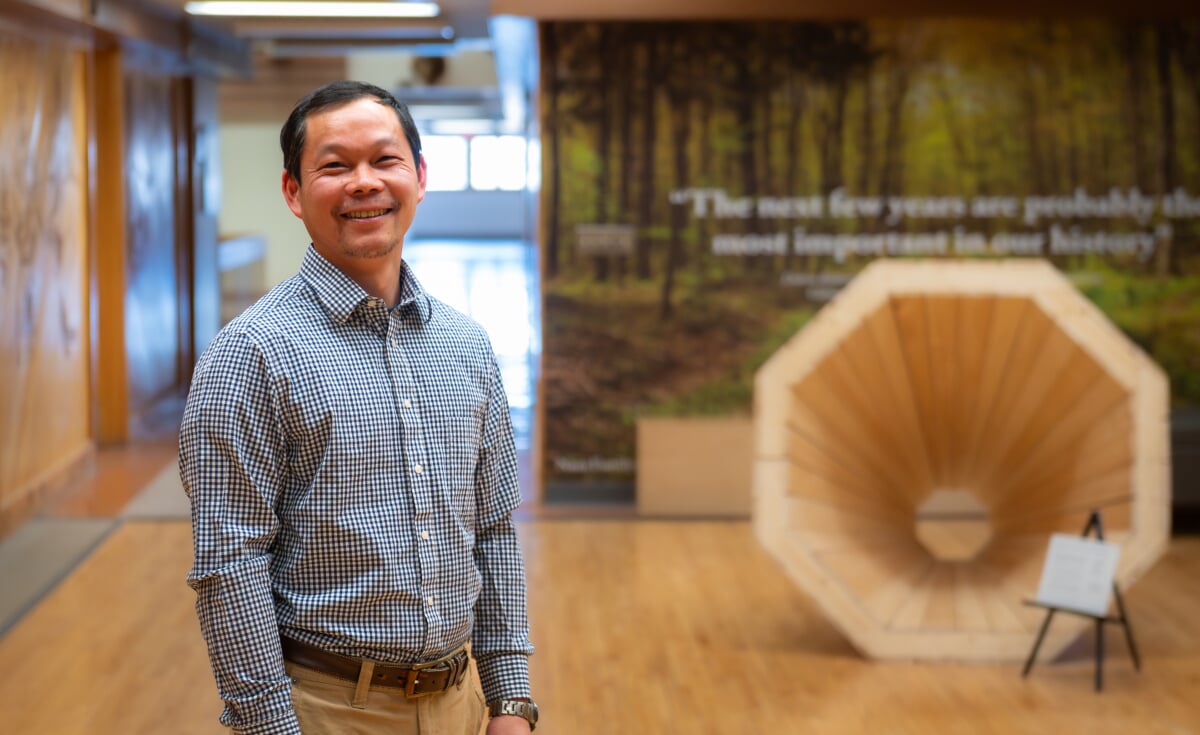
The College of Forest Resources and Environmental Science's Wood Protection Group, directed by Xie, had already identified several decay fungal strains, including white-rot fungi, capable of selectively removing lignin with high precision and efficiency. What they lacked was a method for densifying the treated wood.
Plans for a solution fell into place through a chance conversation when Xie ran into Paul Sanders, Michigan Tech's Patrick S. Horvath Endowed Professor of Materials Science and Engineering, while picking blueberries at a local farm.
"He immediately suggested using extrusion as a continuous densification process," said Xie. "That single conversation connected the missing piece and ultimately set the direction for what became a groundbreaking collaboration."
Extrusion is a mechanical process in which materials are compressed by pushing them through a die of the desired shape. The team also uses a high-pressure physical hydraulic press to compress the wood nanofibers. The combination of fungal lignin breakdown and extrusion or compression successfully creates a lightweight material so strong and dense that the team had to redesign their strength testing method.
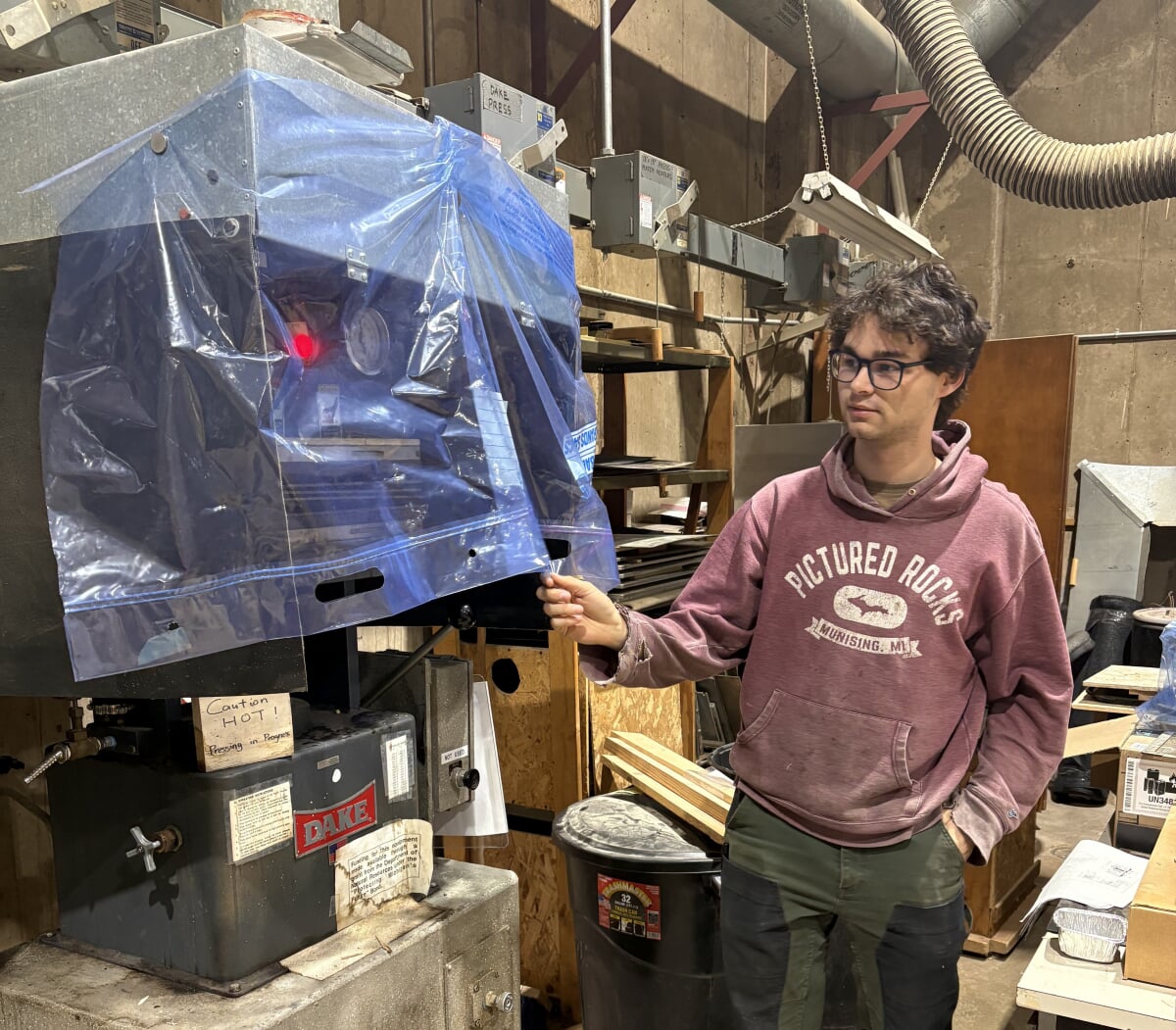
Typically, wood material strength is gauged by bending the wood and measuring how much pressure it takes for the convex surface of the bent wood to break as the fibers pull away from each other. However, the compressed low-lignin wood Xie's team produced was so strong that the fibers on the concave side buckled and compressed inward during initial testing, but did not break. So, the team switched to a pure tension test, where test pieces of the material are secured between vices and pulled apart from both ends until the cellulose nanofibers snap.
Costigan has led the charge on recent testing, pushing the biomaterial to its limits to improve strength, density and overall quality.
"This work answers how different species, jointing techniques, and moisture conditions influence the structural integrity and reliability," said Costigan. "Our research aims to improve material performance and inform better design and manufacturing practices in the wood industry."
Tough Enough for Industry: Precision, Efficiency, Density and Strength
Though manufacturing the material is efficient in terms of energy, it is currently much less efficient in terms of time. Xie and his fellow researchers are working to accelerate the fungal treatment process by adding nutrients and increasing the temperature to encourage fungal growth. They are also working to increase the material's density and strength by adding a small amount of polymeric diphenylmethane diisocyanate (PMDI) — an adhesive commonly used in wood materials and industry.
"Hopefully, with less than 10% adhesive added to the material along with biological treatment and mechanical compressing, we can bring the strength of the material to a whole new level," said Xie.
Starting with or combining different species of wood and types of wood byproducts is another avenue the team is exploring to fine-tune their material. Xie's team has proven their process works for solid wood, but most wood waste comes in smaller pieces. Further experimentation is ongoing to get the same tensile strength from a product created from wood flakes, chips and dust.
"Joining this research team has allowed me to delve further into the wood processing industry and gain firsthand experience with the vital research that drives innovation in the field."
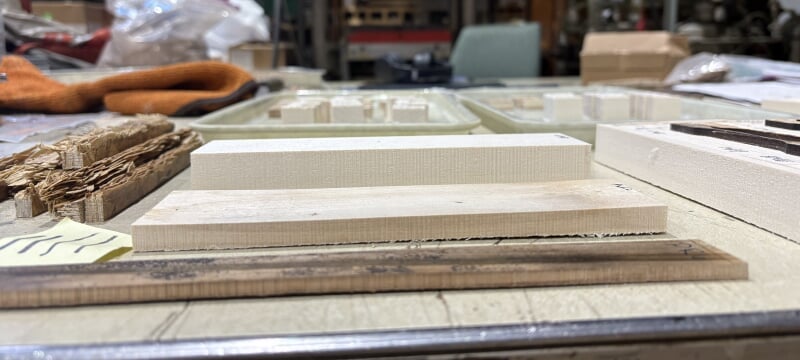
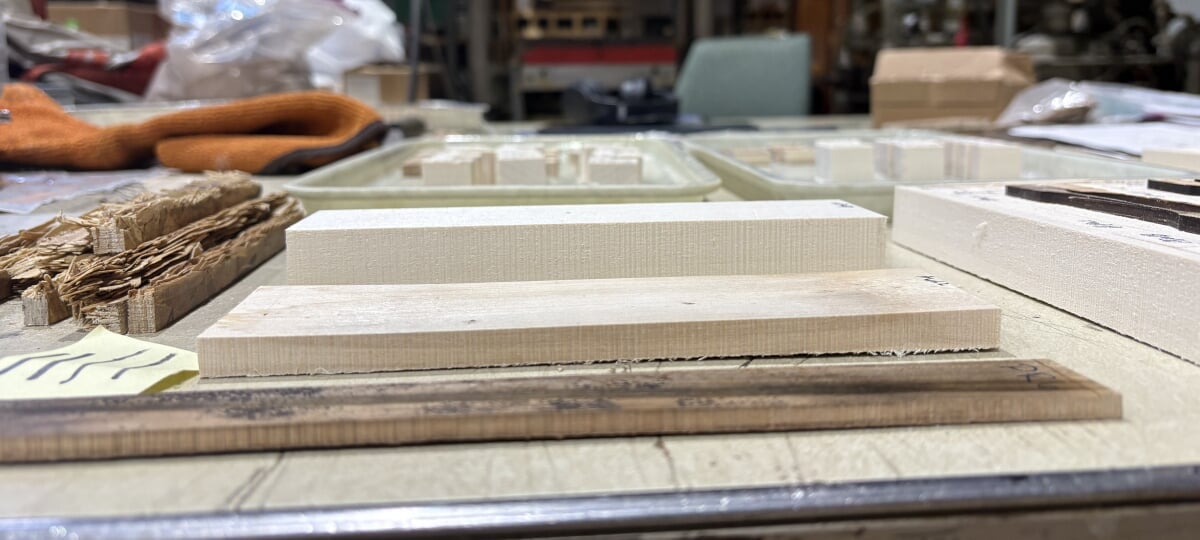
Bustos, who has been working in the Wood Protection Group pilot plant since 2022, joined the DARPA WUD project in 2025. He proudly shows off his work in the lab, handing samples and sections of wood product to visitors so they can feel for themselves the weight and density.
"We've made good progress," said Bustos. "I'm currently working on conditioning samples, which we have created by pressing treated chips. Right now, we're focusing on organic processes to increase strength. Last week, we made some small boards which were pressed with treated chips."
Building on a Legacy of Materials Research
Though Xie and his sustainable bioproducts students have done a lot of the heavy lifting, the entire project also relied on collaboration with Sanders and his team of experts in materials science and engineering.
"As a wood scientist, this is a unique opportunity for me to work with material scientists on campus. When people think of materials, they think of metal or plastics, but they don't think of wood as much," said Xie. "At Michigan Tech, we're really good at metal, but here we have a natural, renewable material."
For Costigan, working with wood from the perspective of materials science is a chance to explore a side of research she never knew existed.
"It's extremely beneficial to see some of the research the University is conducting that many students don't know about," said Costigan. "The faculty on this team are some of the most knowledgeable, hardworking, and dedicated people I've met."
The project also provides something not every researcher gets: a physical product that proves all the hard work, experimentation and studies have made a positive impact on the future of their industry.
"Wood is the only renewable industrial raw material that has a negative carbon footprint. I believe that it has an important role in our sustainable futures," said Xie. "Really, the ultimate question is, can we use wood to replace all these non-renewable materials like steel and concrete?"
Michigan Technological University is an R1 public research university founded in 1885 in Houghton, and is home to nearly 7,500 students from more than 60 countries around the world. Consistently ranked among the best universities in the country for return on investment, Michigan's flagship technological university offers more than 185 undergraduate and graduate degree programs in science, technology, engineering, mathematics, computing, forestry, business, health professions, robotics, psychology, social sciences, humanities, and the arts. The rural campus is situated just miles from Lake Superior in Michigan's Upper Peninsula, offering year-round opportunities for outdoor adventure.