
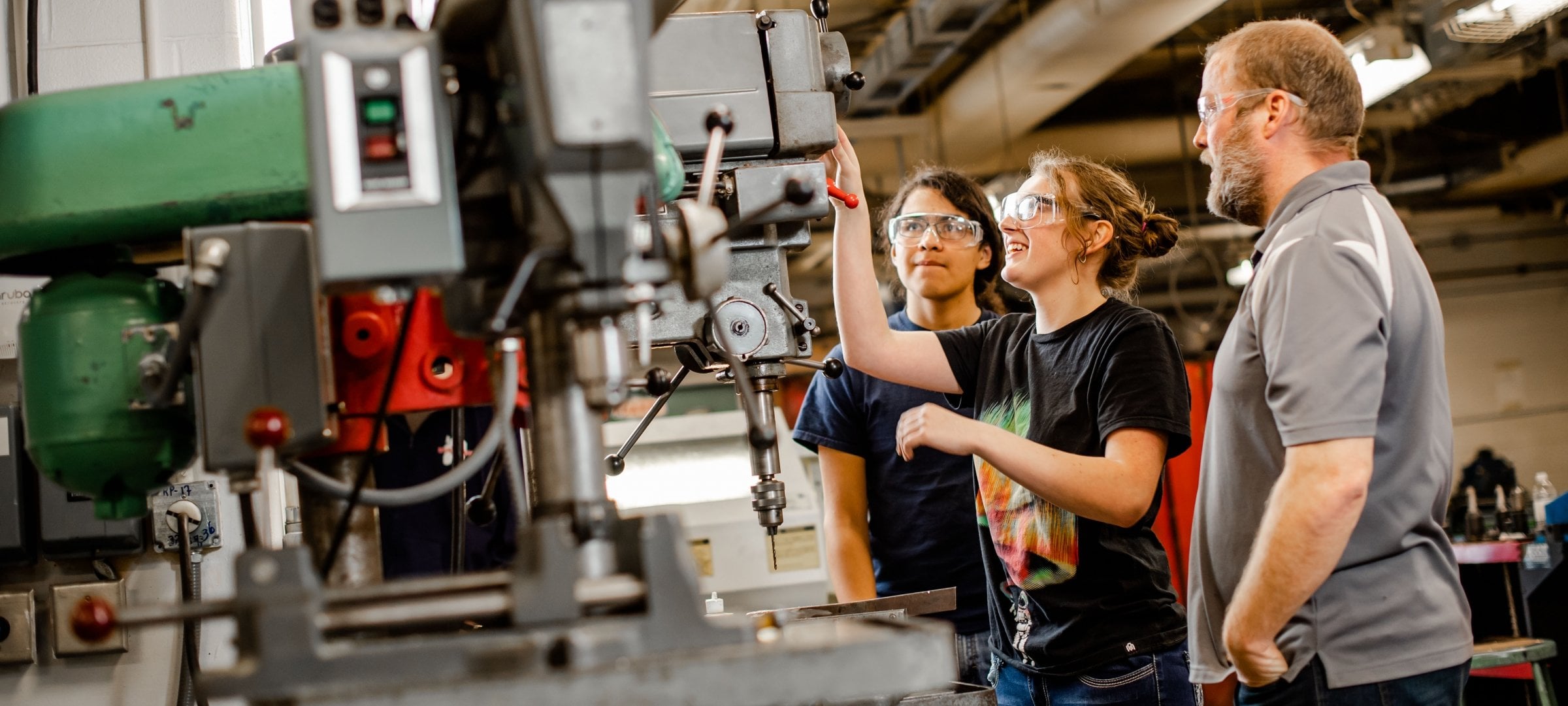
From autonomous machines to aerospace systems, mechanical engineering drives the technologies that move our world. Michigan Tech’s MS in Mechanical Engineering takes you deeper into the forces, materials, and systems behind modern innovation. Build advanced knowledge in fields ranging from robotics and simulation to energy, mobility, and materials engineering. And then put that knowledge to work tackling tomorrow’s engineering challenges.
The Accelerated Master's Program is available for current Michigan Tech students. Explore our Online Master's Program.
Who Is This Program For?
If you’re interested in how mechanical systems are designed, analyzed, and improved, this customizable MS offers room to specialize. This program is for you if you'd like to investigate vehicles, mobility, and autonomous systems; thermal-fluid sciences, energy, or aerospace applications; or robotics, materials, dynamics, vibration, and computational engineering.
What You'll Study
Examine topics that span land, sea, and air mobility; energy systems and microgrids; aerospace and space systems; biosystems; autonomous robotics; noise, vibration, and harshness; materials; and computational tools such as fluid dynamics and finite-element analysis. Whatever focus area you choose, you'll use mechanical engineering principles to connect physical behavior with engineering models, experiments, and design decisions.
Where You'll Apply Your Knowledge and Skills
Advanced mechanical engineering knowledge opens doors across industries such as automotive, aerospace, energy, manufacturing, and robotics. Apply your expertise in modeling, simulation, and analysis to evaluate vehicle performance, improve thermal and fluid systems, assess materials, or develop automated technologies. Depending on your specialization and experience, you could pursue careers as a mechanical design engineer, research and development engineer, aerospace engineer, robotics engineer, thermal systems engineer, or engineering project manager.
Mechanical Engineering Program Details
Choose a specific degree option or delivery type to learn more about the mechanical engineering program at Michigan Tech. For international students, Mechanical Engineering is a designated STEM program.
On-Campus Programs
Online Programs
Additional Program Information
Want to learn more about mechanical engineering at Michigan Tech? Visit the department for more information:
Sample Areas of Interest
Select areas of interest to help customize your mechanical engineering MS. Sample areas include:
- Design and Dynamic Systems
- Energy and Thermo-Fluids
- Solid Mechanics
- Manufacturing and Industrial