
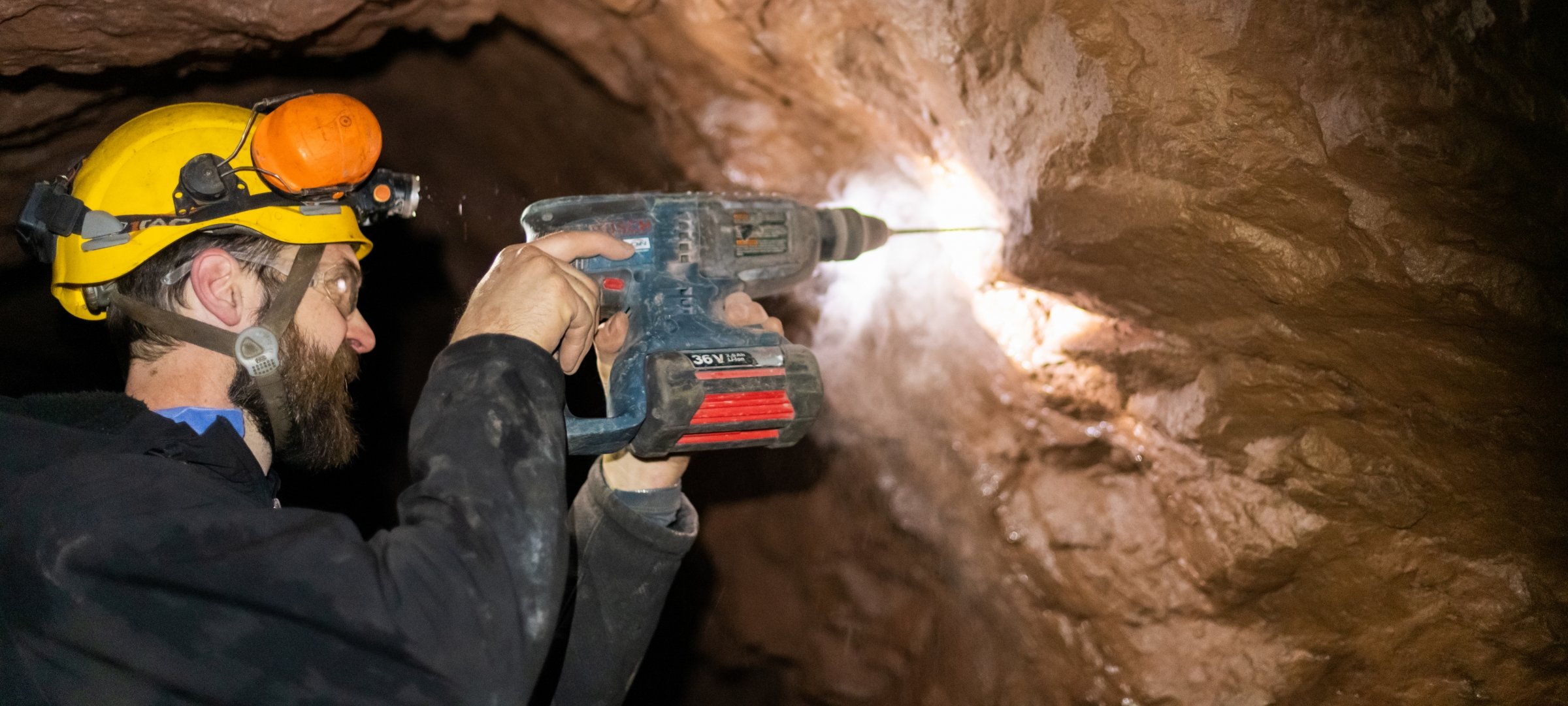
You’re a problem solver, an explorer, and an effective communicator with an eye for detail. You’re not afraid to get your hands dirty or dig deeper. Sound like you? We thought so. Put that curiosity to work in Michigan Tech’s MS in Geological Engineering, where you’ll bring geology and engineering together to investigate Earth materials and subsurface conditions. You’ll explore how what lies beneath the surface shapes what engineers build, extract, protect, and manage while supporting the safe use of Earth’s resources.
The Accelerated Master's Program is available for current Michigan Tech students.
Who Is This Program For?
If you want to understand how conditions beneath the surface influence engineering decisions, this program gives you a way to connect your interests in geology with technical problem-solving. You’ll combine geology, geophysics, and engineering analysis to investigate Earth materials and subsurface conditions, exploring questions about resource development, environmental protection, and engineering in complex geological settings.
What You'll Study
Deepen your understanding of Earth materials and subsurface conditions, and use geological evidence to guide engineering decisions. Michigan Tech’s master’s and doctoral programs in geological engineering offer flexibility to shape your studies around your interests and career goals in geophysics or geological engineering. As a master’s student, you can choose from thesis, report, or coursework options to balance research and advanced study.
Whatever the chosen program path, you'll connect field evidence with quantitative analysis to investigate geological conditions that affect resource development, environmental protection, and infrastructure projects. You'll also have access to study opportunities in Italy and France through INVOGE, our international dual-degree program.
Where You'll Apply Your Knowledge and Skills
Geological engineers help interpret the ground conditions that influence technical projects. They apply knowledge of Earth materials, subsurface measurements, and engineering analysis to investigating the suitability of a site, assessing resource-related conditions, or evaluating geological factors affecting infrastructure and environmental decisions. You'll be prepared for work in resource industries, environmental projects, mining engineering firms, and the public-sector.
-
Delivery Options
- Accelerated: MS
- On-Campus: MS, PhD
Geological Engineering Program Details
Choose a specific degree option or delivery type to learn more about the geological engineering program at Michigan Tech. For international students, Geological Engineering is a designated STEM program.
On-Campus Programs
Additional Program Information
Want to learn more about geological engineering at Michigan Tech? Visit the department for more information:
Sample Areas of Interest
Select areas of interest to help customize your geological engineering MS and PhD. Sample areas include:
- Atmospheric Sciences
- Geotechnical/Geomechanics
- Geoscience Education
- Earthquake Geology/Volcano Seismology