
Chemistry MS, PhD Programs

What can the behavior of a molecule reveal about a material, an environmental process, or a living system? Michigan Tech’s MS and PhD in Chemistry take you deeper into the structure and transformations of matter. Explore chemical questions through advanced study and research that bridge molecular science, analytical methods, materials, and the environment. Develop biomolecular nanoparticles. Understand the relationship between protein misfolding/aggregation and disease processes. Challenges equal to your dedication and enthusiasm are waiting. Are you ready?

The Accelerated Master's Program is available for current Michigan Tech students.

Who is This Program For?

If you’re drawn to questions about chemical structure, reactions, and measurement, this MS offers room to deepen your expertise. It may suit students interested in one of these areas: pursuing experimental, analytical, or computational chemical research; analyzing materials, environmental, biological, or molecular questions; deepening your knowledge of chemical methods.  

What You'll Study

Explore chemistry from molecular interactions to complex materials and biological systems. Michigan Tech’s MS and PhD in Chemistry offer diverse research opportunities in catalysis, chemical measurement, molecular structure and dynamics, environmental chemistry, nanochemistry, and computational methods. Investigate topics ranging from biomolecular nanoparticles and protein aggregation to chemical processes and mechanisms, while drawing on the program’s interdisciplinary and collaborative approach to research.

Where You'll Apply Your Knowledge and Skills

Advanced chemistry helps you identify, analyze, model, and investigate substances and reactions.

Those with chemistry expertise are employed by industrial laboratories, research institutes, and environmental testing facilities. BASF and Dow maintain chemistry-related research and production functions whereas NIST and the EPA conduct scientific measurement and environmental investigations. Your workplace will depend on whether your interests lean toward discovery, analysis, or applied development.

  • Delivery Options

    • Accelerated: MS
    • On-Campus: MS, PhD

Chemistry Program Details

Choose a specific degree option or delivery type to learn more about the chemistry program at Michigan Tech. For international students, Chemistry is a designated STEM program.

On-Campus Programs

Additional Program Information

Want to learn more about chemistry at Michigan Tech? Visit the department for more information:

Contact

Graduate Director

Marina Tanasova

Graduate Assistant

Brendan Aho


Sample Areas of Interest

Select areas of interest to help customize your Chemistry MS, PhD. Sample areas include:

  • Analytical Chemistry
  • Chemical Synthesis
  • Medicinal Chemistry
  • Nanotechnology

View the full listing for this program.

Application Process and Admissions Requirements

Using a holistic approach, our graduate admissions team reviews applications on an individual and ongoing basis. Fill out our free graduate application online to apply to any of our programs. Official transcripts and scores are not required for the initial application, but you will need to upload them later.

Accredited by HLC

Michigan Tech has been accredited by the Higher Learning Commission (HLC) since 1928. We offer over 125 graduate certificates, master's degrees, and PhD programs to provide our students and the world with what tomorrow needs.

Who You'll Learn From and Work With

You'll work collaboratively with faculty who are experts in chemical synthesis, analysis, physical chemistry, biochemistry, and chemical biology. Benefit from professors who will become mentors and partners in your exploration and education. Our graduate students interact closely with a faculty advisor in research groups of two to six people, often pursuing interdisciplinary research. 

Where You'll Study and Do Research

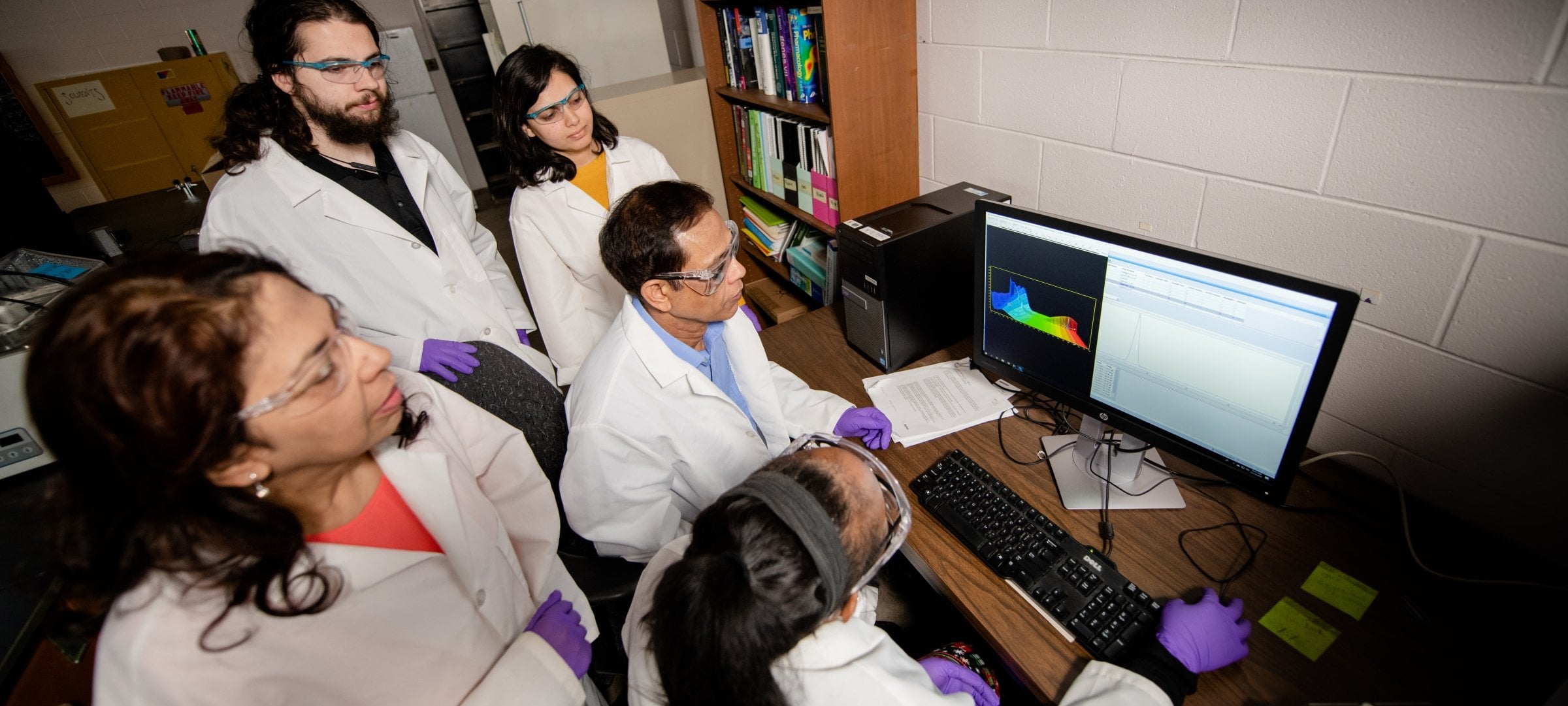
Study chemistry in Michigan Tech’s teaching, computer, and research laboratories, including studio, organic, analytical, instrumental, physical, inorganic, and biochemistry labs. These facilities house specialized equipment for investigating molecular structures, analyzing compounds, and synthesizing biological molecules.

Depending on your research focus, you may work with instruments such as these:

  • Bruker Microflex LRF MALDI-TOF mass spectrometer: Analyzes biomolecules, including proteins, peptides, and DNA, as well as polymers and other large organic molecules.

  • ABI 394 DNA/RNA Synthesizer: Synthesizes short DNA and RNA sequences used in molecular research, including studies related to oligonucleotide purification and drug development.

  • Thermo Finnigan LCQ Advantage Ion-Trap LC-MS: Separates complex chemical mixtures using liquid chromatography, then identifies their molecular components through mass spectrometry.

Faculty Spotlight

Marina Tanasova

Marina Tanasova
Associate Professor,
Chemistry

"Working on the interface between chemistry and biology–our approach to solving challenging problems in health research."

Tanasova develops molecular probes and biochemical assay for identifying and understanding links between impaired biological mechanisms and cancer. She relies on chemical biology to understand molecular interactions that control cellular equilibrium and uses synthetic organic chemistry to produce small molecules to monitor and adjust impaired biochemical processes.

Program Faculty