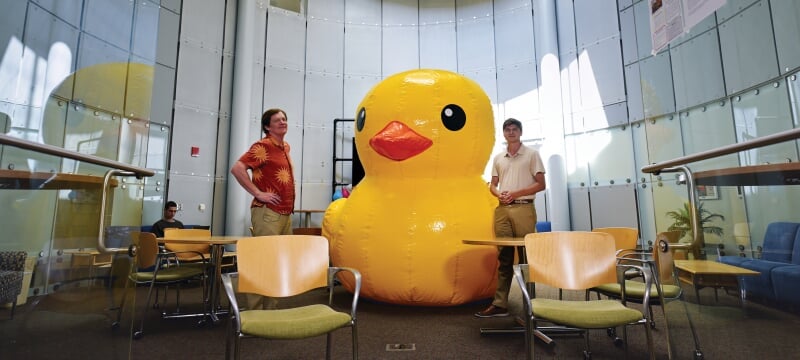
In labs, classrooms, and collaboration spaces across campus, College of Computing faculty members demonstrate the Michigan Tech difference: Here, students routinely work with their professors on leading-edge technology and career-building challenges. Find out about new projects, applaud teaching awards, and meet the new faculty carrying on the mission to prepare our students for their bright, world-changing futures.
Meet the Makers and Mentors

How Undergraduate Research at Michigan Tech Supercharges Your Experience
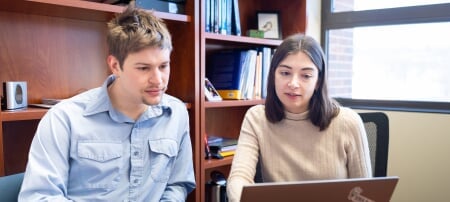
Students who come to Michigan Tech tend to be as excited about research as they are about outdoor recreation opportunities. The good news is, so are their professors. Department of Computer Science Professor Charles Wallace and computer science major Connor Fleser didn't come to Tech at the same time. But they did come for similar reasons, which included the desire to do research and to enjoy what the University's backyard—the Keweenaw Peninsula—has to offer.
Find out how Wallace and Fleser discovered research access, camaraderie, and community as they share their story.
[REU]: Undergrad Research Opportunities Expand
Michigan Tech wants undergraduate students to conduct research in labs and out in the field as early as possible. College of Computing Research Experiences for Undergraduates [REU], which kicks off in the 2026-27 academic year, is a major boost to the ongoing effort. The program funds paid undergraduate research opportunities and includes weekly professional development training as students work alongside their faculty mentors.
College of Computing faculty proposed projects for the program's inaugural group of undergrad researchers in spring 2026. Five projects were chosen.
- "Extended Reality Visual Rewards for AI-Enabled Robot Tutoring" submitted by Assistant Professor Michael Walker
- "AI-Powered Translation of Large-Scale Scientific Codes" submitted by Assistant Professor Bo Zhang
- "How Effective are AI-Written Tests at Catching Bugs in AI-Written Code?" submitted by Assistant Professor Jie Wu
- "Using a Minimalist Constructed Language as a Machine Translation Interpretability Tool" submitted by Assistant Professor Evan Lucas
-
"Why Do Simple Models Still Work? A Data-driven Study of Machine Learning for Molecular Property Prediction," submitted by Assistant Professor Neerav Kaushal
Walker, Zhang, and Wu are faculty in the Department of Computer Science, and Lucas and Kaushal are faculty in the Department of Data Science.
Five returning undergrads with at least one year to go before graduation have been paired with the selected projects. Students will work up to 10 hours per week at $20 per hour over the academic year, totaling up to $6,000 in compensation per student as they learn and innovate alongside their mentors.
The [REU] joins other research undergraduate experience programs across Michigan Tech, including those in the College of Engineering and College of Sciences and Arts.
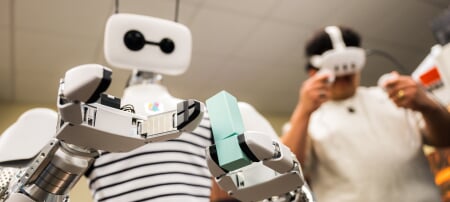
One of the [REU]'s inaugural undergrad researchers has already been announced: robotics engineering major Jose Padilla, paired with Walker. The research duo's work will take place in Walker's Human-Robot Interaction Lab using the Reachy Robot and Reachy Mini platform to explore how visual rewards presented in extended reality can support student motivation during interactions with robot tutors.
Follow Michigan Tech News and the College of Computing blog for more details as additional selected students are announced and research gets underway.
The Humanoid Next Door: Reachy the Robot Bridges the Uncanny Valley at Michigan Tech
In Michigan Tech's Human-Robot Interaction Lab, Huskies teach the lab's newest occupant the basics: how to wave, glide, and hold a steady grip. Guided by their faculty mentor, they're on a mission to make advanced robotics more accessible.
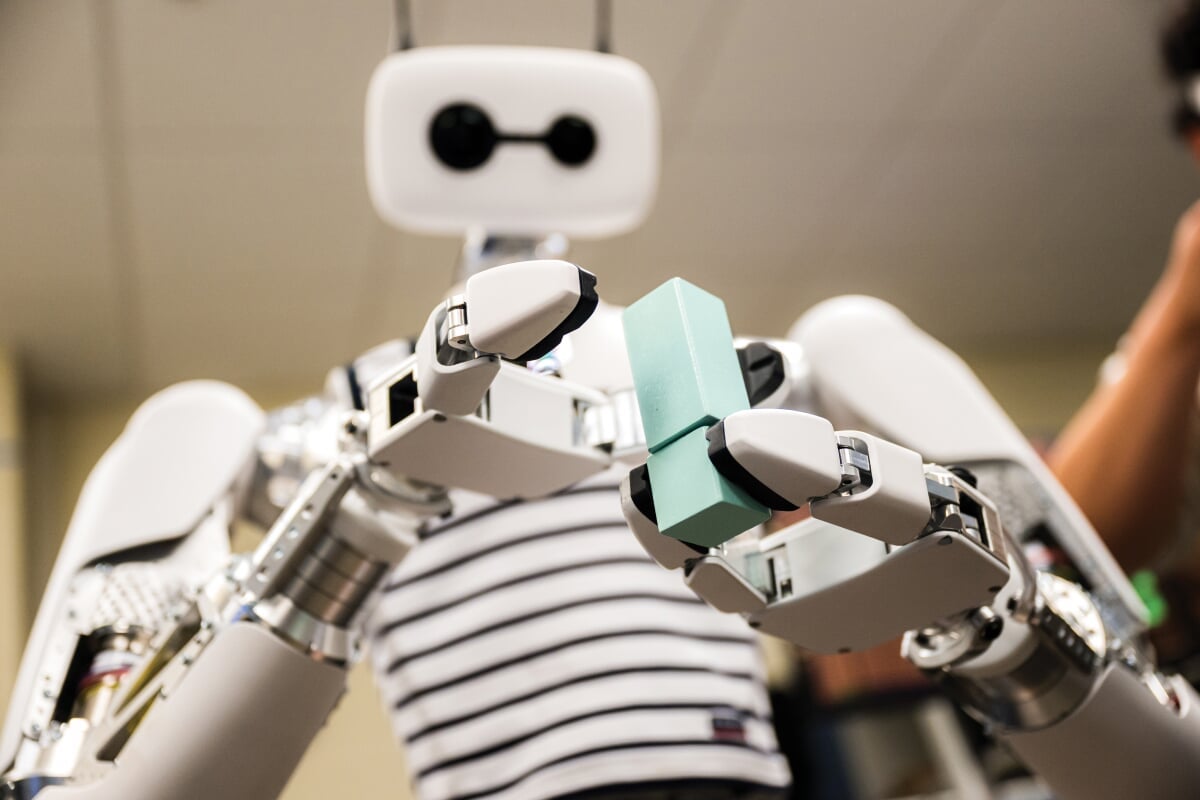
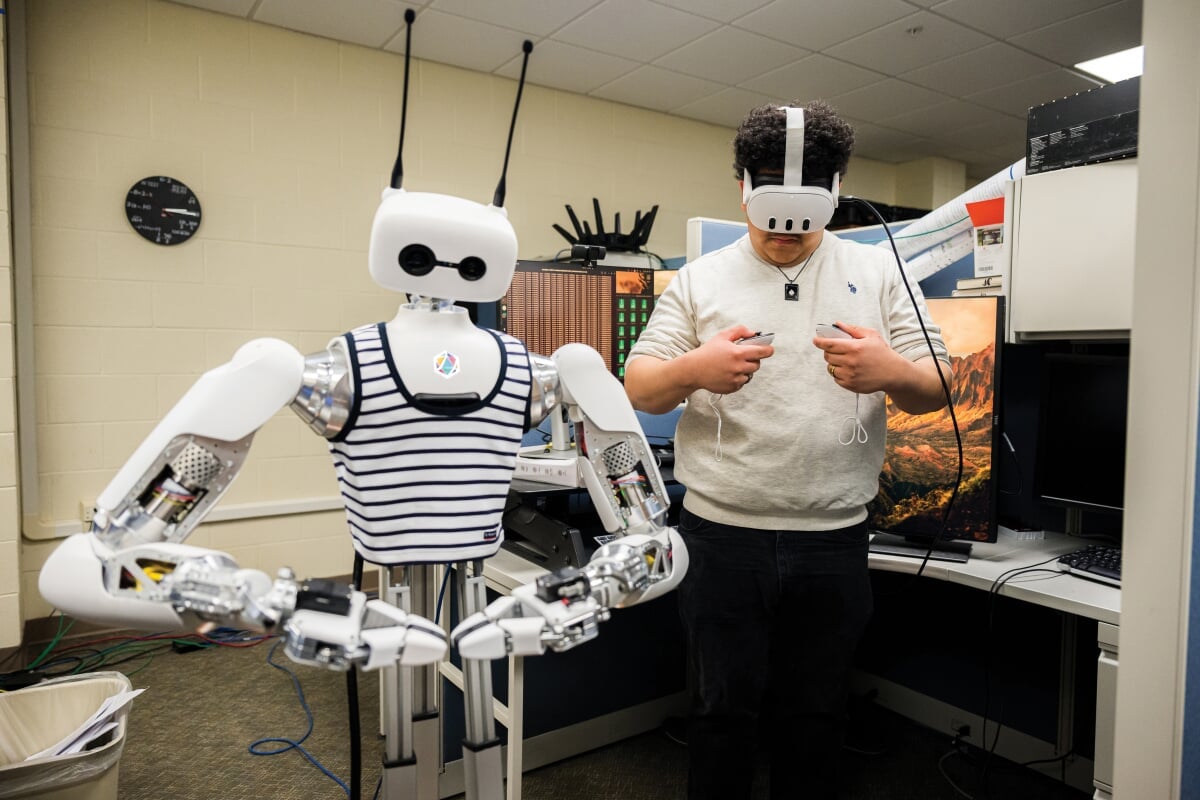
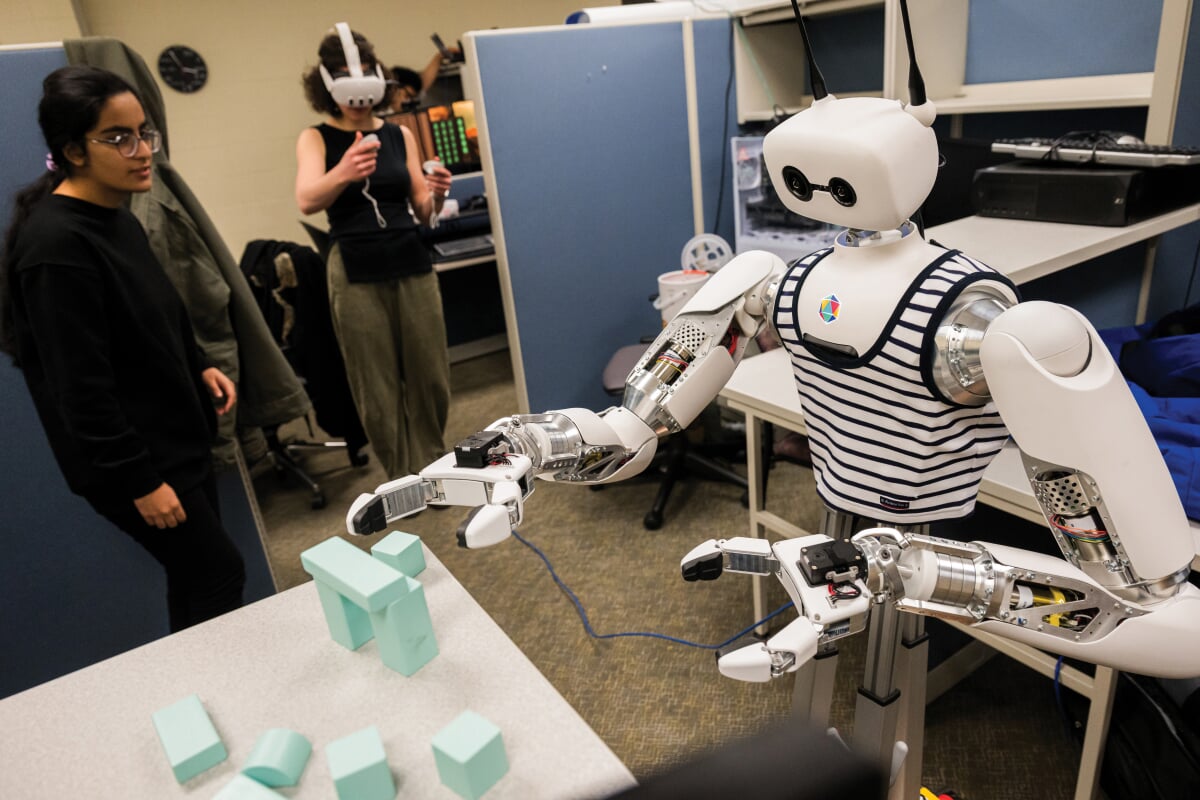
Inside Michael Walker's Human-Robot Interaction (HRI) Lab, the clinical atmosphere often associated with high-tech research is nowhere to be found. Instead, the air is filled with the low hum of motors and mechanical clicks along with enthusiastic conversation between student and faculty researchers.
At the center of it all is Reachy the Robot. Meet Reachy and its wrangler in the full story on Michigan Tech News.
Mini, Adorable—and One Day, Metered?
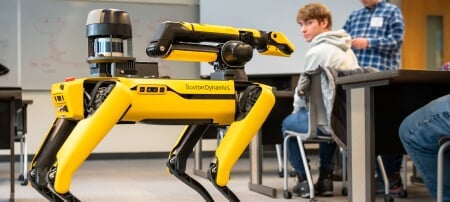
Reachy has been joined by a new member of the Michigan Tech robot pack: Reachy Mini. Smaller but possibly even more expressive than its full-size counterpart, Reachy Mini is leveling the playing field in robotics research and education by lowering cost barriers. Hugging Face, a collaborator in producing the desktop robot, is also spearheading the development of a leaderboard designed to show AI energy consumption comparisons. The AI Energy Score Project is one proposed step toward the big challenge of developing sustainable and responsible practices for sustainable AI use.
Van Wagner Receives Teaching Award
College of Computing Dean Dennis Livesay selected Tim Van Wagner, associate teaching professor in the Department of Applied Computing, for the 2026 Deans' Teaching Showcase, part of Michigan Tech's William G. Jackson Center for Teaching and Learning's (CTL) Instructional Award Series. Van Wagner went on to be selected for the CTL's 2026 Innovative or Out of Class Teaching Award.
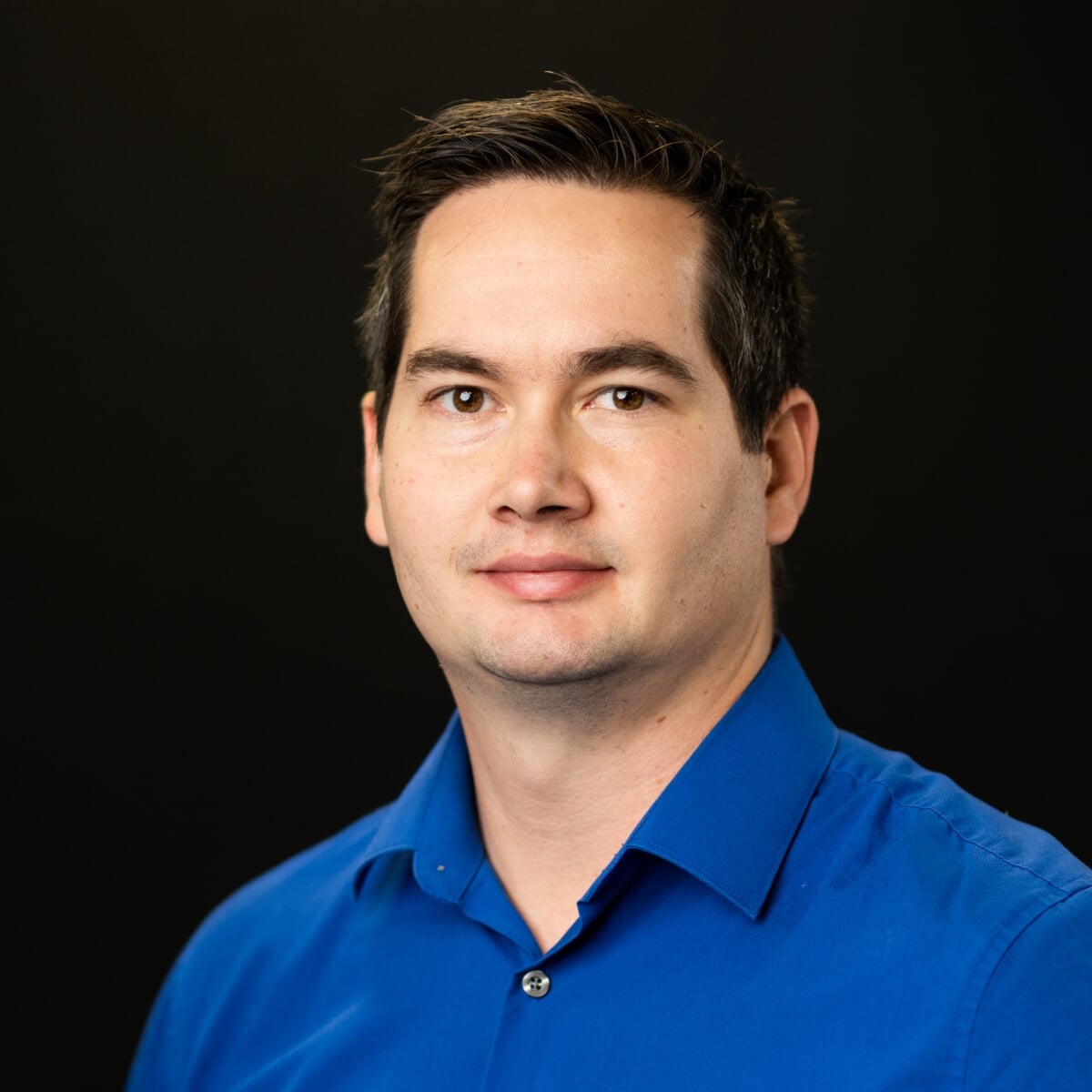
Van Wagner is the lead instructor for courses in Michigan Tech's BS in Information Technology and BS in Cybersecurity programs in network administration and related areas. Over the years he's built a suite of courses in the area, which is constantly evolving and expanding to meet the needs of Huskies and their employers in industry.
Dan Fuhrmann, chair of the Department of Applied Computing, said Van Wagner is the "center of gravity for computer networking" for Tech's BS in Information Technology program. He described Van Wagner's four-course sequence in network administration as the showpiece of his teaching.
"Tim is passionate about the hardware and the technology that make up modern computing networks and he passes that enthusiasm along to his students," said Fuhrmann.
In addition, Van Wagner teaches courses in database management, wireless system administration, and data center operation. He also serves as the supervisor for the department's Senior Design sequence in IT and cybersecurity. His teaching evaluations are among the highest in a department that has a tradition of teaching excellence, and his door is always open to students when he is not in the classroom or laboratory.
The department's Educational Data Center is Van Wagner's baby, added Fuhrmann, and he's always looking for ways to improve it. In this educational testbed, students configure servers, routers, switches, and other computing and networking technology in a realistic setting that combines advanced software features with get-your-hands-dirty installation of racks and cables.
2026 Research Award Winner: Tim Havens
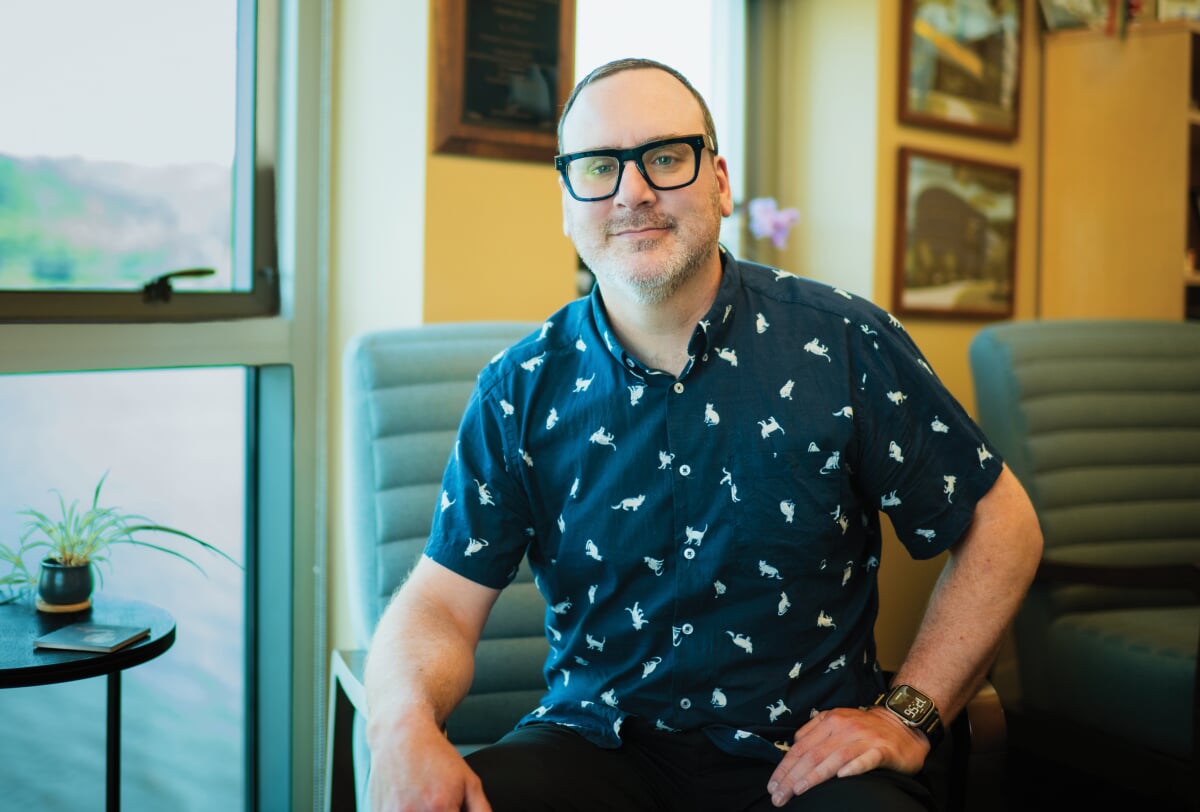
Tim Havens received Michigan Tech's 2026 Research Award, recognizing his leadership in computational intelligence. An electrical engineering alumnus and Tech's William and Gloria Jackson Professor of Computer Science, Havens centers his interdisciplinary work on helping people and systems make the best decisions possible in the presence of complexity and uncertainty.
His highly prolific career features $10.7 million in funding across industries, including automotive and defense, and successful leadership of Tech's Institute of Computing and Cybersystems and the Great Lakes Research Center. But Havens measures his deepest satisfaction through community. Known for his engaging communication style and involvement of students in meaningful research, he views discovery as a team effort.
A passionate musician, Havens embodies a holistic approach to science and technology. Discover his inspiring trajectory from MTU student to internationally recognized research leader in our exclusive Michigan Tech News Q&A.
New Faculty Drive Computing Forward
The College of Computing welcomed four new faculty members for the 2025-26 academic year.
Dennis Livesay, Dave House Dean of the College of Computing, said new faculty members Neerav Kaushal, Evan Lucas, Jie "JW" Wu, and Bo Zhang strengthen the College of Computing's resources and mission.
Meet the new faculty.
Faculty Members Earn Promotions
In the 2025-26 academic year, Serein Al-Ratrout was promoted to associate teaching professor. Leo Ureel II and Briana Bettin were promoted to associate professor with tenure. Keith Vertanen was promoted to professor. All four faculty members hail from the Department of Computer Science.

Walters Inducted into Academy of Teaching Excellence
Victoria Walters, a professor of practice in applied computing, has been inducted into the Academy of Teaching Excellence at Michigan Tech. Established in 1998, the Academy recognizes educators who have demonstrated continued dedication and support for the University's teaching mission. Membership includes finalists for the annual Distinguished Teaching Awards and the Fredrick D. Williams Instructional Innovation Award.
Michigan Technological University is an R1 public research university founded in 1885 in Houghton, and is home to nearly 7,500 students from more than 60 countries around the world. Consistently ranked among the best universities in the country for return on investment, Michigan's flagship technological university offers more than 185 undergraduate and graduate degree programs in science, technology, engineering, mathematics, computing, forestry, business, health professions, robotics, psychology, social sciences, humanities, and the arts. The rural campus is situated just miles from Lake Superior in Michigan's Upper Peninsula, offering year-round opportunities for outdoor adventure.