Huskies are using artificial intelligence to crack down on insider trading. They're coaching high school students to victory in national contests—and placing nationally themselves in prestigious computational competitions. They're exploring the ways that machine learning, AI, and cybersecurity can help to sustain and build safer, more resilient communities. Go deeper into the research and results in this round-up of their accomplishments during the 2025-26 academic year. It's a preview of even more impressive work to come.
When Gremlins Learn from Huskies: High School Students Earn National Recognition in Cybersecurity and AI
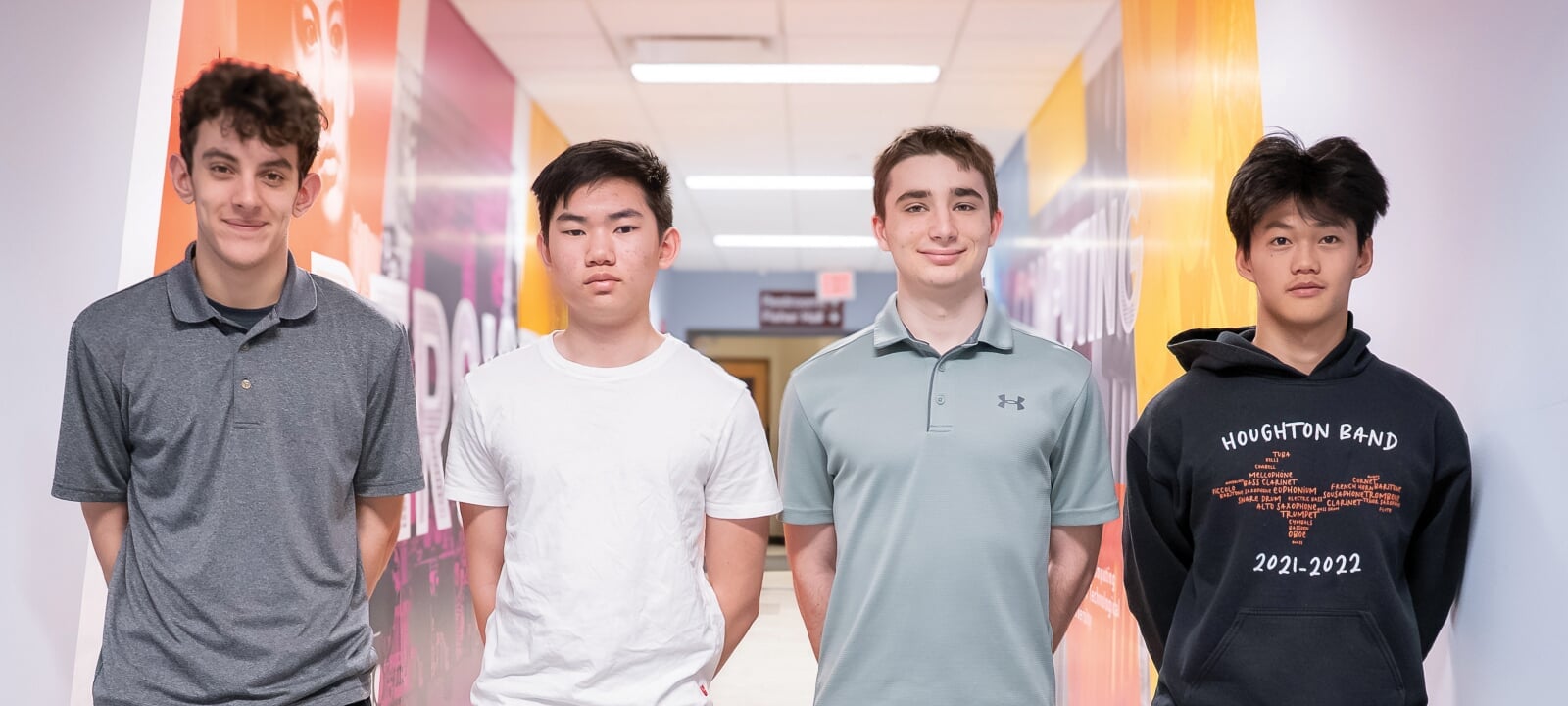
The Houghton High School Gremlins taking part in Michigan Tech’s CyberHusky program are on a roll, racking up multiple national, regional, and state honors during the 2025-26 academic year.
CyberHusky teams, coached by Michigan Tech faculty and students, achieved their best-ever results in the 2025 CyberPatriot National Youth Cyber Defense Competition in fall 2025, then went on to earn an impressive ninth-place national ranking in the high school category during the spring 2026 National Cyber League (NCL) competition.
In the individual component of the NCL spring 2026 competition, which included more than 1,300 participants nationwide, Alex Svanidze ranked No. 13 nationally and achieved a perfect score of 3,000 out of 3,000.
Adding to the honors in the past competition season, CyberHuskies Samuel Cai, Gabe Hjerstedt, Daniel Xie, and Lewis Vendlinski were among the Michigan winners of the 2026 Presidential AI Challenge state championship.
In other individual achievements, CyberHusky Anna Wu was named the winner of the 2025 Congressional App Challenge in Michigan’s First Congressional District. Her entry, called the Wuzy Snow Alarm, is designed to check the user’s school website to let the student know whether school is delayed or canceled due to weather conditions. Asked why she created the alarm, she said she was inspired by getting ready for school and having her parents drive her there only to find it closed. “The area where I live gets a lot of snow during the winter, and it’s nice to stay in bed when you don’t need to get up,” she said.
First to Solve: Huskies Take Their Place Among Elite Talent at North America Programming Championship
On March 22, Michigan Tech’s premier programming team, MTU Purple, competed against other talented student programmers representing the top 2 percent of universities from across North America at the 2026 International Collegiate Programming Contest North America Championship (ICPC NAC).
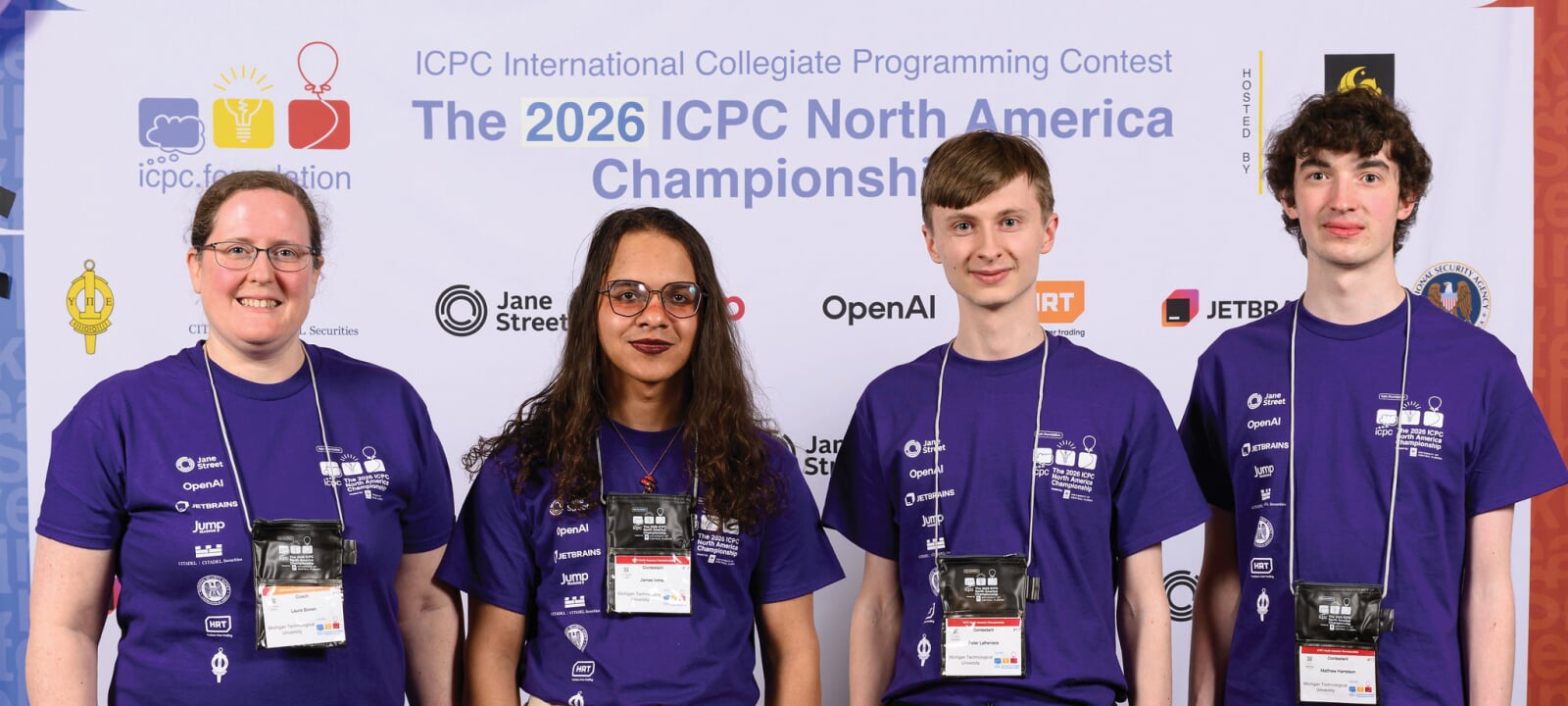
Joining 52 of the best teams from the US and Canada, the Huskies of MTU Purple claimed their spot following a standout regional qualifying performance in November—no small endeavor in the ICPC’s high-pressure environment, where teams must solve 10 to 12 complex algorithmic problems under strict time and memory constraints.
MTU Purple members proved they could compete with the best early in the championship, becoming the very first team to successfully solve Problem I, completing it in just 11 minutes. The feat earned the team a cash prize and special honors from Upsilon Pi Epsilon, the international honor society for computing and information disciplines. Tech was one of only six schools to be the first to solve a problem, joining the ranks of MIT, the University of Waterloo, and the University of Central Florida.
“The team’s success is a testament to the interdisciplinary depth of our students,” said faculty advisor Laura Brown.
MTU Purple includes undergraduate computer science majors Dreya Inman (minoring in financial technology, mathematical sciences, and economics) and Peter Lafreniere, along with computer science graduate student Matthew Harrelson ’25, who earned his bachelor’s in computer science in December with a minor in mathematical sciences.
The ICPC is a massive global undertaking, involving over 63,000 competitors from 3,450 universities worldwide representing 96 countries. The week-long event included rigorous training sessions led by alumni and a practice contest hosted by OpenAI.
In this intensely competitive field, Michigan Tech placed 46th overall, earning an honorable mention and finishing ahead of notable universities including Purdue and Northwestern.
“Our Huskies’ performance continues to solidify Michigan Tech’s reputation as a powerhouse for computational talent and problem-solving excellence,” said Brown.
Full results, event photos, and live commentary from the championship are available on the official ICPC NAC website.
Huskies Put Hacking Skills to the Test to Detect Insider Trading
Huskies who competed in JacHacks at the University of Michigan in spring 2026 placed first in the FinTech category for Polywatch, an AI-powered insider trading detection tool for prediction markets.
“Our project tackles the growing issue of insider trading on decentralized prediction markets,” said computer science major Caeden Kidd, whose fellow teammates included Michigan Tech College of Computing students Adam Christley and Nathan Schultz, along with Amar Zecevic of Wayne State University.
“While insider trading has always been a problem, platforms like Polymarket have made it easier than ever to act on privileged information anonymously,” Kidd explained. “Any user with insider knowledge can anonymously bet on the outcomes of real-world events from elections, policy decisions, and even war, with often little oversight. The consequences range from unfair financial gains and market manipulation to even greater risks like signaling upcoming government decisions and providing incentives for people to profit from real-world harm.”
To address the issue, the team used Tree of Thought reasoning, an advanced artificial intelligence framework that enhances the reasoning capabilities of large language models (LLMs), to autonomously investigate manipulation, coordinated wallets, and suspicious trading patterns. They built a tool to help private investigators and governments identify and investigate suspicious behavior.
“Our agentic agent is capable of calling our data analysis tools, reading the data, and making decisions about how to proceed further with the investigation. After the LLM conducts a thorough investigation, a summary with a list of evidence is provided to a human investigator, who can then determine how to proceed,” Kidd said.
Huskies Collab with Communities in New Urban Intelligence Lab Enterprise
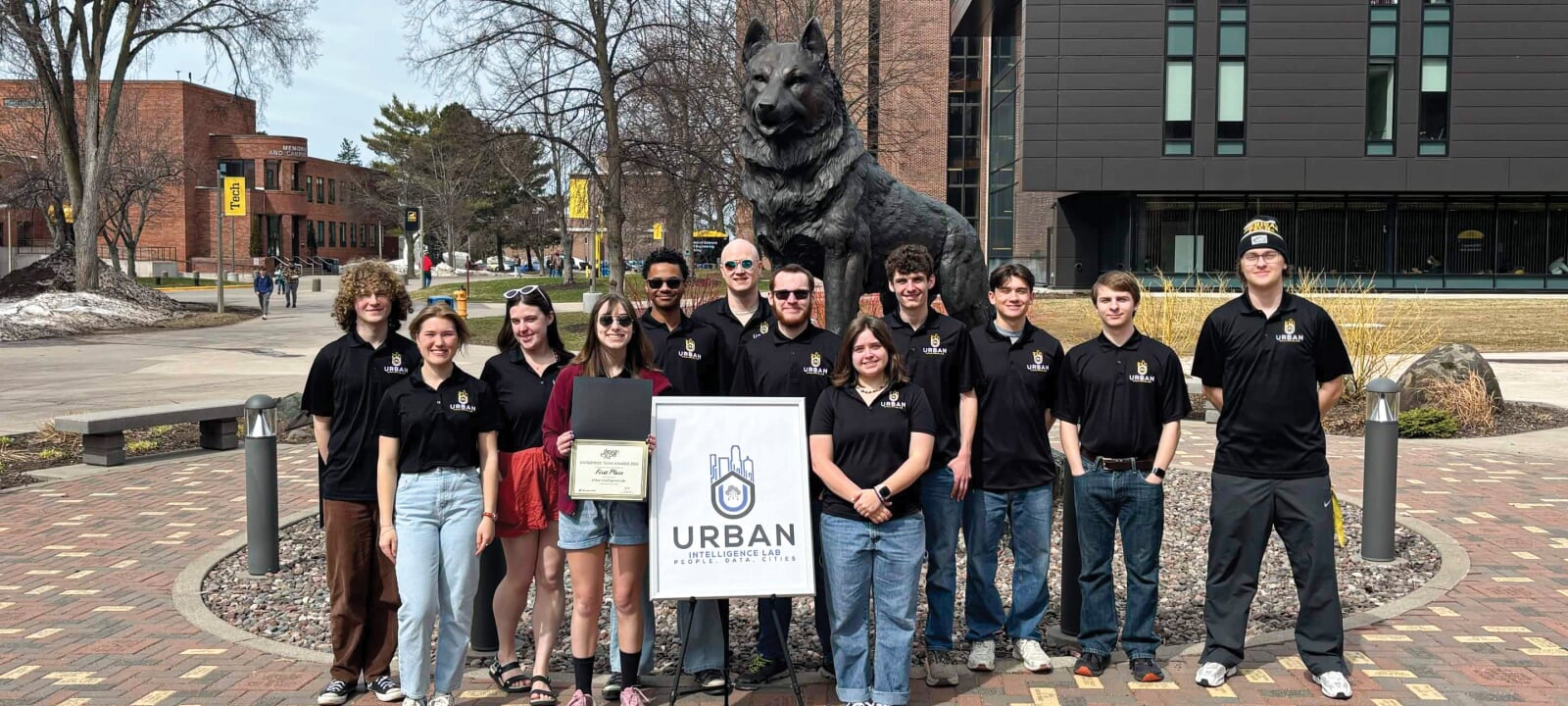
Rooted in discovery-based learning for 26 years, Michigan Tech’s Enterprise Program continues to grow, offering new interdisciplinary opportunities for students across campus to work with clients on projects that benefit communities and industries. The Urban Intelligence Lab Enterprise, one of three new additions to the program’s 25-plus teams in 2025-26, uses sensing, analytics, and system-level thinking to address challenges on campus and in the Keweenaw by tapping into local data.
Featured in Michigan Tech News, find out more about the UI Lab and other Enterprise teams.
Inside MTU RedTeam: How Students Learn to Hack, Secure, and Lead in Cybersecurity
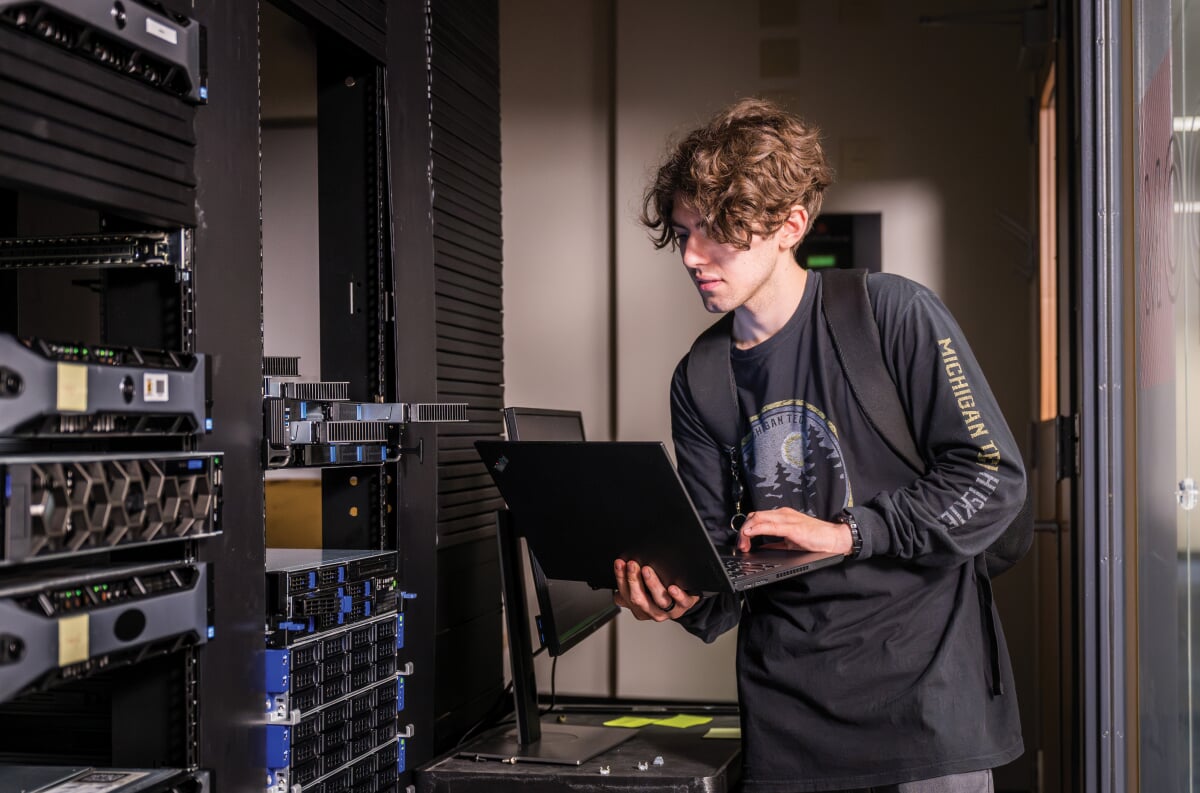
Noah Holland ’26 didn’t know there was another Husky in his family tree until he applied to Michigan Tech.
What he did know, well before he came to the University as a first-year cybersecurity student, was that he wanted to join MTU RedTeam.
Find out more about the inner workings of MTU RedTeam in the College of Computing blog.
Michigan Technological University is an R1 public research university founded in 1885 in Houghton, and is home to nearly 7,500 students from more than 60 countries around the world. Consistently ranked among the best universities in the country for return on investment, Michigan's flagship technological university offers more than 185 undergraduate and graduate degree programs in science, technology, engineering, mathematics, computing, forestry, business, health professions, robotics, psychology, social sciences, humanities, and the arts. The rural campus is situated just miles from Lake Superior in Michigan's Upper Peninsula, offering year-round opportunities for outdoor adventure.