
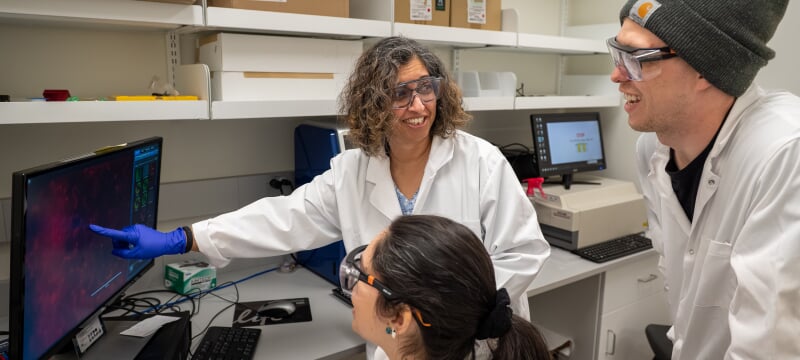
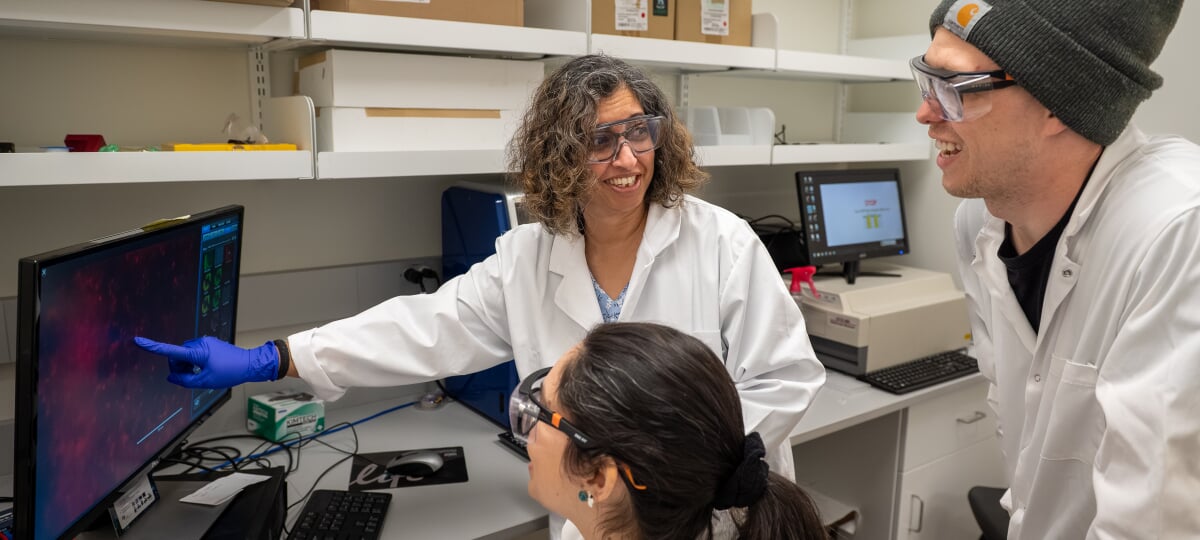
From targeting cancer cells to engineering 3D tissue, Michigan Tech's Biomedical Micro-Devices Lab operates at the intersection of biology and precision engineering.
The next big advancements in physiology and cell biology are happening at the micro-level. In Michigan Technological University's H-STEM Engineering and Health Technologies Complex, Associate Professor Smitha Rao and her students in the Department of Biomedical Engineering are working to better understand cells and cellular structures. As leader of the University's Biomedical Micro-Devices Lab, Rao and her team focus on fundamentals and reinforcing multidisciplinary thinking — and mentoring the next generation of collaborative scientists and engineers.
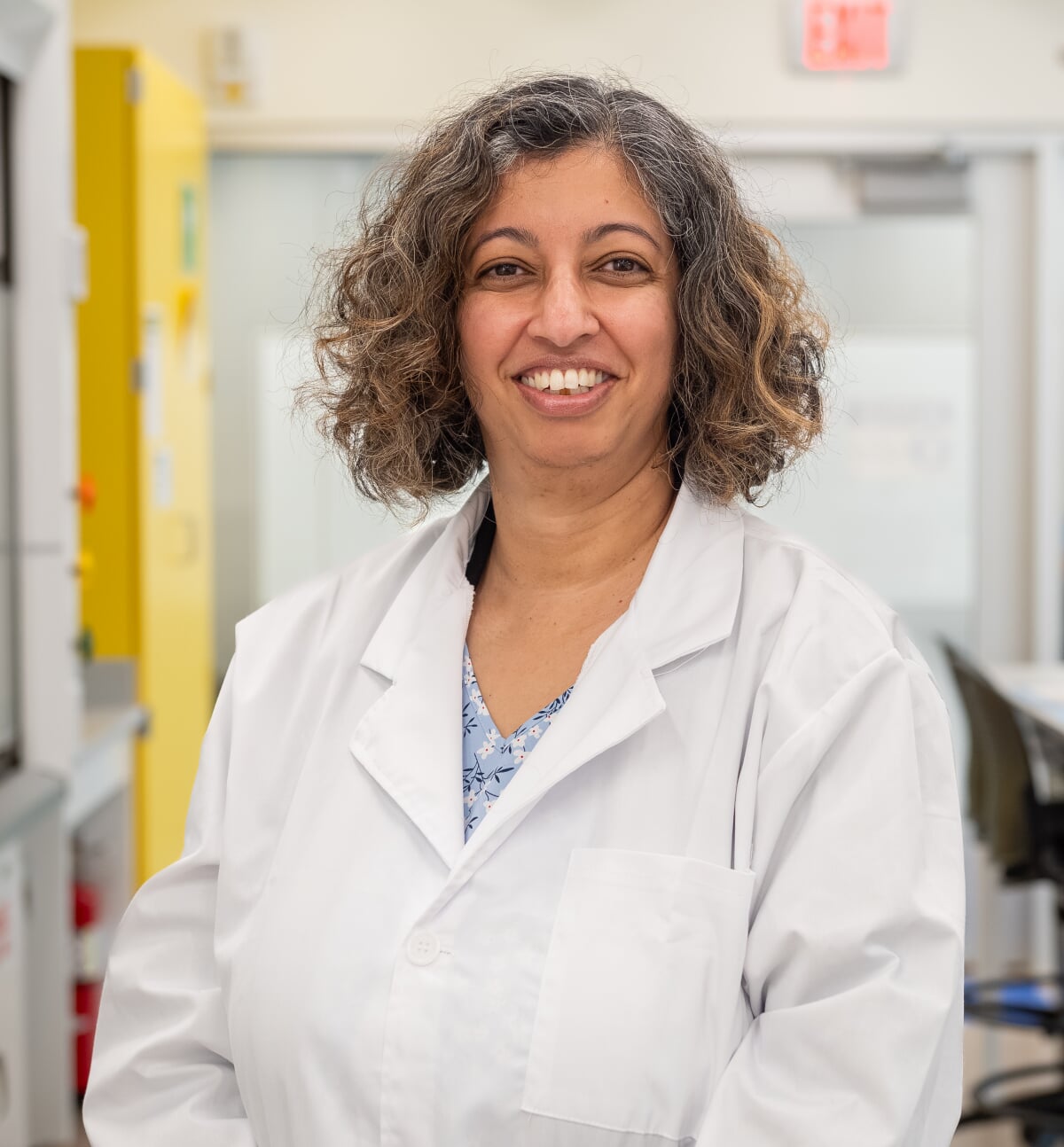
Just as cells are the building blocks of the human body, curiosity, collaboration and multidisciplinary thinking are foundational in the Biomedical Micro-Devices Lab. Research projects ranging from nanofiber scaffolding to cancer metastasis to cellular uptake of heavy metals all stem from the same original question: Why do cells do what they do?
"Asking the simple questions and finding the simple solutions can often be very elegant," said Rao. "Being a multidisciplinary lab, when my students and I ask questions, we try to find the interconnections between fields."
Rao sees her lab and the work she and her students conduct as one large web. The threads of their research may spread out in different directions, but they usually remain interconnected so that one project's success affects another. Formed around that initial question, the web of research happening in the Biomedical Micro-Devices Lab continues to expand and evolve.
Initially, Rao was driven by a question from her own doctoral studies: Why does cancer spread? Her research focused on the mechanics of metastasis, the spread of cancer through the body, observing how cells behave as they migrate. Through cross-campus collaborations, Rao and her research team discovered that some cancer cell functions are very similar to wound healing. The finding prompted them to expand their research.
"From that experience, we learned that tissues have structure, a scaffold of sorts, on which cells grow," said Rao. Under lab conditions, cells were traditionally grown on flat plates, a two-dimensional environment quite dissimilar to how cells grow in our three-dimensional bodies. To address this, one of her first Ph.D. students developed a way to grow cells using nanofiber scaffolds that mimic tissue growth.
"That led us to ask the question if this new kind of cell growth in the lab could be better used to monitor cell response that we would see in the body," said Rao. The new experimental structures also gave the team a superior vantage point for testing how cells react to environmental factors, allowing the research to expand once again to study how cells respond to arsenic and lead-based toxins.
The lab's evolution from basic questions to complex tissue engineering is meeting an imperative need. With federal organizations phasing out animal testing, there's a growing demand for human tissue culture. For Rao and her team, it's a confirmation of their iterative, expansive approach.
"It feels like we are being validated," she said.
Today, research projects in the Biomedical Micro-Devices Lab generally fall into one of those three categories: cancer metastasis, 3D scaffolds and cellular toxin response. Even so, those fields remain quite broad.
"We've got about six projects going on right now," said Rao. "My students are really excited and I have to keep it all straight in my head, but they keep me on track."
Welcome to the Micro Lab
As lab director, Rao's guiding principle is to let her students formulate their own research questions. Undergraduate biomedical engineering student Carter Rodzik has been part of Rao's lab team since fall 2024, primarily working on nanofiber scaffolds for tissue engineering. While conducting his research, he realized that certain environmental conditions affect nanofiber structures and wanted to explore how humidity affected the manufacturing process.
"We knew it had an effect, but nothing specific, so I was happy to hand that can of worms to him," said Rao. "That led to him setting up his own lab system to control humidity."
Rao is not only eager to see her students take initiative, she's come to expect it. For Rodzik, that's what makes his research so interesting.
"I enjoy being entrusted with independent work that challenges my thinking, especially when designing experiments," he said. "If I ever need guidance, Professor Rao is always there to mentor and encourage me."
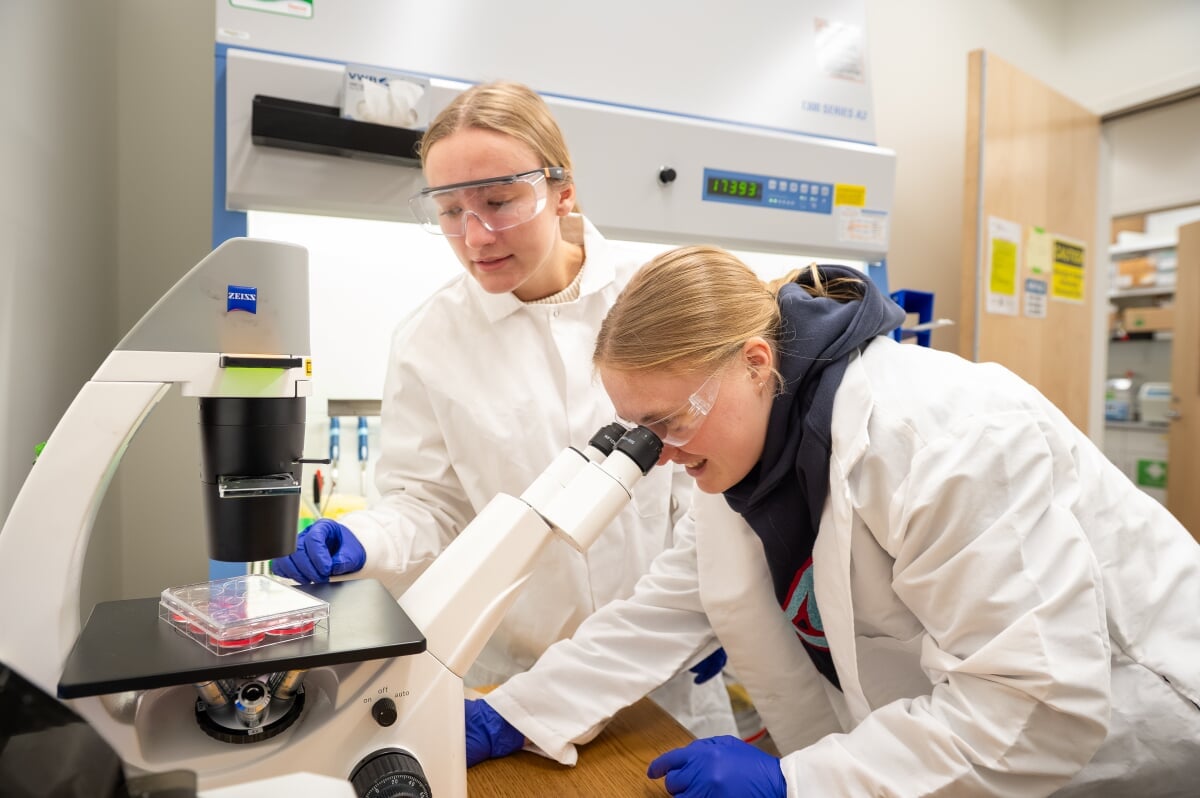
Biological sciences Ph.D. student Shehan Wijesinghe, who is co-advised by Professor Rupali Datta in MTU's Department of Biological Sciences, leads research on cell-based studies to determine the effect on intestinal cells when lead is ingested. The research aims to help young children in urban settlements with lead remediation who may eat contaminated dirt while playing.
"In the lab, Shehan puts the dirt through a fake digestive juice, mimicking what would happen if the dirt was ingested, and the lead compounds left over are what we are looking at," explained Rao. "That's a super cool project, something I never dreamt of getting involved in."
Victoria Santillan, who joined Rao's lab as a Ph.D. student in 2022, is currently working on her dissertation on microparticles for the localized treatment of breast cancer. After working on a collaborative project with Professor Marina Tanasova in MTU's Department of Chemistry, Santillan began developing a process to utilize nanoparticles to increase drug delivery efficacy for cancer patients, working with biomedical engineering professor Bruce Lee.
Inspired by her close work with Rao over the years, Santillan hopes to follow in her mentor's footsteps.
"Professor Rao has been a great influence in my decision to pursue a career in academia," said Santillan. "She creates an inviting learning environment where learning and discovery are rewarding and exciting."
As the lab's most senior research assistant, Santillan is already stepping into her own role as a mentor, including working with the lab's newest and youngest research assistant, high school senior Mary Bartelli. Through the Copper Country Career and Technical Education (CTE) program, Bartelli has been working in Rao's lab since fall 2025 and was recently accepted into Michigan Tech's biomedical engineering bachelor's degree program.
Rao is impressed with both Bartelli and the cross-collaborative environment she established with other lab members. After being trained in biohazard lab safety, Bartelli began working closely with Santillan, eventually snapping photographs used by Rodzik in his first authored research abstract.
"Mary took the images, learned how to process them, and gave a presentation to me, explaining what all that data meant," said Rao. "It was very professional. I was blown away!"
Rao is hopeful that Bartelli will rejoin the lab when she begins her studies at Michigan Tech, but is happy to see her succeed wherever her talent and curiosity takes her.
"I think it's only fair that she gets the opportunity to explore," she said. "If she joins my lab, I'll celebrate, and if she joins a different lab, I'll still celebrate."
The scope and complexity of research conducted in the Biomedical Micro-Devices Lab has grown beyond Rao's initial vision. While it may be difficult at times to keep it all straight, she wouldn't have it any other way. To her, the expansive nature of her lab and research is simply par for the course.
"Our research questions may be simple solutions, not too complicated, but they hopefully solve a problem," she said. "It may open other problems, but that's what research is."
A Winding Road North for a Longtime Educator
Rao remembers teaching for the first time when she was 5 or 6 years old. Growing up in India, she studied English in school and spoke it at home, but while visiting her grandparents, she was surprised to meet children who didn't know how to read or write in English.
"I bribed them with candy and after a few weeks, they could write their names in English, and that feeling stayed with me," she said. "It felt great."
Initially set on attending medical school, Rao describes herself as an "accidental engineer." Following a memorable experience in a cadaver lab, she went on to become a different kind of doctor. For her undergraduate degree, she pivoted to studying telecommunications at the Bangalore Institute of Technology. Satellite communication and electronics were a hot topic, and Rao found the field interesting.
"And, at the time, someone had told me that girls don't pass that subject, which I took as a challenge," she said.
Drawn by a new nanofabrication lab, Rao chose to pursue her Ph.D. in the electrical engineering program at the University of Texas at Arlington. A year in, she was loving her studies, but feeling lost, with no advisor, thesis topic or clear path ahead until a piece of wisdom changed her perspective.
"A professor said that it doesn't matter what field of engineering you are in, you can always apply it to another field," said Rao. "And the example he gave was electrical device applications for medical treatments. I was sold."
Rao completed her master's and Ph.D. in electrical engineering, focusing on microfluidics; founded her own start-up company working with implantable biomedical devices; and trained at the University of Texas Southwestern Medical Center, where she first began her work on cancer research. But she missed working collaboratively across projects and mentoring students. So Rao returned to UT Arlington as an associate researcher and lecturer.
"That was when I started training high school and undergraduate students," she said. "They were the first students I was really mentoring and they were amazing." The experience helped Rao realize that teaching was a big part of what she wanted out of her career.
"I wanted to do research, I wanted to teach and mentor students and I wanted to have a multidisciplinary lab. That was it," she said.
Rao wasn't necessarily looking for a career shift, but after a chance encounter with the then-chair of the Department of Biomedical Engineering at Michigan Tech, she applied and interviewed for a tenure-track position.
"I didn't even know where Houghton was at the time," she said. "I came during Winter Carnival and I felt the energy. It was negative five degrees one morning and I saw students jogging in shorts! I thought if the students could bring that energy in this weather, I wanted to experience that."
After meeting with Michigan Tech engineering faculty and students, Rao was convinced that Tech was the place for her. After 14 years in Texas, now with a husband and young daughter, she knew moving to Michigan's Upper Peninsula would be a big challenge.
"I went back to my husband and said, 'I know this is an awful lot of change, I know this will disrupt our lives, but if Michigan Tech makes an offer, I'm taking it,'" she said.
Rao joined Michigan Tech as an assistant professor in 2015 and hasn't looked back. From the very beginning, she was enamored with the University's sense of community.
"When they say this is a small-town feel, they don't just mean that it's small in size; they mean we all work together. Collaboration is a big part of Michigan Tech. That collegial environment was visible to me the minute I stepped on campus. This is the environment to grow."
Mentorship Makes the Mentor
Over 10 years later, Rao has everything she hoped for: She runs a multidisciplinary lab where she conducts groundbreaking research and mentors ambitious students. As both lab director and classroom professor, she's witnessed the tenacity of Michigan Tech students firsthand.
"The students here at Tech are very unique, very motivated and very smart," said Rao. "The level of understanding they have and the way they talk about their own aspirations, where they are at their age and stage in their career, it's way ahead."
In order to meet the needs of her students, Rao's approach to teaching and mentorship had to evolve as well. She expects from her students the same things she expects from herself: curiosity, collaboration and self-determination.
"I don't feel like I'm working with undergraduates; I think of them as my future colleagues," she said.
Rao meets her students where they are. When a new undergraduate student joins her lab, she asks how they would like to be managed and mentored.
"An overwhelming majority of Michigan Tech students are very aware of how they work best," she said. "The way they seek opportunities shows that. They know what they want, they go after it and still find time to join three broomball teams. Who does that? Tech students do that!"
She lets the students in her lab choose what projects they want to work on. "Because then the chances they'll be invested are higher, so that even when they are busy, they'll be in the lab because it's what they want to be doing," she said. "That's the whole point of the lab. Come, explore, find out what excites you. Whether they go on to grad school or industry, hopefully, this lab helps them get there."
As a mentor, Rao pulls from her own experiences as a student and mentee. She encourages her students to take their time, try multiple things and go on to work with other faculty members in other labs if they wish.
Today, Rao's dedication as a mentor is reflected in her students, who feel not only welcomed in her lab, but valued and supported. She said she remains continuously impressed by her students — and her students are just as impressed by Rao.
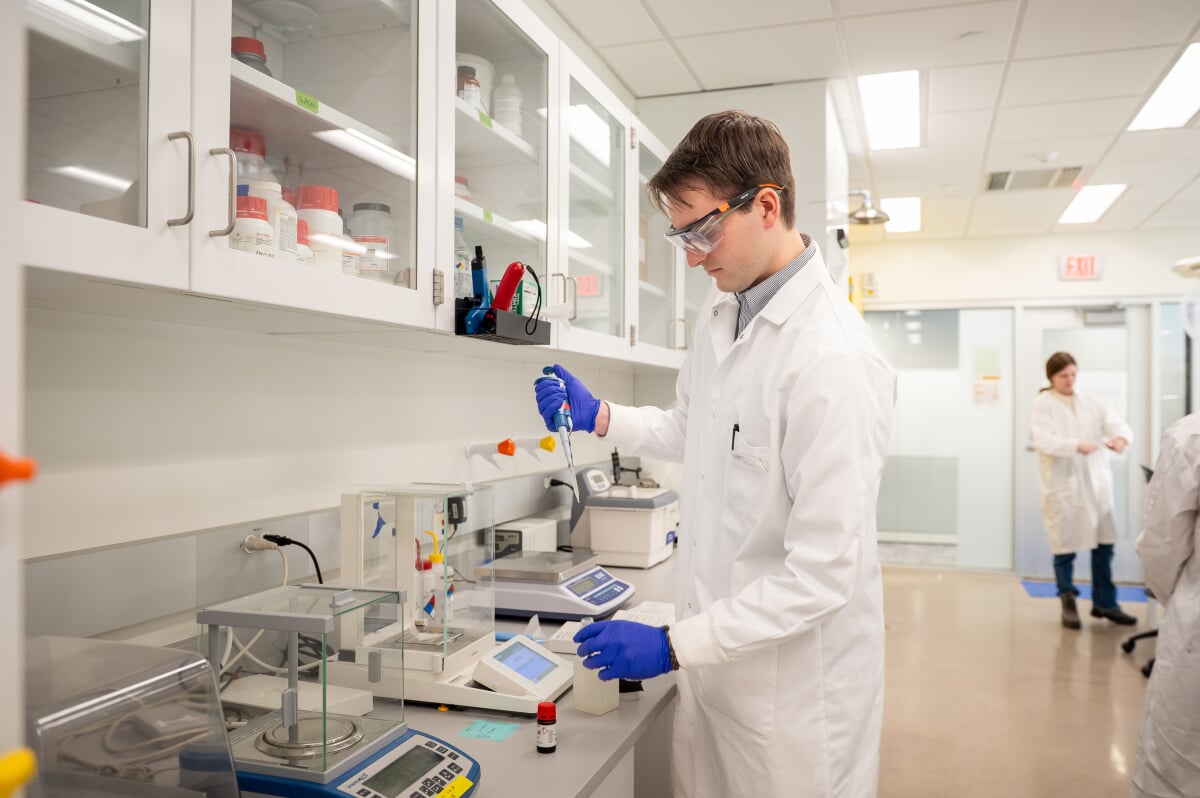
For both Rao and her students, the Biomedical Micro-Devices Lab is a home away from home. Many students come to the lab as a reprieve from their daily schedules, to help others and train on new equipment and instruments.
Edward Sloan '25 began working with Rao while earning his bachelor's degree in biomedical engineering. As an undergraduate student, he was a member of Michigan Tech's H-STEM Enterprise team, which Rao advises. He joined her lab last fall as an accelerated master's student in biological sciences and was recently accepted to Wayne State University's School of Medicine.
"I have never had a supervisor who cares more about the students they mentor," said Sloan. "I have a meeting with her every week to talk about my project challenges, but we almost always transition to how my life is going and how she can support my growth professionally and academically."
Biomedical engineering alumna Olivia Luke '25 said she is grateful to have Rao to turn to when she needs help and to have a fierce champion in her corner. In the lab, Luke works closely with Wijesinghe on the lead contamination project. She will graduate with her master's in biomedical engineering this spring and has already accepted a full-time position with Boston Scientific.
"She has always been there to prepare for presentations, check my resume and provide advice to navigate problems," said Luke. "Professor Rao is always the first person to let our lab know the northern lights will be out, to make sure we all make it home when the wintry roads get bad and to congratulate each student on their accomplishments."
Will Braun '24 also earned his bachelor's in biomedical engineering from Tech, and first joined the Biomedical Micro-Devices Lab as undergraduate research assistant after taking Rao's course in biomedical instrumentation.
"Professor Rao completely changed the trajectory of my career when she offered a position as a Ph.D. student in her lab, and along the way she has helped me grow towards being the researcher she believed I could be," he said.
Rao has worked with more than a hundred Michigan Tech students in her lab and countless more in the courses she teaches. She's watched her own mentees become mentors themselves and seen students go on to industry and academia, and to become doctors, scientists, professors, chairs and more. While she takes her responsibility as a mentor very seriously, she's quick to acknowledge the work her students do themselves.
"That's the whole point: You train them, you stand back and see what they can accomplish," she said. "These students know what they are doing and who they are. I am just helping them along. That motivation and drive to do better and be successful, that's the real strength of our Huskies."
Michigan Technological University is an R1 public research university founded in 1885 in Houghton, and is home to nearly 7,500 students from more than 60 countries around the world. Consistently ranked among the best universities in the country for return on investment, Michigan's flagship technological university offers more than 185 undergraduate and graduate degree programs in science, technology, engineering, mathematics, computing, forestry, business, health professions, robotics, psychology, social sciences, humanities, and the arts. The rural campus is situated just miles from Lake Superior in Michigan's Upper Peninsula, offering year-round opportunities for outdoor adventure.

Comments