Michigan Technological University's highly regarded mechatronics program equips students with the skills needed to work with robotics in manufacturing. When it comes to their success, Huskies in the program say the sense of belonging and support they've found is as essential as the curriculum.
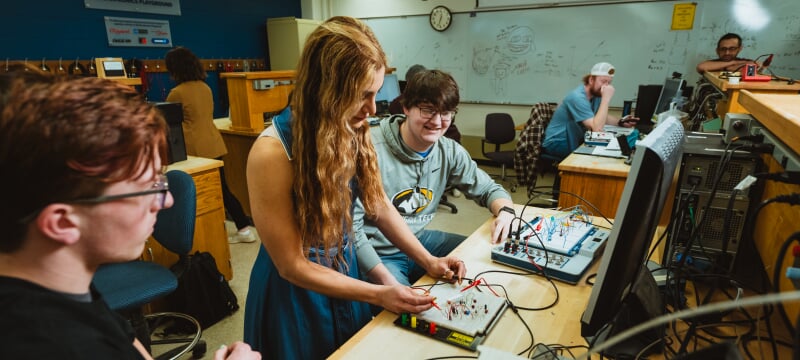
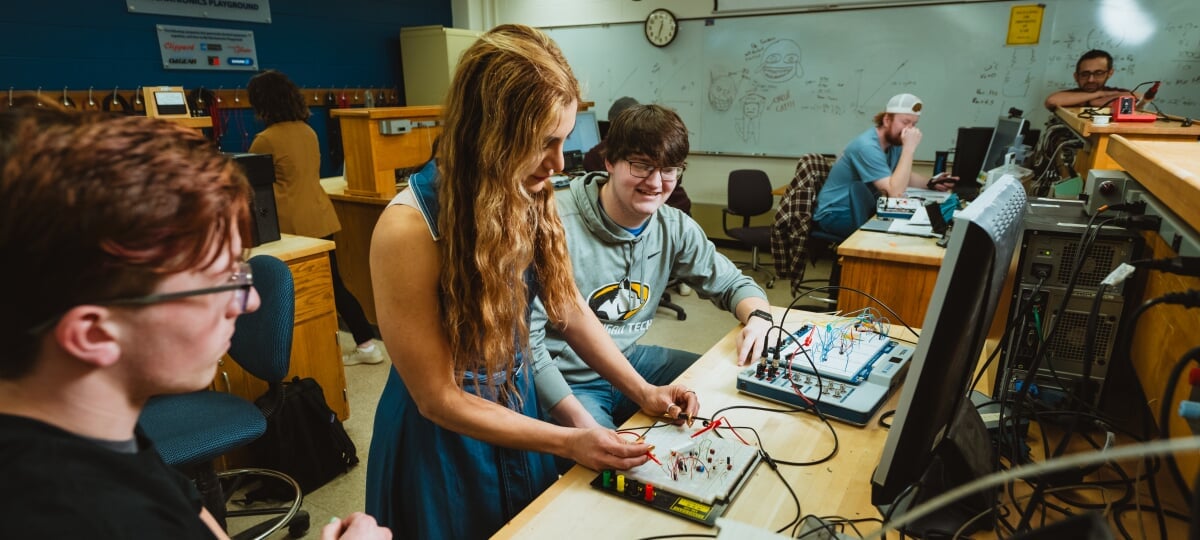
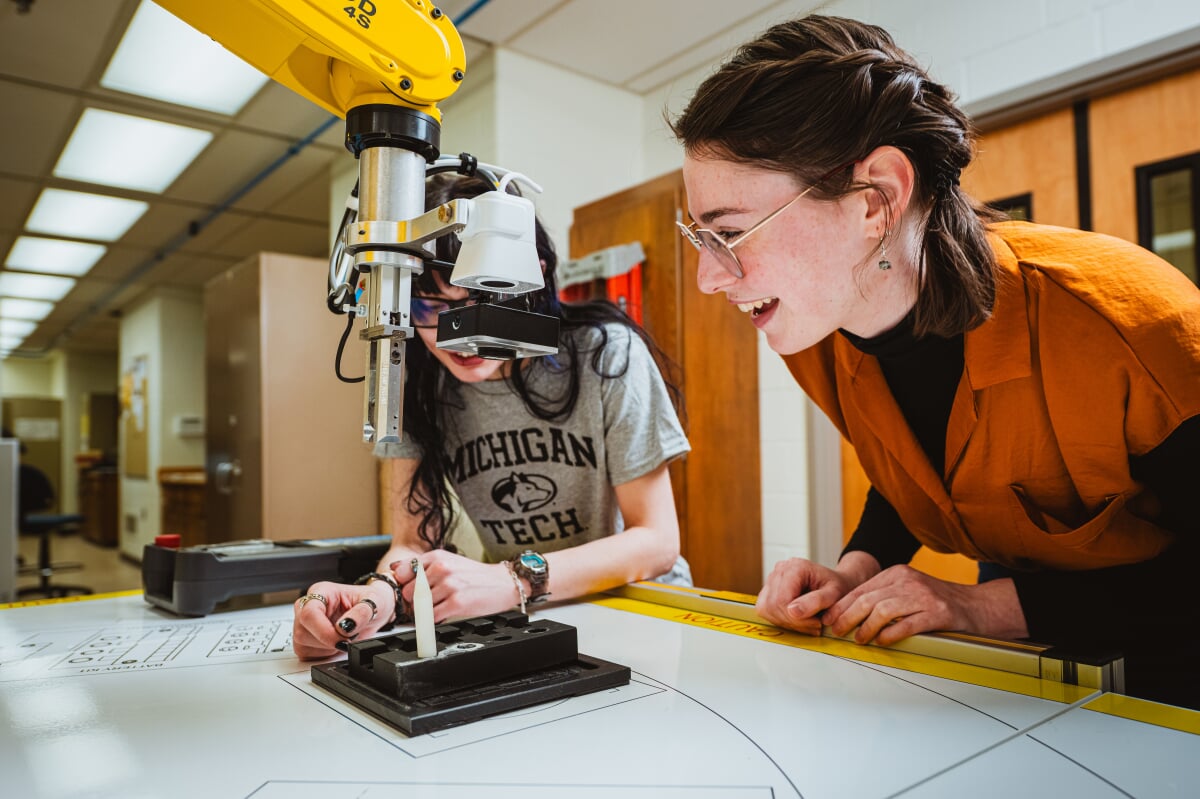
From their earliest classes, Huskies in the Michigan Tech mechatronics program are wiring circuits, programming industrial robots and teaming up on building projects.
"It's insane how much you learn the theories in the classroom and then do them in the lab immediately," said Sebastian Dash '27, a junior mechatronics major who was looking for that kind of applied experience when he chose Tech.
MTU senior Abi Hodsdon '26 enrolled in mechatronics at Tech because she wanted a multidisciplinary path focused on robotics and hands-on work. "Seeing theory come to life is what keeps me excited," she said.
They say the community they've discovered, with a support system that includes helpful classmates and approachable faculty, makes their educational experiences even more meaningful.
When it comes to faculty, one name arises again and again: Paniz "Pani" Hazaveh, associate teaching professor and program director for Michigan Tech's mechatronics and electrical engineering technology bachelor's degrees.
Hazaveh, a 2025 finalist for Michigan Tech's Distinguished Teaching Award, is known for breaking down complex concepts and building community in and out of the lab. Her students say she is a patient, encouraging presence who helps them progress and achieve.
"She won't move forward unless every student understands. She's one of the reasons I've stayed so confident in this major," said Dash.
The blend of mentorship and rigorous academic expectations keeps students grounded as they explore robotics, automation and artificial intelligence. Hazaveh said Tech's mechatronics faculty emphasizes not only how systems work but also their ethical implications, safety considerations and societal impact.
"At MTU, Mechatronics is more than just a degree. It's a community where we turn ideas into real-world applications," Hazaveh said. "We're a family of curious and creative minds. We're not just training people to operate machines. We're teaching them to create systems that improve efficiency, sustainability and quality of life."
Mechatronics Explained
What is mechatronics? The discipline combines mechanical engineering, electronic and computer systems, robotics, systems engineering, and manufacturing. Mechatronics engineers are in demand to design, develop and test intelligent and efficient products and processes across industries, from aerospace to manufacturing. Tech's bachelor's and master's degree programs in mechatronics integrate coursework and research across the College of Computing and the College of Engineering.
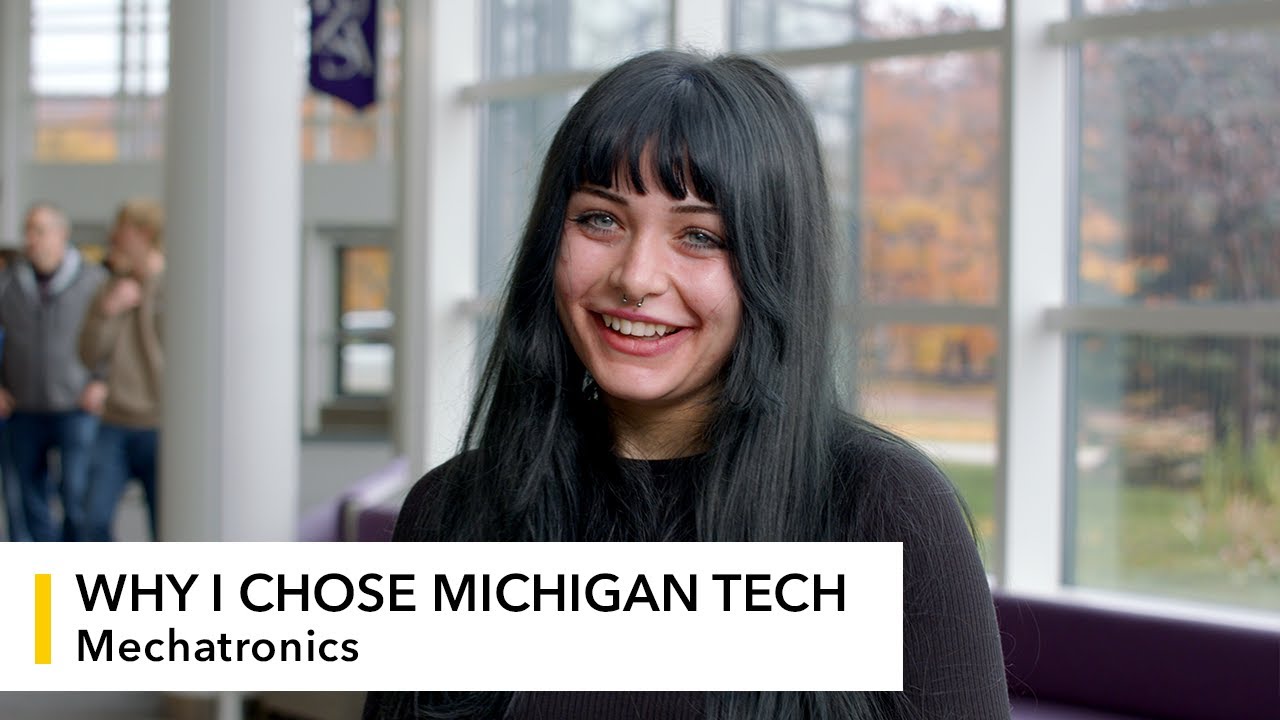
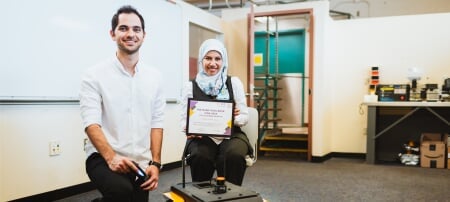
My Michigan Tech: Lydia Festian
Huskies Apply Mechatronics to the Real World
For Dash, his fascination with mechatronics started young with taking things apart to see how they worked. He's now applying those instincts on a larger scale as a member of SENSE, Michigan Tech's Strategic Education through Naval Systems Enterprise. The group is one of the interdisciplinary teams offered through the University's student-driven Enterprise Program. Hodsdon is a member, too.
In SENSE, Dash's team is building an autonomous boat equipped with lidar, GPS and environmental sensors capable of navigating independently on the water. The project blends mechanical design, electrical engineering and programming, mirroring the authentic situations students will face after graduation.
"It's like everything comes together," Dash said. "You build something from nothing, test it, fix it, and then watch it work."
He said overall, the team's focus is on developing an autonomous boat that could support environmental monitoring, marine research or naval operations.
"It's a perfect example of how mechatronics crosses boundaries," Dash said. "Mechanical, electrical and computer engineering all come together in one project."
Collaboration between subjects and teammates is built directly into mechatronics coursework, from first-year labs to Senior Design teams, teaching students that innovation happens best when people work together.
The Enterprise Program gives mechatronics students additional opportunities to develop prototypes, automate manufacturing processes and design autonomous systems for land, air and water. Enterprise projects also build communication, leadership and teamwork skills that are critical in industry.
"You can have the best technical design in the world, but if you can't communicate it, it doesn't go anywhere," Hodsdon said. "This program gives us both."
Hodsdon knew that she wanted a degree that bridged robotics, electronics and mechanical design. What sealed her decision was the mechatronics program's emphasis on hands-on learning. Her favorite experience so far was a multiweek lab project working with sensors and instrumentation.
"We designed, built and tested a bridge rectifier and op-amp circuit for an RTD sensor. Seeing a project through from design to calculation to testing was incredibly satisfying."
Applied learning extends beyond the classroom and labs. Mechatronics faculty frequently invite employers to visit classes or help prepare students for the twice-yearly Michigan Tech Career Fair. Industry professionals review resumes, share project insights and help students make early connections for internships and co-ops.
A Rising Generation Engineers the Future
As technology advances, the demand for engineers who can integrate mechanical systems with digital intelligence continues to grow. Michigan Tech's mechatronics graduates are helping to lead the way, designing systems that can think, adapt and transform industries.
Mechatronics was introduced at Michigan Tech as a master's degree program in 2019. The bachelor's degree program was first offered in 2020. Since then, the program has notched national rankings and influenced U.S. education and workforce development through an appearance at the Congressional Artificial Intelligence Caucus. In fall 2025, the program secured an Advanced Robotics for Manufacturing (ARM) endorsement, further strengthening its national reputation.
Graduates work for companies such as Rockwell Automation, FANUC, General Motors, Bosch and Caterpillar. They're designing systems that automate production, improve safety and reduce environmental impact. Many Huskies also choose to pursue graduate research in robotics, control systems and artificial intelligence.
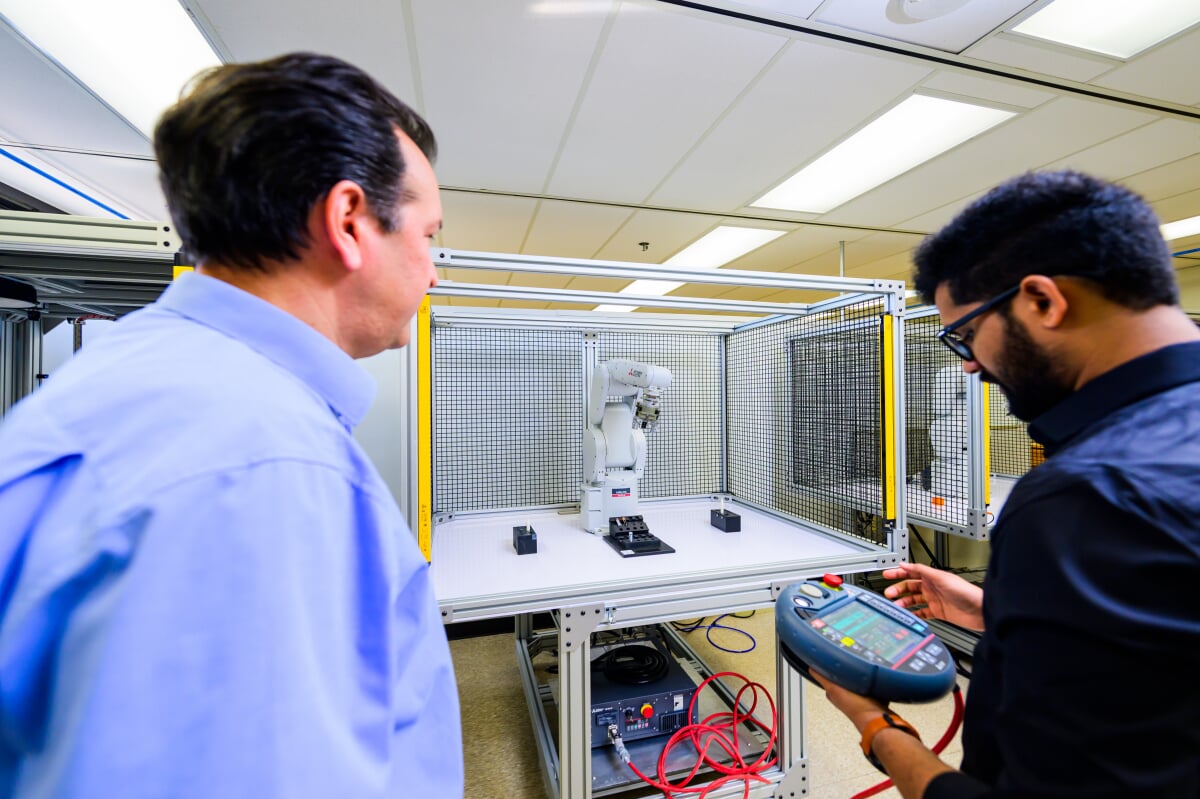
Mechatronics faculty member Nathir A. Rawashdeh, an assistant professor and member of Tech's Institute of Computing and Cybersystems (ICC) and Great Lakes Research Center (GLRC), has seen interest surge.
"The enrollment in my PLC (programmable logic controllers) classes has grown steadily over the past six years," Rawashdeh said. "Students learn to program and control industrial-grade equipment, skills highly sought after by recruiters."
Alumni are also bolstering the growth of mechatronics education at Tech. Jeevan S.D., a 2023 graduate of the master's in mechatronics program, and his company, Overview.ai, recently donated seven intelligent industrial inspection cameras. The AI-enabled tools will be integrated into a new Control Systems Integration course and used for applied research.
"These cameras allow real-time quality inspection," Rawashdeh said, "and will significantly elevate what our students can do."
While state-of-the-art equipment is integral to the program's success, the enthusiasm of students and the support of faculty, alumni and industry partners illustrate how the success of Michigan Tech's mechatronics program is about more than technology. It's also about the human connection of creative, curious, determined Huskies prepared for what tomorrow needs.
"Every day, I feel like I'm learning something new that actually matters," Dash said. "We're not just imagining the future. We're building it."
Michigan Technological University is an R1 public research university founded in 1885 in Houghton, and is home to nearly 7,500 students from more than 60 countries around the world. Consistently ranked among the best universities in the country for return on investment, Michigan's flagship technological university offers more than 185 undergraduate and graduate degree programs in science, technology, engineering, mathematics, computing, forestry, business, health professions, robotics, psychology, social sciences, humanities, and the arts. The rural campus is situated just miles from Lake Superior in Michigan's Upper Peninsula, offering year-round opportunities for outdoor adventure.