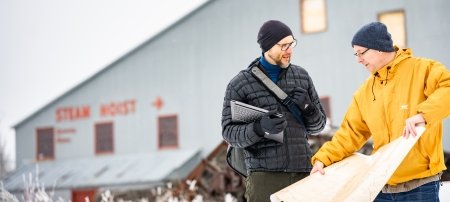
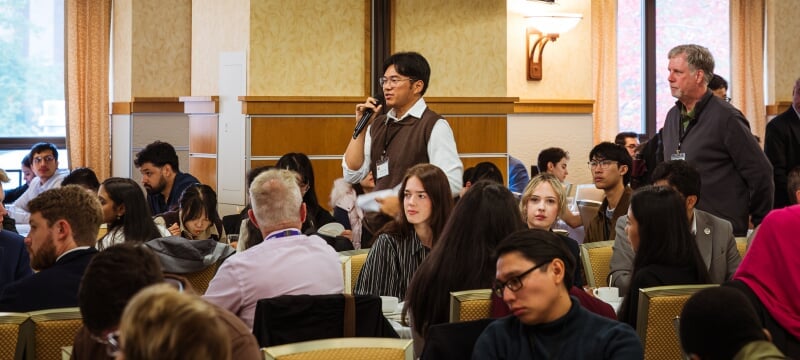
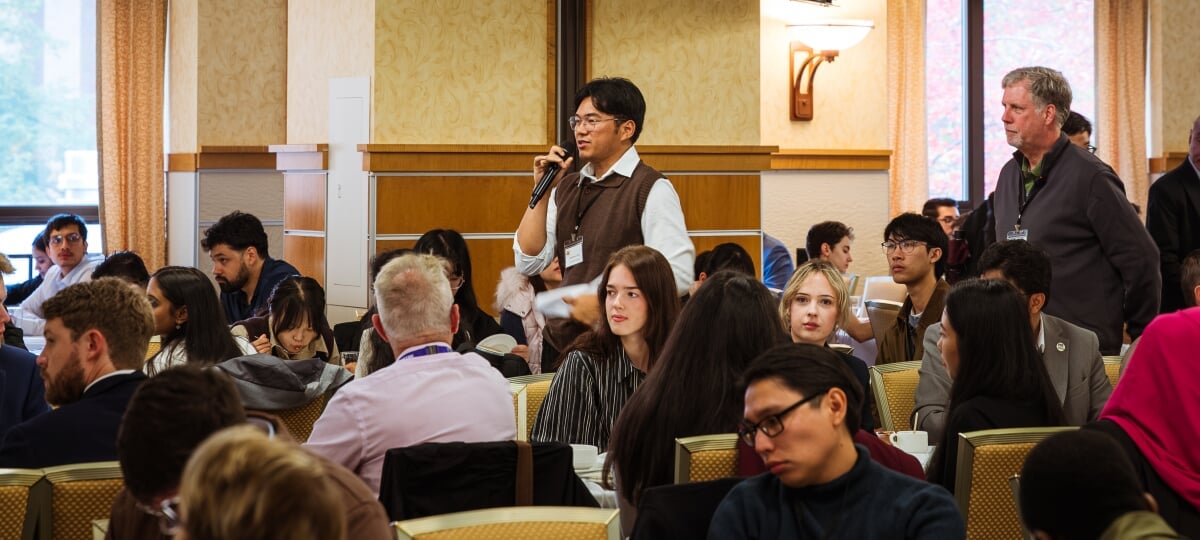
More than 400 researchers, students and industry experts came together on Michigan Technological University's campus Oct. 11-13 to focus on advancing the systems that power the world.
The annual North American Power Symposium (NAPS), originally known as the Midwest Power Symposium, has been a mainstay in the pivotal conversations surrounding energy since 1969. At the 2026 event hosted by Michigan Tech, sessions focused on the rapidly evolving landscape of energy and power, including new risks and rewards presented by artificial intelligence. Electric grid stability, renewable energy potential and data center energy management were prominent among presentations, along with cyber-physical security, grid flexibility and transportation electrification.
This year's symposium marks the first time that NAPS has returned to Michigan Tech since 1985. Organized by a faculty committee from the University's Department of Electrical and Computer Engineering (ECE), the event was chaired by Professor Chee-Wooi Ten, who noted that more than half of the attendees were students.
"We're connecting the next generation of engineers directly with national leaders who are shaping the future of the electric power system," he said. "The organizing committee and I were glad to welcome NAPS back to Michigan Tech as the automotive industry and emerging technologies reshape how we plan and secure our electric grid."
Event co-chair Professor Wayne Weaver, ECE department chair, said it was exciting to host energy sector experts along with upcoming leaders and innovators. Five national laboratories were represented, along with 25 industry organizations.
"This gathering connected more than 200 student researchers with industry and academic professionals who are shaping the future energy industry," he said, adding that the symposium also provided an excellent opportunity to showcase the Michigan Tech engineering program as well as the peak fall colors of the Keweenaw Peninsula.
The event featured two-and-a-half days of presentations, including papers, poster sessions and panels, preceded by social networking on Oct. 11.
The keynote was delivered by 1996 Michigan Tech mechanical engineering alumnus and GM Energy vice president Wade Sheffer, who focused on the emerging role of transactive energy that connects residential energy systems to the broader electric grid. Sheffer highlighted how electric vehicles, home battery storage, and distributed energy resources can play major roles in more flexible, resilient and interactive energy ecosystems.
Three featured panels tackled of-the-moment topics spanning utilities and other energy-associated industries, national laboratories, academia, and government and regulation.
1982 ECE alumnus and National Academy of Engineering member Kevin Tomosovic moderated a panel discussion on the integration of large and emerging electric loads. A panel on strengthening the power grid against cyber threats, physical disruptions and extreme events included Midwest power providers, while a discussion on grid flexibility, arbitrage and transportation electrification included Michigan Public Service Commission (MPSC) Chair Dan Scripps.
Mentioning the State of Michigan's ambitious energy goals, which include building the infrastructure to accommodate two million electric vehicles on the road by 2030, Scripps said the power landscape has undergone a major shift, as both energy technology and demand rise. In the previous century, the most compelling need for a manufacturing state like Michigan with a strong industrial base was to match the load requirements of customers operating continuously, Scripps said.
"We built a grid to serve that type of use," he said. "Nuclear plants and coal plants — especially nuclear plants — you sort of plug them in, turn them on and then you only stop for refueling cycles. When there were variations in load, we did things like building the Ludington Pumped Storage Plant, which is essentially a giant water battery. It was designed to allow the plants to continue to operate, and where they were generating more than the grid was using, to move it around a little bit," he said. "It's a very different story in the 21st century."
"If always-on and consistent power usage was the theme of the 20th century, I really think that flexibility is the theme of the 21st century."
Scripps said battery storage will continue to play an important role in the approach the state takes in carrying out the goals of the MI Healthy Climate Plan. Designed by the Michigan Department of Environment, Great Lakes, and Energy (EGLE) through its Office of Climate and Energy, with input from citizens and experts around the state, the plan aims to effectively address environmental and climate change issues by the midcentury. Scripps also touched on the commission's combination of rate design, planning, and incentives put on utilities and their customers to provide flexibility needed as the grid continues to evolve.
Students Connect with Peers and Careers
For Anna Stuhlmacher, ECE assistant professor and technical agenda chair for the event, welcoming NAPS back to Tech after 40 years was especially meaningful. "NAPS was the first conference where I presented a paper when I was a Ph.D. student," she said. "I enjoyed seeing students share their work, build connections and learn about new research ideas."
A More Powerful Michigan
Conversations and collaborations continued in the afternoon on Oct. 13 at Michigan Day, an on-campus gathering with the MPSC to discuss research and collaboration opportunities in the state. Hosted at Tech's Great Lakes Research Center, Michigan Day included an MPSC panel discussion, lightning talks with faculty and industry, and student poster presentations.
"Michigan Day brought University researchers, industry, students and the Michigan Public Service Commission into the same room to talk about Michigan's energy future," said Anna Stuhlmacher, organizer and ECE assistant professor. "I hope people left with new connections and ideas for how we can work together to address challenges and support energy innovation across the state."
In addition to networking with peers and professionals, students at NAPS also received encouraging career advice.
"There's a feeling that we're in a new era," said panelist Jonghwan Kwon, who is lead for the Grid Expansion and Interdependency Group in the Energy Systems and Infrastructure Assessment Division at Argonne National Laboratory. "Follow your interests, follow your passions. When you do things you love, it's way easier to do them, and when your interests or your passions change, find a way to pivot along the way. This is a wide field; it will change a lot over the coming years, and as long as what you are doing is interesting to you, you will do good."
Scripps said energy is one of the most intriguing sectors of the current economy. "Everything's changing and it's happening really fast," Scripps told students. In addition to careers with utilities, work with startups in the distributed energy space, and academic research, he asked students to consider public service opportunities. "The training that the commission can provide is difficult to replicate almost anywhere else. We have people who have stayed with the commission their whole career. Others go to utilities or other parts of the private sector."
The MPSC said there are at least eight Michigan Tech graduates who currently work at the commission, including Dave Chislea, the director of the MPSC's Gas Safety & Operations Division, and Cathy Cole, who is director of the MPSC's Strategic Operations Division. Scripps noted that two Huskies working for the commission live in the Upper Peninsula: Tim Dombrowski, a gas safety engineer, and Amber Place, a public utilities engineer in the MPSC's Energy Resources Division.
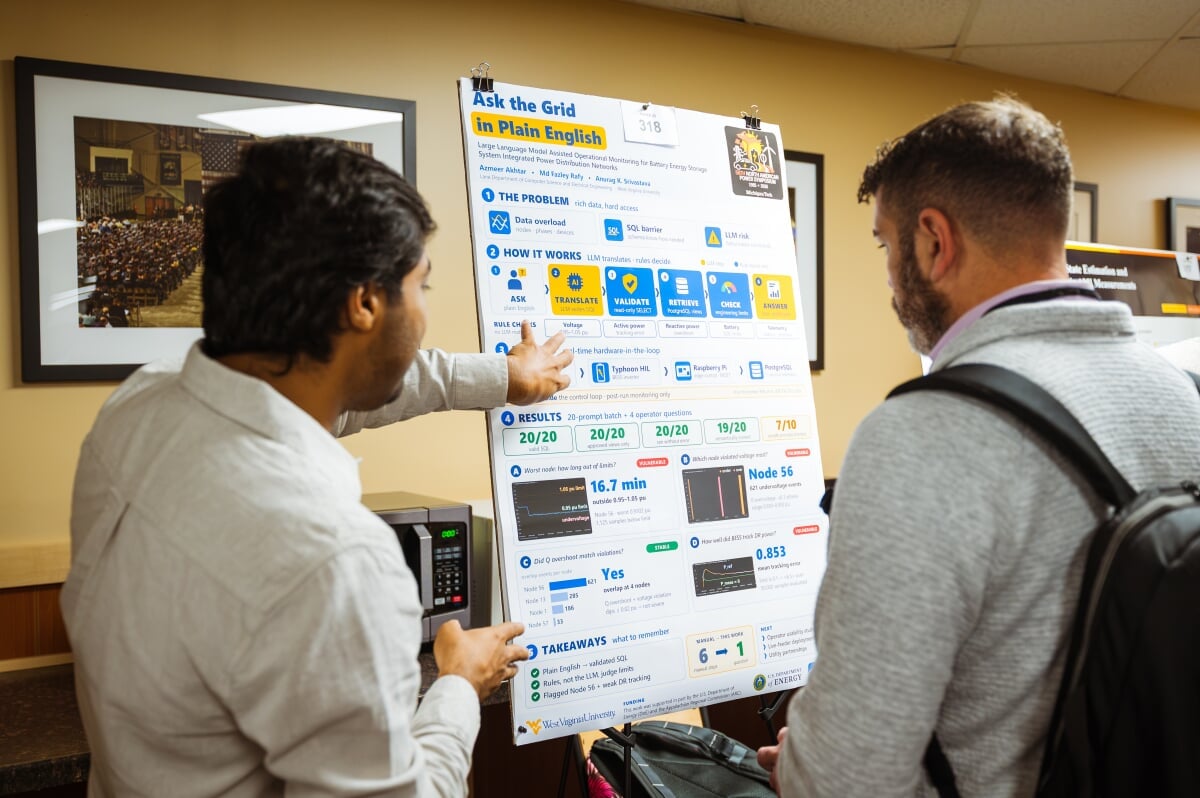
The 58th convening of NAPS was the first time that Yi Hu, ECE assistant professor and publications chair for the event, has attended the symposium. Hu, whose work addresses present and future challenges in the power and energy systems field, said he hopes participants left with new technical insights, useful professional connections and potential research collaborations. "I was especially excited to welcome the power and energy community to Michigan Tech and see the exchange of ideas among students, researchers and industry professionals," he said.
Ten said the symposium could not have happened without an extraordinary organizing committee and student volunteers.
"Bringing NAPS back to Michigan Tech after 41 years was a tremendous undertaking. Everyone contributed selflessly, adapted to unexpected circumstances, and stepped up whenever needed," he said. "Our student volunteers were enthusiastic, motivated, and gracious in welcoming participants from around the world. Their involvement was a wonderful opportunity to connect with peers from other universities, build friendships and become part of a broader research community."
"Michigan Tech has generations of alumni whose resilience, perseverance and willingness to work hard reflect the character of this community. I wanted our guests to experience not only the intellectual strength of Michigan Tech, but also the people, culture and enduring spirit that make this place so special."
Michigan Technological University is an R1 public research university founded in 1885 in Houghton, and is home to nearly 7,500 students from more than 60 countries around the world. Consistently ranked among the best universities in the country for return on investment, Michigan's flagship technological university offers more than 185 undergraduate and graduate degree programs in science, technology, engineering, mathematics, computing, forestry, business, health professions, robotics, psychology, social sciences, humanities, and the arts. The rural campus is situated just miles from Lake Superior in Michigan's Upper Peninsula, offering year-round opportunities for outdoor adventure.