
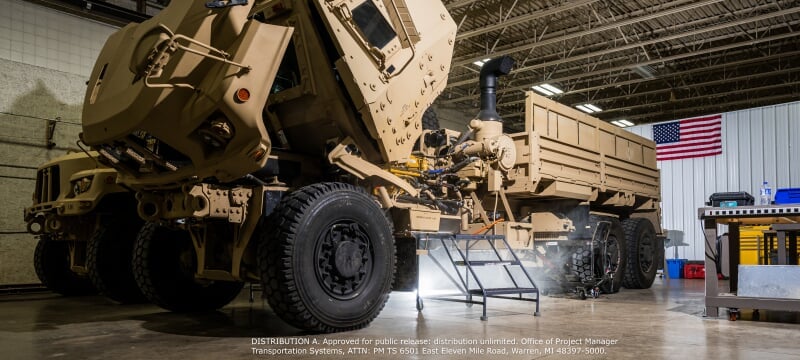
Michigan Technological University’s Advanced Power Systems Research Center, also known as APS LABS, has been tapped by the U.S. Army to expand its cutting-edge work developing expeditionary power generation kits for tactical vehicles.
Through a Defense Innovation Unit other transaction agreement (OTA), the U.S. Army recently awarded APS LABS a contract extension for their project titled "Mobile Energy Generation for Austerity — Vehicle Integrated Power Kit,” which involves the development of a kit for energy generation on tactical vehicles. The 18-month extension lengthens the project timeline to 3 years and expands the total project value significantly, with $16.9 million exercised to date. It also focuses on bringing the Michigan Tech power kit to full production level. To do so, APS LABS has partnered with Oshkosh Defense, a major defense equipment supplier that manufactures the Family of Medium Tactical Vehicles A2 (FMTV A2) tactical vehicles involved in the project.
"This extension is a significant milestone for APS LABS and our R&D, validating our groundbreaking efforts,” said Richard & Elizabeth Henes Professor in Energy Systems Jeffrey D. Naber, who is leading the project. "By deepening our partnership with Oshkosh Defense, a world-class defense leader, we are bridging the gap between academic innovation and scalable, mission-critical solutions.”
The Vehicle Integrated Power Kit (VIPK) is designed to deliver mobile, on-platform energy to support critical battlefield operations, including a wide range of Counter-Unmanned Aircraft Systems (C-UAS), directed energy weapon systems, missile defense systems, post operations, and field hospitals. The kit can generate up to 120kW of power at 600 volts of direct current and is compliant with the Tactical Microgrid Standard (TMS), enabling interoperability with other power systems in the field. By providing reliable power in austere environments, the system enhances operational flexibility and reduces reliance on external power sources. Additional soldier evaluation of the vehicles and VIPK optimization studies will help APS LABS and Oshkosh Defense bring the best product possible to full production level.
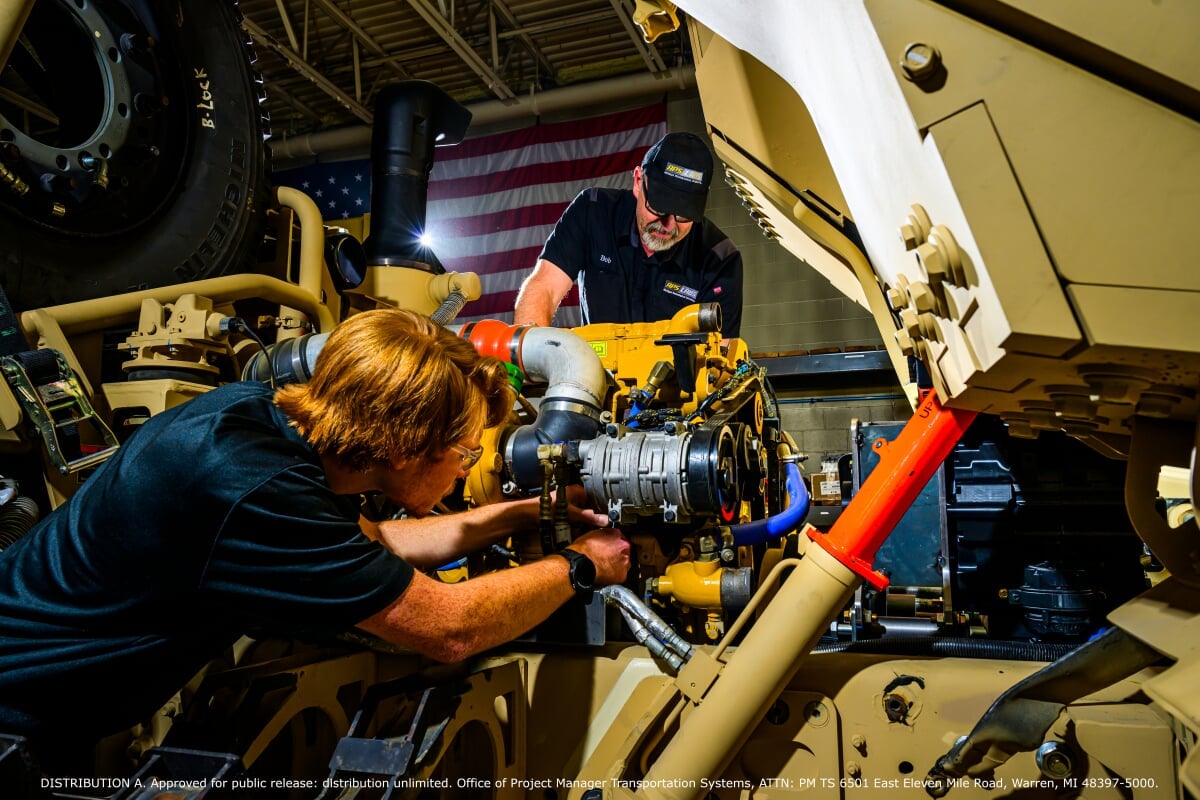
The collaboration brings together the advanced research and development capabilities and integration expertise of APS LABS with Oshkosh Defense’s production expertise to help transition the VIPK prototype toward scalable application. As the original equipment manufacturer (OEM) for the FMTV A2, Oshkosh Defense is supporting commercialization and technology transfer from a proven prototype to a production ready kit, utilizing their expertise in manufacturability and production with a focus on performance, compatibility, and mission readiness.
“This partnership reflects a focused approach to strengthening the FMTV A2 through incremental capability enhancements that directly support mission demands,” said Pat Williams, chief programs officer at Oshkosh Defense. “As the original equipment manufacturer, we are enabling the integration of emerging power solutions in a way that aligns with the platform’s design and performance, allowing soldiers to operate critical systems with greater flexibility and reliability in complex environments.”
Through this effort, Michigan Tech and Oshkosh Defense are advancing technologies that enhance vehicle capability and support the evolving needs of the U.S. Army. The collaboration reflects a shared focus on delivering practical, high-performance solutions that integrate seamlessly into existing platforms. Next, the team will complete and validate two prototypes for government assessment and soldier evaluation. As those prototypes move to a test site, APS LABS will begin building two additional prototypes for continued testing and technology demonstrations while the team finalizes the Technical Data Package and further optimizes the design for manufacturability.
“The VIPK project shows the expertise and synergy that Michigan Tech possesses in automotive, power systems, and applied defense applications,” said Andrew Barnard, Michigan Tech’s vice president for research. Recent APS LABS projects in the automotive and military sectors include the delivery of a prototype tactical hybrid electric High-Mobility Multipurpose Wheeled Vehicle (HMMWV) to the U.S. Army’s Rapid Capabilities and Critical Technologies Office (RCCTO), and becoming the engineering services provider for the American Center for Mobility (ACM) in Ypsilanti, Michigan. “This project, and others like it, are important for Michigan Tech and the State of Michigan to generate new technology and create new industries that build on Michigan's strengths in manufacturing and defense.”
In addition to Oshkosh Defense, partners on the project include GS Engineering, Soli Consulting, and LSA Solutions. Support also comes from many organizations within the U.S military, including Portfolio Acquisition Executive (PAE) Agile Sustainment and Ammunition (AS&A), Capability Program Executive (CPE) Combat Sustainment (CS), Project Manager (PM) Transportation Systems (TS), Product Director (PdD) Multi-Mission Protected Vehicle Systems (MPVS), Office of Secretary of War Defense Innovation Unit (DIU), Office of Secretary of War Operational Energy-Innovation (OE-I), Ground Vehicle System Center (GVSC), and Combat Capabilities Development Command.
About Oshkosh Defense: Oshkosh Defense, an Oshkosh Corporation business [NYSE: OSK], delivers adaptable, connected, and survivable systems critical to the modernization and readiness of the U.S. and its allied forces. As a trusted mobility integrator, Oshkosh brings advanced vehicles, intelligent systems, and mission-critical technologies together into unified solutions built for evolving operational demands. Combining defense expertise with commercial scale, Oshkosh accelerates innovation from development through deployment. And because the mission does not end at fielding, Oshkosh provides global sustainment, lifecycle support, and aftermarket solutions that keep fleets ready while advancing the future of defense mobility. Learn more at OshkoshDefense.com.
Michigan Technological University is an R1 public research university founded in 1885 in Houghton, and is home to nearly 7,500 students from more than 60 countries around the world. Consistently ranked among the best universities in the country for return on investment, Michigan's flagship technological university offers more than 185 undergraduate and graduate degree programs in science, technology, engineering, mathematics, computing, forestry, business, health professions, robotics, psychology, social sciences, humanities, and the arts. The rural campus is situated just miles from Lake Superior in Michigan's Upper Peninsula, offering year-round opportunities for outdoor adventure.