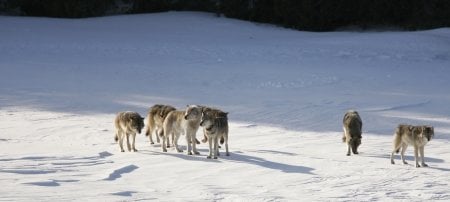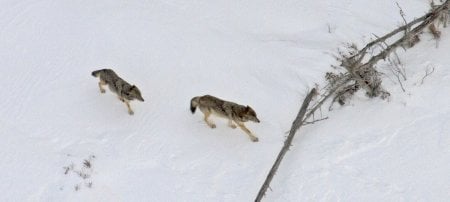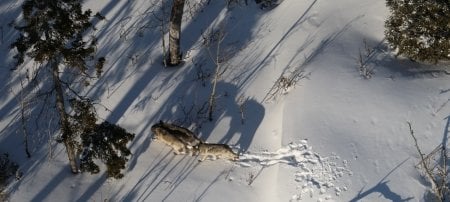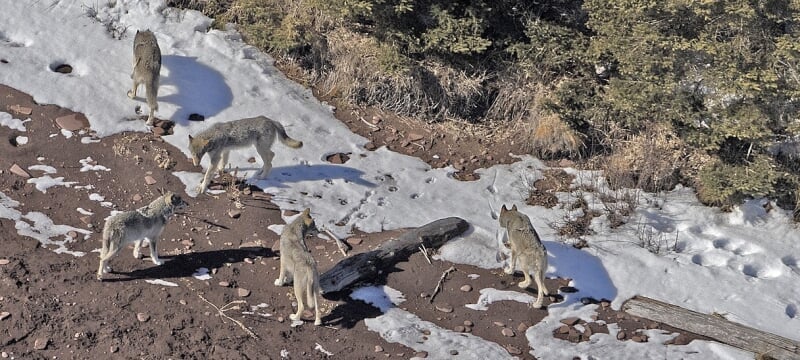

Near-record highs for the number of wolves and near-record lows for the number of moose characterized the 2026 Isle Royale Winter Study, a population survey led by Michigan Tech researchers on Isle Royale National Park.
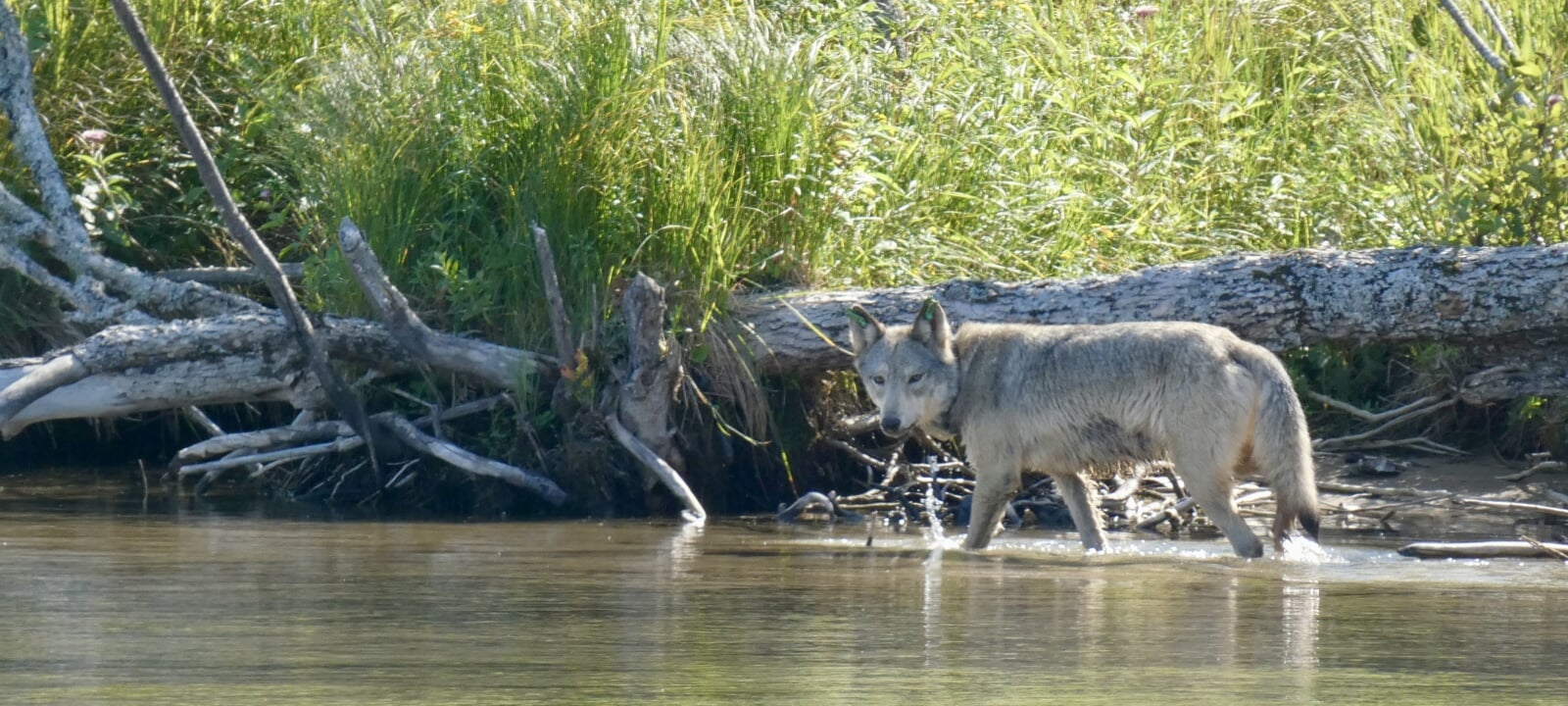
Michigan Technological University's long-running survey of wolves and moose on Isle Royale was conducted Jan. 22 through March 3 in bitterly cold conditions that, for a time, caused an ice bridge to form from the remote island archipelago to the mainland. Co-led this year by Michigan Tech researchers Sarah Hoy and Rolf Peterson of the College of Forest Resources and Environmental Science (CFRES), the latest survey results revealed that the wolf population has increased to an estimated 37 wolves, a level not reached since the late 1970s. The high number of wolves represents a stark contrast from just a decade ago, when the wolf population had dwindled to just two wolves due to inbreeding depression.
This year's survey findings for moose were equally dramatic, though on the other end of the spectrum. The moose population was estimated at 524. That's a 75% drop since 2019, when the number of moose on Isle Royale reached a high of 2,000. The lowest number of moose ever recorded on Isle Royale was 385 in 2007.
The sharp decline in the moose population has been driven by an increase in wolf predation. In 2018 and 2019, 19 wolves were translocated to Isle Royale by the National Park Service to prevent the island's wolf population from going extinct.
"The wolf and moose populations are now approaching the edge of where they have been in the past, with moose low and wolves high."
Another harbinger of decades past was the formation of an ice bridge connecting Isle Royale to the mainland, which existed between the end of January and mid-February.
"Even though it only lasted two weeks, the extensive ice bridge was a welcome reminder of the conditions that prevailed in the 1970s, when mainland wolves had greater access to the island," said Peterson, who brought the study to Michigan Tech in 1975 from Purdue University, where the project began in 1958. He continues to co-lead the wolf-moose project, along with Hoy and fellow CFRES researcher John Vucetich.
Access the Annual Report
Read the full 2025-26 Ecological Studies of Wolves on Isle Royale annual report on the Wolves and Moose of Isle Royale website.
The wolf population is currently composed of three packs, with 10 to 13 wolves in each pack. All three packs — the West Pack, East Pack and Northeast Pack — successfully raised pups last year and appear likely to produce pups again this spring.
Wolf predation rates on moose were close to the highest level ever observed, with calculations suggesting that about 24% of the moose population was killed by wolves over the past year. The researchers noted that wolf predation is a major cause of mortality for moose on Isle Royale.
Moose and Balsam Fir Populations Experiencing Downturns
For the first time in 68 years, the winter study research team observed no calves during the annual moose count. Hoy pointed to this winter's high levels of wolf predation as the likely cause of the calves' low numbers.
"In the past year, I have only seen one moose calf," said Hoy. "While it's great to see the wolf population doing well, it's hard — although not unexpected — to see both the moose population and the forest struggling."
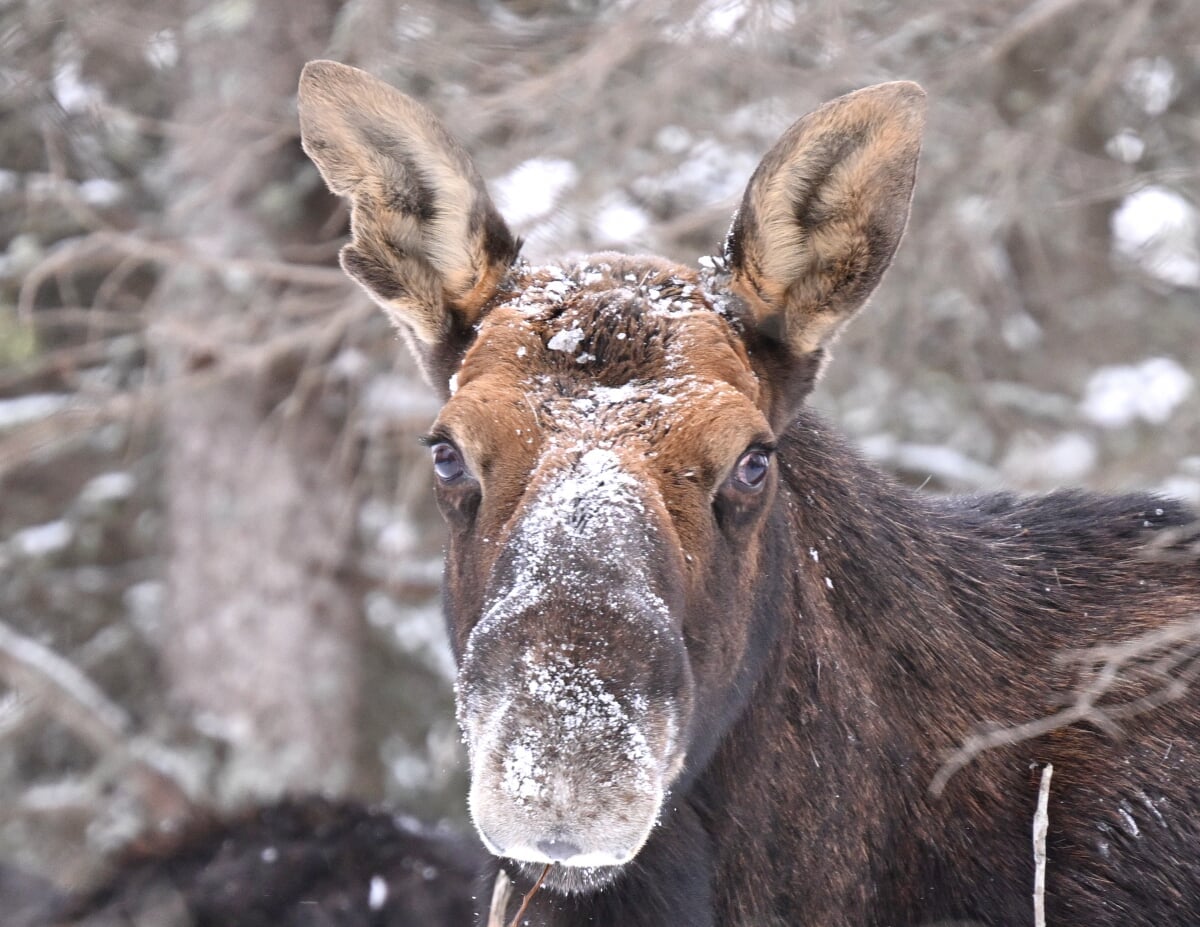
The forest decline Hoy referred to involves balsam fir, a boreal forest staple and a preferred food for moose. The island's balsam fir saplings were heavily browsed by moose from 2018 to 2021. Despite a significant drop in browsing pressure as moose numbers have fallen, the trees have yet to recover.
For more than a decade, MTU researchers have been studying how changes in moose abundance and browsing pressure are affecting balsam fir, which represents 50% of their winter diet. Researchers noted that the negative effects that high levels of moose browsing were having on the growth and survival of balsam fir and other tree species was a major factor in the National Park Service's decision to restore the island's dwindling wolf population.
Based on data collected this past summer, the research team found that young balsam fir trees grew only 2.7 centimeters taller on average over the year. That's the least growth researchers have ever observed. In years when browsing pressure is low, young trees typically grow about 20 centimeters taller on average.
Winter 2026 Provides Both Ideal Conditions and Challenges
The study period was marked by extreme weather, with wind chills reaching minus 50 degrees Fahrenheit. Peterson noted that winter surveys are usually improved by cold weather, which leads to more ice and better landing conditions for the ski plane.
While Hoy was also grateful for better conditions than the warm weather that forced the premature end of the winter study in 2024, she said cutting holes in the ice for drinking water and to securely tie down the survey plane was less than pleasant.

"It was really tough having to stand out on the harbor with no shelter to complete these tasks in such brutally cold conditions," she said. "When we first arrived, it took a very long time for the woodstove to heat up the cabin where we stay for winter study. The first few nights I was sleeping in four layers of clothing, wearing a woolly hat, in my winter sleeping bag with a thermal liner."
Despite the cold, Hoy said the clarity of the winter provided exceptional observations.
"This winter stands out as being exceptionally good for observing wolves," she said. "We saw wolves on all but one survey flight (a flight when we were focused on completing the annual moose count). Even as we took off from the harbor to head back to the mainland at the end of winter study, we saw a lone wolf walking out onto the ice by Washington Island."
Her personal highlights included seeing wolves from the East Pack snuggled up together on the ice on Valentine's Day.
"It's always such a privilege to get to see wolves interacting, witnessing courtship behavior, pups playfully tugging on each other's tails, or a pack working together to take down a moose," she said.
Teamwork in the Skies and on the Ground
The Isle Royale Wolf-Moose Project requires the help of a team of researchers, including students from Michigan Tech and other universities, and a fleet of citizen scientists. The in-the-field winter study, a major component of the annual report, happens when the roadless island is closed to visitors. The team is much smaller for this portion of the project. Most volunteer work and student research happens in summer.
As the project enters its 68th year, Michigan Tech researchers will return to the island in late April to begin summer fieldwork. Throughout the summer, they'll be joined by the citizen scientists of Moosewatch and other partners to conduct additional research on island ecology.
Among numerous other projects, Michigan Tech researchers will continue to monitor whether the resurgent wolf packs can maintain their balance within an ecosystem where their primary prey is nearing historic lows.
Michigan Technological University is an R1 public research university founded in 1885 in Houghton, and is home to nearly 7,500 students from more than 60 countries around the world. Consistently ranked among the best universities in the country for return on investment, Michigan's flagship technological university offers more than 185 undergraduate and graduate degree programs in science, technology, engineering, mathematics, computing, forestry, business, health professions, robotics, psychology, social sciences, humanities, and the arts. The rural campus is situated just miles from Lake Superior in Michigan's Upper Peninsula, offering year-round opportunities for outdoor adventure.