
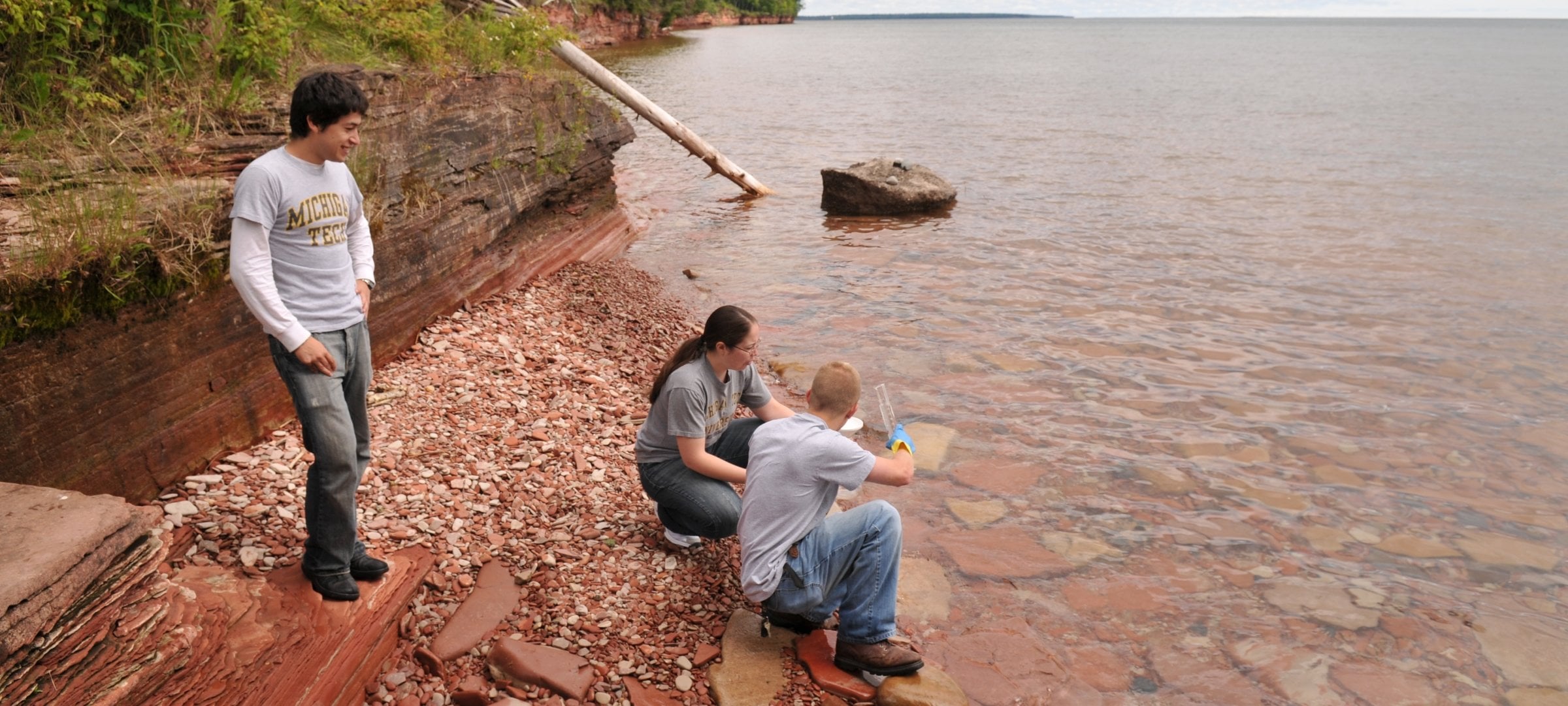
How do you remove contaminants from water, protect air quality, or prevent pollution from spreading through soil and groundwater? The answer is environmental engineering. This interdisciplinary field applies science, mathematics, and engineering design to protect human health and natural systems. Michigan Tech's PhD in Environmental Engineering takes those questions further: investigate how environmental processes work, test treatment and remediation approaches, and conduct original research that can improve the ways communities and industries manage environmental risks.
Who Is This Program For?
The PhD in Environmental Engineering may suit those who want to move beyond applying established environmental engineering practices and investigate how those practices can be improved. If your interests connect engineering with biology, chemistry, geology, public policy, or sustainability, this interdisciplinary program could be a good fit. Whatever the focus, applicants should have a strong quantitative and scientific background and the ability to develop a sustained research question.
What You'll Study
Investigate the physical, chemical, and biological processes that affect air, water, soils, and engineered treatment systems. Depending on your research interests, your doctoral work may address drinking-water and wastewater treatment, environmental process design, pollutant transport, subsurface remediation, air-quality engineering, or water reuse. Apply experimental methods, chemical analysis, modeling, and engineering evaluation to test hypotheses and assess performance. Develop new evidence, methods, or engineering knowledge within a defined area of environmental research.
Where You'll Apply Your Knowledge and Skills
You could apply your expertise to evaluating contaminant pathways, developing water-reuse strategies, testing remediation methods, or improving processes that reduce pollution and resource use. Some possible careers include environmental research engineer, water-treatment research scientist, remediation engineer, environmental process-development engineer, or university researcher. Environmental engineering and consulting firms, water utility companies, government agencies, research laboratories, and technology developers are examples of potential workplaces.
-
Delivery Options
- On-Campus: PhD
Environmental Engineering Program Details
Learn more about the environmental engineering program at Michigan Tech. For international students, Environmental Engineering is a designated STEM program.
On-Campus Programs
Additional Program Information
Want to learn more about environmental engineering at Michigan Tech? Visit the department for more information:

Building Equitable Partnerships"My doctoral research is building equitable research partnerships between Michigan Tech and the Keweenaw Bay Indian Community to address the shared concern about the mixture toxicity associated with fish consumption. With an interest in both science and policy, I am grateful for advisors and mentors that support interdisciplinary degrees."
Sample Areas of Interest
Select areas of interest to help customize your environmental engineering PhD. Sample areas include:
- Air Quality
- Surface Water Quality
- Subsurface Remediation