
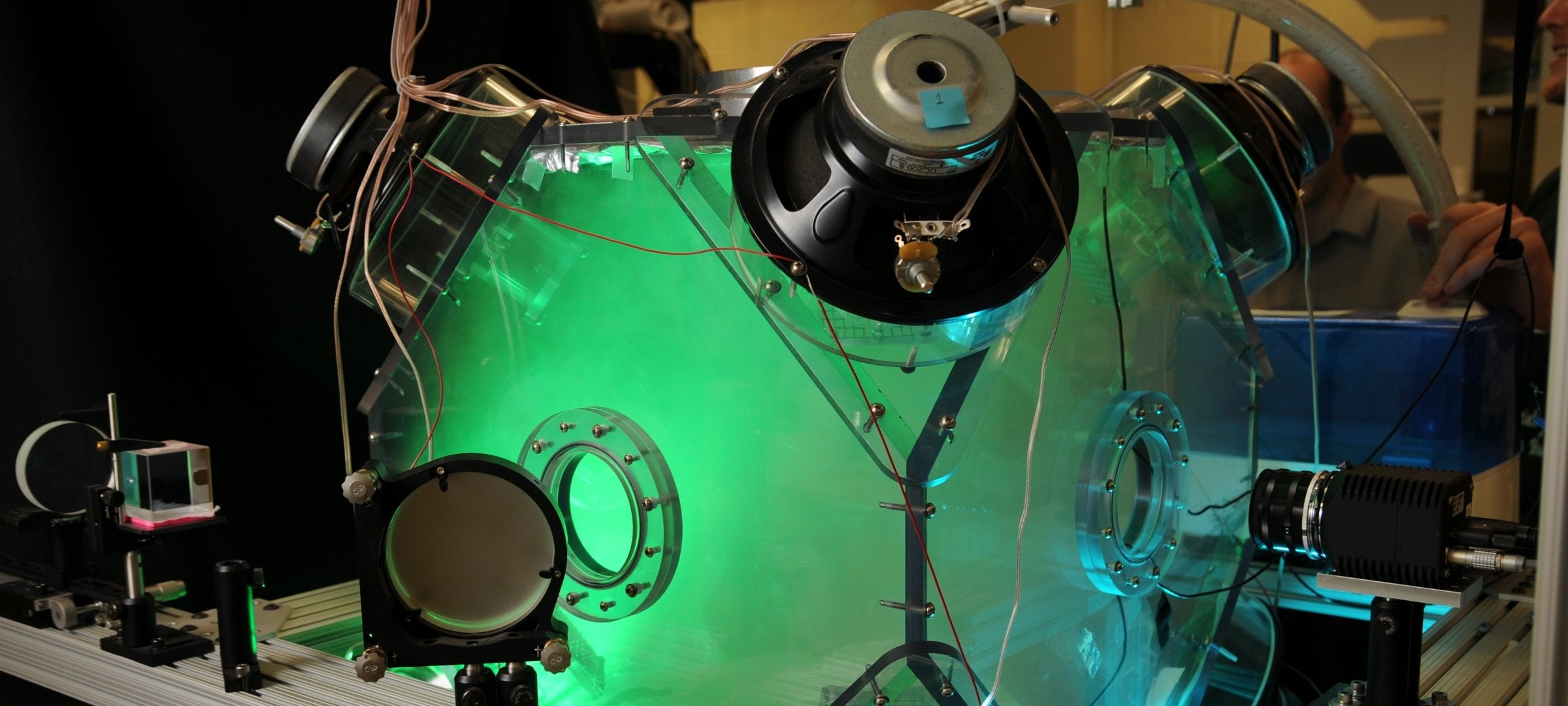
Why do clouds form, pollutants travel, or atmospheric conditions change? Answering these complex questions requires a deep understanding of the physics and chemistry of the air around us. Atmospheric science examines the processes that govern Earth's atmosphere and its interactions with land, water, living systems, and human activity. In Michigan Tech's PhD in Atmospheric Sciences, you'll investigate questions about clouds, aerosols, atmospheric chemistry, climate, and air quality. And examine new fundamental physical and chemical processes that govern the behavior of the atmosphere and its interactions with human activities, solar radiation, and the natural world.
Who Is This Program For?
The PhD in atmospheric sciences is ideal for those who want to investigate how the atmosphere behaves rather than simply use existing forecasts or datasets. It is ideal for you if your background is in physics, chemistry, engineering, environmental science, or another quantitative discipline. If you're fascinated by problems involving clouds and aerosols, atmospheric transport, climate interactions, or air pollution, this program is a good fit.
What You'll Study
Through core courses, you'll develop a foundation in atmospheric physics and chemistry, including thermodynamics, atmospheric fluid dynamics, radiation, cloud and aerosol processes, and chemical transformations in the atmosphere. Study how these mechanisms interact across scales, from individual particles and cloud droplets to transport processes affecting air quality and climate. Depending on your research direction, you may use atmospheric measurements, laboratory simulations, remote sensing, or numerical models to investigate atmospheric–surface exchange, cloud formation, pollutant transport, and related questions.
Where You'll Apply Your Knowledge and Skills
Atmospheric researchers help determine how particles and gases influence clouds and climate, how emissions move through the environment, and how measurements can improve models. You could apply this expertise to air-quality research, climate and atmospheric modeling, satellite-observation analysis, instrument development, or evaluation of atmospheric processes. Some possible workplaces include universities, government research laboratories and agencies, environmental consulting and monitoring organizations, and companies developing atmospheric instruments.
-
Delivery Options
- On-Campus: PhD
Atmospheric Sciences Program Details
Learn more about the program at Michigan Tech. For international students, Atmospheric Sciences is a designated STEM program.
On-Campus Programs
Additional Program Information
Want to learn more about atmospheric sciences at Michigan Tech? Visit the department for more information:

Collaborative, Open-Minded Approach"Being part of the cloud chamber group, I experienced the synergy between theory, experiments, and numerical simulations first hand."
Sample Areas of Interest
Select areas of interest to help customize your atmospheric sciences PhD. Sample areas include:
- Aerosols and Clouds
- Atmospheric-Surface Exchange
- Atmospheric Chemistry
- Atmospheric Modeling