

Your resume and cover letter are often your first opportunity to make an impression on an employer. When used together, they help communicate your skills, experiences, interests, and potential in a clear and professional way. A strong resume highlights what you’ve done, while a tailored cover letter explains why you’re interested in the opportunity and how your background connects to the role. Whether you’re applying for internships, jobs, research positions, or graduate school, learning how to present your experiences effectively can help you stand out and open doors to opportunities.
How to Make Your Resume and Cover Letter Stand Out
Clear
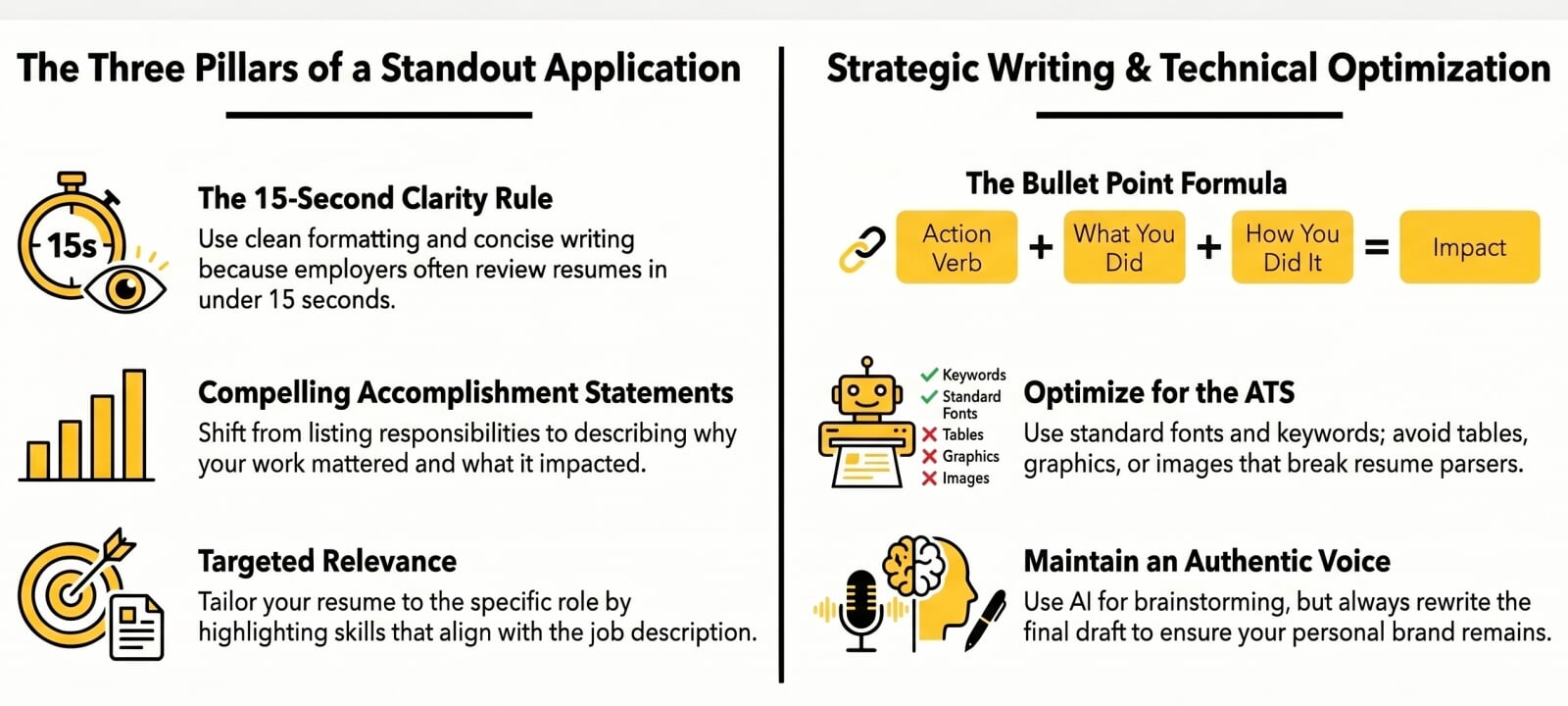
Employers often review resumes quickly - like 15 seconds- so clarity matters. Strong resumes and cover letters use clean formatting, concise writing, and organized sections that make information easy to find. Avoid clutter, long paragraphs, and unnecessary details. Don’t feel like you have to tell them everything about you or your experiences. Decide which experiences to include by prioritizing the most relevant ones as they relate the job you are applying to. A clear resume and cover letter helps employers easily understand your background, experiences, and qualifications.
Compelling
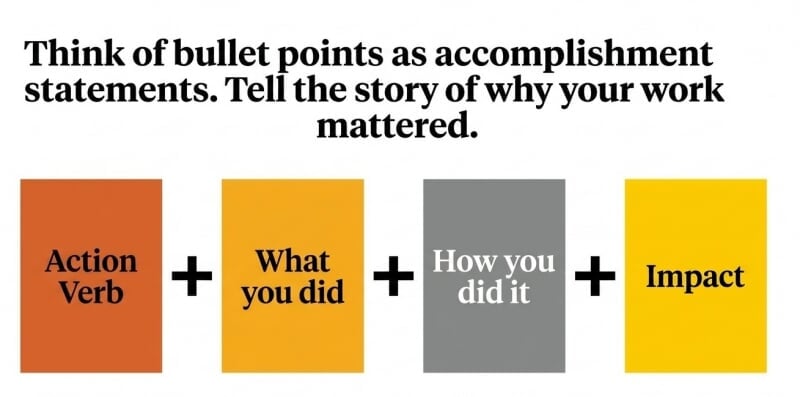
Your resume is more than a list of responsibilities. Think of resume bullet points as accomplishment statements that describe why your work mattered and what it impacted. A cover letter helps connect the dots by telling the story behind your experiences, interests, and goals. Together, they help employers understand not just what you’ve done, but who you are and what you can contribute.
Use this formula to write strong bullet points:
Relevant
The strongest resumes are tailored to a specific role. Review the job description and highlight experiences, skills, and coursework that align with what the employer is seeking. Employers want to see clear evidence that you understand the role and have the qualifications to succeed. Small adjustments to your resume and cover letter can make a big difference in helping your application stand out. Don’t worry about matching every keyword, but be specific when describing your experience.
What about the ATS?
It is common for companies to use an Applicant Tracking System (ATS) to organize their
applications. Think of it as an electronic filing system that helps the human resources
department do their jobs efficiently. One of the many features of an ATS is the resume
parser, a software that converts text into searchable data. The most important thing
to know about this feature is that each company uses it differently. Large companies
may use it to sort and rank candidates and create a list of candidates they want to
interview. Others only use it to store your information in their work system. No matter
how a company uses them, there are a few general tips to keep in mind when tailoring
your resume with the ATS in mind.
- Stick to standard fonts and section headers.
- Avoid tables, graphics, headers, footers, images - these cannot be converted into
clear data.
- Use keywords from the job description as long as you have the experience, and as long as the resume still reads well. In other words, don’t stuff your resume with keywords hoping it will get a higher ranking while making it indecipherable to the person who will actually read it.
For example, if the job description asks for Python programming, don’t just say “ability to code”. Specifically list Python in your skills section and appropriate bullet points.
Remember, its only function is to convert text into searchable data, so it needs to be easy to read. From our experience, most companies only rely on human judgement to make hiring decisions, not the ATS.
Using AI
AI tools can be helpful for brainstorming, restructuring bullet points, or assisting you in the tailoring process. However, letting artificial intelligence do all of the work for you does not help you stand out. In fact, on paper, it can make you look like everyone else who is using AI to create their documents. The overly formal, robotic phrasing is very obvious to recruiters (and career advisors), but more importantly, it often strips away your personal brand and authentic voice. To stand out in a competitive job market, your application must sound like you. Use AI to ideate, clean up formatting, and locate skills gaps, but always rewrite the final draft. Make sure your voice tells the story you want it to tell and convince the hiring manager that there is a real, capable person behind the paperwork.
Getting Started
Need help? Here are a few options to get you started.
Templates