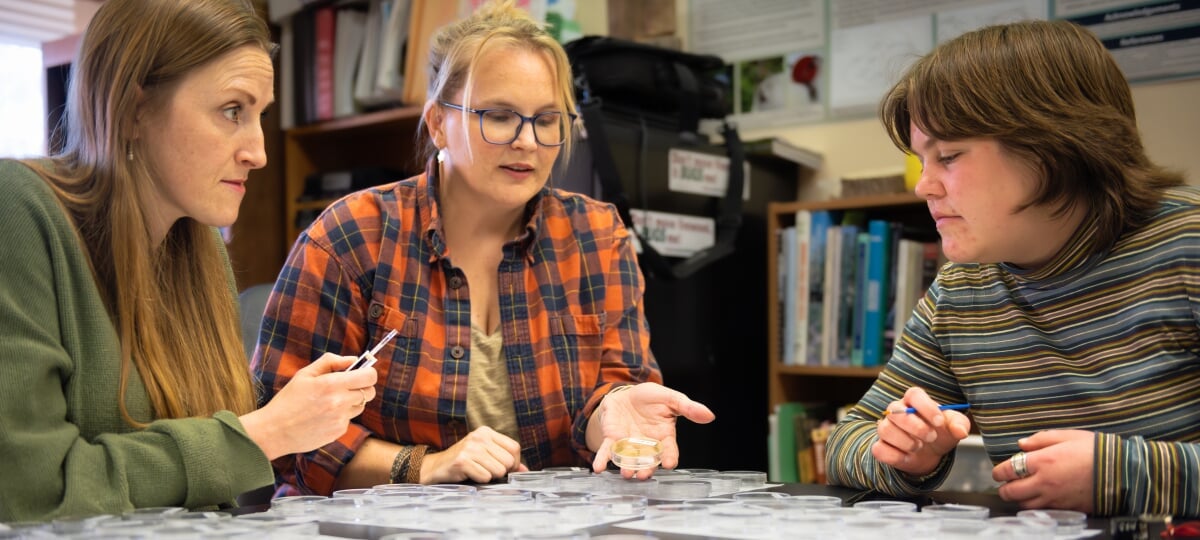
A Michigan Tech student researcher, empathetic to the suffering of tick-infested moose — and with a personal ick for ticks — is working to bring the animals relief.
Grace Moeggenborg, an applied ecology and environmental science student in Michigan Technological University's College of Forest Resources and Environmental Science, is searching for a way to reduce winter tick populations using essential oil from balsam fir trees native to the region.
Ticks make moose miserable. A single animal can acquire 20,000 ticks or more in a year, and once they're established, the parasites hang on. Infestations can cause anemia and malnutrition due to blood loss, and the itchy bites prompt moose to overgroom, which leads to coat loss and cold exposure. Warmer temperatures mean winter ticks are more abundant, causing problems for the moose population, including those on Isle Royale.
"This research aims to pave the way for an organic and environmentally friendly solution for the plight of winter ticks on moose," said Moeggenborg. "Balsam fir essential oil has previously been shown to be effective in killing black-legged ticks. We wanted to find out if it is effective against winter ticks as well, since that could have big implications for moose conservation."
Moeggenborg is working alongside Michigan Tech researchers Tara Bal, associate professor of forest health, and Sarah Hoy, an assistant professor who co-leads the Isle Royale wolf-moose project.
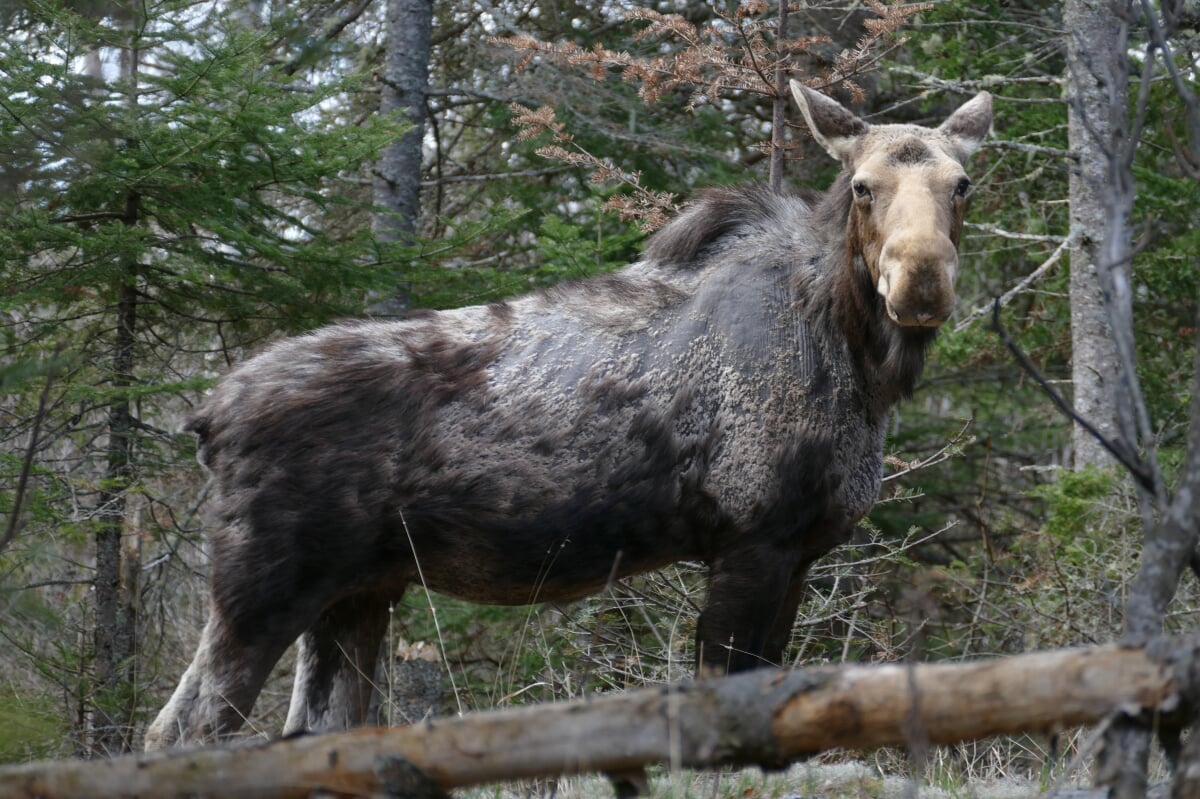
"I've spent hours in the field watching moose and gathering data to try to understand the various environmental factors affecting how severely ticks impact moose," said Hoy. "Some of the moose I have seen during my research have lost the majority of their winter coat hair due to ticks. When outfitting moose with GPS collars, I've seen moose that have hundreds of ticks on them in just a relatively small patch of skin on their shoulders."
Moeggenborg first showed interest in the connection between ticks and balsam fir oil in Bal's Insect Ecology course at CFRES' integrated field practicum, informally called Fall Camp. While working on a group project on Lyme disease, Moeggenborg came across a paper that would jump-start her research career.
The paper, "Balsam fir (Abies balsamea) needles and their essential oil kill overwintering ticks (Ixodes scapularis) at cold temperatures," by Shelley Adamo, was published in Nature in 2022. It describes using balsam fir essential oil as an acaricide, or tick-killer, against black-legged ticks. When Moeggenborg mentioned the paper in her group presentation, Bal was intrigued.
"I asked her if she knew anything about its effect on other ticks, particularly the ones on moose, thinking about how moose live in habitats with lots of balsam or eat a lot of it," said Bal. "We connected with Sarah as our moose expert, and from there, Grace's excitement about how we could actually try to figure out this question just spiraled."
From the start, Moeggenborg's passion was motivated by empathy and personal experience.
"I've had Lyme disease and felt firsthand the hopelessness of evading ticks in a landscape that is so ideal for them," said Moeggenborg. "I relate to the moose — we are both formidable creatures that are vulnerable to ticks. I also recognize the importance of moose as an ecosystem engineer and a charismatic species that can help bring awareness to the conservation of other species, too."
Winter Ticks Drag Their Feet
Under Bal and Hoy's guidance, Moeggenborg's research began with digging up more scientific literature to support her theory. She used that information to write a proposal for the Clara Carter Higgins Summer Environmental Studies Scholarship from the Garden Club of America. She was awarded the scholarship and began field and lab research in August, rolling her work into a senior thesis project during Michigan Tech's fall 2025 semester.
Moeggenborg's lab work started with distilling essential oil from balsam fir, which proved a trickier process than she anticipated. She wasn't able to distill much oil, and so, at Bal's direction, she purchased some to keep her research on schedule. An error diluting the oil sent Moeggenborg back to her faculty mentors for more support.
"I realized that I made my balsam fir essential oil dilutions too strong," said Moeggenborg. "I let Tara know right away, and she immediately helped me troubleshoot what I could do to fix it and still keep the integrity and focus of my research intact."
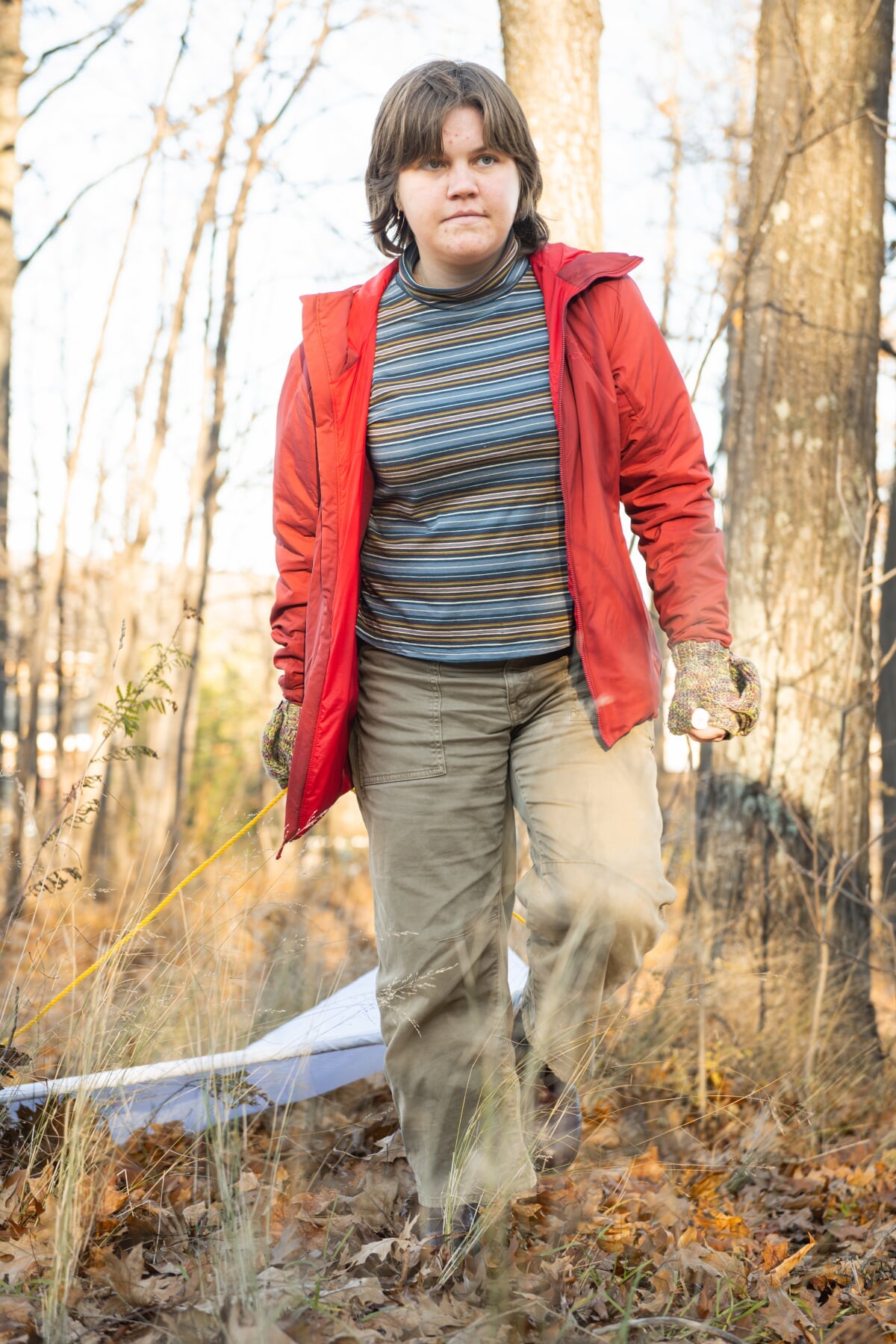
She also performed tick-drag surveys. Tick-dragging involves dragging a cloth along the ground in the hope that ticks will attach. Winter ticks have a different life cycle from other tick species, living on one host for most of their lives. This leaves a narrow window during their larval stage, when the ticks are climbing vegetation in search of a host and can be collected from vegetation by tick-dragging.
Tick larvae weren't abundant enough to collect with drags until September and October, slowing down the research timeline Moeggenborg had prepared with her proposal. Eventually, with help from data provided by the Michigan Department of Natural Resources, she successfully found two sites in the Western Upper Peninsula with plentiful tick larvae, allowing her to collect test subjects to take back to the lab.
"I was thrilled to have finally found them, especially after stressing about the timeline I'm on," said Moeggenborg. "Later that same day, I looked down and realized that I had over 300 tick larvae on my pants. I panicked at first, but then I reached for my camera and thought of it from the angle of a scientist doing research. After that, I calmed down."
"I am very impressed with how much she has accomplished so far — most of which she was able to do by herself with little assistance," said Hoy.
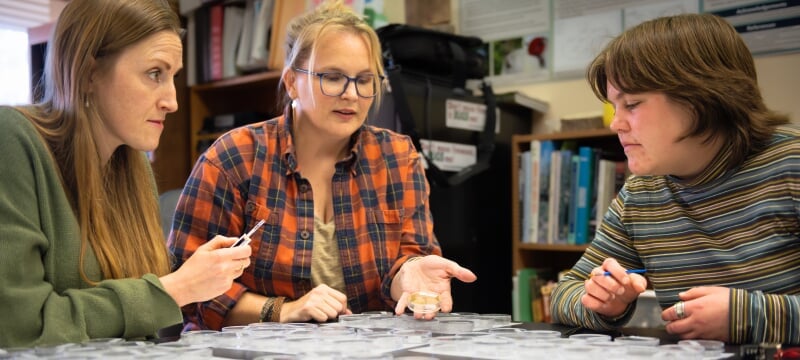
Once Moeggenborg collected the tiny ticks, the next challenge was monitoring such small subjects. With guidance from Hoy and Bal, she installed them in individual vials set up like mini forest floors with a little soil and pieces of dried leaf. These microhabitats also included a small piece of cotton with varying concentrations of balsam fir oil. The hope was that after two to three weeks, she would have good data on the ticks' length and rate of survival when exposed to the natural acaricide.
Save a Moose, Research Winter Ticks
Moeggenborg's research is still in progress, but her findings are promising so far. In her first trial, all of the winter tick larvae except for one died within three days. Moeggenborg then performed a second round of tick collection and another trial design with petri dishes instead of vials. The winter ticks had a bit longer survival time in the second trial, but died over the course of a few days of exposure to the balsam fir oil.
"I've found there is a lot that remains unknown about winter ticks," said Moeggenborg. "To help moose out, we first need to start studying these ticks and their life cycles."
Her fieldwork also showed that while winter ticks may hatch in August, they don't necessarily start climbing vegetation in early September as previously anticipated. She did not see the ticks clustering on vegetation, as some reports from Canada have indicated, but did have clusters on her clothing while in the field. Moeggenborg takes this as evidence that the clustering behavior likely occurs in multiple parts of the winter tick's geographical range. Her overall contribution to the scientific understanding of winter ticks and mitigating their impact on moose populations is undeniable.
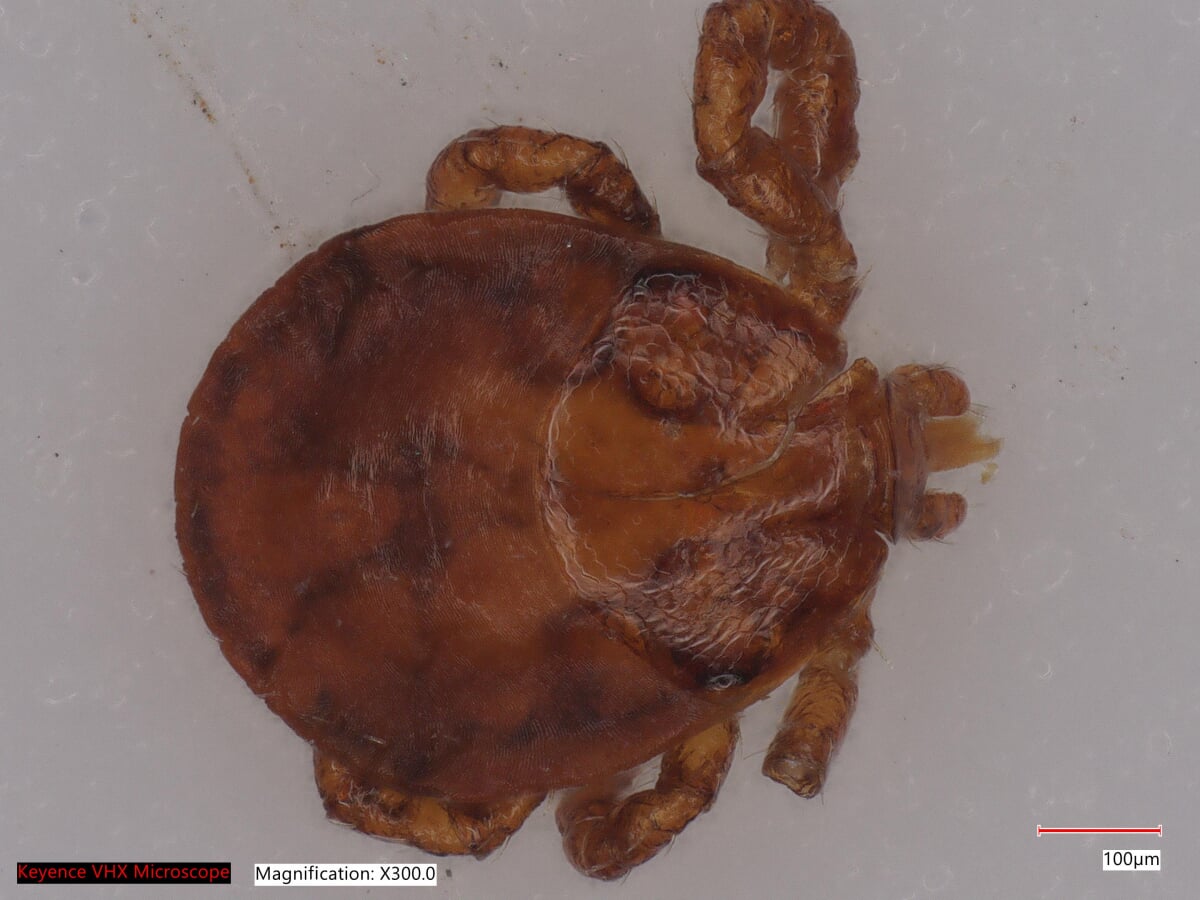
"Photos of winter tick larvae, at an early stage with just six legs, not eight yet, are hard to find online," said Bal. "We're hoping to publish some with Moeggenborg's senior thesis report."
Moeggenborg said further testing in a more controlled environment is needed to learn how balsam fir essential oil impacts winter ticks before the product can be put to practical use.
"It would be amazing to learn more details about the life cycle of winter ticks as well, since information about them is currently limited," said Moeggenborg.
If balsam fir essential oil is proven to successfully eradicate winter ticks, scientists will need to develop an effective application method. Husky researchers have some ideas in mind. Moeggenborg has considered targeting areas shown to have high moose presence in the spring, the window of time when winter ticks fall off to lay eggs.
Alternatively, the oil could be applied to moose during the fall and winter, when ticks are looking for hosts. Bal and Moeggenborg have considered using some sort of moose brush, much like a cow brush, with essential oil applied on it that would then be transferred to the moose. Cow brushes are mechanical devices designed for cattle to scratch and groom themselves, often using an automatic, rotating brush to remove loose hair, dirt and parasites.
Moeggenborg, who said moose aren't known to enjoy brushing their bodies against trees, is also considering additional treatment approaches. "Another solution could be to put low concentrations of balsam fir essential oils on the leaf litter in the fall, when the winter ticks are in their larval stage," she said.
Research Partnerships Inspire Students and Faculty Alike
Moeggenborg, a graduating senior taking part in Michigan Tech's 2025 Midyear Commencement, is seeking a seasonal technician position with Sleeping Bear Dunes National Lakeshore, where she hopes to keep pursuing her passion for addressing forest pests and pathogens. She's also considering continuing her education beyond an undergraduate degree.
"Graduate school and a master's degree are also in the planning stages. I'm considering Michigan Tech for that because of the experiential opportunities and all of the wonderful faculty and staff at CFRES," she said.
Moeggenborg said working under the mentorship of two prominent CFRES faculty researchers has been an exceptional opportunity.
"I've learned a lot about all the moving parts and collaboration that make research feasible," she said. "It's been eye-opening to work with talented, intellectual, and curious scientists like Tara and Sarah."
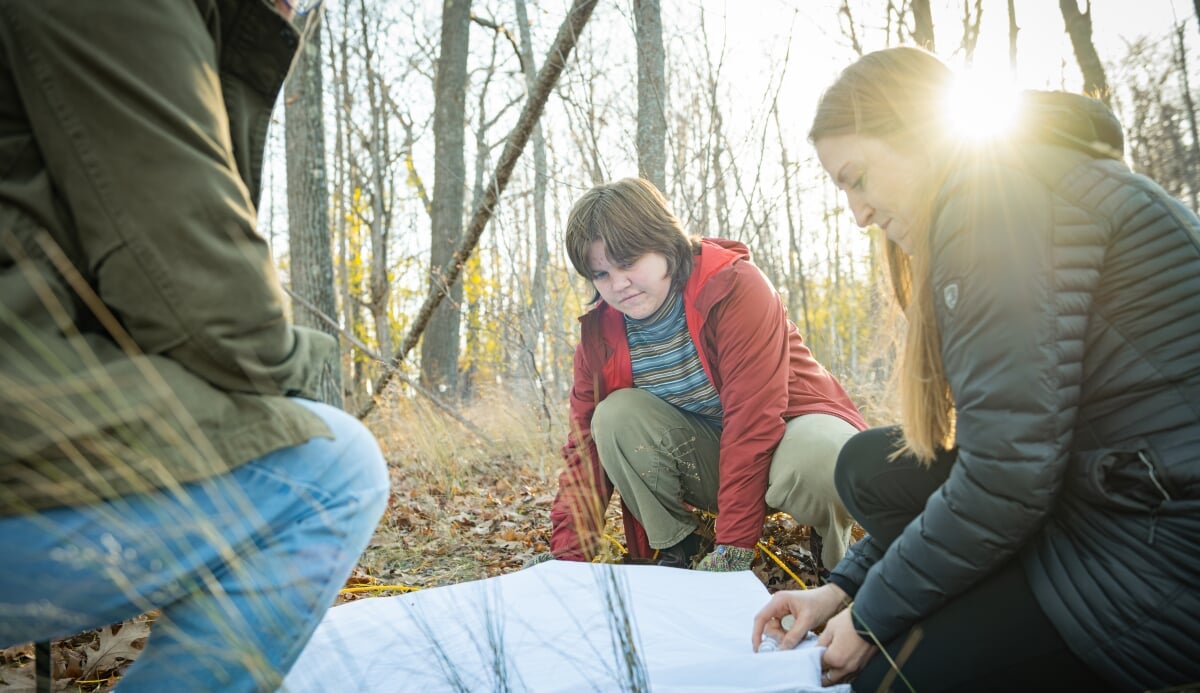
Moeggenborg has also inspired her mentors.
"It's been exciting to see Grace go through the process of identifying and developing a research idea, applying for funding to support that research and figuring out how to design and implement a study," said Hoy. "Now we're waiting to see her results and support her as she writes up her research."
"It's a good reminder that great research questions can come from anywhere," said Bal. "Cool opportunities can pop up anytime you have an open mindset and are willing to figure something out."
Michigan Technological University is an R1 public research university founded in 1885 in Houghton, and is home to nearly 7,500 students from more than 60 countries around the world. Consistently ranked among the best universities in the country for return on investment, Michigan's flagship technological university offers more than 185 undergraduate and graduate degree programs in science, technology, engineering, mathematics, computing, forestry, business, health professions, robotics, psychology, social sciences, humanities, and the arts. The rural campus is situated just miles from Lake Superior in Michigan's Upper Peninsula, offering year-round opportunities for outdoor adventure.