

Michigan Technological University student Moira Gerard started interning early in her academic career. Her experience at Yellowstone National Park in the summer of 2026 was the best yet for the ecologist, engineer and artist.
Second-year Husky Moira Gerard, a student in Michigan Tech's College of Sciences and Arts from Fontana, Wisconsin, fell in love with wolves as a kid. She developed that affinity through the online game WolfQuest, which focuses on the wolf ecology of Yellowstone National Park. Alongside her fascination with wolves, Gerard developed her illustration skills. Both served her well during a five-week internship in Yellowstone, crafting illustrations for a forthcoming field guide on mammal tracks in the park.
Gerard first visited Yellowstone with her family at age 13. Following her curiosity about the park's wolves led her to attend the Great Lakes Wolf Symposium hosted by the Timber Wolf Alliance at Northland College in Ashland, Wisconsin, in 2024. There, she attended a wolf-tracking workshop with renowned biologist and Michigan Tech alumnus Doug Smith. Known for his work to restore the wolf population at Yellowstone, Smith worked on the long-running Isle Royale wolf-moose project while earning his master's in biology from Tech. The wolf-moose project was how she first heard about Michigan Tech's research.
"My interest in wolves definitely evolved into a desire to research them more as I looked into pursuing college studies," said Gerard. "I chose Tech because of the opportunities to perform interdisciplinary research as an undergraduate."
After looking further into Tech's programs, she became a Husky with a double major in ecology and evolutionary biology and biomedical engineering.

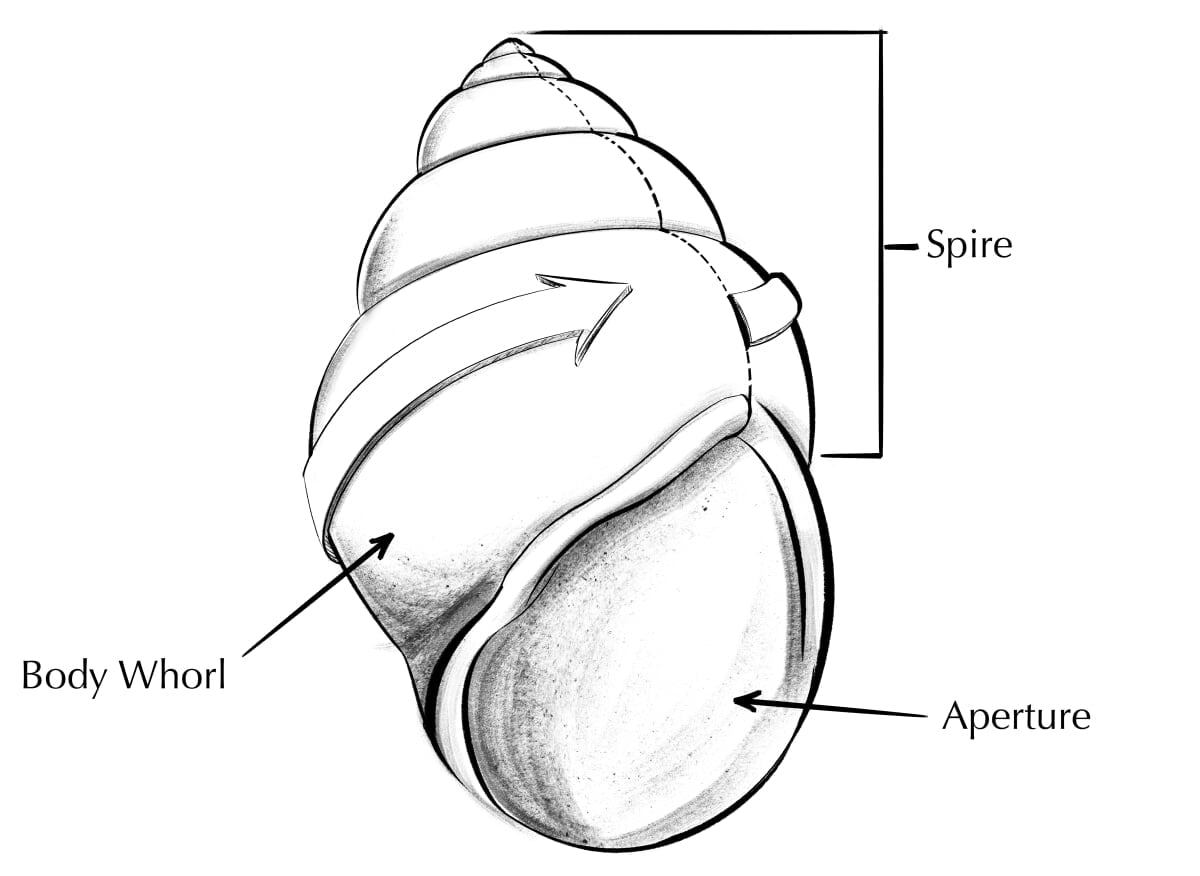
That same year, she landed her first summer internship with the Geneva Lake Environmental Agency, where she has continued working for three summers. One of her internship assignments was creating an illustrated guide to aquatic macroinvertebrates for the agency, which is still in use. The assignment helped her refine her understanding of illustration for ecology education.
"One challenge with scientific illustration is making sure you are conveying what you want the reader to learn using your pictures," said Gerard. "The goal in this kind of non-fiction work is to teach, document, clarify and convey a topic. Accuracy and revision are key; scientific illustration requires focus on small details to ensure accuracy."
Gerard met her future mentor, naturalist Jim Halfpenny, at Smith's 2024 workshop. In 2025, Gerard approached Halfpenny about internship opportunities through a mutual connection, Yellowstone naturalist Leo Leckie. Gerard included her illustration portfolio along with her resume in her correspondence to Halfpenny, and he responded by welcoming her along for a five-week project in Yellowstone during the late spring and early summer of 2026 to illustrate his upcoming field guide on mammal tracks. Halfpenny has not yet finalized which of the 67 mammal species that live in Yellowstone National Park will be included in the guide.
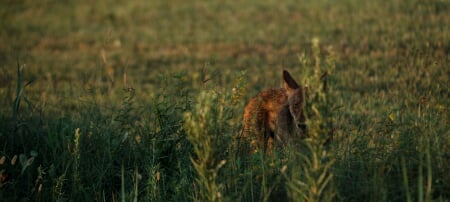
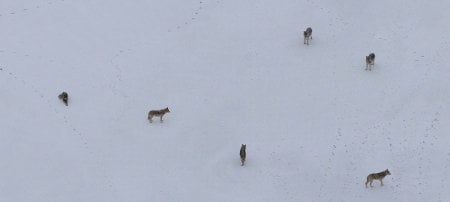
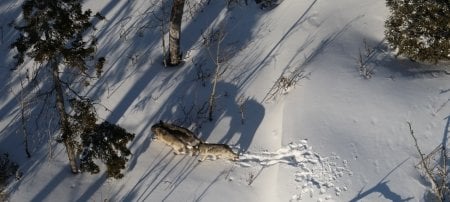
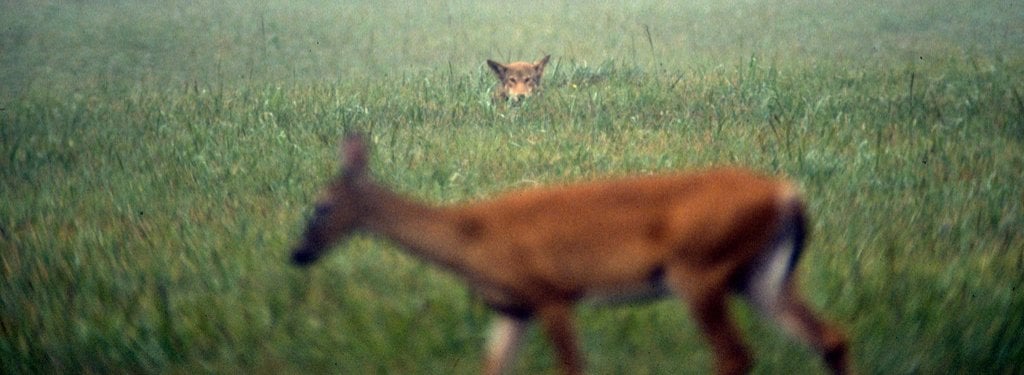
Gerard started each day of her internship with an early drive into the Lamar Valley to look for wolves and other wildlife. That month, the Junction Butte wolf pack denned in Slough Creek, an hour's drive into Yellowstone's northern range, right at the western threshold of the Lamar Valley. During her regular searches for pup sightings and to observe pack behavior, Gerard witnessed unforgettable scenes, including an hour-long interaction between the wolf pack and a mother grizzly bear with her cub.
As Gerard describes it, the mother bear and her yearling cub were very close to the wolf den, with six wolves pacing around them. After circling each other like they were in a fighting ring, the wolves and bears would lie down, watching each other from a distance. At one point, the cub charged the wolves and the wolves snapped back, pushing the cub toward its mother. Eventually, the bears left the den area and headed east toward Lamar Valley.
"It was a lively, tense interaction and fascinating to watch," said Gerard.
Other highlights of her time at the park included a day with the Yellowstone Wolf Project, observing the work tracking gray wolf restoration, behavior and ecological impacts, and learning about current research projects. On another morning, Leckie took Gerard hiking to the Rose Creek Pen, where wolves were kept during their reintroduction to the park in 1995. Gerard, who has been studying gray wolf reintroduction to the park since her first visit to Yellowstone as a young teen, was fascinated to see it firsthand.

"I love that it still stands as a reminder that once there were no wolves in Yellowstone, and now all the wolves that are there came from the few that were released in 1995," said Gerard. "I have read many books about the reintroduction and the first packs that formed, so it was incredible to see it in person."
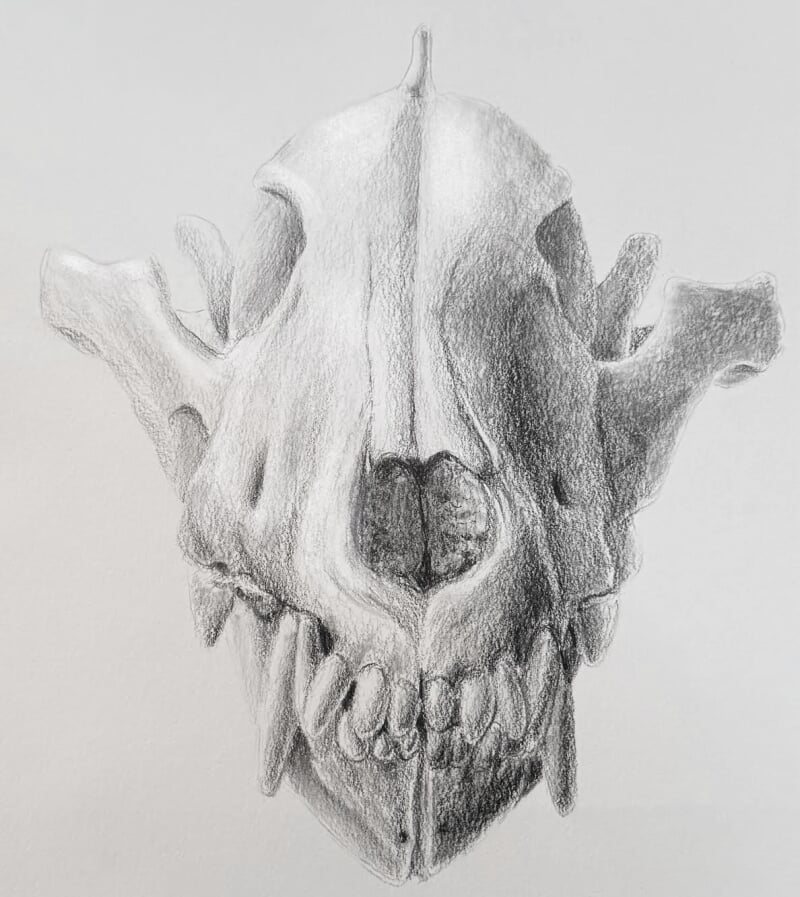
Across her adventures in the park, Gerard worked closely with Halfpenny. She adapted her experience illustrating macroinvertebrates in her earlier internship to the much larger creatures in Halfpenny's developing field guide. Her process began with a library of references for each organism, including both the entire animal and detailed close-up photos. For larger animals, she also refers to skeleton and muscle diagrams to keep anatomical representations accurate.
"From there it depends heavily on what the purpose of the illustration is," said Gerard. "If it's for identification, a standard pose showing the features of the organism works best. If it's trying to communicate a process or behavior, features of that take priority."
Halfpenny's guide focuses on animal movement and gait, including a diagram showing the walking pattern of two types of mammals in the park. Gerard said those complex and detailed illustrations articulating how hind prints and front prints of animals work together were her biggest challenge throughout her internship.
"Once I got it, it was rewarding to figure out how to depict the drawings in a way that was clear and consistent," said Gerard. "The key is to draw what you see and observe, not what you think you see. References and planning are one of the most critical steps. It's also where changes can be most easily made."
Gerard said the Yellowstone internship helped her develop a focus on how biomedical technologies like collaring and tracking devices can be further used in wildlife research applications. After her experience, she chose to change out her second major, biomedical engineering, for applied physics, while keeping a biomedical engineering focus in her minor.
"I wanted to take a more interdisciplinary research approach, especially in ecology," said Gerard. "I noticed there is often a gap in technology and applications of engineering and physics to ecology, which can be a significant limiting factor as to the work possible."
"Ultimately, I think that the intersection between ecology and engineering is worth investigating, including within wolf research," she said. "I wanted a stronger base foundation in the sciences to apply it to engineering in a graduate program down the line if I choose that route."
Gerard said she was first encouraged to combine biology and engineering studies by her high school physics teacher. She noted that John Lehman, Michigan Tech's vice president for university relations and enrollment, has also advocated for her double major since she first became a Leading Scholar at Tech. The Leading Scholar scholarship program recognizes and nurtures exceptional high school students.
"He (Lehman) took an immediate interest in the path I'm hoping to continue taking at Tech, and I'm grateful for his interest and belief that it can be achieved," said Gerard. "With the applied physics and minor in biomedical engineering, I can get both a stronger foundation in physics for graduate programs and some engineering-specific courses as well!"
After finishing her undergraduate degree, Gerard plans to pursue a master's degree at Michigan Tech, possibly in either wildlife ecology and conservation or a more engineering- and technology-focused program. She wants to apply her knowledge after graduation as a professor and researcher.
"I'd like to improve technologies in field research, especially for ecology and wildlife management. My dream career would be to teach at a university and also work on a research project directly, focusing on specific technologies to help aid projects," said Gerard.
Gerard's advice to students who want to make the most of their internship experiences is to start seeking positions early, keep in touch with the people you meet along the way, and don't limit yourself to a single niche.
"Be open-minded about taking opportunities outside of your specific interest if it can teach you something about research. I got the chance to learn scientific illustration because of the opportunities I had working at our local lake agency," she said. "Continued correspondence is extremely important; emails, phone calls, and maintaining an up-to-date resume that you can send along with communications help a lot."
Michigan Technological University is an R1 public research university founded in 1885 in Houghton, and is home to nearly 7,500 students from more than 60 countries around the world. Consistently ranked among the best universities in the country for return on investment, Michigan's flagship technological university offers more than 185 undergraduate and graduate degree programs in science, technology, engineering, mathematics, computing, forestry, business, health professions, robotics, psychology, social sciences, humanities, and the arts. The rural campus is situated just miles from Lake Superior in Michigan's Upper Peninsula, offering year-round opportunities for outdoor adventure.