
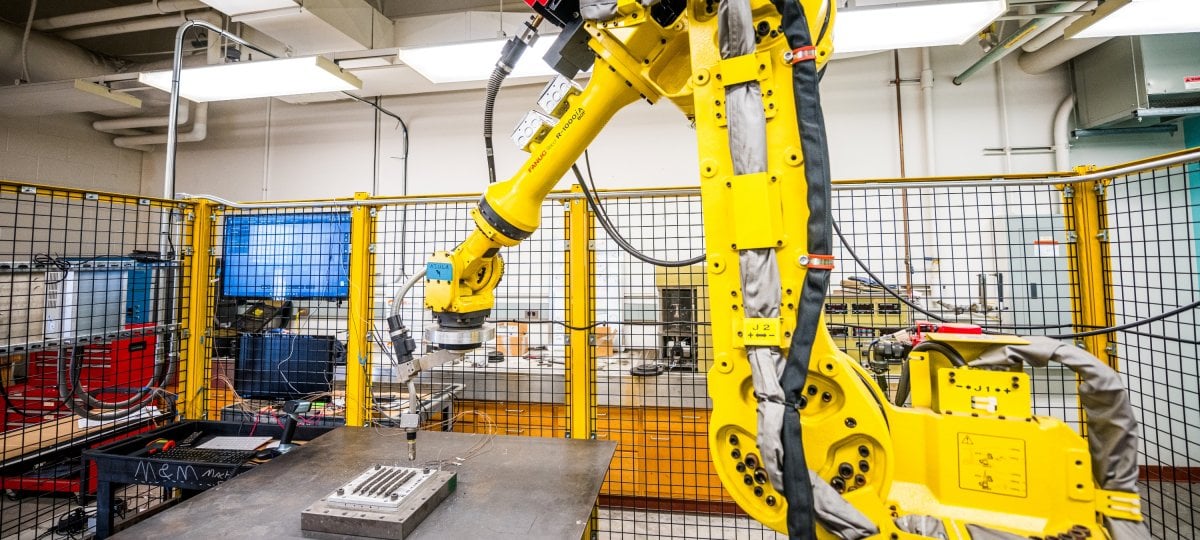
Advance Manufacturing Technology and Research.
Manufacturing engineering involves the design, operation, and maintenance of integrated systems and specialized equipment. Those in the field of manufacturing engineering primarily work in plants and factories where they create solutions for various manufacturing issues. Manufacturing engineering also relies heavily on cost-benefit analyses and the use of computer-aided software to design, create, and optimize products.
Both Michigan Tech's online master's degree and PhD program, which have been designed in partnership with industry, stress manufacturing competitiveness, which is at the hub of smart manufacturing, modeling, simulation, sustainability, additive manufacturing, and advanced materials.
Who Are These Online Manufacturing Degrees For?
Online MS: The master's degree is ideal for engineers and related technical professionals who want stronger manufacturing knowledge and skills. It suits people with backgrounds in manufacturing, mechanical, electrical, biomedical, materials, chemical, robotics, or related engineering fields, including those interested in projects that connect to their workplace.
Online PhD: The doctoral program is intended for engineers and researchers who want to investigate manufacturing processes, materials, systems, or methods through original doctoral research. There are entry routes for applicants beginning with either a bachelor's or a master's degree; the plan depends on prior study.
How the Programs Work
Whatever your educational background, you can personalize your program as well as collaborate with your employer to complete work-based projects or original research.
The Online MS: Select One of Three Program Options
Choose between a coursework-based degree, report, or thesis. Each option comes with a different number of required courses and electives. Please note that all electives are subject to approval by advisors.
Students can also progress from Michigan Tech's master's of manufacturing engineering to the PhD.
The PhD in Manufacturing Engineering
The doctoral degree, which emphasizes research into the most viable and efficient processes used during fabrication, shaping, machining, and assembly, allows you to further your domain knowledge and field expertise. This innovative PhD degree cuts across traditional disciplines, such as material science, mechanical engineering, electrical engineering, robotic engineering, biomedical engineering, and chemical engineering.
Students in the manufacturing engineering PhD program focus on advancing manufacturing processes for forming, joining, casting, molding, producing composites, micromachining, and using additive methodologies.
Two Possible PhD Program Routes
There are two routes in the doctoral program, which depend on what previous degree you have.
If you already have a master's degree in something other than manufacturing engineering, your transcripts are evaluated for their coursework. Because there is a minimum of 12 credits of research, you might have to take up to 18 credits of required courses if your previous master's degree does not have a significant emphasis in manufacturing.
What You'll Study
Both the online MS and PhD in Manufacturing Engineering share a practical, industry-informed core curriculum that provides a foundation for advanced study. Regardless of what master's or PhD pathway you're on, you will work with an advisor to choose electives from four fundamental manufacturing engineering areas.
Core Courses For Both Degrees
Manufacturing Emphasis Electives (Four Areas)
- Additive Manufacturing
- Manufacturing Systems and Operations
- Advanced Materials and Manufacturing Processes
- Quality Engineering
Why Choose Michigan Tech?
Both Michigan Tech's online MS and PhD in Manufacturing Engineering build on the university's longstanding manufacturing expertise and programs designed in partnership with industry. Rooted in the Industry 4.0 priorities of Automation Alley, Michigan's Industry 4.0 knowledge center, these degrees address the technologies and practices transforming modern manufacturing.
What distinguishes MTU's degree are their practical, industry-informed foundation. The curriculum, which draws on the Society of Manufacturing Engineers' Four Pillars of Manufacturing Knowledge, integrates four essential areas:
- Materials and manufacturing processes
- Product, tooling, and assembly engineering
- Manufacturing systems and operations
- Manufacturing competitiveness
Together, these areas provide a systems-level understanding of manufacturing, connecting technical knowledge with the processes, operations, and decisions that drive industrial innovation and competitiveness.
Where You'll Apply Your Knowledge and Skills
Both regional and national studies have established a growing demand for manufacturing engineers and engineering managers. For instance, the NEWMA (Northeast Wisconsin Manufacturing Alliance) Needs, Skills, and Talent Survey tallied responses from over 100 major manufacturers. One of the report's main findings is that both curriculum and training programs that develop manufacturing engineers are in high demand.
Industries relying on additive manufacturing and advanced materials will have the most positive rate of change.

Industries Needing Skilled Manufacturing Engineers
- Automotive
- Biomedical
- Energy
- Medical
- Packaging
- Retail
Get Started on Your Online Manufacturing MS or PhD.
Take the next step on your educational journey at Michigan Tech. We are here to answer your questions and to help you succeed in your online degree. Reach out when you're ready. Or start our free and easy online graduate application.