Across Husky Nation, artificial intelligence is being explored, from updated computer science (CS) curriculum and grading to ethical, sustainable use. Get a sample of ongoing projects across the spectrum of AI applications in this overview. Follow up on details and ongoing developments on our College of Computing News hub.
Grading Gets a Glow-up
"The biggest change that we think everybody is going to have to make is to stop worrying about the end product that the students are developing. What we should be grading is the process that they're using to create the artifacts. Because that's the important thing that we're trying to teach them," said CS Associate Professor Leo Ureel II.
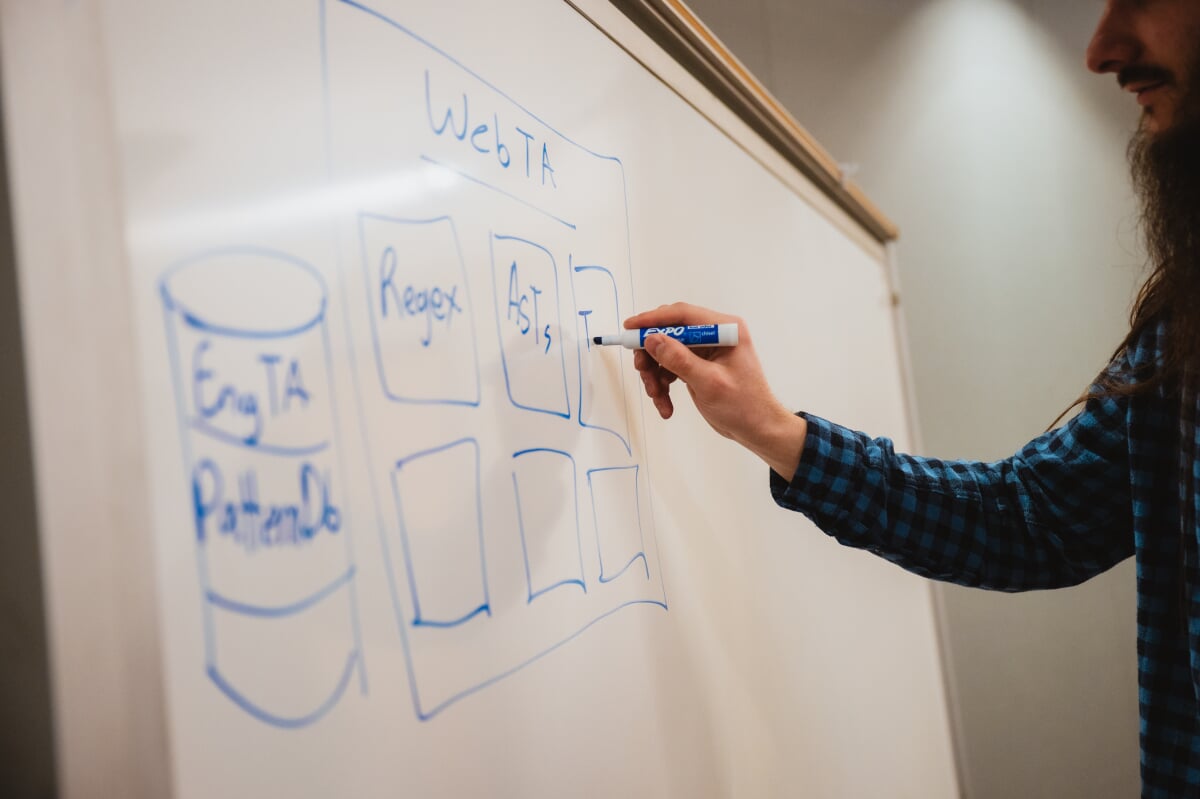
Typically, CS educators use autograders that run student programs with inputs and check the outputs to ensure they're correct. "And for a long time, that was good enough," said Ureel. "But now, AI can generate the program. And so we're not learning anything about a student when we look at the program and see if it works."
Ureel and colleagues in Michigan Tech's Computer Science Education Research Group (CSERG) are researching ways to fully understand student workflow. CS PhD student Daniel Masker's project will help educators better discern the mistakes students are making, when they're being made, and how they're being remediated. CS-ERG is also working on software innovations to test student solutions more rigorously.
Changing Course
"The classic introductory CS course, centered on medium- and long-term programming assignments with predefined requirements, cannot be the same anymore. AI is just too good at generating solutions," said CS Professor Charles Wallace. One of his favorite innovative, AI-inclusive teaching approaches is Probeable Problems.
"The instructor puts together a solution to the programming assignment. Students have access to the solution, but only as a black box. They can't see the code, but they can sort of converse with it through AI," he said. "I really like that because it gets at the reality of software development, where you're working with a client and you have to ask them, 'What would you like to have? What would you like this to be?'"
"In some ways this is like a dream that's been unavailable to us. Instead of writing immense and error-prone programming assignment descriptions, we can flip the problem around and think of the assignment as a conversation," Wallace said.
AI Ethics are Essential
Michigan Tech offers a minor in AI ethics through its Essential Education program. Launched by the Department of Humanities in 2025, it's available to students of all majors. The curriculum lays the groundwork for basic understanding of AI-associated issues, including accountability and regulatory oversight; potential adverse biases and effects; and impacts on privacy, jobs, and the environment.
The minor leverages existing courses in the humanities and social sciences as well as technical fields. A primary goal is flexibility, said CS Professor Charles Wallace, who rolled out the minor alongside MTU faculty colleagues specializing in philosophy, rhetoric and composition, and legal studies.
"It's important to provide entryways for students across campus, not just those in computing disciplines, because AI has major consequences for all fields," said Wallace.
The minor was created through existing courses, from CyberEthics to the History of Privacy, covering communications, technology, and social contexts. Eventually, courses specifically designed for the minor will be added.
"We have some exciting ideas about what we want to do," said Wallace.
AI for Justice
CS PhD student Josh Alele-Beals is making online tools to help people better understand statutory law. He chose to focus on Michigan's Clean Slate Law, which expunges old convictions from public records.
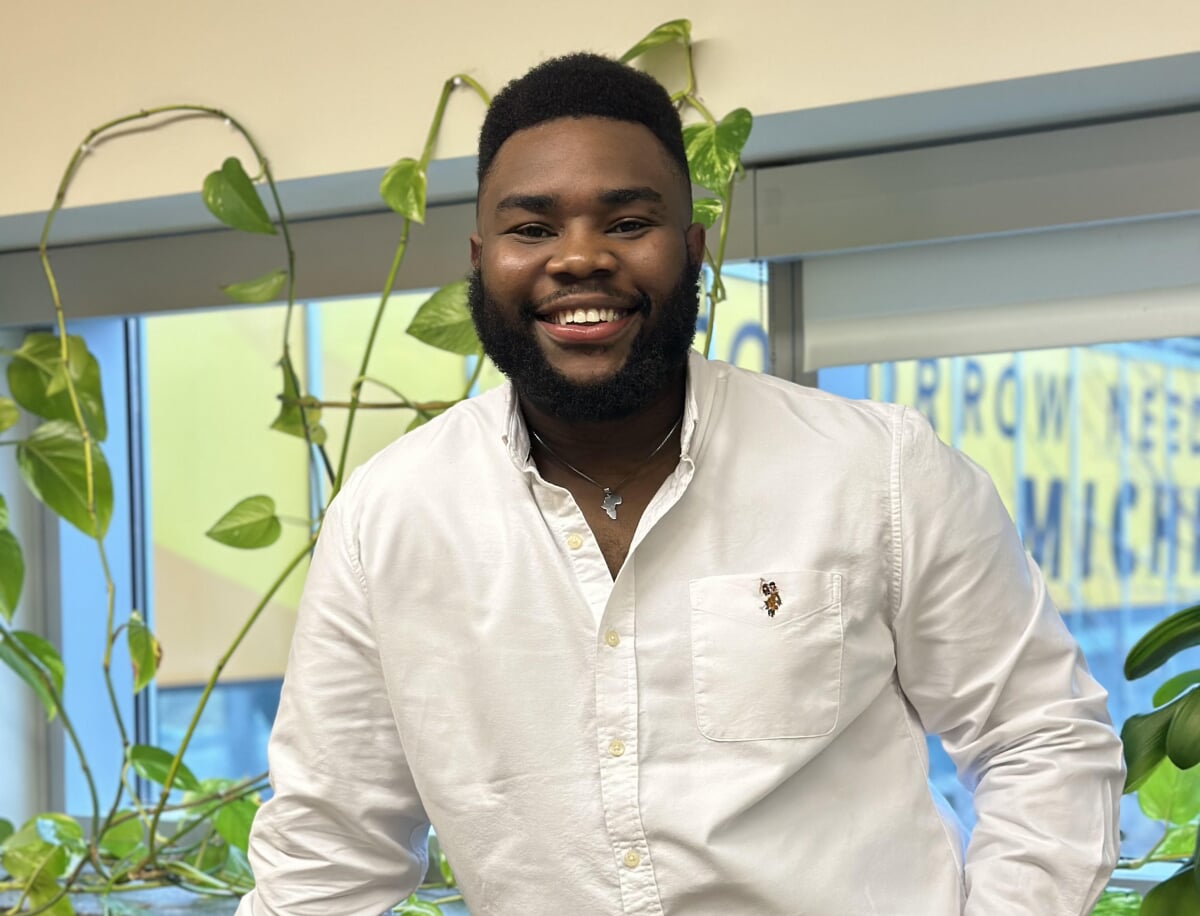
"I became interested in this project because of its direct impact on people's lives," said Alele-Beals. "Clean Slate laws can make a real difference in whether someone is able to move forward after a past conviction. Even minor offenses from years or decades ago can continue to limit employment opportunities, prevent people from securing housing, restrict access to credit, and block educational pathways."
The law is complex and difficult for non-experts to navigate, Alele-Beals noted. "The combination of a challenging technical problem and the potential to help people rebuild their lives was something I couldn't pass up," he said.
"Instead of relying on AI to 'interpret' the law on its own— which can introduce non-determinism, hallucinations, or bias—the core decision-making is handled by a formal model, where outcomes are constrained, verifiable, and reproducible," said Alele Beals. "The goal is to make the law accessible in the fullest sense: approachable, understandable, and actionable for anyone who needs it."
Cleaning Up Our Waters
Assistant Professor Ashraf Saleem's research combines robotics, remote sensing, and artificial intelligence. In his Robotics and Remote Sensing Lab, Saleem develops AI-based techniques for underwater image enhancement.
"Poor visibility, color distortion, and changing conditions can significantly affect what a camera—and an AI model—can see," said Saleem, who uses machine learning and computer vision to improve degraded underwater imagery. His research also explores integrating these AI capabilities with autonomous and remotely operated vehicles to support environmental monitoring and rapid response.
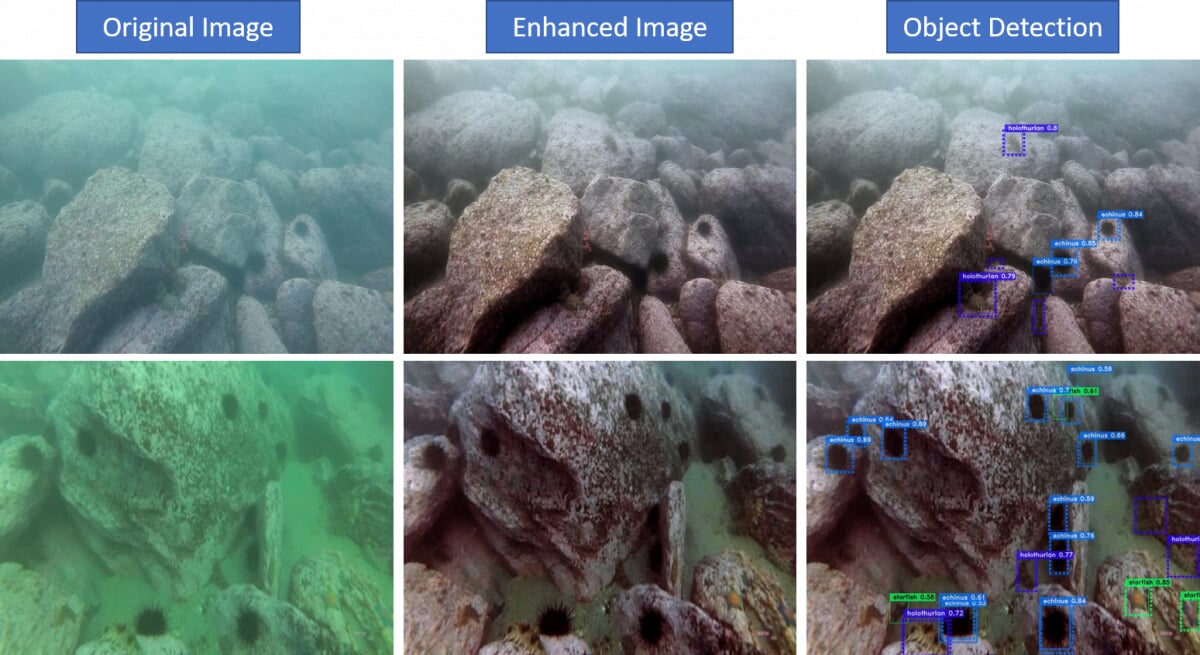
"Our goal is to develop AI methods that can improve underwater imagery and reliably detect objects in these difficult conditions," said Saleem. "Ultimately, we want to bring these capabilities onto robotic platforms so they can support real-time monitoring of our lakes and oceans and help us better understand and protect aquatic ecosystems."
AI for Human Health
Guy Hembroff, an associate professor of applied computing and director of the Health Informatics graduate program at Michigan Tech, uses machine learning and deep learning to advance data science and its application in the field of human health. From computer vision algorithms development and biometric development to mobile health (or mHealth) and intelligent medical devices, Hembroff's AI expertise is as diverse as its application is useful. This breadth has proven particularly beneficial to his students, many of whom come to Tech from the medical field looking to improve both their decision-making in the clinic and outcomes for their patients.
Michigan Technological University is an R1 public research university founded in 1885 in Houghton, and is home to nearly 7,500 students from more than 60 countries around the world. Consistently ranked among the best universities in the country for return on investment, Michigan's flagship technological university offers more than 185 undergraduate and graduate degree programs in science, technology, engineering, mathematics, computing, forestry, business, health professions, robotics, psychology, social sciences, humanities, and the arts. The rural campus is situated just miles from Lake Superior in Michigan's Upper Peninsula, offering year-round opportunities for outdoor adventure.