

From lunar roads and rovers to snowmobiles and reflectivity, MAE shines a spotlight on department news, partnerships, research, and victories from the 2024-2025 academic year.
Through Industry Partnerships, HuskyWorks Develops First-ever Lunar Road
By Coby-Dillon English
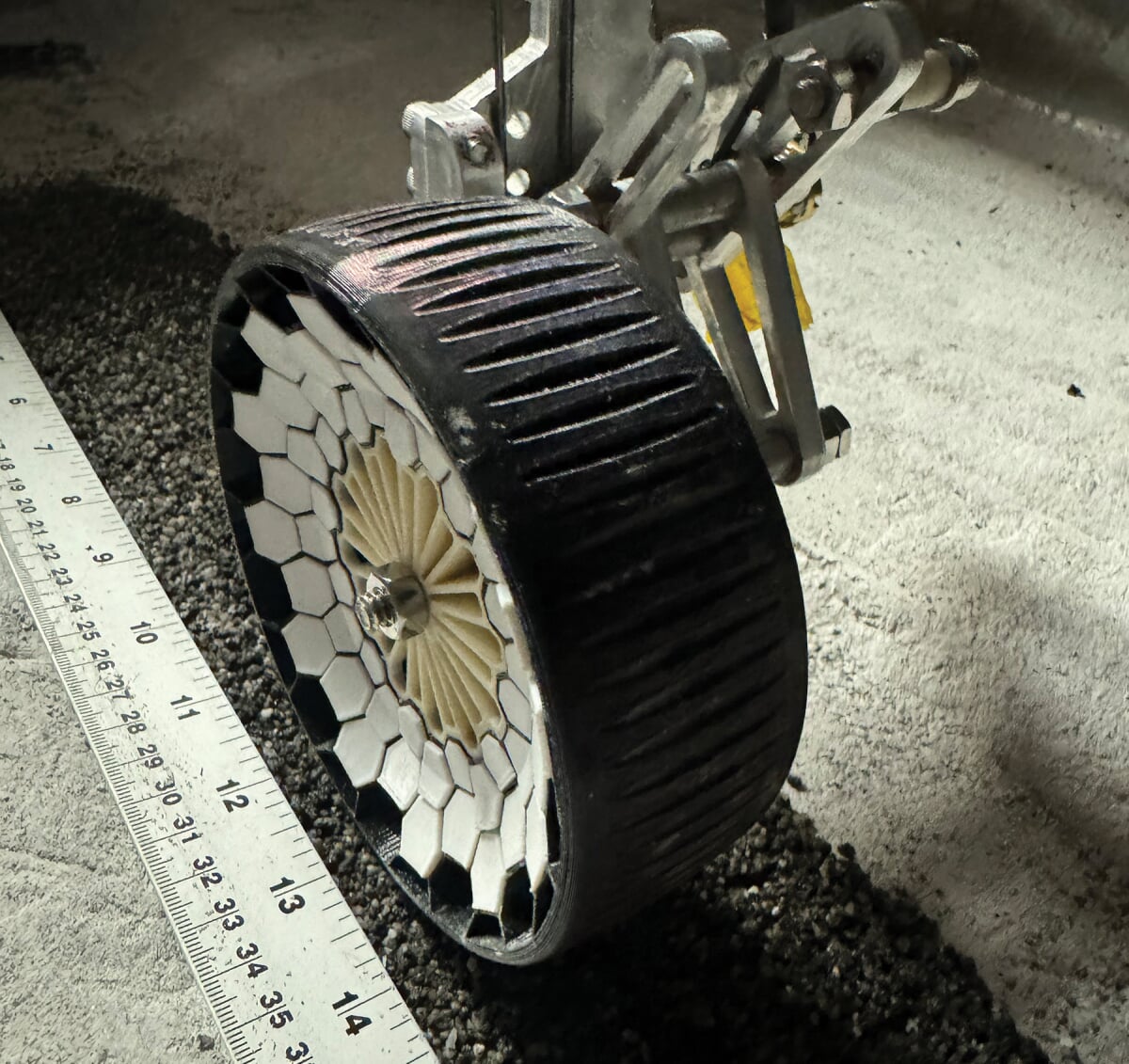
In a milestone in space construction technology, Michigan Tech's Planetary Surface Technology Development Lab (PSTDL) partnered with SpaceFactory to successfully build and test the first lunar road in a simulated space environment, replicating the dusty vacuum conditions of the moon.
Both Tech's PSTDL and SpaceFactory have a history of breaking barriers in the space industry. The PSTDL, also known as HuskyWorks, focuses on advancing technologies for planetary exploration and construction. The lab works in collaboration with government, academic, and private-sector partners to drive innovation in space technology and support long-term human exploration of extraterrestrial surfaces.
The surface of the moon is covered in regolith—a blanket of dust, broken rocks, and other related materials loosely covering solid rock. The substance is notoriously problematic in lunar environments. Its fine, jagged particles adhere to surfaces, infiltrate machinery, and obscure sensors, compromising equipment functionality and longevity. In order to utilize the prevalence of lunar regolith, SpaceFactory and MTU researchers developed a new material, known as lunar asphalt.
Using a robotic apparatus designed by SpaceFactory to lay and heat lunar asphalt into a dense, cohesive surface, MTU researchers designed a custom test setup for the hardware in the PSTDL's Dusty Thermal Vacuum Chamber (DTVAC), which is meant to simulate extreme extraplanetary environments such as the lunar and Martian surfaces.
Michigan Tech researchers tested the material's durability by driving a simulated lunar rover wheel over the constructed road 900 times, covering a total distance of 720 meters. No dust accumulation was found on the wheel following the durability test, highlighting this new material's significant advantage over the unaltered lunar surface.
Read the full story of the lunar road development.
APS LABS Leads MTU Partnership as New Engineering Services Provider for the American Center for Mobility
By Rick White
Michigan Technological University has signed an agreement to become the new engineering services provider for the American Center for Mobility (ACM) in Ypsilanti, Michigan.

Through renowned facilities like the Advanced Power Systems Research Center, the Keweenaw Research Center and the Michigan Tech Research Institute, Michigan Tech has built a record of excellence in sustainable vehicle technologies and advanced mobility solutions. Leveraging the University's cutting-edge research and development, testing programs, and industry expertise, MTU will offer comprehensive engineering services to ACM's customers.
Michigan Tech and ACM have worked together for years to advance safe, sustainable, and secure technologies utilizing the technical expertise of the combined teams and the extensive capabilities available at ACM's 500-acre proving grounds facility in Ypsilanti. Together, Michigan Tech and ACM have collaborated to secure $20 million in joint federal funding to date.
Michigan Tech's Advanced Power Systems Research Center, or APS LABS, led by Director Jeffrey D. Naber, is a multidisciplinary collaborative that develops clean, efficient, sustainable mobility and power systems technologies that will lead the University's partnership with ACM.
Read the full story of the new engineering services provider.
Michigan Tech Awarded R1 Classification Reserved for Nation's Leading Research Institutions
By Rick White
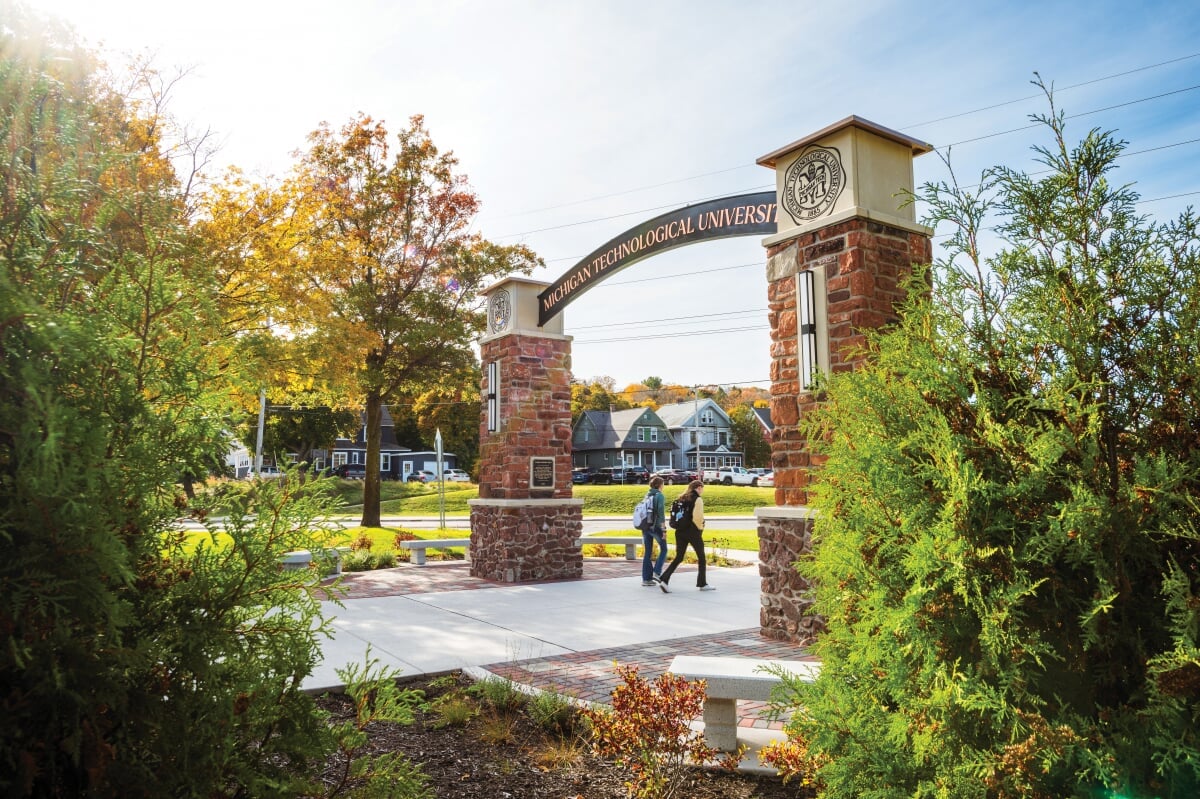
Michigan Technological University has been designated by the Carnegie Classification of Institutions of Higher Education as an R1 research institution, formally placing Tech among the top research universities in the country.
Since 1970, the Carnegie Classification has been the leading framework for comparing and grouping accredited and degree-granting institutions. Carnegie's R1 status is awarded to doctoral universities for excellence in research activities at the highest level. In 2025, only 187 institutions nationally are recognized as R1 universities.
The distinction makes Michigan Tech the fourth R1 university in Michigan—joining the University, of Michigan-Ann Arbor, Michigan State University, and Wayne State University. Based in Houghton in the Upper Peninsula, Tech is also the only R1 institution in Michigan located in a rural area.
Read the full story about the R1 classification designation.
Michigan Tech's Clean Snowmobile Team Wins First Place in SAE International Competition
By Coby-Dillon English
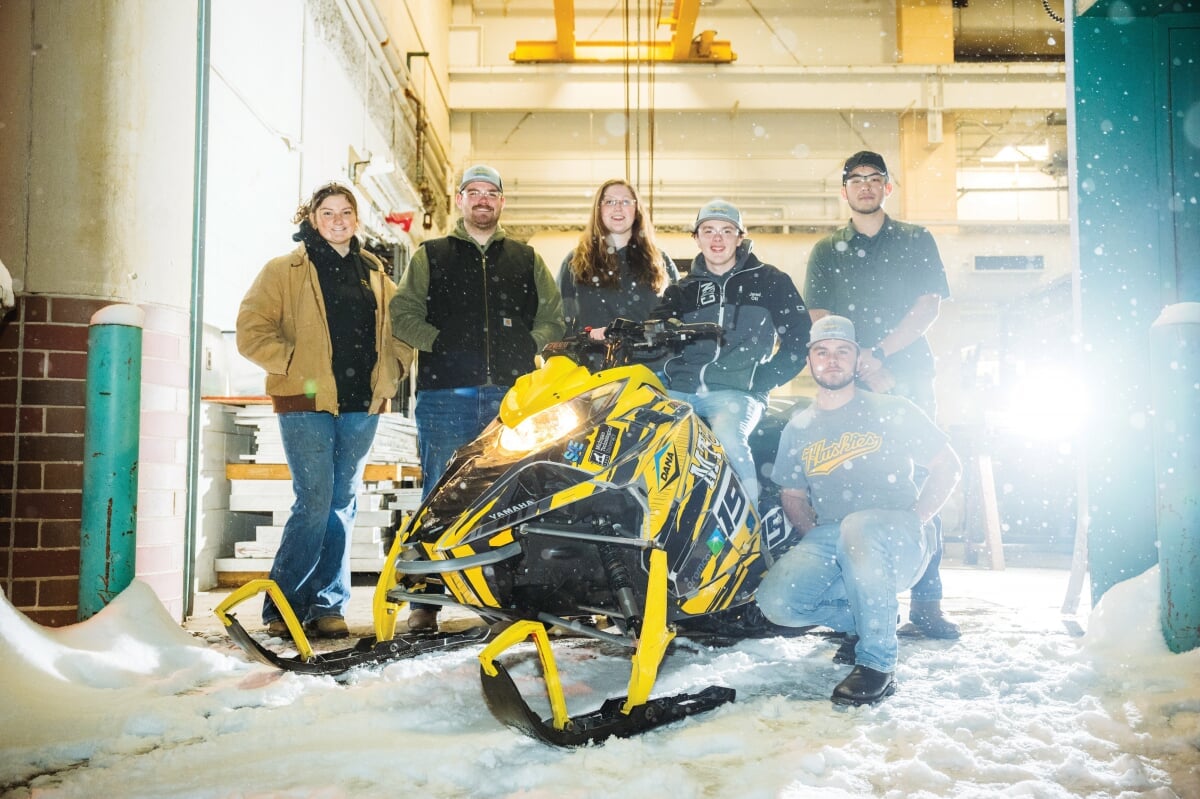
Michigan Tech's SAE Clean Snowmobile Challenge team took home first place at the annual challenge held in Eagle River, Wisconsin, in March 2025. The team won both the sparked ignition snowmobile (SI) challenge and the design phase of the competition. Huskies earned second place in the compression ignition diesel utility snowmobile (CI) competition.
The SAE Clean Snowmobile Challenge team at Michigan Tech, part of Tech's Advanced Motorsports Enterprise, is a multidisciplinary student organization that works toward improvement on emissions, noise reduction, and performance of current-production snowmobiles. The team is entirely student-run, from engines and electrical to project management and finances.
Read the full story about Clean Snowmobile taking first place.
Astro-Huskies Take to the Moon in NASA Lunabotics Challenge
By Coby-Dillon English
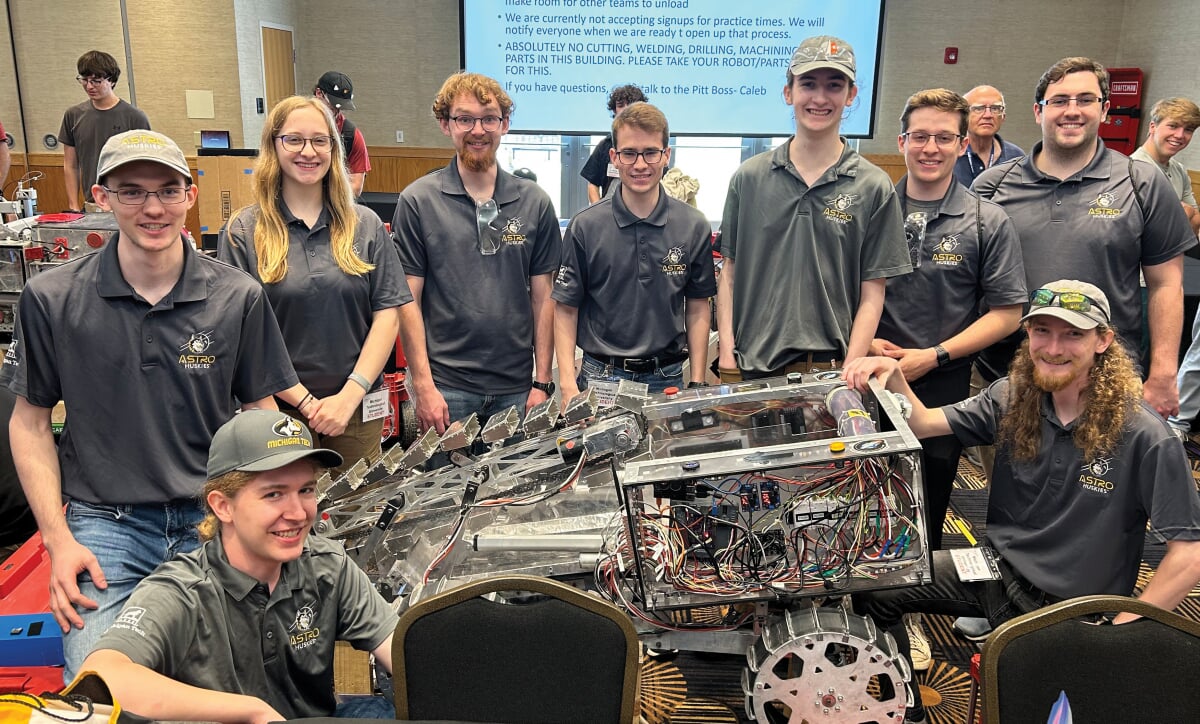
Michigan Tech students have a long history of shooting for the moon—and some Huskies get very close. In May 2025, Michigan Tech's Astro-Huskies team placed fourth in the 16th annual NASA Lunabotics Challenge. Developed to highlight NASA's systems engineering principles, the annual challenge tasks student organizations from universities around the country to design, build, and test a prototype off-world construction robot.
The MTU Astro-Huskies team is part of Tech's Multiplanetary INovation Enterprise (MINE). Team members spent a full academic year working on their prototype while meeting technical milestones and submitting materials to NASA ahead of the qualifying rounds at the University of Central Florida. After qualifying among the competition's top 10 teams, the Astro-Huskies continued on to the finals at the NASA Kennedy Space Center Visitor Complex.
As part of this year's challenge, the Astro-Huskies constructed a working lunar rover prototype equipped with excavation capabilities and autonomous elements. ATLAS, or the Advanced Terrain Lunar Alteration and Shaping rover, is able to remotely maneuver across a simulated lunar surface to an excavation site, collect material, move along to a construction site, and deposit the material.
Read the full story about the Astro-Huskies in the NASA Lunabotics Challenge.
Over 250 Inches of Research Material: Huskies Dig Into Snow Reflectivity at Keweenaw Field Site
By Coby-Dillon English
The Keweenaw Peninsula, home to Michigan Tech, received over 250 inches of snow in winter 2024 and MAE Assistant Professor Alden Adolph is making the most of the locale’s abundant resource. With her team of students, Adolph is studying snow albedo, or reflectivity, in melting snow at a fieldsite just 15 minutes from campus.

Understanding how, why and when snow melts could help answer larger questions about climate change and freshwater resource management. “Because snow is able to stay cool due to its high albedo, it has a global effect. By reflecting sunlight, the snow allows Earth to stay cool as well,” said Adolph.
Read the full story about snow reflectivity research.
MTU Named to Academic Engagement Enterprise by US Space Command
By Coby-Dillon English
The United States Space Command has named Michigan Technological University an Academic Engagement Enterprise member, effective July 7, 2025.
USSPACECOM collaborates with universities to shape the future workforce of space professionals, increase applied research and innovation, expand space-focused analytical partnerships, and enrich strategic dialogue on space.
MTU joins more than 80 universities and academic institutions from around the country as part of the Academic Engagement Enterprise. This partnership will expand collaborative research, academic programming, and workforce development for students, faculty, and staff.
Michigan Technological University is an R1 public research university founded in 1885 in Houghton, and is home to nearly 7,500 students from more than 60 countries around the world. Consistently ranked among the best universities in the country for return on investment, Michigan's flagship technological university offers more than 185 undergraduate and graduate degree programs in science and technology, engineering, computing, forestry, business, health professions, humanities, mathematics, social sciences, and the arts. The rural campus is situated just miles from Lake Superior in Michigan's Upper Peninsula, offering year-round opportunities for outdoor adventure.


