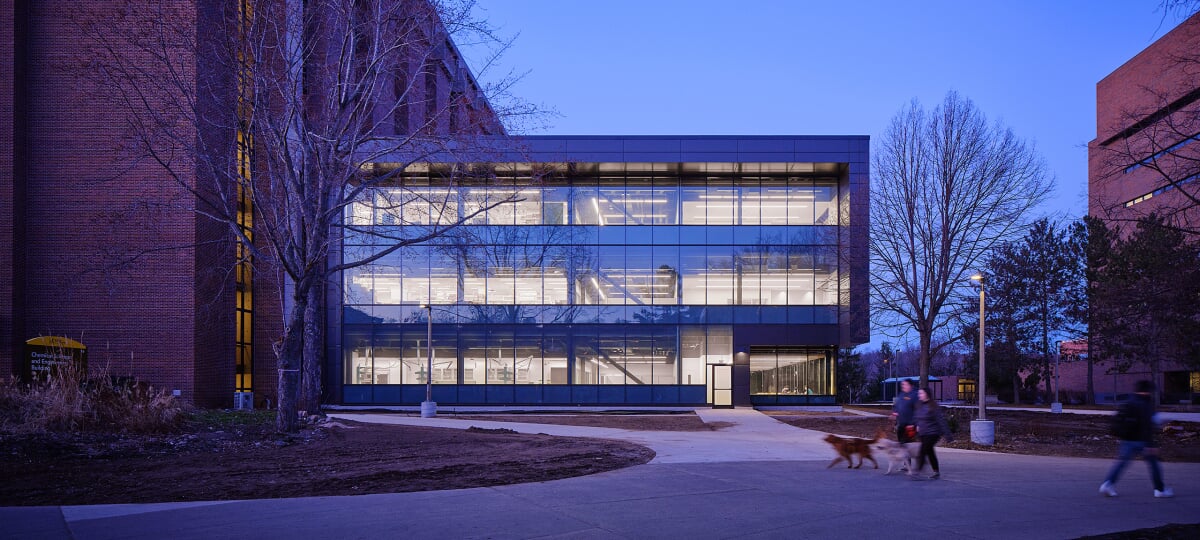
For their expansive work in biosensing technologies, researchers Yixin Liu and Grace Dykstra have received Michigan Technological University's 2026 Bhakta Rath Research Award. The "synthetic antibodies" they developed will lead to advancements across the healthcare field and beyond, from wearable health technologies to agricultural and environmental monitoring.
Biosensor technology is already widely used in everyday life. It's found in personal health devices such as fitness trackers and glucose monitors and is also used to measure environmental toxins. The tech has already changed the game worldwide — but at Michigan Tech, Associate Professor Yixin Liu and her recent Ph.D. student mentee Grace Dykstra '25 recognized its potential for further advancement.
About the Award
Established in 2010, the Bhakta Rath Research Award recognizes a Michigan Tech Ph.D. student and their faculty mentor for "exceptional scientific and technological research in anticipation of the future needs of the nation."
Biosensing technologies typically use biological components, like enzymes or antibodies, to recognize a target chemical or biological substance. A transducer then turns the recognition events into signals that can be measured and communicated, such as an electrical, optical or mechanical response.
Relying on naturally produced enzymes or antibodies has historically limited these technologies in scale, cost and operational stability. Liu and Dykstra's research outlines the use of molecularly imprinted polymers, or MIPs, to counteract those limitations.
MIPs can act like "synthetic antibodies." They are polymer materials engineered to meet the operational requirements of a specific biosensing technology, such as wearable trackers that monitor stress, fatigue and metabolic health, or rapid diagnostic tests for disease and infection. These engineered MIPs perform a similar recognition role to natural antibodies but are low-cost, chemically stable and highly scalable in terms of manufacturing.
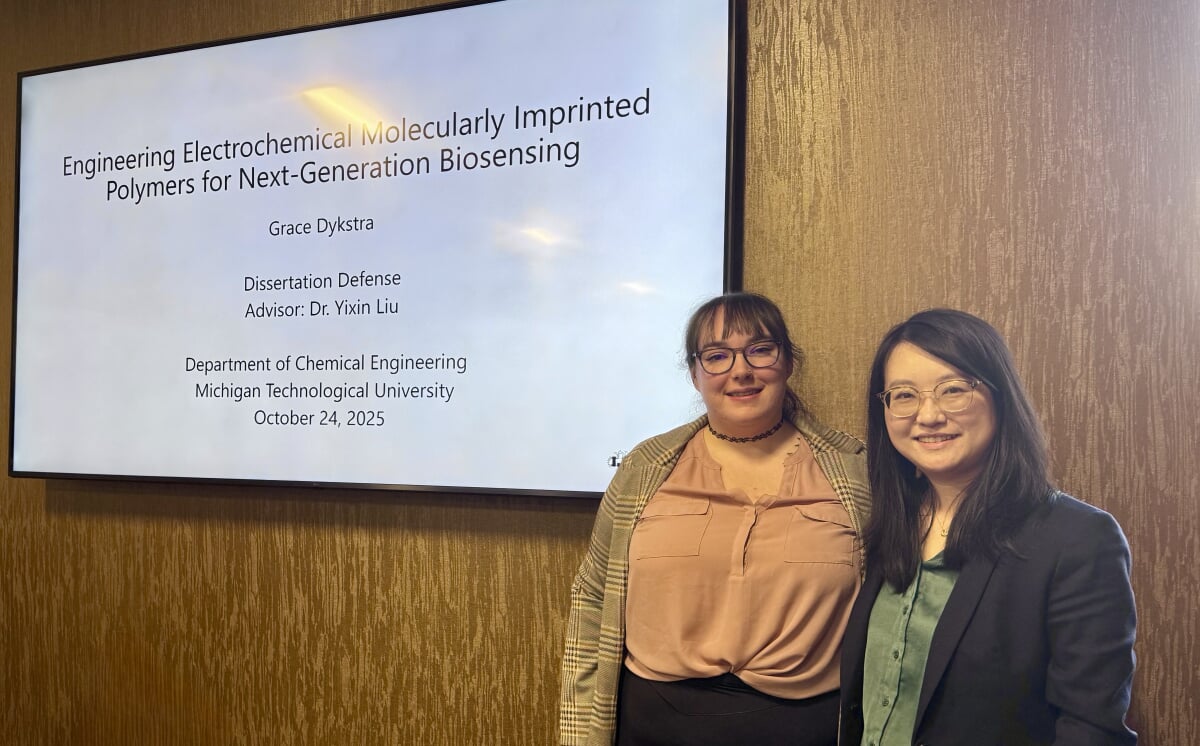
Liu and Dykstra's research has the potential to revolutionize existing biosensing technologies, opening the door to fast, reliable biosensors capable of supporting more decentralized healthcare and next-generation diagnostics. While their MIP development is just one piece of the puzzle, their award-winning research leads toward a more robust and accessible healthcare field.
In a letter supporting Liu and Dykstra's nomination for the Bhakta Rath Research Award, Professor Jeffrey M. Halpern from the Department of Chemical Engineering and Bioengineering at the University of New Hampshire highlighted their work for its "depth and creativity across multiple areas of sensor development."
"Their work introduces new knowledge with clear transformational potential," he said. "Their platform offers the potential for cost savings, energy efficiency and adaptability across applications relevant to public health, environmental monitoring and national security."
"The broader significance of this research extends beyond a single sensing application," said Professor Chelsea Monty-Bromer from the Department of Chemical and Biomedical Engineering at Cleveland State University in another letter. "It establishes generalizable design principles for intelligent materials development, supports the advancement of portable and decentralized analytical technologies and contributes to emerging needs in environmental monitoring, health diagnostics and chemical detection."
"The work embodies the translational and future-oriented spirit of the Bhakta Rath Research Award by combining fundamental insight with clear technological trajectory."
Liu and Dykstra both came to Michigan Tech in fall 2020 and began working together in spring 2021. Liu, an associate professor and co-director of graduate programs in the Department of Chemical Engineering, joined Tech after five years with ABB Corporate Research Center working on industrial chemical sensor development and productization.
Dykstra, Liu's first Ph.D. student, came to MTU following a chemical engineering undergraduate degree from the University of Minnesota Duluth. Dykstra graduated with her Ph.D. in Chemical Engineering from Michigan Tech in 2025 and currently holds a position as postdoctoral researcher at the University of Hawaii at Manoa, where she is continuing her work in biosensors.
In this Q&A with Michigan Tech News, Liu and Dykstra discuss their research, its future applications in the ever-expanding healthcare field and working together as research collaborators.
Q: To a general audience, how would you explain your research?
YL: We develop synthetic materials that mimic the way antibodies recognize specific molecules that are cheaper, more stable and easier to manufacture. We use these materials to build biosensors that detect molecular signs of health and disease. Our broader goal is to make sensing technologies more affordable and accessible, whether through wearable devices that track health over time or point-of-care tests that deliver rapid results outside of a traditional laboratory.
GD: The research focus is to develop low-cost and stable biosensors for the detection of a variety of biomolecules through tailored sensor fabrication. These sensors, known as molecularly imprinted polymers (MIPs), are made through polymerization and provide a low-cost, shelf-stable alternative to the traditional antibody and enzyme systems currently used. The research focused on optimizing the polymer fabrication process to better understand MIP development and improve sensor performance.
Q: The Bhakta Rath award recognizes "research in anticipation of the future needs of the nation." In your own words, how do you see your research meeting those future needs?
YL: Healthcare is moving toward earlier detection, more personalized monitoring and decentralized testing. Meeting those needs will require biosensing technologies that are affordable, scalable and reliable enough to work outside specialized laboratories. Our work focuses on developing synthetic sensing materials that can be adapted to many different biomarkers, helping make advanced diagnostic technologies more accessible to more people and in more settings.
GD: The sensors that we have fabricated can be tailored to a wide range of analytes and can be made for nearly any molecule of interest. Molecularly imprinted polymer-based sensing platforms have the opportunity to translate to current biosensing needs as well as future needs as we continue to learn more about biomarkers for different diseases and identify new viral targets. By laying the framework for their optimization, their fabrication can be translated to larger scales to help meet the future needs of the nation.
Q: What led to your interest in biosensing technologies research?
YL: As our world becomes increasingly connected and data-driven, we rely on more and more sensors to provide information for decision-making in many smart technologies. But obtaining meaningful molecular information remains much more challenging. Molecules can tell us whether someone is getting sick, whether food is contaminated or whether our environment is changing.
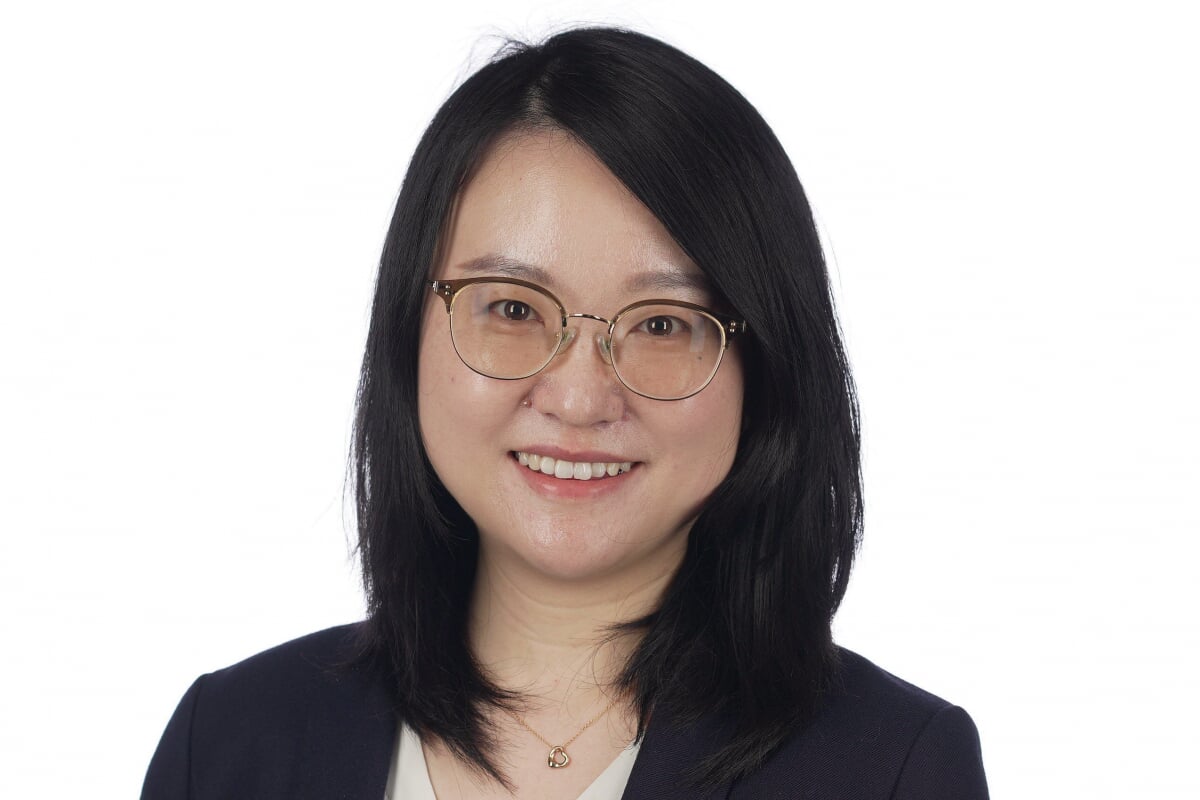
"I was trained in chemical sensing, and biosensing captured my interest because it combines a fundamental scientific challenge with the opportunity to make a direct impact on people's lives. The possibility of developing technologies that can improve healthcare and quality of life is what motivates me most."
GD: I first became interested in biomedical-related research when I took a biomedical engineering class during my undergraduate studies. It allowed me to see how my chemical engineering background could be applied to fields beyond the traditional industries I was familiar with. When I came to Michigan Tech, I hoped to join a lab that combined engineering with medical research and applications. I am very grateful that I was given the opportunity to work with Professor Liu, who introduced me to the field of biosensors. Since then, I have discovered just how many sensing technologies are integrated into our everyday lives, even if we do not always think about them. From carbon monoxide detectors and smoke alarms to glucose meters and pregnancy tests, sensors play an important role in monitoring our health, safety and environment.
Q: How do you see your research affecting the broader field of healthcare and/or nanomaterials?
YL: I hope this work helps advance a new generation of sensing technologies that are less dependent on fragile biological materials and more suitable for real-world deployment. Beyond healthcare, the design principles we developed may also be useful for creating other functional materials and interfaces for agricultural, energy and environmental sensing applications.
GD: I am hopeful that this work has created a framework for the future development of low-cost sensing technologies. I hope it will help facilitate easier access to healthcare by providing lower-cost, reliable options for biomarker detection. Ultimately, these technologies could support earlier diagnosis, preventative care and prognostic monitoring for a variety of diseases and medical conditions.
Q: Research is a collaborative effort. Tell us about your various research partners and what it's like to work with them.
YL: This work benefited from contributions from students, faculty collaborators and external partners with expertise spanning chemical engineering, biomedical engineering, materials characterization and data science. Each collaborator brought a unique perspective and expertise that strengthened the project. I'm often amazed by how a principle or phenomenon discovered in one field can be translated to solve challenges in another.
GD: We have had the opportunity to work with many different students, faculty members and external collaborators and have been able to learn a great deal from those relationships. Many of these collaborations brought together individuals with different backgrounds and expertise, allowing us to approach research challenges from new perspectives. Working with others has exposed us to new techniques, ideas and ways of thinking. These collaborations have strengthened our research and played an important role in my development as a researcher.
Q: How long have you two been working together? What is it like to work with one another? What have you learned from each other?
YL: Grace was my first Ph.D. student, and we've worked together since spring 2021. Since I had just returned to academia from industry and this was also a relatively new research direction for me, in many ways we learned and grew together. She is curious, persistent, meticulous and willing to tackle difficult problems. Our discussions frequently challenge me to think more deeply and consider new perspectives. Watching Grace evolve from a new graduate student into an independent researcher with her own scientific judgment and research vision has been one of the most rewarding experiences of my career so far. Receiving this award together makes it especially meaningful because it reflects not only the research itself, but also the journey we shared in building it.
GD: I started working with Professor Liu in the spring of 2021, and she taught me many of the tools and techniques that I use in research today. During our first summer working together, Professor Liu and I spent much of our time in the laboratory, where she directly taught me electrochemical techniques while we explored data from our first MIP research project. I am grateful for the opportunity to have learned from her firsthand.
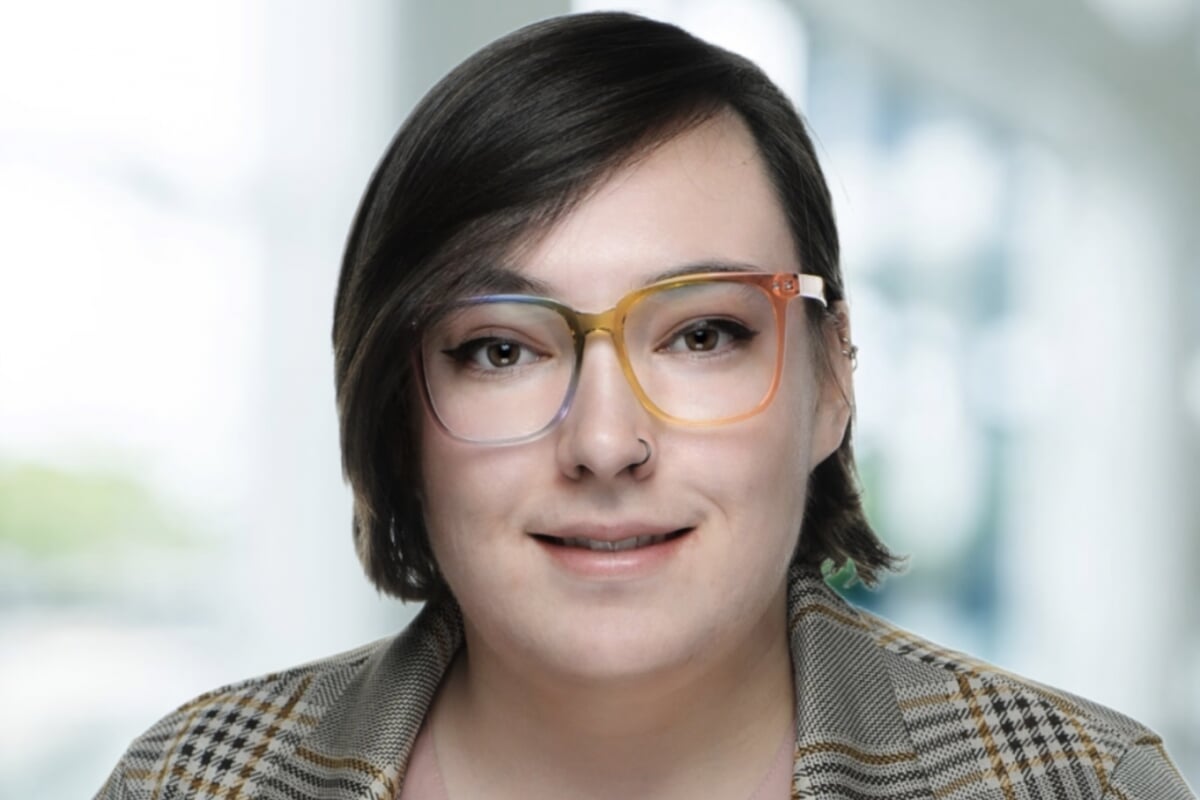
"Over the years, I have learned a great deal from Professor Liu, not only about conducting research in the laboratory, but also about presenting at technical conferences and communicating complex research in a concise and effective manner. I do not think I could have asked for a better Ph.D. advisor."
Q: What brought each of you to Michigan Tech?
YL: Before joining Michigan Tech, I spent five years in industrial research developing sensing technologies for real-world applications. When I decided to return to academia, Michigan Tech attracted me because of its strong practical engineering culture and collaborative research environment. It provided an excellent opportunity and the resources needed to build a research program focused on translating research into impactful technologies, while mentoring students who share that same passion for solving practical problems.
GD: I first learned about Michigan Tech while on a co-op in 2020, where some of the other co-op students attended the university. At the time, however, I was not interested in pursuing graduate school. Over the course of that summer, I became more curious about research, and by my final semester of undergraduate studies, I spoke with one of my professors about the possibility of continuing my education through graduate studies. After our conversation, he forwarded me an email from Michigan Tech, and I decided to apply. Since I had never expected to attend graduate school, I was unsure whether I would be admitted. When I received my acceptance, I took it as a sign that Michigan Tech was where I was meant to be. Looking back, I would not change anything. I truly enjoyed my time at Michigan Tech and am grateful for all of the people I have met and experiences I have had along the way.
Q: What's next for you in your research endeavors?
YL: We are expanding this work from small molecules to larger biological targets, such as proteins, and developing multiplexed biosensors capable of monitoring multiple biomarkers at the same time. We are also increasingly integrating computational tools and data-driven approaches into our research to accelerate sensor development.
GD: I have recently begun my journey as a postdoctoral researcher and am continuing my work in biosensors using a variety of materials and fabrication methods. Through this experience, I hope to further develop my skills as a researcher, learn from different perspectives and expand my knowledge of the field. Ultimately, I hope to teach and conduct research at a university, where I can lead my own research group and mentor future students.
Q: Anything else you would like to share? Anyone else you would like to thank?
YL: This award reflects the efforts of many people. I'm grateful to Grace for her outstanding work and dedication, and to the students, collaborators and colleagues who helped make this research possible. I also thank the National Science Foundation, Michigan Tech's Research Excellence Fund, and the Health Research Institute Graduate Fellowship for supporting this research. Finally, I would like to thank Michigan Tech and the Department of Chemical Engineering for providing a supportive environment and the resources needed to pursue innovative research.
GD: I would like to thank everyone who has helped make this journey possible. First, I would like to thank Professor Liu for her support throughout my Ph.D. and for her continued support as I begin the next stage of my academic career. Professor Liu has had a tremendous impact on my professional and research development, and I would not be where I am today without her guidance, mentorship and encouragement. I would also like to thank the students and labmates with whom I have had the opportunity to work closely over the years. Their ideas, collaboration, support and willingness to share knowledge contributed greatly to both my research and personal growth. I am grateful for the support of my friends and family, who helped keep me grounded and encouraged me throughout this journey. Finally, I would like to thank the Michigan Tech Department of Chemical Engineering, the Health Research Institute, the Graduate School and all of our funding sources for providing the resources and support that made this work possible.
Michigan Technological University is an R1 public research university founded in 1885 in Houghton, and is home to nearly 7,500 students from more than 60 countries around the world. Consistently ranked among the best universities in the country for return on investment, Michigan's flagship technological university offers more than 185 undergraduate and graduate degree programs in science, technology, engineering, mathematics, computing, forestry, business, health professions, robotics, psychology, social sciences, humanities, and the arts. The rural campus is situated just miles from Lake Superior in Michigan's Upper Peninsula, offering year-round opportunities for outdoor adventure.