Michigan Tech’s mechanical engineering alumni are making big impacts in unique ways. Whether it's revolutionizing the local snow removal industry or a special recognition of 35 years of service, MAE alums are connecting with the Upper Peninsula communities they call home.
Snow-blowing Reimagined: Mechanical Engineer Clears the Way in the Copper Country
By Becky Barnard
Troy Bouman's doctorate in mechanical engineering is the foundation of All UP Snow Blowing—a company dedicated to making snow removal less stressful in the Keweenaw.
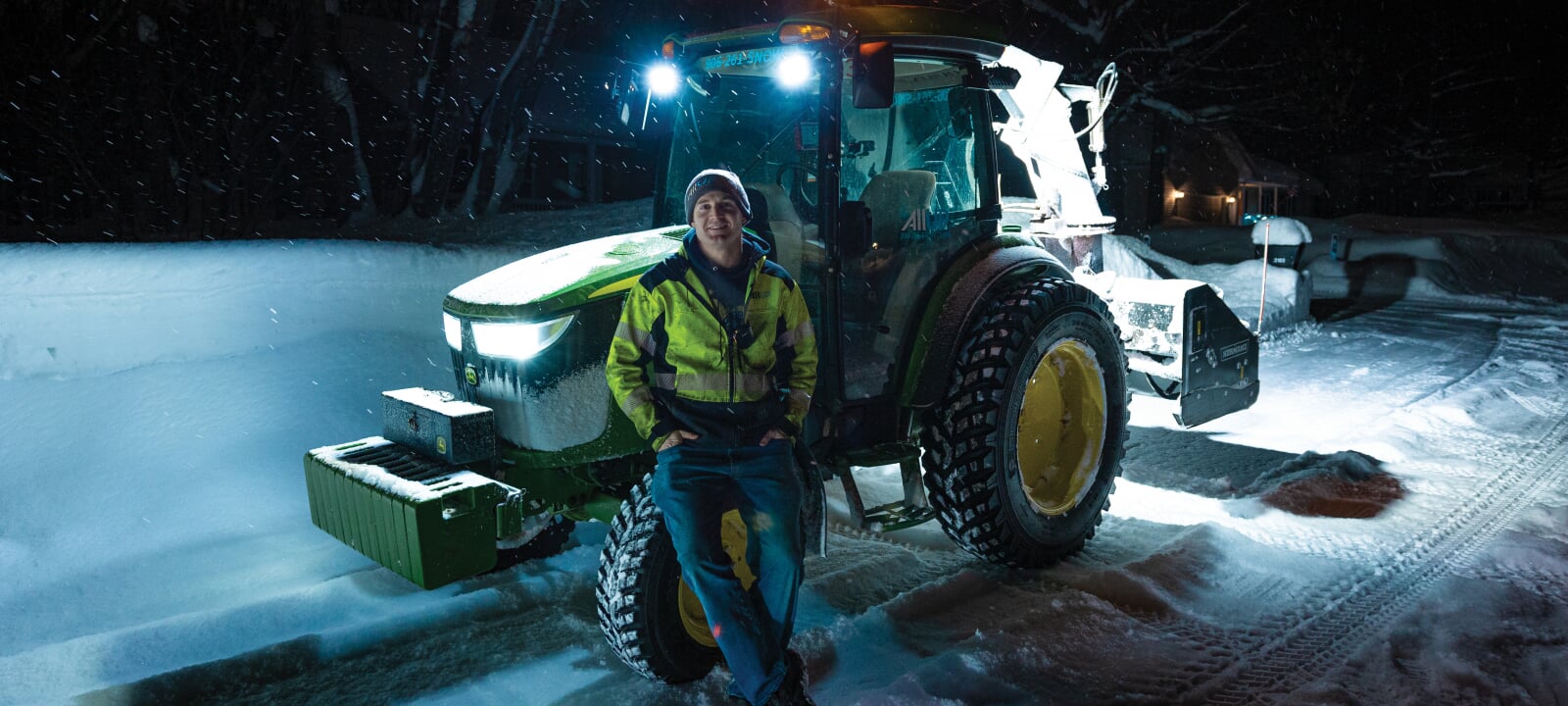
Bouman '12 '16 '21 came to Michigan Tech as a student in 2007, drawn to mechanical engineering after working in a machine shop in high school. He dove into undergraduate life, joining Triangle Fraternity, working as a resident assistant and a community coordinator, and minoring in electrical engineering and general music. Through a collaboration between then-Residence Life and Orientation, he met his now-wife Andrea '11 '12, who was then an Orientation Executive Staff member majoring in biology and exercise science with aspirations to attend medical school.
After graduation, the couple moved downstate for Andrea's residency. Bouman earned an MBA from Grand Valley State before he and Andrea returned to Houghton, where she is now an emergency room doctor. Bouman returned to Tech, earning a master's and, eventually, a PhD in Mechanical Engineering, with a focus on noise, vibration, and harshness (NVH).
Bouman worked for product development supplier Roush, where he consulted on NVH problems for clients ranging from auto manufacturers to aerospace companies. He and Andrea welcomed their first daughter in 2017.
At that point, the path seemed clear: Andrea would continue her medical practice, Bouman would advance in corporate engineering, and they would expand their family. But life had other plans.
After the premature birth of their twins, the Boumans spent months at the hospital. Sadly, they lost their son, but their daughter grew stronger with a care plan that included hours of skin-to-skin contact. Amid the grief and uncertainty, whiling away the hours with a delicate baby sleeping on his chest, Bouman came across a video showcasing snow removal techniques in Quebec. He saw the benefits a similar business could bring to the Copper Country.
"When my son passed away, I realized the importance of having people in a community who help—both professionally and personally," he said. "So many people helped us through that difficult time in 2021, as well as when we tried again and lost our daughter to prematurity in 2023. I saw a need in our area, I found this technology that wasn't being used here, and I had a desire to be one of those positive parts of the community. That's how All UP started."
That deeply practical, quietly compassionate perspective has shaped a successful and rapidly expanding company.
Lightening the Snow Removal Hassle for Copper Country Neighbors
Many homeowners in the area clear their own driveways, a task that can amount to another full-time job during winters that see an average of 200 inches of snow and occasionally more than 300 inches annually. Hiring a service often involves knowing someone with a plow in your immediate vicinity, since routes are usually localized to a few neighborhoods and websites are rare.
"At the core of every business, you're solving a problem. In 2021, I asked: 'Who is solving the problem of residential snow removal?' The answer was hardly anyone," said Bouman.
Finding pricing during his market research was as difficult as locating a needle in a snow drift. What he did come up with was inconsistent, with a wide variance. Seasonal costs for a two-car driveway ranged from $300 to $2,500—in the same neighborhood.
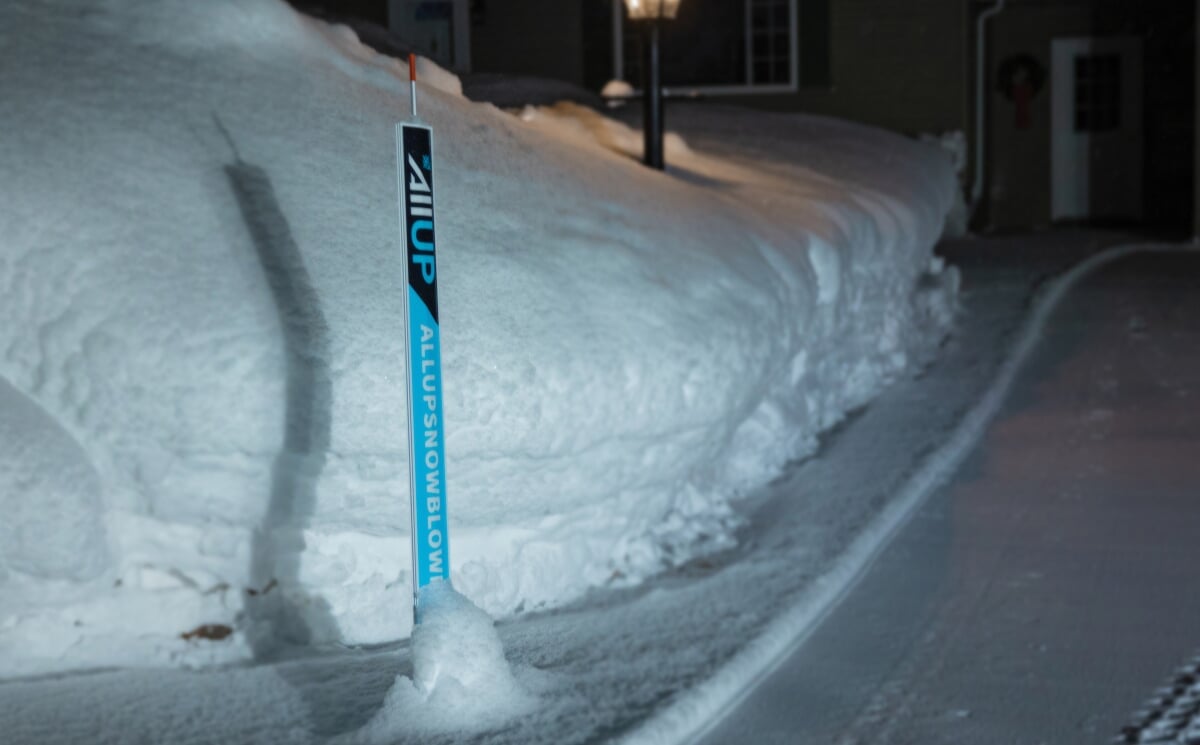
Additional customer discovery indicated common pain points. For example, crews didn't always coordinate with municipal plowing schedules, leaving freshly cleared driveways unusable due to berms laid down by city or county crews. Traditional plows stack snow along the edges of roads and driveways, building high banks rather than redistributing snowfall. Pushing the stacks back often damages lawns.
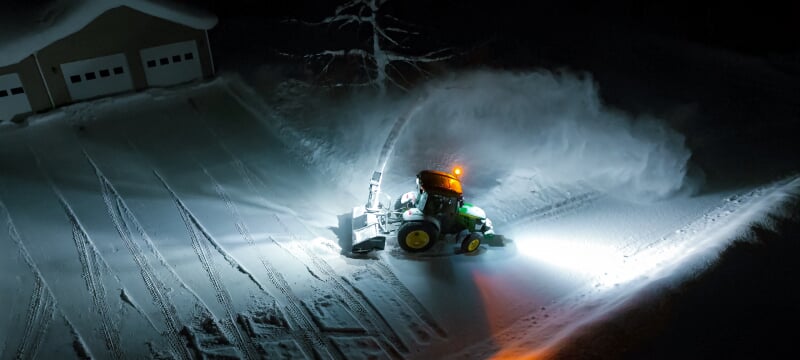
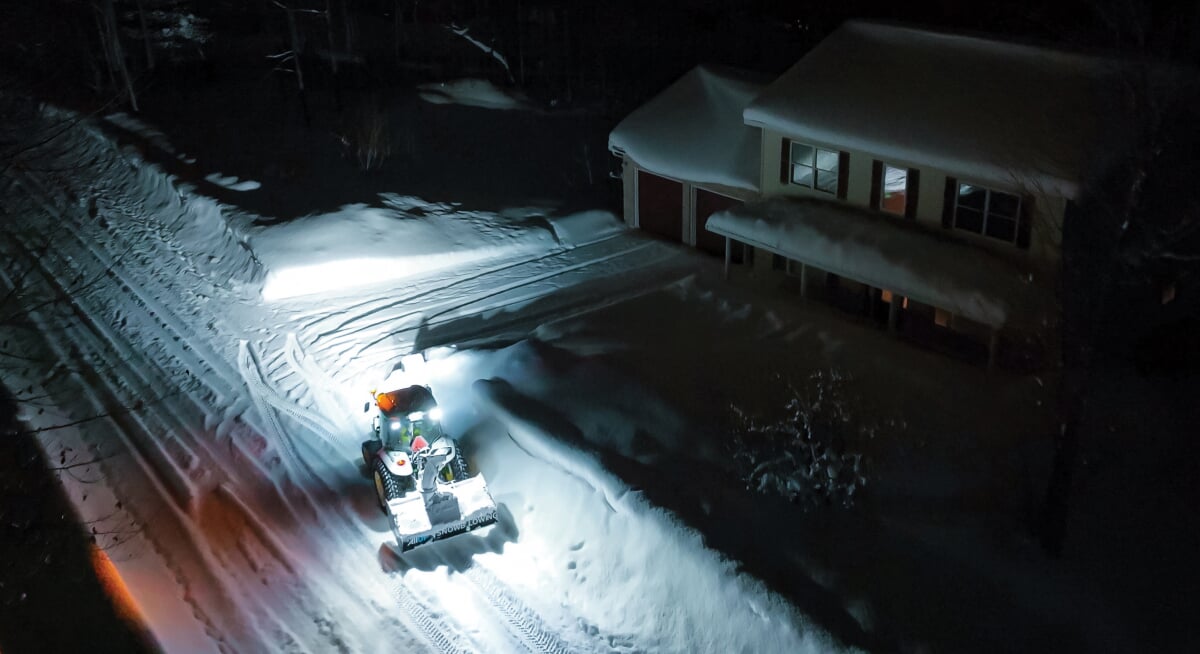
All UP Snow Blowing uses tractors with rear-mounted, inverted snow blowers instead of front-mounted plows. The tractors back over new snow, then drop the blower and drive forward. The blowers can spread snow over the entire yard, and they're fast. Bouman said he can clear a two-car-wide driveway in just 90 seconds.
All UP launched in 2022 with one tractor, 75 customers in Hancock, a website with transparent pricing, and a spreadsheet full of calculations. "I knew there was demand. I just didn't know how much," Bouman said.
Demand exceeded expectations. The next year, the business expanded into Houghton, and the year after that, into Calumet and Laurium. In 2024–25, All UP served nearly 500 homes with seven tractors. And demand is still growing: Bouman has four more tractors on order for 2025–26.
How to Engineer a Successful Business
Bouman approaches business like an engineer with an MBA, constantly improving both technology and business processes. He's written custom route-optimization software in Python and tested different blade materials and cutting angles based on driveway type. He uses GPS tracking to send customers updates and arrival estimates—features more common to Silicon Valley start-ups than Keweenaw snow clearing.
Reflecting on how the business came together, Bouman understands what he didn't see at the time. "Everything I'd studied—engineering principles, business modeling, systems optimization—led directly to what I'm doing now," he said.
The biggest testament to all his work behind the scenes is how effortless it seems to his clientele.
"My customers just want to know when they can get out of the driveway," he said. One customer recently shared how All UP's service gave her peace of mind during a medical event. They were able to get in the car and go to an appointment without dealing with new snow or a berm. "That," he said, "is exactly why I do it."
All UP will remain a Copper Country business, as Bouman isn't looking to franchise or expand beyond the region. His goal remains consistent: to be one of the people in the community who shows up when it matters.
When asked if he saw this in his future as a first-year engineering student, he grinned.
"No way. Back then, the goal was corporate life. You get the engineering job, you move into management, all of that," he said. But Bouman's educational background gave him a unique toolkit to analyze and solve problems, no matter the career path. He encourages other engineers to pursue their own business ideas.
"My MBA gave me the framework to analyze a business, but engineering gave me the framework to solve problems," he said. "We learn it early on with first principles analysis: If the principle of a business is to solve a problem, and engineers are trained to solve problems, it makes sense that engineers should be starting businesses. I credit a lot of my success to the framework I learned from Tech: how to be a problem-solver."
Full Steam Ahead: Great Lakes Tugboat Named After Ronald J. Pearce '51
By Morgan Laajala
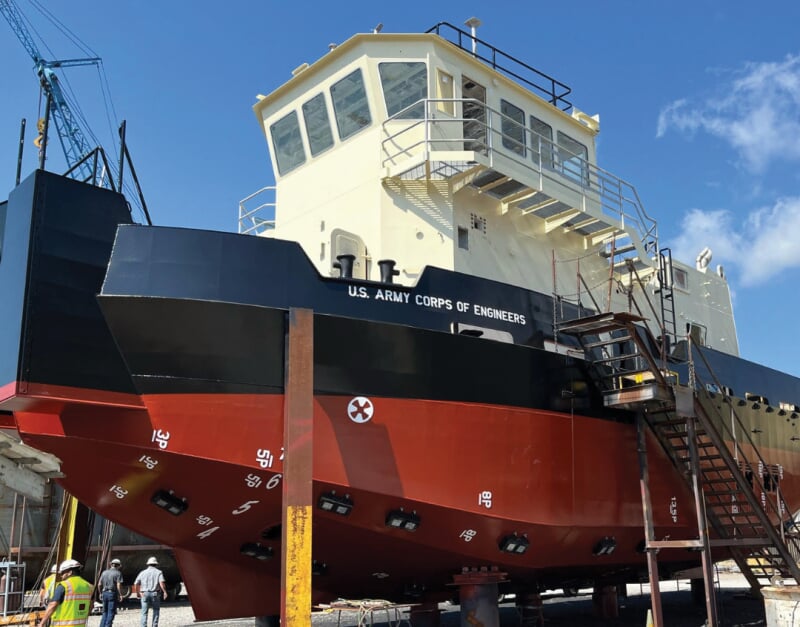
Michigan Tech alumnus Ronald Johnston Pearce (1929-2020) spent 35 years of his career working for the U.S. Army Corps of Engineers as a civil engineer in Sault Ste. Marie. In recognition of his years of service and dedication, the USACE named a new tugboat in his honor, the TB Ronald J. Pearce.
Having grown up in “The Soo” during World War II, Pearce developed a strong work ethic and sense of national pride and after graduating from Michigan Tech with his bachelor’s degree in mechanical engineering in 1951, he was drafted into the Army in 1953. He served in Korea and built public buildings, dams, and electric power stations for local villages before returning to the U.S. in 1956 to join the USACE.
Read the full story about Ronald Pearce.
Michigan Technological University is an R1 public research university founded in 1885 in Houghton, and is home to nearly 7,500 students from more than 60 countries around the world. Consistently ranked among the best universities in the country for return on investment, Michigan's flagship technological university offers more than 185 undergraduate and graduate degree programs in science and technology, engineering, computing, forestry, business, health professions, humanities, mathematics, social sciences, and the arts. The rural campus is situated just miles from Lake Superior in Michigan's Upper Peninsula, offering year-round opportunities for outdoor adventure.