A purpose-driven College for a purpose-driven life.
1979. Supertramp had just released "The Logical Song." Sony introduced the Walkman, and Atari debuted a visionary new video game called Asteroids. That's how far back you have to go to find a first-year class as large as the 92 students who began their careers in the College of Forest Resources and Environmental Science (CFRES) in the fall of 2025. There are many factors that account for our dramatic, sustained growth. One of the most important is a generation of students intensely committed to environmental stewardship.
All of our alumni carry their love for the natural world into their careers. But this generation grew up steeped in dire environmental news. In their talks with me, they convey an urgency to conserve the environment and use natural resources sustainably. More than any generation before, they feel the existential threat to the ecosystems that support our lives, economies, and planet.
Our students are seeking a purpose-driven life. Many of them tell me their quest was sparked in childhood: family camping trips, hunting or fishing with a relative, or birding on a school field trip. An inspiring biology teacher or an Eagle Scout project may have started them on their way. In CFRES, our job is to help them gain the skills and knowledge they need to achieve the professional goals that support their purpose.
As they enter a new season in their lives, students are choosing CFRES because they know we're committed to the same values they are. We offer them a state-of-the-science environment to pursue their dreams. We involve them in relevant research and immerse them in the natural beauty surrounding us from day one.
With an eye on the future, we continue to honor the beloved, hands-on traditions that define our uniqueness, from fall camp to sugar bush season. CFRES builds on the work of our past researchers through vital projects like cataloging our one-of-a-kind regional insect collection and cladding the vintage Ford Sawmill with high-tech siding developed with the help of an emeritus faculty member. Meanwhile, CFRES research continually moves us into new frontiers as Michigan Tech takes its place among four R1 research institutions in the state, and the only one located in a rural area. From the Texas coast to the Amazon rainforest, our researchers are involved in headline-making collaborations to address the threat of species extinction. Here in Michigan, through our biomaterials research and support for new mass timber manufacturing, we are strengthening the state's industrial base and laying the groundwork for new jobs.
Proactively planning for change requires paying attention to everyone with a stake in our future. In addition to talks with prospective students, conversations with faculty and staff over the past year have helped me to see our College and its mission more clearly, in all its complexity and beauty.
Our faculty, staff, and leadership are experts at embracing change and rising to challenges. For more than half a century, CFRES has successfully anticipated where the discipline is going and provided the programs that address emerging issues in natural resource management. We have a legacy as respected as our wolf-moose study and as revered as our forestry program for offering forward-looking educational experiences that harness new technology, strengthen communication skills, and prepare students for an ever-changing workplace.
Our degree programs are also constantly evolving ahead of the curve. When I joined the School of Forestry and Wood Products in 1998, there were two bachelor's degrees: the BS in Forestry and the newly minted BS in Applied Ecology and Environmental Science. Since then, the College has added five new undergraduate degrees and five new graduate programs. In our latest leap forward, starting in fall 2026, we will offer a new BS in Ecological Engineering co-created with the College of Engineering. In addition, we now offer a fully online Master of Geographic Information Science degree for working professionals.
Our sustained commitment to outstanding teaching and community building is another reason why our fall 2025 incoming class is the largest in more than four decades. Forty percent of our current faculty have won or been finalists for University-level teaching awards. In exit interviews with our new graduates, I hear compelling stories of life-changing experiences: how earn-and-learn research projects set them up for success, how summer or fall camp was their favorite Tech experience, and how our professors truly care about them as both students and fellow human beings.
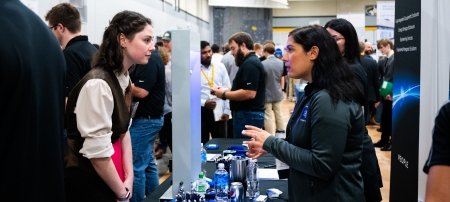
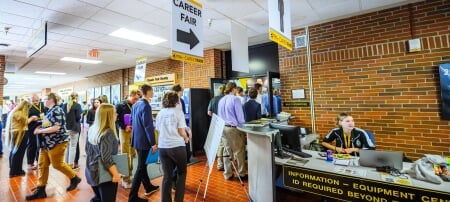
We know that students and their families are putting their trust in Michigan Tech and our College. In addition to their connection with nature, we also help Huskies connect with employers and our influential alumni network at the annual Natural Resources Career Fair. And the value of a CFRES education is evident in our job placement rate, which in 2024 was 94 percent within six months after graduation.
In this season, and always, our faculty and staff will continue to deliver on our promise to grow and empower the next generation of natural resource professionals.
In whatever season and climate you dwell, I hope you enjoy learning about the remarkable people, projects, and purpose of CFRES, knowing that you are a cherished part of this community.
Michigan Technological University is an R1 public research university founded in 1885 in Houghton, and is home to nearly 7,500 students from more than 60 countries around the world. Consistently ranked among the best universities in the country for return on investment, Michigan's flagship technological university offers more than 185 undergraduate and graduate degree programs in science, technology, engineering, mathematics, computing, forestry, business, health professions, robotics, psychology, social sciences, humanities, and the arts. The rural campus is situated just miles from Lake Superior in Michigan's Upper Peninsula, offering year-round opportunities for outdoor adventure.