
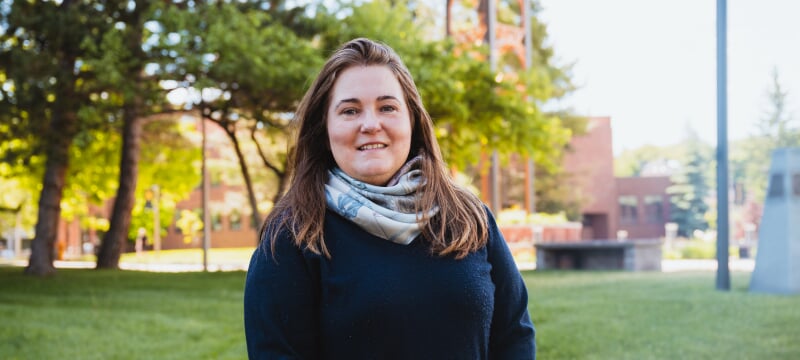
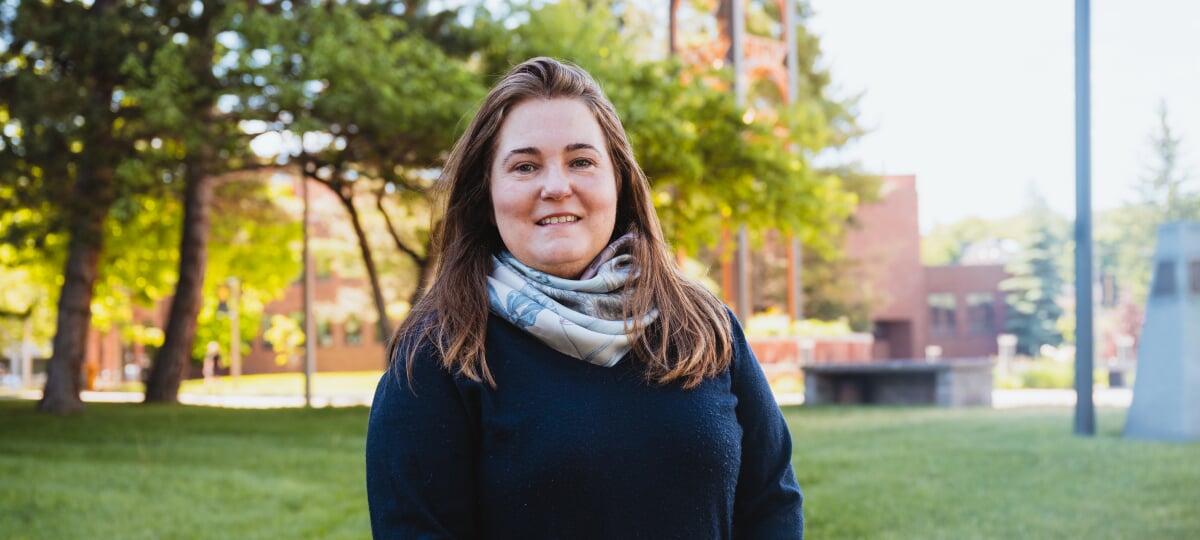
Laura Sieders is the recipient of Michigan Technological University's 2026 Distinguished Teaching Award in the category for assistant professors/teaching professors.
Laura Sieders is an assistant teaching professor in accounting and the director of Michigan Tech's Master of Science in Accounting program. Also a Tech alum, Sieders earned her bachelor's in business administration as a Husky before receiving a master's in accounting from Western Governors University. She gained ample industry experience working as the director of finance and IT for the Reserve Officers Association, the controller for the International Association of Fire Chiefs, and the director of accounting for the National Recreation and Park Association. Sieders began her teaching career in 2016 as an adjunct instructor at Finlandia University, before joining Michigan Tech in 2023.
Distinguished Teaching Award
The Michigan Tech Distinguished Teaching Award has been presented annually since 1982. The award celebrates two categories, one for assistant professors/teaching professors and another for associate professors/teaching professors, professors/teaching professors, and professors of practice. The award nomination and review process are student-driven; finalists are selected based on student ratings regarding quality of instruction. Winners receive $2,500 and a plaque at an awards dinner sponsored by the Office of the President.
A beloved member of the College of Business faculty, Sieders won the College of Business Teacher of the Year Award in 2025. The Edward and Betty Robinson Faculty Fellow in Accounting was praised by students for her work to make learning less intimidating while also showing how much she cares for their personal growth and success.
In this Q&A, Sieders explains her teaching philosophy, the most memorable moments of her career thus far, and why she chose to teach in the first place.
Q: What does this recognition mean to you personally and professionally?
LS: When I first started teaching, I had a simple goal: if even one student, years
later, could say that I made a positive difference because they were in my class,
I would consider myself successful. Receiving the Distinguished Teaching Award is
deeply meaningful because it suggests that impact has extended far beyond what I ever
imagined. Personally, it is both humbling and gratifying. Professionally, it affirms
my commitment to creating a learning environment where students feel challenged, supported,
and empowered to achieve their goals.
Q: Can you share some insights into your approach to teaching and how it has changed
over the years?
LS: My approach to teaching is grounded in the belief that learning happens most effectively
when instructors build bridges between where students are today and where they need
to be. Students arrive with different backgrounds, experiences, strengths, and challenges;
I see my role as helping them connect new concepts to what they already know while
gradually developing the confidence and skills needed to succeed.
Over the years, I have become more intentional about meeting students where they are and helping them navigate the path forward. Early in my career, I focused primarily on delivering content. Today, I spend more time thinking about how students learn, anticipating where they may struggle, and designing learning experiences that make complex ideas more accessible. While the subject matter remains important, my focus has increasingly shifted toward helping students develop the confidence and mindset needed to tackle challenging material both inside and outside the classroom.
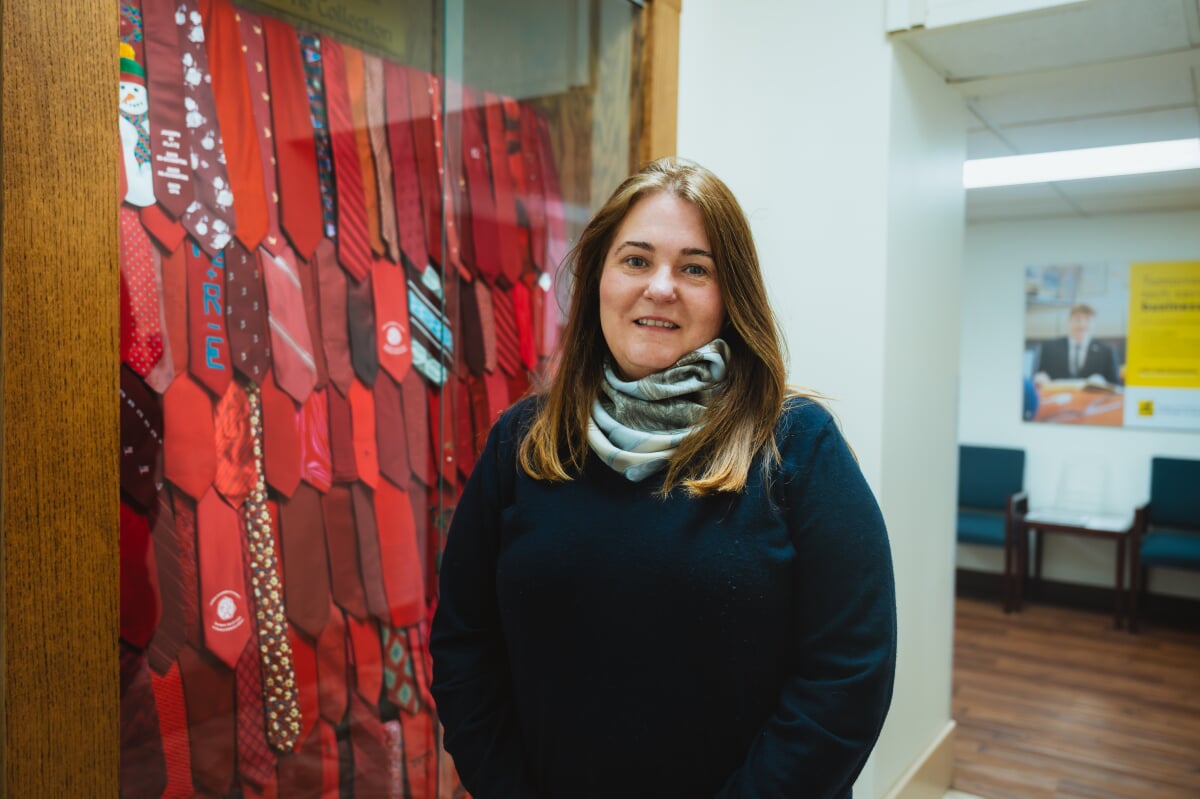
Q: What do you think makes for a successful learning experience?
LS: A successful learning experience occurs when students feel both challenged and
supported. Students learn best when expectations are clear, standards are high, and
they understand that their instructor believes they are capable of meeting those standards.
At the same time, successful learning requires compassion. Students bring a wide range of experiences, responsibilities, and challenges into the classroom, and learning flourishes when they feel respected and supported as individuals. I have found that compassion and accountability are not opposing ideas; in fact, they work together. Students are more willing to engage deeply, take intellectual risks, and persevere through difficult material when they know their instructor genuinely cares about their success.
Q: How do you strive to nurture your students' growth?
LS: I strive to nurture my students' growth by creating an environment where they
are encouraged to challenge themselves while knowing they have the support needed
to succeed. Growth rarely happens when students remain in their comfort zones, so
I intentionally design learning experiences that require students to stretch their
abilities, take intellectual risks, and tackle problems that may initially seem beyond
their reach. At the same time, I believe students need the freedom to struggle, and
occasionally fail, without fearing that a single setback will define their success.
To support that growth, I build in safety nets through feedback, opportunities for
revision, and guidance that help students learn from challenges and continue moving
forward. The goal is to create a learning environment where students develop resilience
and confidence by discovering that they can overcome difficulties they once thought
were beyond them.
Q: Are there any particular teaching methods or techniques that you find especially
effective in helping students grasp complex concepts in your field?
LS: One teaching approach I find especially effective is deliberately creating space
for mistakes as part of the learning process. Students often arrive with a strong
desire to be correct — something I respect and value — but that mindset can sometimes
limit their willingness to take intellectual risks. In my classroom, I work to normalize
productive mistakes as an essential part of learning, not something to be avoided
at all costs.
At times, I will even ask students to provide incorrect answers and then use those responses as a starting point for discussion and analysis. This helps build a classroom culture where error is not associated with failure or shame, but with opportunity and insight.
Q: Is there a particular teaching memory from your time at Tech so far that stands
out to you?
LS: One teaching moment that stands out to me occurred after an exam in which a student
became very upset because they had been unable to finish the assessment — something
that was entirely new for them. The student was visibly distressed, not only about
the performance on that exam, but about what it might mean for their overall success
in the course.
Rather than letting that moment end in uncertainty, I invited the student to come to my office immediately after class and wait while I graded the exam. My goal was to provide clarity as quickly as possible and to prevent the student from leaving in a state of distress and self-doubt.
When I finished grading, the student discovered that they had actually earned an A on the exam. What stayed with me most from that experience was not the grade itself, but the emotional shift — from anxiety and fear of failure to relief and confidence. It reinforced for me how important it is for students to receive timely feedback and reassurance, and how quickly perceptions of failure can change when students are given clarity and support.
Q: Who (or what) inspired you to become a teacher?
LS: I left my corporate accounting career in the Washington, D.C., metro area after
the tragic death of my daughter and returned home to the Keweenaw. After giving myself
some time off, I thought to gently re-enter the workforce.
I reached out to the dean of the International School of Business at Finlandia University. I was thinking along the lines of tutoring but to my delight and surprise, the dean approached me about an adjunct teaching position. Taking up that offer ended up being one of the best decisions I ever made; I absolutely loved being in the classroom and helping to bring up the next generation of accountants.
Right about the same time that Finlandia University announced its closure, an accounting faculty position at Tech was posted. I was incredibly excited by the opportunity to continue working with students at my alma mater. Now, not only am I giving back to the profession, I'm also giving back to the school that launched my career and was foundational to my professional success in the field.
Q: What opportunities does this award open up for you?
LS: The Distinguished Teaching Award strengthens my ability to contribute beyond my
own courses. It provides additional credibility when sharing teaching practices with
colleagues, mentoring new instructors, and participating in conversations about curriculum
and pedagogy. I see it as an opportunity to be more intentional in sharing what I
have learned from my own teaching experience, as well as learning from others who
are equally committed to student success.
Most importantly, it motivates me to continue refining my teaching and to keep looking for ways to better support students as they develop both confidence and competence in their field.
Michigan Technological University is an R1 public research university founded in 1885 in Houghton, and is home to nearly 7,500 students from more than 60 countries around the world. Consistently ranked among the best universities in the country for return on investment, Michigan's flagship technological university offers more than 185 undergraduate and graduate degree programs in science, technology, engineering, mathematics, computing, forestry, business, health professions, robotics, psychology, social sciences, humanities, and the arts. The rural campus is situated just miles from Lake Superior in Michigan's Upper Peninsula, offering year-round opportunities for outdoor adventure.