-
This Must Be the Place
Students and faculty with a passion for robotics are making Michigan Tech a destination for all things robots and automation. To meet the needs of a quickly evolving industry, the University's scholars and researchers are using their multidisciplinary acumen to . . .
-
Anatomy of a Production: Behind the Scenes of a Michigan Tech Theatre Performance
-
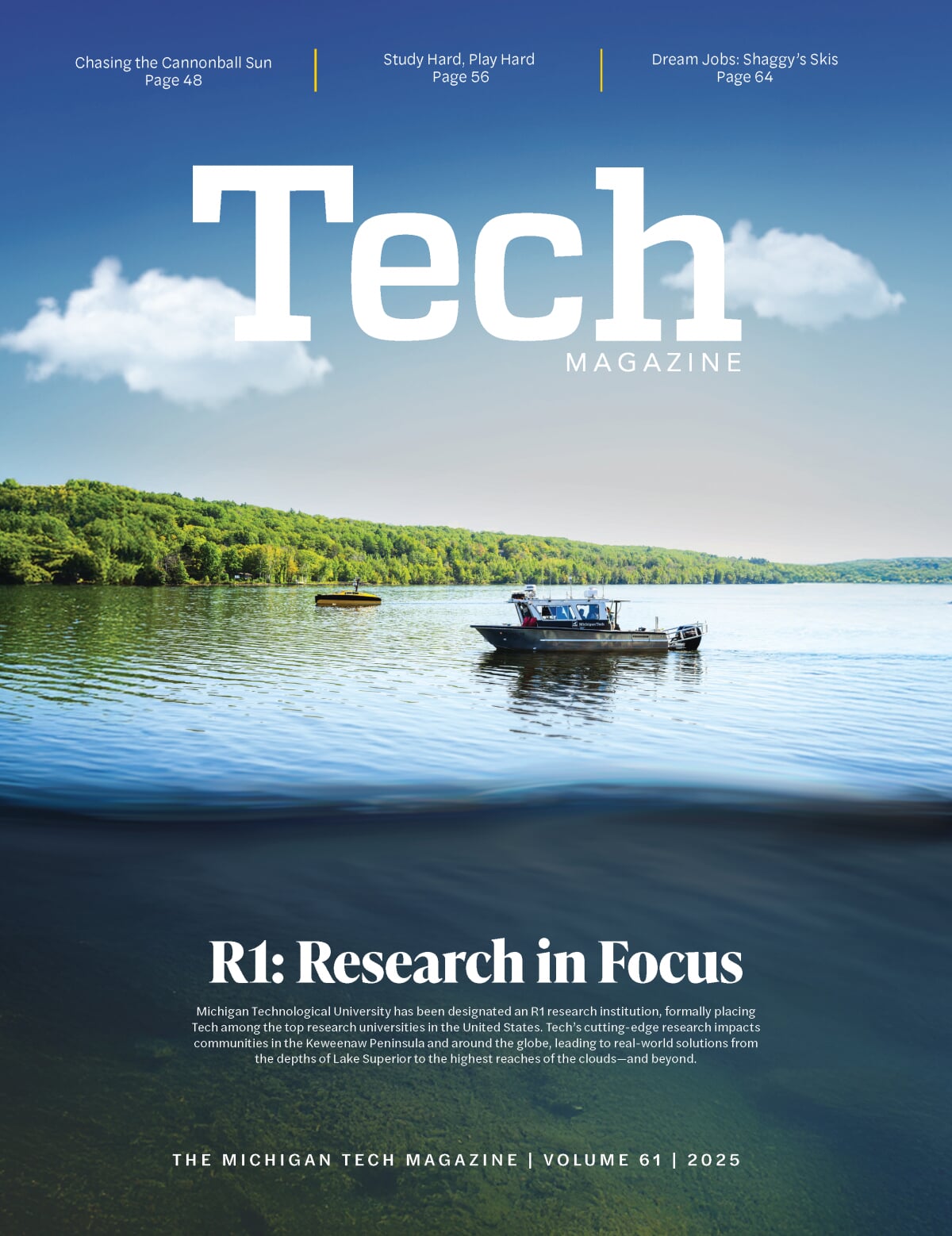
Research in Focus
-
Research in Focus: The Education of Experience
-
Research in Focus: Huskies Seek the CURE
-
Robert's Rules of Order
-
Q&A with Coach Bill Muckalt
-
» Interdisciplinary
1400 Townsend Drive: University News
-
1400 Townsend Drive: Research News
-
1400 Townsend Drive: Student Life
-
Dream Jobs
-
Alumni Reunion and Awards
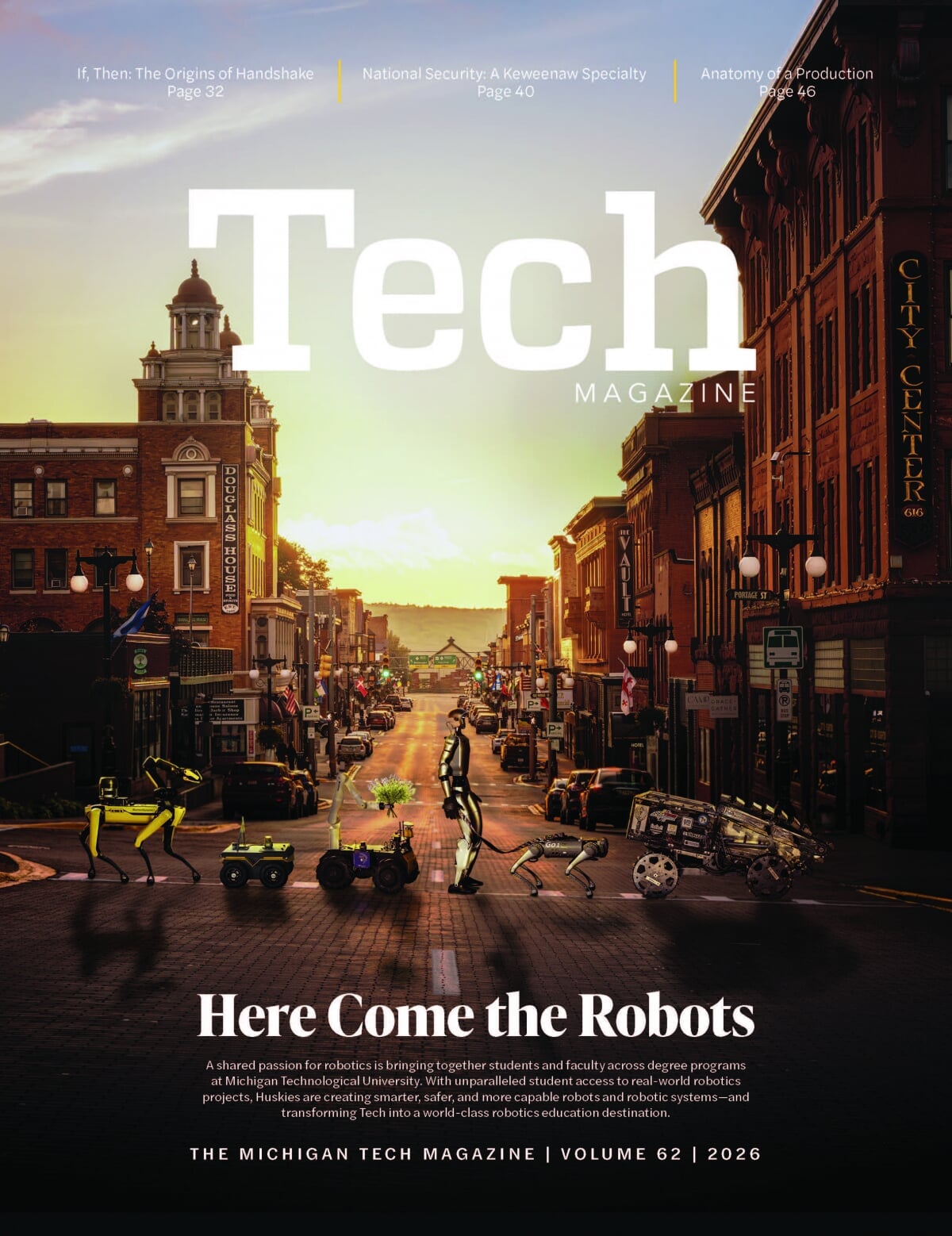
On the cover: Robots from Michigan Tech hit the town, crossing Shelden Avenue in downtown Houghton. Composite photo by Kaden Staley
Published by University Marketing and Communications, Spring 2026
- Editor
Rick White - Assistant Editor
Jessie Tobias - Writers
Coby-Dillon English
Wes Frahm
Hailey Hart '14
Morgan Laajala '19
Calvin Larson '10
Cyndi Perkins '22
Jordan Shawhan
Windy Veker - Art Director
Phoebe Meston - Designers
Jack King
Jen Withers - Photographer
Kaden Staley - Videographer
Ben Jaszczak '15 - Production Manager
Will Schuett - Social Media Manager
Mary Stevens '25 - Web Editor
Megan Ross '00 - Contributors
Conlan Houston '26
Daniel Staelgraeve '26
Leila Larsen '28 - Executive Editors
- Andrew Barnard '02 '04, Vice President for Research
- Jessica Brassard '19, Director of Research Development and Communication
- Allison Carter '95, Executive Director of Marketing, University Marketing and Communications
- Rick Koubek, President
- John Lehman, Vice President for University Relations and Enrollment
- Jennifer Lucas ’09, Assistant Vice President for Alumni Engagement and Annual Giving
- Ian Repp, Associate Vice President for University Marketing and Communications
- Bill Roberts, Vice President for Advancement and Alumni Engagement
- Comments to the editors:
magazine@mtu.edu - Research questions:
research@mtu.edu - Alumni inquiries and mailing address changes
alumni@mtu.edu