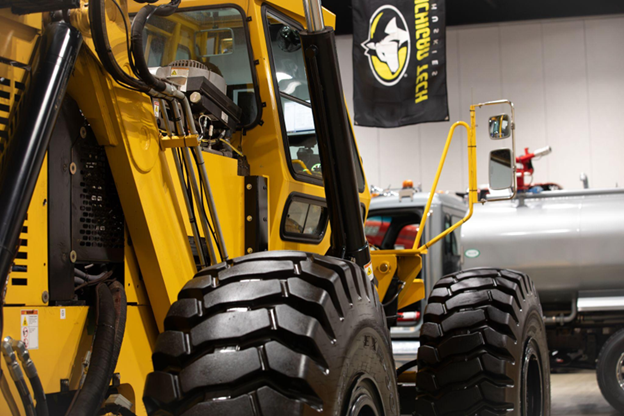

APS LABS has considerable expertise in modeling and simulating complex systems using a variety of commercial and in-house developed tools.
APS LABS is proficient in performing modeling exercises first using available data, then calibrating with experimentally recorded data, tuning the model, and using the high-fidelity model to inform design decisions before developing a prototype vehicle.
1D Simulations
- MathWork’s MATLAB, Simulink, and Simscape for numerous tasks including vehicle propulsion system modeling, controls development, and much more
- Gamma Technology’s GT-SUITE and GT-POWER for propulsion system modeling, thermal system modeling, and engine combustion modeling
- Siemens’ Simcenter Amesim for vehicle propulsion system modeling, controls modeling, hydraulic system modeling, and thermal system modeling
- AVL’s CRUISETM M
- Argonne’s GREET and Autonomie
- Magna’s KULI software for thermal system modeling
- Custom models for:
- Diesel aftertreatment systems including DOCs, CPFs, and SCRs.
- Engine models for numerous engine combustion systems
Project Highlight: Modeling and Simulation of Material Handler
In this $3.6 million Department of Energy project, an off-road material handler, the Pettibone Cary-Lift 204i, was the platform on which the APS LABS was to demonstrate a 20% fuel savings by using electrification technologies.
Creating a High-Fidelity Model of Propulsion and Hydraulic Systems
Simcenter Amesim was used to create high-fidelity models of the propulsion and hydraulic system architectures for the Pettibone Cary-Lift. These models were used to understand and quantify the energy distribution in the Cary-Lift, to view opportunities for energy savings.
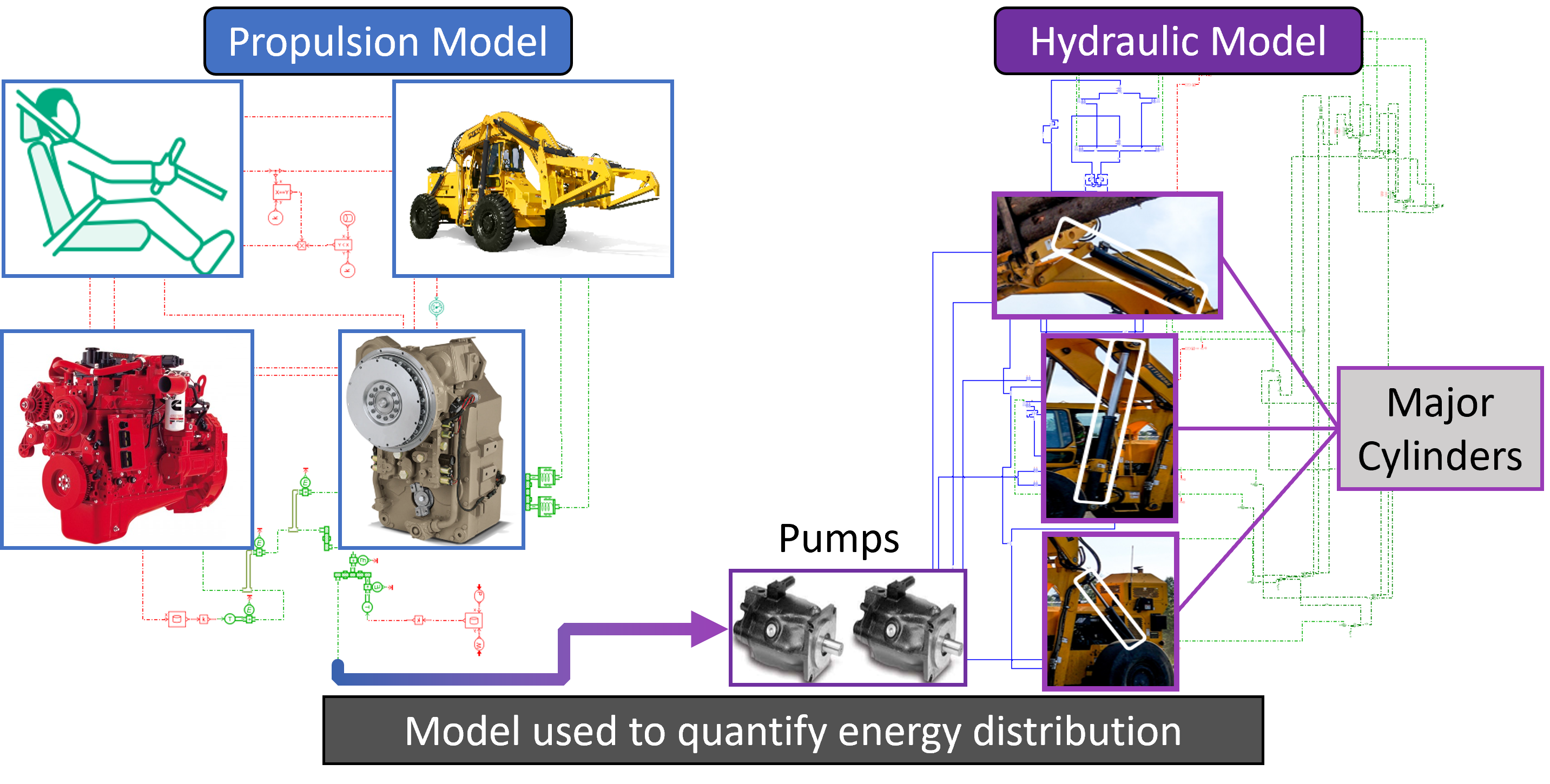
Figure 1. Propulsion and hydraulic systems in Simcenter Amesim, showing major components.
Calibrating Model with Experimental Data
In order for the model to be useful, it needed to be accurate. This is where the calibration step came into play, where experimentally-recorded operating data was used to tune the model such that simulated results aligned closely with experimental results. A comparison of significant model parameters is seen in the figure below, where results are closely aligning, showing a calibrated model.
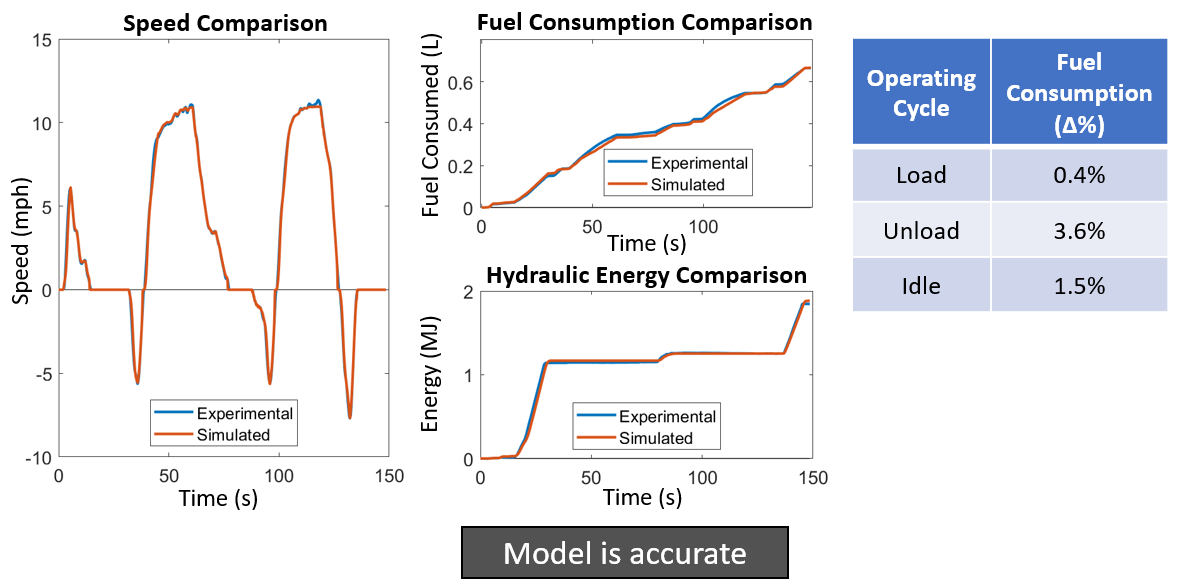
Figure 2. Calibration model results, showing strong correlation between experimental and simulated results, confirming model accuracy.
Using Simulated Results to Determine Optimal Architecture
With an accurate model of the Cary-Lift, modifications to the machine’s propulsion and hydraulic systems could be made in the modeling environment to view the most promising electrified architectures to achieve the over 20% fuel savings target while also maintaining performance. A list of feasible architectures was first generated, before filtering into the most promising architectures, and then modeling these most promising architectures in detail.
The most promising architectures were studied in terms of lifetime carbon dioxide equivalent (CO2e) emissions and cost, to determine the tradeoffs of different architecture options. See the figure below for this comparison for 8 different architectures, from the base machine with a diesel engine, all the way to a full battery electric vehicle.
Selecting Optimal Hybrid Architecture
The plug-in series hybrid (also known as extended range electric vehicle, or EREV) was chosen as the architecture to be built. With CO2e savings the main project goal, this was a large driver for the decision. See the figure below for the architecture drawing and the reasoning behind choosing the plug-in series hybrid.
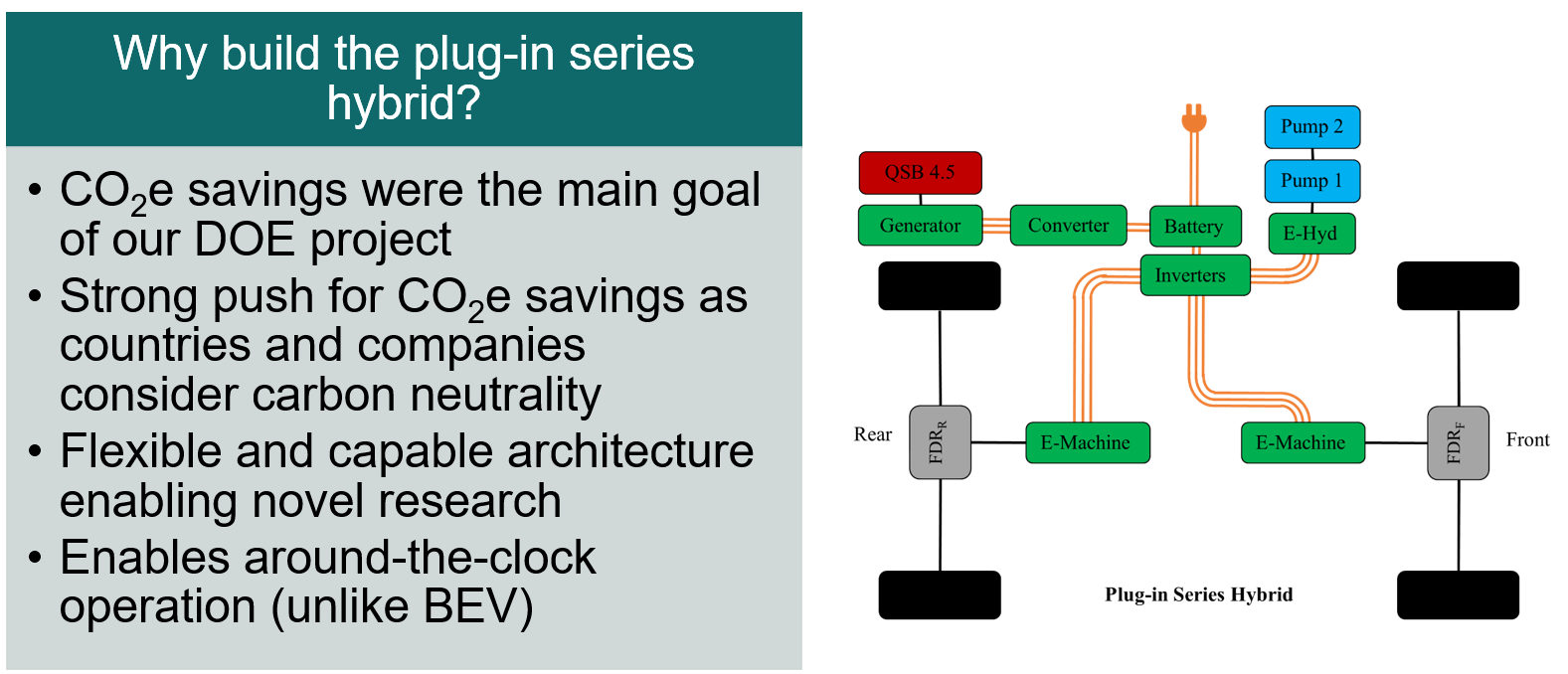
Figure 3. Reasoning for plug-in series hybrid as the architecture decision (left) and the plug-in series hybrid architecture drawing (right).
Results: Demonstrating 47% Fuel Savings
The prototype plug-in series hybrid version of the Pettibone Cary-Lift was built at the APS LABS and demonstrated using our custom-developed operating cycles. This plug-in series demonstrated 47% fuel savings, a massive improvement to the baseline machine and significantly exceeding the 20% project goals. For detailed information on this project, see the Department of Energy Final Technical Report, available as open access here.