

Ready for an adventure! Want to learn on a train or in a rainforest? Consider our study abroad / study away programs. The benefits of international study and travel include intercultural awareness, sensitivity, and communication skills, as well as exposure to different cultures, perspectives, and geographic regions. Conduct field research and learn from hands-on real-world experience all while making life-long friends.
Check out some of our past programs!

Study Away Across America on Amtrak!
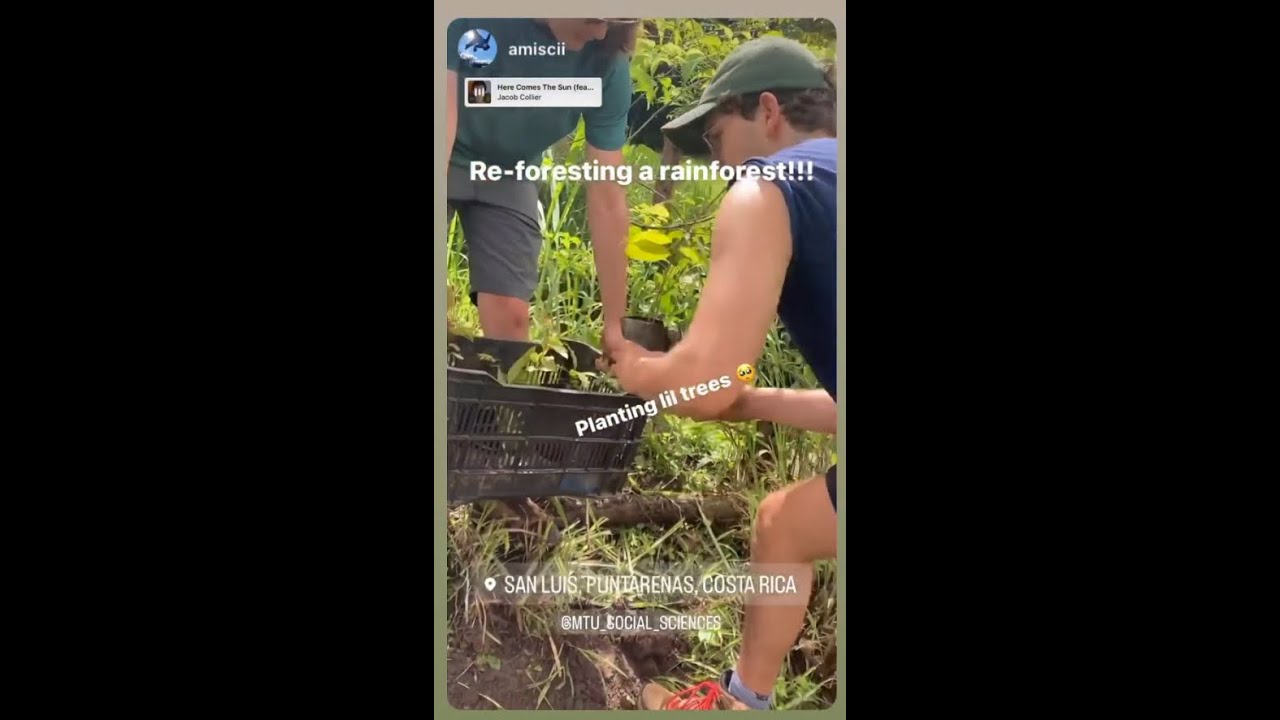
Study Abroad to Costa Rica
Upcoming Study Abroad/Away Programs

Spring Break 2027 - Yucatan Peninsula, MEXICO
Experience the Yucatán beyond the resorts. This immersive study-away course takes students from Maya communities and historic cities to rapidly developing coastal destinations to explore how tourism, migration, culture, and development are reshaping the region. Through site visits, conversations, observation, and reflection, students will examine who benefits from tourism, whose stories are represented, and how communities navigate economic opportunity alongside social and environmental change. Along the way, students will build confidence traveling in a Spanish-speaking environment, engage with diverse perspectives, and develop a deeper understanding of the connections between people, place, identity, and development.

Summer 2027 (Track A) - Wales & Cornwall - Critical Copper Connections
Travel across Wales, Cornwall, and the Keweenaw to find the critical connections connecting these copper communities. As two minority nations within the United Kingdom with their own languages, histories, and traditions, Wales and Cornwall offer a beautiful and safe landscape to understand the life cycle of mining. From site selection, community and political consultation, technological development, labor relations, community organization, post-mining economies, environmental remediation, and historic preservation, this program engages with communities across the coasts, mountains, and valleys of Cornwall and Wales. After visiting policymakers, national museums, national parks, World Heritage Sites, and private mining companies in Wales and Cornwall, the program ends at the annual meetings and tours of the Mining History Association and Society for Industrial Archeology annual meetings hosted by MTU in 2027.
2028 and Beyond
Mexico - Local Communities and Development
Japan - Imaginary Worlds
Wales - Community Transformations
Questions? Please Contact Us

Kathryn Hannum
- Assistant Teaching Professor
- khannum@mtu.edu
- 906-487-2824