


- Dean and Professor, College of Forest Resources and Environmental Science
- Director of Undergraduate Programs
- djflaspo@mtu.edu
- 906-370-1122
- Noblet Building 121
Links of Interest
Areas of Expertise
- Conservation biology
- Avian ecology and reproduction
- Cascading effects of deer overbrowse
- Island ecology
- Associate Professor, Forest Health
- Master of Forestry Degree Program Director
- Wood Protection Group, Microbiology/Pathology Lab Leader
- tlbal@mtu.edu
- 906-487-1898
- Noblet Building 115
Teaching Interests
- Forest Health
- Forest Entomology
- Forest Pathology
- Wild Foods, Maple Syrup & Culture
- Professionalism
Areas of Expertise
- Forest Health Management and Monitoring
- Forest Education, Diversity and Inclusion in Forestry and Natural Resources
- Invasion Ecology
- Wood Decay Testing and Pathology
- Insect, Fungi, and Environmental Education, Pedagogy
"The highest education is that which does not merely give us information but makes our life in harmony with all existence."
—Rabindranath Tagore
—Rabindranath Tagore
- Associate Teaching Professor/Researcher
- Program Director, Online Master's of GIS
- Lead GIS & Remote Sensing Educator, MichiganView
- ppbhatt@mtu.edu
- 906-487-2291
- Noblet Building 189-190
Areas of Expertise
- Geographical Information Systems
- Remote Sensing
- Web GIS/ArcGIS Online
- Digital Image Processing and Image Enhancement (Multispectral, LiDAR, UAV, Hyperspectral)
- Land use/cover Mapping
- Natural Habitat Community Mapping
- Machine Learning/Deep Learning/Artificial Intelligence
- Forest Health and Natural Resource Management
- Spatial Data and Statistical Analysis
- Invasive Species Mapping
Links of Interest
- Foundations in Geographic Information Science for Natural Resources | Michigan Tech Global Campus (mtu.edu)
- Python for Modern GIS and Remote Sensing | Michigan Tech Global Campus (mtu.edu)
- GIS/Remote Sensing Educator - MichiganView
- NASA STELLA - STEM Education Ambassador
- Associate Editor - Smart Forestry - Maximum Academic Press
- OpenForest4D - Advisory Committee Member
- Faculty Advisor – Indian Students Association
- Google Scholar
- ResearchGate

- Associate Professor
- kbrzeski@mtu.edu
- 906-487-1093
- Noblet Building 172
Areas of Expertise
- Conservation genetics
- Canid genomics
- Noninvasive methods in wildlife management
- Wildlife immuno- & epi- genetics
- Applied conservation in Central Africa

"Every day in the woods is a good day - don't get so caught up in the work at hand that you forget to look around and appreciate where you are."
- Distinguished Professor
- Associate Dean for Research
- Coordinator of Interdisciplinary, Multi-Institutional Research
- ajburton@mtu.edu
- 906-487-2566
- Noblet Building 174
Links of Interest
Areas of Expertise
- Forest responses to global change factors
- Belowground processes
- Carbon and nutrient cycling
- Physiological ecology of tree roots
- Undergraduate involvement in research
"There are two spiritual dangers in not owning a farm. One is the danger of supposing that breakfast comes from the grocery, and the other that heat comes from the furnace."
—Aldo Leopold, A Sand County Almanac
—Aldo Leopold, A Sand County Almanac
- Associate Professor, Silviculture
- jiburton@mtu.edu
- 906-487-2387
- Noblet Building 170
Links of Interest
Areas of Expertise
- Silviculture
- Functional ecology
- Conservation of biodiversity in managed forests
- Climate change adaptation and mitigation
- Forest community and stand dynamics
- Disturbance ecology
"I consider myself extremely fortunate to live in a time when genome revolution in many areas of biology is enabling unprecedented depth into our understanding of life."
- Professor
- vbusov@mtu.edu
- 906-487-1728
- Horner Hall 185
Areas of Expertise
- Regulation of winter bud dormancy
- Gibberellins metabolism and signal transduction pathway
- Regulation of lateral root formation in relation to nitrogen and drought stress
- Regulation and evolution of secondary growth in woody perennials
- Micro and small RNAs regulation of development and response to environment

"The wonder is that we can see these trees and not wonder more."
—Ralph Waldo Emerson
—Ralph Waldo Emerson
- Associate Dean & Professor
- Director of Graduate Studies
- macavale@mtu.edu
- 906-487-2843
- Noblet Building 117
Links of Interest
- Tropical Responses to Altered Climate Experiment (TRACE)
- Follow on X: @MollyCavaleri
Areas of Expertise
- Forest canopy structure and function
- Forest response to global change
- Carbon and water cycling through forests
- Tree ecophysiology
- Stable isotope ecology
- Invasive tree species

"We are what we imagine ourselves to be."
—Kurt Vonnegut, Jr
—Kurt Vonnegut, Jr
- Professor
- rchimner@mtu.edu
- 906-487-1464
- Noblet Building 114
Links of Interest
Areas of Expertise
- Peatland and wetland restoration
- Peatland and wetland carbon cycling
- Mountain wetlands
- Tropical peatlands
- Ecosystem carbon cycling
- Wetland ecohydrology

- Assistant Teaching Professor
- srcotey@mtu.edu
- 906-487-2953
- Noblet Building 120
Areas of Expertise
- Mesocarnivore ecology
- Landscape ecology
- Wildlife-habitat relationships
- Conservation planning
- Science communication
- Citizen science

- Research Assistant Professor
- Assistant Professor, College of Forest Resources and Environmental Science
- Affiliated Assistant Professor, Humanities
- vsgagnon@mtu.edu
- 906-487-2180
- Noblet Building 168
Research Interests
- University-Community Partnerships, research engagement, and equitable practice and design
- Environmental Justice and Policy, toxic substances, risk management, and promoting holistic health
- Indigenous / Native American Studies, treaties and the government-to-government relationship, food sovereignty, and Indigenous wisdom in the Great Lakes region
- Environmental Stewardship and the Seven Generations Philosophy

- Associate Vice President for Research, Integrity and Facilities
- University Professor of Natural Resource Policy
- Joint Appointment in Social Sciences and CFRES
- kehalvor@mtu.edu
- 906-487-3098
- Lakeshore Center 304
Specialties
- Institutional Official for IRB, IBC, IACUC, and Research Integrity
- Oversees core and shared facilities
- Oversees Conflict of Interest Program
- Support to Research Institutes

- Assistant Teaching Professor/Researcher
- klhofmei@mtu.edu
- Noblet Building 162
Areas of Interest
- Water and soil resources
- Surface-groundwater interactions
- Biogeochemistry
- Forest and wetland ecology
- Land use change and disturbances
- Geospatial modeling

Sarah Hoy
- Assistant Professor
- srhoy@mtu.edu
- 906-487-3292
- Noblet Building 188
Specialties
- Predator-prey interactions
- Animal ecology and conservation
- Population biology
- Life-history trade-offs
"A good map tells a multitude of little white lies; it suppresses truth to help the user see what needs to be seen. ...the value of a map depends on how well its content reflects a chosen aspect of reality."
—Mark Monmonier
—Mark Monmonier
- Teaching Professor
- Master of Geographic Information Science Degree Program Director
- mdhyslop@mtu.edu
- 906-487-2308
- Noblet Building 140A
Links of Interest
Areas of Expertise
- Geographic information systems
- Cartography
- Global positioning systems
- Great Lakes Quaternary (glacial) geomorphology
"Two roads diverged in a wood, and I took the one less traveled by, and that has made all the difference"
—Robert Frost
—Robert Frost
- Associate Teaching Professor
- mpjarvi@mtu.edu
- 906-487-2596
- Noblet 184
Areas of Expertise
-
Forest ecology with an emphasis on belowground processes
- Ecophysiology
- Forest response to global climate change
- Tree species native range differences in nutrient cycling
- Forestry and natural resource issues identified through the use of multispectral and hyperspectral imagery attached to unmanned aerial vehicles (drones)

- Assistant Professor
- cljohn@mtu.edu
- Noblet Building 182
Links of Interest
Areas of Expertise
- Environmental data science
- Landscape dynamics, phenology, and seasonality
- Animal migration and movement ecology
- Multiscale remote sensing
- Field validation of satellite products

"Cellulose is the fiber of human civilization."
- Emeritus Research Professor, Biological Sciences
- Affiliated Professor, CFRES
Research Interests: Biological Sciences
- Plant Molecular Genetics
Areas of Expertise: Biology and Forestry
- Cellulose and lignin biosynthesis in trees
- Wood formation
- Tree growth and development
- Engineering trees
- Forest bioinformatics/computational biology

"Soil is the basis of all terrestrial life."
- Research Professor
- mfjurgen@mtu.edu
- 906-487-2206
- Noblet Building 137
Links of Interest
Areas of Expertise
- Forest soil productivity, management and sustainability
- Global climate change impact on soil biology
- Organic matter decomposition and ecosystem nutrient cycling

- Professor
- eskane@mtu.edu
- 517 282 7315
- USDA Northern Research Station Forest Service Building room 123
Areas of Expertise
- Soil carbon
- Plant/soil relationships
- Decomposition
- Dissolved organic carbon
- Wildfire
- Black carbon

"Forestry will become a major provider of key materials; from construction to high-tech to biofuels. It is our job to ensure trees thrive."
- Associate Professor
- Assistant Director, Ecosystem Science Center
- ckulheim@mtu.edu
- 906-487-1615
- Noblet 167
Links of Interest
Areas of Expertise
- Genetic basis of trait variation
- Plant adaptation to local environment
- Plant secondary metabolism
- Chemical ecology including plant –herbivore interactions
- Functional genomics of plant defences

Adrienne Keller
- Research Assistant Professor
Links of Interest
Areas of Expertise
- Ecosystem ecology
- Terrestrial carbon and nutrient cycling
- Ecosystem carbon management
- Climate mitigation and adaptation
- Urban ecology

- Distinguished Professor Emerita
Areas of Interest
- Toxics, forested watersheds, and northern lakes
- Environmental history
- Watershed change and water quality
- Mining history

"We are, in actuality, students of that greater order known as nature. It is into nature that man vanishes."
—Loren Eiseley
—Loren Eiseley
- Adjunct Associate Professor
Links of Interest
- International Society of Arboriculture
- American Society of Consulting Arborists
- iTree urban forest benefit measurement tools
- Urban & Community Forestry - USDA Forest Service
- National Arbor Day Foundation
- Urban forests and human benefits - resources
- Forestry for Urban Environments - Intro to FW4400 Urban Forestry class
Areas of Expertise
- Urban Forestry
- Arboriculture
- Tree Appraisal and Expert Witness Services
- Environmental, Economic and Social Benefits of Urban Forests
- Soundscape Ecology

"Change is the norm in ecosystems. What is new is the rate of change. How we respond to this change will be our legacy to future generations."
- Adjunct Professor
- elilleskov@fs.fed.us
- 906-482-6303
- Forest Service Building
Areas of Expertise
- Forest ecology
- Ecosystems ecology
- Physiological ecology
- Community ecology
- Fungal ecology
- Mycorrhizal fungi
- Molecular ecology
- Soil ecology
- Global environmental change impacts on forest ecosystems
- Invasive species impacts
- Biogeography of invasive soil organisms

"Water is the new oil: a resource long squandered and soon to be overwhelmed by insatiable demand."
—The Economist
—The Economist
- Associate Professor
- fliu7@mtu.edu
- 906-487-1089
- Noblet 171
Links of Interest
Areas of Expertise
- Ecohydrology and forest hydrology
- Hydrological and biogeochemical processes in snowmelt-dominated watersheds
- Black ash wetland ecosystem processes

"The practical application of knowledge is what moves us forward."
- Professor Emerita
- amaclean@mtu.edu
- 906-487-2030
- Noblet Building 189
Areas of Expertise
- Remote sensing
- Digital image processing
- Geographic information systems
- Spatial modeling

- Professor of Practice
- johnmcca@mtu.edu
- 906-487-2253
- Noblet Building 112
Links of Interest
Areas of Expertise
-
Ecology and Conservation of Birds
-
Environmental Science and Sustainability
-
Global Climate Change
-
Conservation in Agricultural Landscapes

"Knowing what thou knowest not is in a sense omniscience."
—Piet Hein
—Piet Hein
- Research Associate Professor
- Northern Institute of Applied Climate Science
- lenave@mtu.edu
- Forest Service Building
Links of Interest
Specialties
- Forest ecology
- Soil carbon management
- Biogeochemistry
- Data synthesis and meta-analysis

"The challenge of wild carnivore restoration."
- Research Professor
- ropeters@mtu.edu
- 906-487-2179
- Noblet Building 173
Areas of Expertise
- Mammalian ecology
- Predator-prey relationships
- Ecology and behavior of gray wolves

"Every tree has its enemy, few have an advocate."
—J. R. R. Tolkien (1892-1973)
—J. R. R. Tolkien (1892-1973)
- Research Assistant Professor
- Coordinator, Keweenaw Invasive Species Management Area (KISMA)
- scresh@mtu.edu
- 906-487-1139
- Noblet Building 116
Links of Interest
Areas of Expertise
- Invasive species research, treatments, and education/outreach
- Forest restoration
- Soil sustainability

- Research Professor
- rjross@mtu.edu
- 608-231-9221
- USDA Forest Products Laboratory
Links of Interest
Areas of Expertise
- Forest Biomaterials
- Nondestructive Evaluation
- Structural Condition Assessment
- Professor of Practice in Forest Biomaterials
- Coordinator of Industrial Research, Innovation, and Commercialization
- Director of Ford Center and Forest
- mrudnick@mtu.edu
- 906-487-2603
- Noblet Building 175
Areas of Expertise
- Forest Biomaterials
- Tree biomechanics
- Wind and trees
- Dendrochronology
- Extension and Outreach

- Professor of Environmental Studies, University of Wisconsin-Madison
- Adjunct Professor of Sociology, Department of Social Sciences
Links of Interest
Research Interests
- Socio-technological system transitions
- Technology adoption
- Energy policy
- Energy practices
- Sustainable communities
- Self-provisioning
- Environmental education

"Useful concepts must be placed in context and rendered operational."
- Assistant Teaching Professor
- jmschmie@mtu.edu
- 906-487-2963
- Noblet Building 160
Links of Interest
Areas of Expertise
- Management and silviculture of northern hardwoods and boreal forests
- Timber harvesting and site preparation effects on forest regeneration
- Forest recreational development and management

- Research Professor
- Dean Emeritus & Professor Emeritus
Areas of Interest/Study
- Academic leadership in natural resources
- Educational reform in natural resources
- Trends in natural resource enrollments
- Regeneration ecology of forests

- Provost and Senior Vice President for Academic Affairs
- Professor, College of Forest Resources and Environmental Science
- storer@mtu.edu
- 906-487-2440
- Administration Building 505A
Links of Interest
Areas of Expertise
- Forest insect ecology
- Insect/fungus/plant interactions in forest ecosystems
- Impacts of exotic species on forest ecosystems
- Interactions among fire, insects and disease in forests
- Urban forest health

- Forest Service Climate Advisor
- Director, Office of Sustainability and Climate
- Adjunct Professor
- Christopher.swanston@usda.gov
- 906-482-6303
- Forest Service Building
Links of Interest
Areas of Expertise
- Soil organic carbon stabilization and cycling
- Radiocarbon analysis and interpretation
- Forest response and adaptation to climate change
- Landscape scale conservation
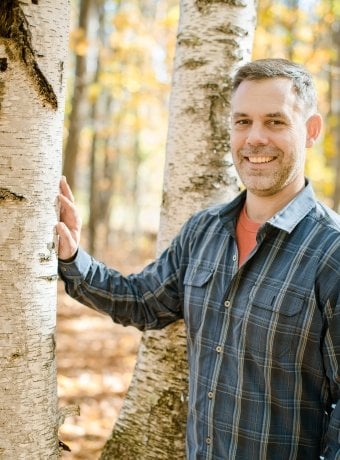
- Associate Professor of Forest Ecology & Management
- slvoelke@mtu.edu
- 541-864-0810
- Noblet Building 178

- Distinguished Professor
- javuceti@mtu.edu
- 906-487-1711
- Noblet Building 186
Links of Interest
Areas of Expertise
- Demographic and genetic elements of population biology
- Ecology of wolves and moose
- Environmental ethics

"Whether working with students in the lab, field or classroom, nothing beats seeing the spark of understanding ignite a passion for learning."
- Research Assistant Professor
- lmvuceti@mtu.edu
- 906-370-2374
- Noblet Building 188
Links of Interest
Areas of Expertise
- Isle Royale wolf genetics
- Field research methods

"To keep every cog and wheel is the first precaution of intelligent tinkering."
—Aldo Leopold
—Aldo Leopold
- Professor
- cwebster@mtu.edu
- 906-487-3618
- Noblet Building 166
Areas of Expertise
- Gap dynamics and disturbance ecology
- Invasion biology of exotic species
- Landscape ecology
- Plant community ecology
- Restoration silviculture
- Wildlife habitat relationships
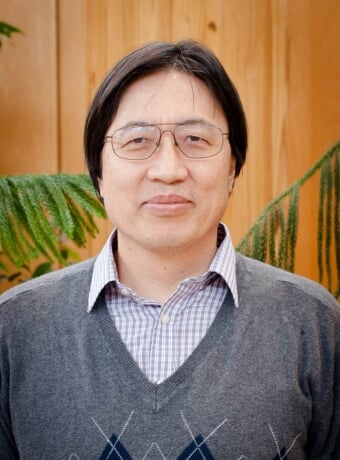
- Professor
- Editor-in-Chief, Forestry Research
- Adjunct Professor, Departments of Computer Science & Mathematics
- hairong@mtu.edu
- 906-487-1473
- Noblet Building 176
Links of Interest
- Software developed by Wei group
- SignalPath-Finder (AI)
- DyGAF (AI)
- IntegraGRN (AI)
- JRmGRN
- Top-down GGM
- Bottom-up GGM
- CollaborativeNet
- TGMI
- TGPred
- HB-PLS
- BWERF
- Prospective students and postdocs interested in plant genomics, bioinformatics, and AI/ML are welcome to contact me about developing competitive external fellowship applications, including NSF graduate and postdoctoral fellowships.
Research Interests
- Implementation of AI in life science
- Bioinformatics tool and software development
- Identification of genes regulating complex traits via systems biology approaches
- Algorithms for gene network construction;
- Genomics of wood formation
- Functional genomics.
- Genome Assembly and annotation

- Associate Professor
- jdwolfe@mtu.edu
- 906-487-3608
- Noblet Building
Links of Interest
Fields of Expertise
- Temperate and tropical avian ecology
- Climate change and wildlife demography
- Migration and habitat quality
- Quantitative population ecology
- Wildlife disease and resilience
- Avian molt, plumage, and age classification

- Associate Professor of Forest Biomaterials
- xinfengx@mtu.edu
- 906-487-2294
- Noblet Building 110
Areas of Expertise
- Carbon materials derived from wood, lignin, and cellulose
- Integrated thermochemical conversion and fractionation of lignocellulosic biomass
- Carbon-polymer composites and hybrid materials
- Wood protection and preservation
- Wood properties, quality, and modification
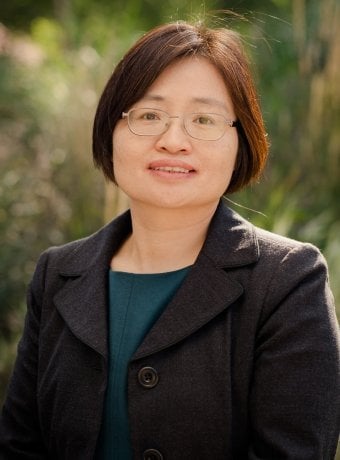
"The RNA regulatory system might have been essential prerequisite to both the evolution of developmentally sophisticated multicellular organisms and the rapid expansion of phenotypic complexity into uncontested environment."
- Assistant Professor
- yinyuan@mtu.edu
- 906-487-1835
- Noblet Building 180
Areas of Expertise
- Identification and characterization of natural antisense transcripts in woody plants
- Functionality of alternative splicing and fusion RNAs in plant growth and development
- Sequencing complex plant transcriptome through targeted nanopore direct RNA sequencing methods