
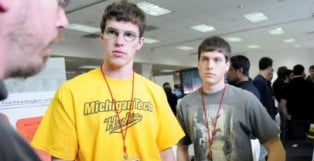
Applications Invited for NSF-Backed Research Security Workshop at Michigan Tech

American universities face growing research security challenges as foreign intelligence agencies target cutting-edge research. To strengthen institutional strategies, Michigan Technological University — sponsored by the National Science Foundation (NSF) — will host the 2026 Research on Research Security Workshop.

This event invites research security officers or equivalent personnel from recent R1 and rising R2 institutions to engage in a structured, participatory dialogue on university research security. The workshop will feature a group-level assessment (GLA) — a collaborative method for generating and prioritizing data to guide actionable outcomes.

Applications are due Dec. 15.

  • 25 sponsored participants will attend at no cost.
  • Unsponsored participants may join for a $200 registration fee.

Learn more at the Institute of Computing and Cybersystems’ 2026 Research on Research Security Workshop site.

The planning committee welcomes and encourages those at MTU who have contacts to share this with external research security personnel.

Updated Report a Concern Page to Launch Wednesday

On Wednesday, Nov. 19, the Dean of Students Office will launch a redesigned Report a Concern webpage that streamlines the reporting process for all campus community members. Whether you're reporting a concern about a student, seeking resources for yourself, or helping students navigate support services, the updated page provides clearer pathways and greater transparency about what happens next.

What's Changing?

  • Know what happens when you report: Every reporting category now includes a "Process Information" section that clearly outlines who receives your report, what steps follow submission and how privacy is protected for all parties involved.

  • Find the right tool faster: The new layout replaces accordion-style menus, displaying all reporting options at once.

  • Better resource organization: The redesigned page clearly distinguishes between frequently used tools and additional reporting options.

Why It Matters

Faculty and staff play a critical role in identifying and reporting student concerns. The clearer structure and enhanced transparency will help you:

  • Feel more confident about when and how to use reporting tools.
  • Better understand the outcomes of your reports.
  • Provide accurate information to students who approach you with concerns.
  • Make more informed decisions about which resource best fits each situation.

Get Familiar with the Changes

We encourage you to visit the Report a Concern website starting Wednesday to explore the new layout. Familiarizing yourself with the updated structure will help you respond more effectively when concerns arise — whether you're reporting directly or guiding a student through the process.

For questions about the new page or specific reporting processes, email the Dean of Students Office or call 906-487-2212.

Purchasing Policy Update: Restricted Purchasing of Fire Extinguishers and AEDs on MTU P-Cards

Michigan Tech has updated University purchasing guidelines to ensure the proper management and safety of critical emergency equipment. Effective immediately, portable fire extinguishers and automated external defibrillators (AEDs) may no longer be purchased directly with University P-Cards.

To maintain compliance and ensure these life-saving devices are properly tracked, all purchases of fire extinguishers and AEDs must now be routed through Environmental Health and Safety (EHS). This process allows EHS to:

  • Review and approve purchases to ensure equipment meets University standards.
  • Include items in the maintenance program for regular inspections, servicing and certification.
  • Maintain accurate records of equipment locations and compliance schedules.

This change supports Michigan Tech’s commitment to campus safety by ensuring that emergency equipment is reliable, accessible and properly certified.

For reference, these items have been added to the University’s P-Card Prohibited list.

For questions and concerns, please contact Purchasing at purchasing@mtu.edu or EHS at ehs-help@mtu.edu.

Winter Reminder: Preventing Slips, Trips and Falls

As Heikki Lunta wakes up from his summer slumber and turns the Keweenaw into a winter wonderland, snow and ice quickly become part of our daily Husky life. But with the beauty of the season comes some serious challenges, including slips, trips and falls — the No. 1 cause of injuries and lost time at Michigan Tech. These incidents affect students, faculty and staff alike, disrupting academics, research and campus operations. By taking a few extra steps of caution, we can enjoy this winter safely and keep our Husky community safe and strong all season long.

Environmental Health and Safety (EHS) would like to remind everyone:

  • Slips and falls don’t just cause bruises — they can lead to sprains, fractures and extended recovery time.
  • Lost time from injuries affects academics, research and campus operations.
  • Prevention is easier than recovery. Small choices make a big difference!
  • Nobody wants to miss out on holiday celebrations because they’re stuck at home with an ice pack instead of hot cocoa.

If you do have a slip, trip or fall, please have your supervisor complete EHS’ Injury/Incident Report. Instructions for reporting through the Experience portal can be found on our Incident and Injury Reporting page.

EHS Husky Tips for Staying Safe This Winter:

  • Wear appropriate footwear: Snow boots may not win a fashion show, but they’ll help you avoid an unplanned performance in the “Slip, Trip and Fall” ballet.

  • Slow down: Give yourself extra time to get to class or work. Rushing increases the chance of a fall.

  • Use designated walkways: Stick to cleared and salted paths whenever possible. Avoid shortcuts across snowbanks.

  • Stay visible: With shorter days, reflective gear or bright clothing helps drivers and cyclists see you when walking to and from campus in the dark. Consider using flashing lights and/or carrying a flashlight when walking in the dark.

  • Report hazards: If you notice icy spots, slippery walkways or snow-blocked walkways, call the University's Facilities Snow Hotline at 906‑483‑SNOW (7669) to report slippery conditions immediately.

  • Watch for wet floors: Slippery surfaces don’t end at the doorway! Be aware of wet and slippery steps, ramps and hallways within buildings.

Although safety is a year-round Husky community effort, wintertime requires extra awareness and precautions. By looking out for one another, Huskies can reduce injuries and keep our campus safe and healthy through the long Keweenaw winter. So whether you’re heading to an early-morning lab or walking home after an evening study session, remember: A few extra steps of caution can prevent weeks of recovery.

Stay safe, Huskies! The only thing we want sliding around campus this winter is a sled, not you.

2025 MTU Wellness 360 Incentive Submission Form Is Open

Submission for the 2025 MTU Wellness 360 Incentive is open. To earn up to $450, participants will check off the activities they completed between Jan. 1 and Dec. 31, 2025, and submit the electronic form. Benefits-eligible employees can access the MTU Wellness 360 - Incentive 2025 Checklist Google form or navigate to the MTU Wellness 360 website

The last day to submit the MTU Wellness 360 incentive form for 2025 will be Jan. 13, 2026. Payouts are expected to arrive by March. Tax-free payout options include lump sums deposited into an employee’s health savings account (HSA) — available only to employees enrolled in the HDHP1/HDHP2 health insurance plans — or flexible spending account (FSA). Taxable payout options include Michigan Tech Gift Card or Keweenaw Cash.

The MTU Wellness 360 program supports qualifying, benefits-eligible faculty and staff in learning about their health and well-being, encourages them to take steps to improve or maintain it, and offers monetary rewards of up to $450 for participating in the annual incentive program. Participation in the MTU Wellness 360 program is free, voluntary and confidential. The current  MTU Wellness 360 Incentive program will conclude after 2025. A new wellness program is under development and slated to launch in 2027.

Upcoming Perceptive Content Downtime

Perceptive Content will be unavailable on Dec. 7 from 10 a.m. to 4 p.m. due to maintenance.

If you use the Perceptive Content client to upload documents, please back up your existing profiles before Dec. 5. On Dec. 8, the Monday morning following the maintenance, if you have any issues with Perceptive Content, copy the profiles back into place. Instructions for backing up and restoring profiles are available in the Knowledge Base article “Backup and restore Perceptive Content capture profiles.”

Affected departments include:

  •  Advancement
  •  Admissions
  •  Business Support Center
  •  Campus Store / University Images
  •  Facilities
  •  Financial Services and Operations
  •  Graduate School
  •  Human Resources
  •  International Programs and Services
  •  Information Technology
  •  MTRI
  •  Rozsa Center
  •  Registrar's Office
  •  Residential Living
  •  Sponsored Programs
  •  Summer Youth Programs
  •  University Marketing and Communications

If you are still have issues after restoring your profiles, we can help. Email IT or call 906-487-1111.

Figure Skating Club Skate Drive

Do you have any old ice skates, soakers or guards sitting around? Drop them off at the Figure Skating Club's skate drive!

The drive starts today, Nov. 17, and runs to Dec. 5, with bins in the Memorial Union Building by MUB 101 and in the Van Pelt and Opie Library by the 24-hour door.

Previously, the Figure Skating Club registered student organization had a bring-your-own-skates policy, which can be financially draining. By donating skates, you provide the opportunity for participants to experience figure skating regardless of financial obstacles.

This Week at the Rozsa

Men On Boats — Michigan Tech Theatre
Tuesday through Friday, Nov. 18-21 | 7:30 p.m. nightly
McArdle Theatre
Michigan Tech Theatre Series

This week, make sure to catch one of four performances of Michigan Tech Theatre's first production of the season!

“Men On Boats” tells the (mostly) true story of 10 explorers who set off in 1869 to chart the Green River and Colorado River under the guidance of John Wesley Powell, a one-armed Civil War veteran.

This satirical retelling of historical events is made even more interesting by the author's insistence that all characters are to be played by anyone except white males, who made up the entirety of the actual expedition. This casting twist puts the words and actions of the characters into a different context, providing plenty of laughs as well as extremely touching moments.

This is director Nich Radcliffe’s fourth production at Michigan Tech, and after the success of last season’s “Glass Menagerie” and “Sweeney Todd: The Demon Barber of Fleet Street,” expectations are high.

“I hope the audience leaves the theatre laughing,” said Radcliffe, “and I hope that laughter makes it easier to be honest with themselves, about the world, and about the place and the voice everyone deserves in it.”

Content Guidance: Alcohol use, tobacco use, adult language and simulated gunfire.

*****

Night at the Movies — Superior Wind Symphony
Wednesday, Nov. 19 | 7:30 p.m.
Rozsa Center
Michigan Tech Music Series

Join the musicians of the Superior Wind Symphony, conducted by Joel Neves, as they perform a variety of songs you are sure to recognize from your favorite Hollywood hits! From “Indiana Jones” to “Batman,” these pieces will inspire memories of the first time you heard them on the silver screen. Consider visiting our concessions booth before enjoying an evening of magical movie music!

Content Guidance: Free earplugs are available for those with sensitive hearing.

Faculty Candidate Forum with Hyesun Chung

The Department of Psychology and Human Factors will host faculty candidate Hyesun Chung on Wednesday, Nov. 19, from 4-5 p.m. in the M&M Third Floor Coworking Space.

Chung, a Ph.D. candidate in industrial and operations engineering at the University of Michigan, will present "From dyadic to multi-agent human-autonomy interactions: Modeling human trust dynamics, behaviors, and performance."

From the abstract:
Technology is evolving rapidly, and human interaction with autonomous technologies is no longer confined to one-to-one decision-support settings. Intelligent agents are increasingly working alongside groups of people in diverse contexts such as defense, navigation, and search-and-deliver tasks. Consequently, it has become important to design human trust- and behavior-aware adaptive agents that enable humans and agents to leverage their complementary strengths, while ultimately promoting values unique to human society. To this end, Hyesun’s research focuses on modeling human trust and behavioral dynamics over time. In this seminar, she will first introduce her work on classifying and predicting trust dynamics profiles using individuals’ personal characteristics, uncovering who follows which trust trajectory and why. Subsequently, she will present her study examining individual variability in trust bias (contrast versus assimilation) and its effect on coordination when humans collaborate with multiple autonomous agents concurrently.

Chung was recently named a Barbour Fellow. Before joining the University of Michigan as a doctoral student, she earned bachelor's degrees in industrial engineering, business, and industrial design, as well as an M.S. in Industrial Engineering, all from Seoul National University, South Korea. Building on her interdisciplinary background, she is a human factors engineer who integrates computational and statistical methods with psychological theories to better understand human-autonomy interaction and teaming.

Physics Colloquium with Michela Negro

Michela Negro from Louisiana State University will present at this week's Physics Colloquium. Negro's presentation is titled "Magnetars: Nature’s Most Extreme Physics Experiments."

The seminar will be presented  at 4 p.m. on Thursday, Nov. 20, in Fisher 139. The coffee hour will be held at 3:30 p.m. in the Fisher Hall Lobby.

Read Negro's abstract and bio on the University Events Calandar.

Job Posting

Job Posting for Monday, Nov. 17, 2025

Staff and faculty job descriptions are available on the Human Resources website. For more information regarding staff positions, call 906-487-2280 or email humanresources@mtu.edu. For more information regarding faculty positions, contact the academic department in which the position is posted.

Assistant Teaching Professor, Mathematical Sciences.

Michigan Technological University is an Equal Opportunity Educational Institution/Equal Opportunity Employer that provides equal opportunity for all, including protected veterans and individuals with disabilities.

Accommodations are available. If you require any auxiliary aids, services, or other accommodations to apply for employment or for an interview at Michigan Technological University, please notify the Human Resources office at 906-487-2280 or humanresources@mtu.edu.

On the Road

Michigan Tech faculty from the Department of Engineering Fundamentals (EF) presented at IEEE's Frontiers in Education Conference, held Nov. 2-5 in Nashville, Tennessee.

  • Michelle Jarvie-Eggart (EF) co-facilitated a pre-conference workshop titled "Podcast-Based Learning for Engineering and Computer Science Educators" with Justin Henriques of Boston College, Reva Johnson of Valparaiso University and Winifred Opoku of Ohio State University, as well as co-authors Kurt Paterson of Arizona State University and Mary Raber (EF).

  • Jarvie-Eggart also co-presented the paper "WIP: Understanding and Addressing Barriers to Industry Engagement in Undergraduate Engineering Programs" with Stephanos Matsumoto of the Olin College of Engineering and co-authors Brahim Medjahed and John Cristiano, both of the University of Michigan-Dearborn; Sebastian Dziallas of the University of the Pacific; Jean Huang of Olin College; Chris Sharp of George Fox University; and Rabih Younes of Duke University.

  • Jarvie-Eggart served as junior technical progam committee member for the 2025 conference and moves into a senior role for the organizing of the 2026 conference.

  • Radheshyam Tewari (MAE) presented the paper "WIP: Do Metadiscursive Riffs Harmonize Lecture Delivery?" written with co-authors Chang Kyoung Choi and Aneet Dharmavaram Narendranath (both MAE).

  • A paper co-authored by human factors Ph.D. candidate Laura Albrant and Leo C. Ureel II (CS), titled "WIP: Beyond Averages — the Impact of Survey Administration on User Experience Metrics," was presented by their co-author Lynn Albers of Hofstra University.

In the News

Lake Superior Magazine shared excerpts from last month's Unscripted Research Blog story highlighting Michigan Tech’s Genomic Sequencing Lab and its research on ticks, Arctic bacteria, Isle Royale moose and other regional public-health and environmental projects. The story was written by Cyndi Perkins (UMC).

The Daily Mining Gazette mentioned Michigan Tech in a story about the City of Houghton’s winter preparations, noting that Houghton Police will coordinate with the University during a spring disaster-response exercise.

MOTOR mentioned Michigan Tech in a story about General Motors’ Shifting Gears Automotive Technical Training Program, highlighting Chevrolet’s partnership with the University to build custom handcycles for the Achilles Freedom Team of Wounded Veterans.

Michigan Tech hockey forward Teydon Trembecky was a guest on the Nov. 13 episode of The Reporter’s Corner podcast. Trembecky discussed his junior hockey career in western Canada, his decision to come to Houghton, and what he’s learned about MTU’s devoted fan base during his first months with the program.

My UP Now covered Michigan Tech soccer junior defender Allison Millina being named to the All-GLIAC Honorable Mention Team.

Business Wire mentioned Michigan Tech alum Gaurang Shah ’91 (B.S. Electrical Engineering) in coverage of his appointment as vice president and general manager of embedded processing at Renesas.

Reminders

Seeking Client Partners for Student Grant Writing Projects

John T. Sherrill, visiting assistant teaching professor in the Department of Humanities, is accepting proposals for potential client projects for HU3694 Grant Writing, which is being offered this spring 2026 semester.

For their final projects for the course, students research and write grant proposals (or portions of grant proposals) for campus and community partners, usually nonprofit organizations. The best grant projects for this class are small, well-defined projects that can be funded through grants (typically $50,000 or less) from foundations or state government grant programs.

If you are involved with an organization that would be interested in collaborating with students to work on a grant proposal, or if you know of a potential client, contact Sherrill at jtsherri@mtu.edu by Jan. 5, 2026.

*****

Faculty Candidate Forum with Kimberly Williams

The Department of Psychology and Human Factors will host faculty candidate Kimberly Williams, Ph.D., today, Nov. 17, from 3-4 p.m. in the M&M Third Floor Coworking Space. 

Williams, lead consultant and owner of Monarch Innovations LLC, will present "Human Factors at Play in Healthcare: Linking System Safety and Game-Based Learning."

From the abstract:
Medical errors remain a major obstacle to achieving optimal patient outcomes. Although such errors are often attributed to individual providers, human factors and system safety analyses frequently reveal deeper system weaknesses that increase their potential for error. This talk presents two research studies that illustrate how principles from human factors and applied cognitive psychology can be used to reveal system vulnerabilities and promote safer, more resilient healthcare systems. The first study (Williams et al., 2023) applied the Systems Engineering Initiative for Patient Safety (SEIPS) 3.0 framework to the highly publicized RaDonda L. Vaught v. Tennessee litigation, in which a nurse was criminally prosecuted for a medication error. The case analysis highlights cognitive factors that contributed to the event, as well as system-level influences that shaped these interactions. These investigations are essential for generating insights that reduce errors across the healthcare system, but their quality depends on timely and accurate error reporting. Providers’ psychological safety (defined as the perception that the environment is safe to take interpersonal risks) is integral to this reporting process. Thus, the second study (Williams et al., under review) examines a game-based escape room intervention aimed at strengthening psychological safety within healthcare teams. The presentation concludes with future directions for human factors research in healthcare, including applications in competency-based medical education, interprofessional training, and team science.

*****

EPSSI Seminar with Yuzhi Chen

Yuzhi Chen of the Pacific Northwest National Laboratory will give a talk as part of the Earth, Planetary, and Space Sciences Institute (EPSSI) Fall 2025 Seminar Series today, Nov. 17.

This event will be held in the Great Lakes Research Center. Refreshments and a social will be held at 3:30 p.m. in the GLRC Lobby on the first floor, with the lecture to follow at 4 p.m. in GLRC 202.

The title of the talk is "Aqueous Processing of Isoprene Epoxydiols (IEPOX): From Aerosol Particles to Cloud Droplets."

Read Chen's abstract and bio on the University Events Calendar.

Today's Campus Events

To have your event automatically appear, please submit them to the University Events Calendar.

New Huskies Orientation Presentation Session

*****

PhD Defense: Larissa Juip

Industrial Heritage and Archaeology Advisor: Melissa Baird Indigenous-Industrial Heritage: Centering Indigenous Voices in Minnesota's Iron Range Attend Virtually: https://michigantech.zoom.us/j/85164691516

*****

PhD Defense: Emma Shedd

Forest Science Co-advisors: Molly Cavaleri and Andrew Burton Fine root and ectomycorrhizal functional traits of Quercus rubra populations from across a latitudinal gradient Attend Virtually: https://michigantech.zoom.us/j/84233434915

*****

Filtered Tailings in Indonesia: The Catastrophic Failure of a Disruptive Technology

Environmental Engineering Graduate Seminar Dr. Steven Emerman, Owner, Malach Consulting Abstract: From 2015 to 2024 production of nickel in Indonesia increased from 5.7% to 59.5% of world production with the opening of seven high-pressure acid leaching (HPAL) projects from 2021 to 2025. An additional 14 and 12 HPAL projects have been permitted and proposed, respectively. Although HPAL and filtered tailings combine the demand for nickel with the less environmentally destructive alternative of filtered tailings to create the complete “green” package, the explosion of HPAL and filtered tailings in Indonesia has been a catastrophic failure. Target water contents for HPAL tailings are 30-35%, so that the use of the name “Dry Stack Tailings Facility” (DSTF) for the PT Halmahera Persada Lygend (HPL) project on Obi Island is a marketing term. Two 2020 reports showed that, in response to seismic activity, the DSTF, the foundation, and the rockfill buttresses will all be unstable. A 2022 report noted the lack of any monitoring data and described the failure of the DSTF as an “uncontrolled risk.” The DSTF was constructed without quality control with water contents ranging from 8-36% and compacted densities ranging from 0.93-2.20 t/m3. Revision 1 of the 2022 report included a photo with the heading “View of DSTF area with significant water ponding” plus the statement “During the site visit, some issues with water ponding and poor drainage appeared to be present … given the height of the facility (57 m), the lack of quality control in the placement of tailings, and the observed surface water issues, further study is required.” By the final version, the caption had become “View of dry stack tailings facility area,” and “During the site visit, some issues with water ponding and drainage appeared to be present,” as well as “and the observed surface water issues” were removed. On March 16, 2025, the PT Huayue Nickel Cobalt (HYNC) filtered tailings facility on Sulawesi Island failed by liquefaction. On March 21, 2025, a landslide occurred at the adjoining PT Qing Mei Bang (QMB) New Energy Materials facility, resulting in three deaths. More failures have occurred since earlier satellite imagery shows a landslide from the PT HYNC facility with channels leading to the Bahodopi River. The response from PT QMB was that the rainfall that triggered the fatal landslide was “beyond human control.” Bio: Dr. Steven H. Emerman has a B.S. in Mathematics from The Ohio State University, M.A. in Geophysics from Princeton University, and Ph.D. in Geophysics from Cornell University. Dr. Emerman has 31 years of experience teaching hydrology and geophysics, including teaching as a Fulbright Professor in Ecuador and Nepal, and has over 70 peer-reviewed publications in these areas. Since 2018 Dr. Emerman has been the owner of Malach Consulting, which specializes in evaluating the environmental impacts of mining for mining companies, as well as governmental and nongovernmental organizations. Dr. Emerman has evaluated proposed and existing tailings storage facilities in North America, South America, Europe, Africa, Asia and Oceania, and has testified on tailings storage facilities before the U.S. House of Representatives Subcommittee on Indigenous Peoples of the United States, the European Parliament, the United Nations Permanent Forum on Indigenous Issues, the United Nations Environment Assembly, the Permanent Commission on Human Rights of the Chamber of Deputies of the Dominican Republic, and the Minnesota Senate Environment, Climate and Legacy Committee. Dr. Emerman is the former Chair of the Body of Knowledge Subcommittee of the U.S. Society on Dams and one of the authors of Safety First: Guidelines for Responsible Mine Tailings Management.

*****

PhD Defense: Hanry Issavi

Mechanical Engineering-Engineering Mechanics Co-advisors: Fernando Ponta and Sajjad Bigham SLUG/ANNULAR FLOW BOILING HEAT TRANSFER EVENTS IN SMOOTH AND STRUCTURED RECTANGULAR MICROCHANNELS Attend Virtually: https://michigantech.zoom.us/s/85460249752

*****

EPSSI Seminar: Dr. Yuzhi Chen

This event will be held in the GLRC. Refreshments and a social will be held at 3:30pm in the GLRC Lobby on the first floor, with the lecture to follow at 4:00pm in GLRC 202. Yuzhi Chen of Pacific Northwest National Laboratory (PNNL) will give a talk on Monday, November 17th. The title of the talk is "Aqueous Processing of Isoprene Epoxydiols (IEPOX): From Aerosol Particles to Cloud Droplets" Abstract: Atmospheric aerosols influence the Earth's energy balance mainly through their indirect effects on clouds. A large fraction of aerosol mass is secondary organic, formed through atmospheric chemical reactions. Isoprene is the dominant non-methane hydrocarbon emitted by the biosphere. When isoprene readily reacts in the sunlit atmosphere, it produces isoprene epoxydiols (IEPOX) in high yield, which efficiently form SOA through interactions with wet acidic aerosols. Field studies have reported substantial contribution of IEPOX-derived SOA (30-40%) toward fine organic aerosol mass in isoprene-rich regions such as Southeast United States and Amazon. While there is evidence that cloud droplets may play a role in SOA formation, this process has rarely been studied in authentic cloud environments. Most prior investigations rely on extrapolations of results from bulk solutions or deliquesced aerosol particles to cloud-mimic conditions. In this presentation, I will share some preliminary measurements from the MTU 𝚷 cloud chamber, where cloud-phase processing of IEPOX can be probed in synthetic cloud droplets. These experiments explore the chemical fate of IEPOX in cloud droplets under varying liquid water content. Understanding the role of clouds in SOA formation can help refine atmospheric models and reveal new perspectives on aerosol-cloud interactions with implications for air quality and climate. Bio: Yuzhi Chen is an Earth Scientist in the Atmospheric, Climate, & Earth Sciences Division at Pacific Northwest National Laboratory (PNNL). His research focuses on characterizing secondary organic aerosol (SOA) formation, composition, and transformations using advanced analytical techniques, laboratory experiments, and computer modeling. He earned his Ph.D. in Environmental Sciences and Engineering from the University of North Carolina at Chapel Hill in 2021, where his dissertation investigated SOA formation from isoprene epoxydiols (IEPOX) and the role of anthropogenic interactions. Currently at PNNL, Yuzhi studies how atmospheric processes impact the evolution of aerosol size, composition, properties, and ability to activate into cloud droplets or ice crystals. Additionally, he applies advanced mass spectrometry techniques to investigate other aerosol types, such as biomass burning aerosols, in both laboratory and ambient environment. .

*****

Faculty Candidate Forum

The Department of Psychology and Human Factors will host faculty candidate Kimberly Williams, PhD, Lead Consultant and Owner of Monarch Innovations, LLC, on Monday, Nov. 17, from 3:30-4:30 p.m. in the M&M Third Floor Coworking Space. Kimberly Williams will present: Human Factors at Play in Healthcare: Linking System Safety and Game-Based Learning Medical errors remain a major obstacle to achieving optimal patient outcomes. Although such errors are often attributed to individual providers, human factors and system safety analyses frequently reveal deeper system weaknesses that increase their potential for error. This talk presents two research studies that illustrate how principles from human factors and applied cognitive psychology can be used to reveal system vulnerabilities and promote safer, more resilient healthcare systems. The first study (Williams et al., 2023) applied the Systems Engineering Initiative for Patient Safety (SEIPS) 3.0 framework to the highly publicized RaDonda L. Vaught v.Tennessee litigation, in which a nurse was criminally prosecuted for a medication error. The case analysis highlights cognitive factors that contributed to the event, as well as system-level influences that shaped these interactions. These investigations are essential for generating insights that reduce errors across the healthcare system, but their quality depends on timely and accurate error reporting. Providers’ psychological safety (defined as the perception that the environment is safe to take interpersonal risks) is integral to this reporting process. Thus, the second study(Williams et al., under review) examines a game-based escape room intervention aimed at strengthening psychological safety within healthcare teams. The presentation concludes with future directions for human factors research in healthcare, including applications in competency-based medical education, interprofessional training, and team science.

*****

AIChE General Meeting

Join AIChE for a research presentation from Dr. Liu.

*****

Behind the Buzz

Substance use is often surrounded by myths, stereotypes, and misinformation. Behind the Buzz is an interactive event that goes beyond the headlines to explore the real impacts of alcohol, cannabis and other substances on health, decision-making, and college life. Through engaging activities and practical strategies, participants will gain tools to navigate social pressures, make informed choices, and support peers in healthier ways. We'll be providing food, giveaways and engaging activities with guest speaker, Licensed Social Worker Savanna Weber

*****

Deep Dives

Deep Dives is a biweekly program designed to bring students together to share their research, personal journeys, and ideas in an open and collaborative environment. The series provides an opportunity to connect with peers, spark curiosity, and foster community through science and conversation. For those interested, one-to-one mentoring will also be available to offer personalized guidance in the research areas discussed. Pizza will be provided.

*****

BMES x H-STEM Enterprise Workshop: From Schematic to PCB

Biomedical engineers often work with electronics to create tools that sense, measure, and interact with the human body. This workshop introduces students to the fundamentals of circuit design through a real-world example: a custom controller for lab instrumentation. In this two-part series, participants will: Session 1 (Nov 14): Learn how to design a schematic from scratch, using best practices and validation techniques to ensure accuracy. Session 2 (Nov 17): Get hands-on with PCB layout tools to turn your schematic into a physical design. While we won’t fabricate the boards this semester, you’ll leave with a complete layout ready for future prototyping. What is a PCB? A Printed Circuit Board (PCB) is the physical platform that connects and supports electronic components. It’s essential in biomedical devices—from pacemakers to lab sensors—and knowing how to design one empowers engineers to prototype, troubleshoot, and innovate. Who should attend? This free workshop is open to all students interested in biomedical instrumentation, electronics, or hands-on design. No prior experience is required—just bring your curiosity and a laptop if you have one!

*****

Keweenaw Socialists - General Meeting

KS at MTU weekly general meeting.