
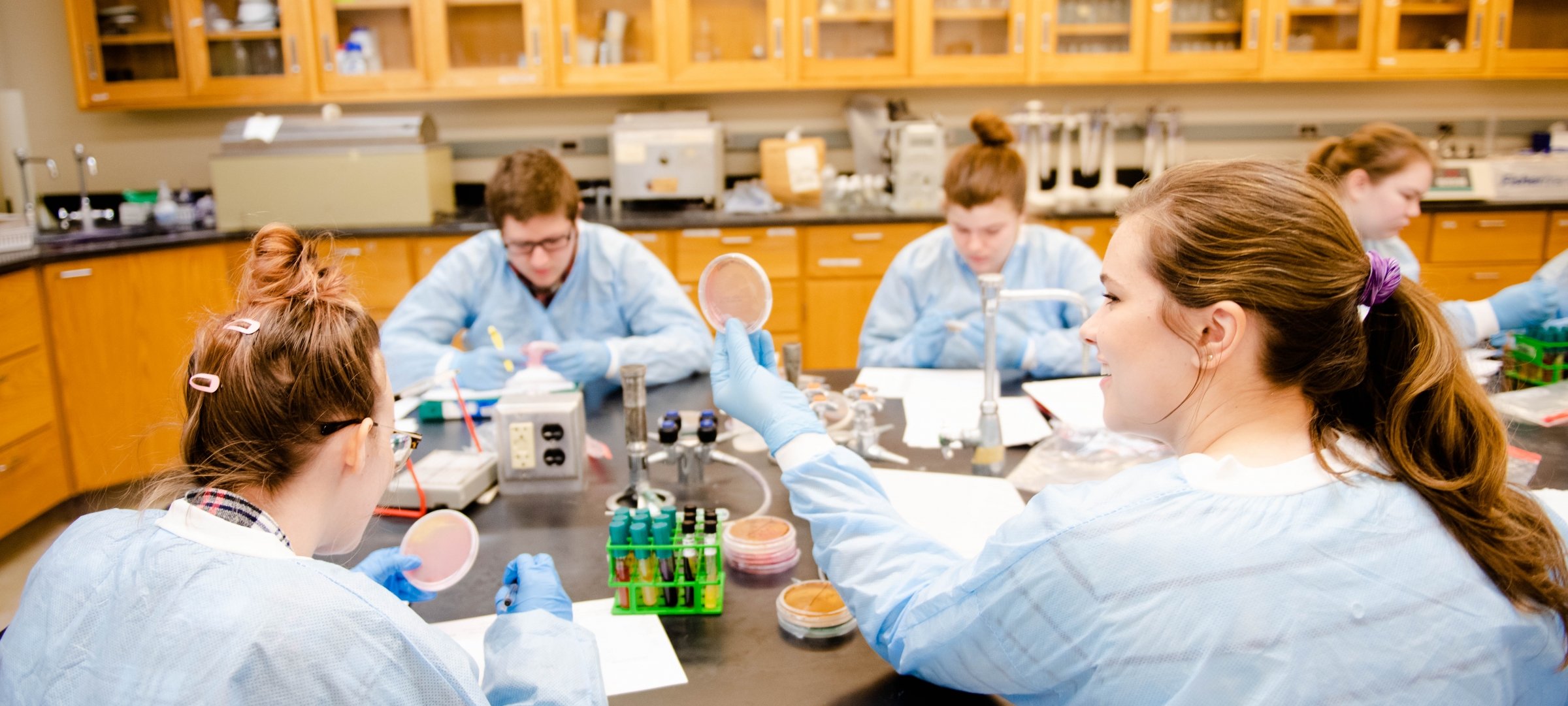
Create Solutions That Help Sustain Life
The future of life as we know it depends on the expertise of biological scientists who are equipped for whatever tomorrow brings.
Biological scientists know the keys to understanding life, improving healthcare, conserving biodiversity, advancing agriculture, and unlocking the secrets of evolution and genetics. The areas of study within the Biological Sciences Department—biological sciences, biochemistry and molecular biology, computational biology, ecology and evolutionary biology, human biology, medical laboratory science and nursing—help you to develop analytical, critical thinking, laboratory, research, and applied skills, blending the theoretical and practical aspects of biology you'll need to be successful.
Request Information
Form loading . . .
Career outcomes—including job placement and starting and median salaries are excellent. Plus, you'll be job market ready with a degree ranked No. 5 in Niche's Best Colleges for Biology in Michigan. It's no wonder that so many choose to study the biological sciences.
Bachelor's Degrees
Biological Sciences—BS
Take a traditional approach to the study of biology with our BS in Biological Sciences, which sets you up for success in graduate school, industry, or laboratory research. Biological sciences majors learn best in a practical laboratory setting. Our program will prepare you to contribute to the nucleus of biological advancements in diverse fields and leave your impression on the world. You'll quickly learn your way around our advanced labs and equipment, spending time conducting research (independently and alongside faculty) and creatively exploring the real-world applications of biology.
Biochemistry and Molecular Biology—BS
Biochemists and molecular biologists investigate biologically important molecules, mechanisms, and processes. Our interdisciplinary Bachelor of Science in Biochemistry and Molecular Biology will prepare you for a rewarding career in virtually any branch of the life sciences you choose, such as agriculture; biotechnology; biofuels; medicine and pharmacology; forensic science; or genomics and molecular genetics. Spend your time conducting research and creatively exploring the real-world applications of biochemistry, including environmental remediation, cancer biology, diabetes, RNA silencing, CRISPR/Cas9 genome editing, cell wall biotechnology, and plastic biodegradation.
Computational Biology—BS
Fuse your interest in biology with your IT and computer skills with a BS in Computational Biology. More than just studying concepts, you'll become a specialist, using a variety of computational analyses to study, process, and analyze vast molecular biological data. Learn by doing in our specialized computations facilities and computing laboratories—all of which feature the latest software and technologies. You'll benefit from a program that emphasizes a strong, quantitative education combined with cutting-edge biological research.
Ecology and Evolutionary Biology—BS
Michigan Tech's location amid diverse ecosystems teeming with life—waters, forests, wetlands, the Great Lakes, and more—makes it a prime location to earn a BS in Ecology and Evolutionary Biology. You will study biodiversity in the environment and the ecological and evolutionary mechanisms that change and maintain it. You'll graduate prepared for a career in research, environmental science, agency work, conservation and restoration, education and outreach, or advanced education in graduate school. Make the Keweenaw your classroom.
Human Biology—BS
Gain a deep understanding of humans through a biological perspective—from the chemical through organismal levels, and how humans impact and interact with their environment. The BS in Human Biology includes all commonly required and recommended courses for pre-health professions, including medical school. Like many of our graduates, you could go on to pursue a graduate health professional program or a career in research, biosafety, industry sales, health education, or communication.
Medical Laboratory Science—BS
Detect disease and monitor patient health in our hands-on laboratories with a BS in Medical Laboratory Science. Small class sizes, one-on-one advising, and a medically oriented curriculum will prepare you for your future. You'll complete a clinical practicum and prepare to become board certified in our NAACLS accredited program. Plus, you'll be employable and in high demand as soon as you graduate from Tech—our grads get job security with a 100 percent job placement rate!
Nursing—BS
Impact lives with a challenging, yet rewarding BS in Nursing. Small class sizes, one-on-one advising, hands-on experience, and a rigorous curriculum will prepare you for a fulfilling nursing career in a variety of healthcare settings. Plus, there's no waiting list for admission, which means qualified students can get started right away.
Earn an Accelerated Master's Degree in Just 1 Extra Year
Highly motivated students can earn a master's degree in biological sciences in as little as one additional year of study beyond a bachelor's. Accelerated master's students graduate prepared for various careers in biology that require advanced training, such as in industry, teaching, independent research, or continued graduate work.