
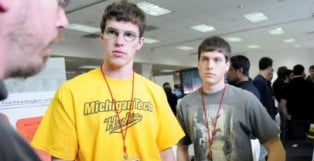
Jingfeng Jiang Named Department of Biomedical Engineering Chair

Jingfeng Jiang has been named chair for the Department of Biomedical Engineering (BME) in Michigan Tech’s College of Engineering. He joined Michigan Tech in 2012 and currently serves as a professor and graduate program director for the department.

“Jiang brings a strong background of leadership in research and education, and I am looking forward to working with him to help BME lead the way in these exciting times of health advancements in biomaterials, sensors, and therapeutics,” said Michelle Scherer, dean of the College of Engineering.

Jiang received his Ph.D. in Civil Engineering from the University of Kansas and has more than 20 years of experience in computational modeling, medical image/signal analysis, machine intelligence, scientific and image visualization, and ultrasound technological developments. He teaches courses in biomechanics, medical imaging and biomedical design.

Register a Service Site for Make a Difference Day!

We are just one month away from Michigan Tech's largest annual day of service — Make a Difference Day!

Last year, 541 Huskies gave back at 66 unique service sites across the Keweenaw. Student Leadership and Involvement anticipates a similar number of volunteers for this year's event, which will take place on Oct. 25 from 9 a.m. to 1 p.m.

Do you know of an organization, agency or community member who is in need of assistance? We can help! Request support yourself by completing our service site registration form or pass it on to others who would benefit from having some Husky Helpers.

Past activities completed by our volunteers include organizing donations, chopping wood, cleaning storage facilities, fall lawn cleanup, trail maintenance and more.

Thank you for helping to make a difference in our community!

Essential Education Important Fall Course Proposal Dates

This is a reminder of important Essential Education course proposal dates coming up this fall as part of Michigan Tech's white binder process.

  • Wednesday, Oct. 15 — White binder course proposals complete and posted to department summary sheet
  • Friday, Oct. 17 — Proposals for Essential Ed courses due to Essential Ed Steering Committee via proposal form
  • Monday, Oct. 27 — White binder proposals/changes reviewed by deans and sent to Registrar’s Office for processing
  • Friday, Nov. 21 — Degree audit changes due to Registrar’s Office
  • Friday, Dec. 5 — Essential Education Steering Committee review of proposals complete; list of approved changes forwarded to Registrar's Office

The 2025 Essential Education Course Proposal Form is live for anyone who would like to propose and submit before the deadline. 

Stay tuned for next Thursday's Tech Today article regarding the important role of the Essential Education Steering Committee and Course List Team in the operation and continuous improvement of the program.

Did you miss an Essential Ed update? Find it at Michigan Tech's Essential Education Newsblog.

Western UP Schools Awarded Resources to Spark Hands-On Learning

Michigan Tech's Center for Educational Outreach is proud to announce that five Western Upper Peninsula schools — Baraga, Dollar Bay, Hancock, Jeffers and Lake Linden-Hubbell high schools — have been selected to receive new classroom resources through the University's GEAR UP program to enhance teaching and expand student learning opportunities.

Educators were selected following a proposal process open to all Copper Country Intermediate School District schools that invited teachers to request innovative and transformative curricular resources.

One awardee shared plans to bring history to life using LEGO packs to create replicas of key historical artifacts — giving students a project-based, hands-on way to learn. “Instead of passively learning, students will actively create,” they said. “It builds teamwork, problem-solving, and critical thinking — skills that help them take ownership of their learning and succeed long-term.”

Another teacher plans to bring life cycles to life — literally — through a classroom hydroponics system. “Last year, we had a class fern that started as a tiny sprout and turned into a massive, leaf-shedding jungle,” they said. “This award will allow us to expand the project to grow berry bushes, native flowers, potentially even exotic picks like magnolias — combining science, observation, and creativity.”

The Center for Educational Outreach’s GEAR UP program serves all Copper Country Intermediate School District schools, providing programming and resources to support learning opportunities, financial literacy skills, college and career exploration, mentorship and more. These educational support resources are provided in celebration of National GEAR UP Week, a nationwide celebration recognizing the extraordinary efforts of teachers, schools and communities working together to expand college and career readiness.

To learn more about the center and GEAR UP, visit the Center for Educational Outreach website.

New Guidelines for Use and Storage of Lithium-Ion Batteries in Research

Michigan Tech has an increasing portfolio of research on or with stand-alone lithium-ion batteries and/or using research devices with larger-scale lithium-ion batteries. While these batteries offer unique research opportunities and exceptional energy storage capabilities, they also present unique safety challenges that require special handling protocols. Because of these challenges, Environmental Health and Safety (EHS) has collaborated with Research Integrity's Lab Inspections team to develop guidance on conducting this research safely.

Researchers conducting research on or with stand-alone lithium-ion batteries and/or using research devices with larger-scale lithium-ion batteries are directed to guidance in the form of a safety fact sheet for all research involving lithium-ion batteries. Go to Research Integrity Policies and Procedures and expand the “Other Policies and Procedures” drop-down to find the Lithium-Ion Batteries in Research Fact Sheet PDF.

These guidelines apply across all campus and University-owned properties and associated events where research using research device lithium-ion batteries is conducted and/or research on or with stand-alone lithium-ion batteries or battery packs is used, handled, charged, maintained, stored or collected for disposal.

Unlike traditional batteries, lithium-ion batteries can experience thermal runaway — a condition where the battery generates heat faster than it can dissipate it. This can lead to fire, explosion or the release of toxic gases. The risk increases when batteries are damaged, overcharged, exposed to extreme temperatures or manufactured with defects.

Research environments present additional challenges because experimental setups often involve custom configurations, modified charging protocols, or research device lithium-ion batteries and stand-alone battery packs operating outside typical consumer applications. These conditions can amplify existing risks or create new hazards that require careful evaluation.

Notable Safety Requirements
The new guidelines establish several non-negotiable safety requirements for research using research device lithium-ion batteries and/or research on or with stand-alone lithium-ion batteries or battery packs:

  • Unattended Charging Policy: It is University policy that no research devices, stand-alone lithium-ion batteries, or battery packs be charged unattended in a vacant room. Exceptions can be granted after discussion and agreement with the Lab Inspections team, which can be contacted at labinspections@mtu.edu.

  • Documentation and Planning: Before beginning battery-related research, investigators must obtain and review the battery manufacturer's safety data sheet, technical specification sheets, and/or other documents available. All safety data sheets must be uploaded to the University's SDS database. Additionally, researchers must perform a job hazard analysis to understand the various failure modes and hazards associated with their proposed configuration and develop written standard operating procedures that include methods to safely mitigate possible battery failures.

  • Proper Disposal and Storage: At the conclusion of testing, battery assemblies must be disposed of properly or left in a safe condition for storage. Damaged or leaking batteries require special handling through the hazardous waste management program, while batteries that have reached the "end of life" or are no longer in service can be disposed of through the Facilities Battery Recycling program.

Best Practices for Safe Research
Beyond the mandatory requirements, the guidelines emphasize several best practices that can significantly reduce risks:

  • Researchers should always follow manufacturer recommendations for charging, storage and usage parameters. Custom charging protocols or operating conditions outside manufacturer specifications require additional safety measures and risk assessment.

  • Physical protection is equally important. Research device lithium-ion batteries and stand-alone battery packs should be shielded from physical damage, extreme temperatures and moisture. Research setups should include safeguards to prevent short circuits and provide adequate ventilation.

  • Fire safety considerations are critical. Lithium-ion battery fires require specialized suppression methods, and researchers should ensure appropriate fire extinguishers are available and maintained in their work areas.

Support and Resources
For questions about implementing these guidelines or to request assistance with safety planning for your battery-related research, contact the EHS team at ehs-help@mtu.edu. Additional resources and the complete guidelines are available on the Research Integrity website under “Other Policies and Procedures.”

For researchers currently working with research device lithium-ion batteries or stand-alone lithium-ion battery packs, now is an excellent time to review existing practices against these new guidelines. Those planning future research should incorporate these safety requirements into their project planning from the beginning.

ChE EAB Poster Session Results

The Department of Chemical Engineering (ChE) would like to congratulate the following students as winners of the External Advisory Board (EAB) Poster Session held on Friday, Sept. 19.

Graduate Research Winners:

  • First Place (four-way tie) — John Szczap, Blessing Ozah, Reeba Reji and Kobina Ofori
  • Second Place — Panashe Hokonya

Undergrad Research Winners:

  • First Place — Robert Peabody
  • Second Place — Andrew Shore

Student Organization Winners:

  • First Place — AIChE
  • Second Place — ChemE SAB

A special thank-you to the EAB members and to everyone who participated, judged and assisted with setup and takedown for this event.

Christian Faculty/Staff Prayer and Fellowship Opportunities

The Michigan Tech Christian Faculty/Staff Fellowship invites the campus community to join us throughout the year for weekly prayer and monthly informal fellowship. All are welcome.

  • Weekly Meetings: Held on Thursdays at noon in the MUB Greenstone Room (MUB 106A) for 30 minutes of communal prayer for our students, colleagues and campus.

  • Monthly Fellowship: Held on the last Friday of each month from 8-9 a.m. at Victoria's Kitchen in downtown Houghton for informal conversation and an opportunity to connect.

Email Maria Bergstrom at mjbergst@mtu.edu if you have questions or would like to be on our email list for reminders.

CFRES Friday Seminar Series Speaker: Carl Trettin

Please join the College of Forest Resources and Environmental Science (CFRES) for our Friday seminar series tomorrow, Sept. 26, from 3-4 p.m. in Noblet 144, followed by a social in the Forestry Atrium.

Carl Trettin, recently retired as team leader for the U.S. Forest Service Center for Forested Wetlands Research in South Carolina, will present an overview of mangrove ecosystems and demonstrate the development and application of an objective assessment framework to measure above- and below-ground carbon stocks, focusing on the two largest deltaic river systems in east Africa.

Trettin's presentation is titled "Integrating Forest Sciences to Objectively Assess Carbon Stocks in Blue Forests."

Environmental Engineering Graduate Seminar with Craig Holmes

The next Environmental Engineering Graduate Seminar will take place at 3 p.m. on Monday, Sept. 29, via Zoom.

Join the Seminar on Zoom (use password 856499).

Craig Holmes, a member of the Department of Civil, Environmental, and Geospatial Engineering Academy, will present "Engineering’s Societal Role in Risk Assessment, Management and Mitigation."

Read Holmes' abstract and bio on the University Events Calendar.

MSE Seminar with Jason D. Nicholas

The Department of Materials Science and Engineering (MSE) is hosting a seminar presented by Jason D. Nicholas, Chemical Engineering and Materials Science Department, Michigan State University, at 3 p.m. tomorrow, Sept. 26, in M&M 610.

Nicholas' presentation is titled "Microstructural and Materials Engineering for Improved Solid Oxide Cells."

From the abstract:
Solid Oxide Fuel Cells (SOFCs) have the highest energy densities and highest demonstrated efficiencies of any chemical-to-electrical energy conversion technology. They also have the ability to produce electricity from a variety of fuels (hydrogen, natural gas, gasoline, biofuels, etc.) without the need for external reformers or precious metal catalysts. As such, they provide a realistic means to transition from today’s fossil-fuel-powered-economy to tomorrow’s hydrogen- or bio-fuel-powered economy. In addition, SOFCs can be operated in reverse, as Solid Oxide Electrolysis Cells (SOECs), to store energy and/or produce chemicals. For these reasons, Solid Oxide Cells (SOCs) have been used to produce oxygen on Mars for NASA, power unmanned aerial vehicles for the U.S. Department of Defense, and reinforce mission-critical datacenters for Microsoft. Unfortunately, despite being invented in the 1930’s, SOCs remain a niche technology. Hence, this talk will summarize recent Nicholas-Group advances in brazes, catalysts, and electrode design highlighting how appropriate materials selection and/or microstructural tailoring at the micro-, nano- and/or atomic-scales can be used to help commercialize SOC technology through the realization of reduced SOC fabrication costs, reduced SOC operating temperatures and/or reduced SOC degradation rates.

Nicholas is an associate professor in the Chemical Engineering and Materials Science Department at Michigan State University (MSU). His group is dedicated to developing new and improved materials, processing routes, characterization techniques and devices to better understand and preserve the Earth. Presently his group focused on a) high-performance SOC electrodes, b) mechano-electro-chemical coupling in electro-chemically active solids, c) SOC seals/circuits/current collectors, and d) thin films for geologic and technological applications.

Nicholas earned a B.S. in Geoscience, with honors, from Franklin & Marshall College in 2000, an M.S. in Materials Science and Engineering from the University of Illinois Urbana-Champaign in 2003, and a Ph.D. in Materials Science and Engineering from the University of California Berkeley in 2007. After a postdoc position at Northwestern University, he joined the faculty at MSU in 2010. His innovative teaching and research have earned him a MSU Withrow Teaching Award and a National Science Foundation (NSF) CAREER Award.

Nicholas has also served as the lead organizer for a NSF-sponsored “Solid Oxide Fuel Cells Promise, Progress, and Priorities” workshop; the inaugural organizer of an annual MSU Girl Scout Science, Technology, Engineering, and Math (STEM) Demo Day; and the guest editor for a Journal of the Electrochemical Society focus issue on mechano-electro-chemical coupling. Find updates on his work at the Nicholas Group Materials Laboratory website.

BioMed Seminar Series Speaker: Lucas Timmins

The next guest speaker of the semester in the Department of Biomedical Engineering (BioMed) Seminar Series will present tomorrow, Sept. 26, at 3 p.m. in Chem Sci 102 and virtually via Zoom.

Join the BioMed Seminar on Zoom.

Lucas Timmins from Texas A&M University will present "Establishing Robust Computational Approaches to Integrate Vascular Biomechanics into the Clinical Setting."

Read Timmins' abstract and bio at the University Events Calendar.

In the News

TheStreet, The Fresno Bee, and 21 national outlets quoted Yu Cai (AC/CS) in stories about Disney’s decision to raise Disney+ subscription prices following boycott threats. Cai commented on how rising costs influence streaming customers’ choices and how the industry might respond with new models to maintain appeal.

*****

9&10 News featured Michigan Tech Nordic ski coaches Kristen and Tom Monahan Smith (both ATH) in a story about their record-setting run on Isle Royale’s Greenstone Ridge Trail. Kristen Monahan Smith set the women’s fastest known time on the 40.6-mile route at 8 hours, 4 minutes, while Tom Monahan Smith recorded the second-fastest men’s time.

*****

SCIENMAG and EurekAlert! mentioned Michigan Tech in stories about robot theater, an after-school program that uses performance to teach children about robotics and artificial intelligence. The program was conceptualized in 2015 by Myounghoon “Philart” Jeon while he was attending MTU.

*****

MLive mentioned Michigan Tech in a story about an internship opportunity cataloging moose bones from Isle Royale National Park. The bones are part of the University’s long-running predator-prey research, one of the nation’s longest continuous scientific studies.

*****

The Keweenaw Report mentioned Michigan Tech in a story about the 2025 Fall Career Fair. The article noted that the fair brings alumni recruiters back to campus and provides students with opportunities to network, explore careers and build professional connections.

*****

The Daily Mining Gazette mentioned Michigan Tech in a story about “Nanowonder: Images of the Microscopic World,” a juried exhibition hosted at the Rozsa Art Galleries. The exhibit showcases photographs taken by the Hitachi Scanning Electron Microscope during its residency at Tech and runs through Nov. 7.

*****

The Keweenaw Report mentioned Mont Ripley and the Michigan Tech Copper Country Cycling Club in a story about fall activities in the Keweenaw. The article highlighted Mont Ripley’s annual fall color chairlift rides, which continue through Oct. 12, and the Copper Country Color Tour, a long-distance cycling event organized by the club.

*****

Crain’s Detroit Business and MLive mentioned Michigan Tech in stories about U.S. News & World Report’s 2026 rankings of the best national universities. Michigan Tech was ranked No. 158 nationally, joining the state’s four R1 universities among the top schools in the country.

*****

The Daily Mining Gazette covered Michigan Tech cross country runner Michael Dennis being named GLIAC Athlete of the Week.

*****

EurekAlert! mentioned Michigan Tech alum Paul Brandes ’04 (M.S. Geology) as the co-author of the book “Roadside Geology of Texas, Third Edition” coming out in November.

*****

Medical Design & Outsourcing mentioned Michigan Tech alum Brian Prodin (B.S. Electrical Engineering) in a story about his appointment as chief operations officer at Arnold Magnetic Technologies.

Reminders

Physics Colloquium with Dean Thelen

Dean Thelen from Corning Research & Development Corporation will present at this week's Physics Colloquium.

Thelen's presentation is titled "Electrical Conduction of Glasses Used in Displays."

The seminar will be presented  at 4 p.m. today, Sept. 25, in Fisher 139. The coffee hour will be held at 3:30 p.m. in the Fisher Hall Lobby.

Read Thelen's abstract and bio at the University Event Calendar.

*****

Distinguished Ecologist Lecture with Nancy Grimm

Join the Ecosystem Science Center (ESC) today, Sept. 25, at 2 p.m. for a seminar by Nancy Grimm titled "Fire as a New Entry in the Disturbance Regime of a Desert Stream Ecosystem."

The seminar will be held in GLRC 202 and streamed via Zoom. Find more info and the Zoom link on the University Events Calendar.

Grimm is an ecosystem ecologist who studies the interactions of climate change, human activities, resilience and biogeochemical processes in urban and stream ecosystems. Grimm was founding director of the Central Arizona-Phoenix LTER, co-directed the Urban Resilience to Extremes Sustainability Research Network, and now co-directs the NATURA and ESSA networks, all focused on solving problems of the Anthropocene, especially in cities.

Grimm’s research centers on nature-based, technological and governance solutions that can build resilience to a future with increased frequency and magnitude of extreme events. In streams, she studies how hydrologic and climatic variability influence ecosystem processes such as stream metabolism and nutrient dynamics, and more recently, the impacts of a novel desert disturbance (wildfire) on stream processes through hydrologic connectivity of upland to stream-riparian corridor.

Grimm is a past president of the Ecological Society of America and the Society for Freshwater Science, as well as a Fellow of the American Association for the Advancement of Science, the American Geophysical Union, the Ecological Society of America, and the Society for Freshwater Science. She is a member of the National Academy of Sciences and has made more than 250 contributions to the scientific literature with colleagues and students.

This seminar is part of the ESC's Distinguished Ecologist Lecture Series and the Department of Biological Sciences' Fall Seminar Series.

*****

Today's C-Cubed Luncheon Menu

Carved and Crafted Catering at Michigan Technological University is hosting the C-Cubed Luncheon for the 2025-26 academic year. C-Cubed will be held on Thursdays from 11:30 a.m. to 1:30 p.m. in the Memorial Union Alumni Lounge (MUB 107). All faculty and staff, along with their guests, are invited.

Menu for Thursday, Sept. 25:

  • Barbecue Beef Brisket
  • Chimichurri Charred Cauliflower (VG) (AG)
  • Macaroni and Cheese (V) (PR)
  • Coleslaw (V) (AG)
  • Cookie Platter (V)

The C-Cubed lunch buffet menus are created and prepared by the catering culinary team. As the name suggests, the meals are meant to foster conversation, community and collegiality. Attendees may bring their lunch instead of purchasing the buffet. Fruit-infused water, coffee, tea and desserts are available free to all attendees.

The buffet lunch is $16 per person. Cash, credit cards and gift cards are accepted. Gift cards can be purchased in the Memorial Union office (MUB 101). Meals are dine-in only and personal containers/tupperware or to-go meals are not permitted.

Submit C-Cubed Feedback • Sign Up to Receive Weekly Menus

*****

MAE Graduate Seminar Speaker: Krishna Garikipati

The next Department of Mechanical and Aerospace Engineering (MAE) Graduate Seminar speaker will present at 2 p.m today, Sept. 25, in Fisher 329.

Krishna Garikipati will present "Fokker-Planck-Inverse Reinforcement Learning: A physics-constrained approach to Markov Decision Process models of cell dynamics." 

From the abstract:
In this presentation, we conjecture there exists an isomorphism between the time-discrete FP and MDP that extends beyond the minimization of free energy (in FP) and maximization of the reward (in MDP). We identify specific manifestations of this isomorphism and use them to create a novel physics-aware IRL algorithm, FP-IRL, which can simultaneously infer the transition and reward functions using only observed trajectories.

Today's Campus Events

To have your event automatically appear, please submit them to the University Events Calendar.

Nanowonder: Images of the Microscopic World Gallery Exhibit - Rozsa Art Galleries

MICHIGAN TECH ART SERIES EVENT For centuries, humanity has been fascinated with the microscopic world. Through advancements in technology, visually investigating this hidden landscape has become increasingly possible. One of these devices, the Hitachi Scanning Electron Microscope, allows us to see the microscopic surface of things more clearly than ever before. The Art Galleries at MTU’s Rozsa Center are proudly hosting a juried exhibition of photographs taken by the Hitachi SEM during its residency at Michigan Tech. Titled Nanowonder, this exhibition is truly collaborative and emphasizes how powerful the relationship between science and the arts can be. See beyond the surface of your stuff for free! The Hitachi Scanning Electron Microscope will be on location at the gallery reception on Friday September 26, 5-7pm. The reception is free, open to all, and light refreshments will be served. All are welcome to bring a small (approx 1"x1"), dry, flat sample to be scanned by the microscope technicians. Support for this event provided by Hitachi, ACMAL (Applied Chemical and Morphological Analysis Laboratory) at Michigan Tech, A. E. Seaman Mineral Museum, Michigan Tech Visual and Performing Arts Department, Michigan Tech Biomedical Engineering Department, Michigan Tech Materials Science and Engineering Department, and Michigan Tech College of Sciences and Arts. Things to know ROZSA ART GALLERIES HOURS | M-F 8 a.m. - 8 p.m. and Saturdays 1-8 p.m. EXHIBIT DATES | September 12-November 7, 2025 RECEPTION | Friday, September 26, 2025 | 5-7 p.m. ADMISSION| Free and open to the public CONTENT GUIDANCE | none Plan your visit with information about parking, accessibility, and more. Rozsa Art Galleries are open 8 a.m.-8 p.m. M-F and 1-8 p.m. on Saturdays. Closed during academic recesses. Contact the Rozsa Box Office for more information. Thanks to Our Sponsors Support for this Michigan Tech Art Event provided by: and the Visual and Performing Arts Circle of Supporters. About the Presenter Professional exhibitions in the Rozsa Art Galleries. Student showcases. Artist Talks with Studio Here Now. Cross-campus collaborations. The Michigan Tech Art Series offers dynamic programming that supports Michigan Tech students and our wider community. Part of the the annual Rozsa Season, the Michigan Tech Art, Music, and Theatre Series are presented by the Visual and Performing Arts Department. Through these series, students from across campus, community members, and faculty create art that connects us to the world. With majors in audio production and technology, sound design, theatre and entertainment technology, and nine minors, the department fosters creativity, self-motivation, and the development of practical and artistic skills. Everyone is welcome, and there's something for everyone. View all Michigan Tech Art Series Events. Related Events Nanowonder: Images of the Microscopic World Gallery Exhibit - Rozsa Art Galleries September 12-November 7, 2025 Reception | Friday, September 26, 2025 | 5-7 p.m. Artful Intersections: Fall Student Art Showcase - Rozsa Art Galleries November 21-December 2, 2025 Reception | Tuesday, December 2, 2025 | 5-7 p.m. Through the Quiet Hours: Night Sky Photography Gallery Exhibit - Rozsa Art Galleries January 16-23, 2026 Reception | Friday, January 16, 2026 | 5-7 p.m. Women's Rights are Human Rights Gallery Exhibit - Rozsa Art Galleries January 30-March 28, 2026 Reception | Friday, January 30, 2026 | 5-7 p.m. Beyond the Frame: Spring Student Art Showcase - Rozsa Art Galleries April 10-14, 2026 Reception | Friday, April 10, 2026 | 5-7 p.m. Explore upcoming Michigan Tech Art Events. Plan Your Visit to the Rozsa Rozsa Box Office InformationAccessibility Services Find a Digital ProgramPlan your Parking​ Get Involved Volunteer to UsherDonate to Support the RozsaMeet Our DonorsGet Updates via Email View All Upcoming Events Personal Responsibility Statement Not all productions may appeal to or be appropriate for every person or for all ages. The Rozsa Center provides content guidance to alert audience members to common potentially sensitive or distressing material. Guests are encouraged to familiarize themselves with each event in order to make informed decisions prior to attending an event. Views Expressed Statement The views, information, thoughts, or opinions expressed in this program or event are those of the individuals involved and do not necessarily represent the policies of the Rozsa Center or Michigan Technological University. Effective Date: 2025/26.

*****

3rd Annual Faith Fair

Are you interested in connecting with a religious organization while in college? You can find 25 faith-based student and community organizations at our 2nd Annual Faith Fair! Join us on September 25th, from 12-2 pm on the lawn between Fisher and the Library. This event is open to everyone! This event is sponsored by the Dean of Students Office, Center for Diversity and Inclusion, Student Leadership and Involvement, and the Cooperative Campus Ministry.

*****

Mental Health Screening

New semester, new stress? Whether you're adjusting to college life or just trying to find your footing again, stop by our Mental Health Screening Day for a quick anxiety or depression check-in, because starting strong means taking care of you.

*****

Distinguished Ecologist Lecture: Dr. Nancy Grimm

Title: Fire as a new entry in the disturbance regime of a desert stream ecosystem Description: Research in Sycamore Creek, Arizona has long focused on resilience to the disturbances of flooding and drying, but recently a wildfire burned half of the Sycamore Creek watershed. In this talk, I will review our understanding of resilience in streams and other ecosystems and the responses of this arid land stream to drought and flood disturbances. I will introduce a new conceptual framework for the impacts of fire on aridland stream biogeochemistry and discuss preliminary findings from the study of this new disturbance in Sycamore Creek. Bio: NANCY B. GRIMM is an ecosystem ecologist who studies the interactions of climate change, human activities, resilience, and biogeochemical processes in urban and stream ecosystems. Grimm was founding director of the Central Arizona–Phoenix LTER, co-directed the Urban Resilience to Extremes Sustainability Research Network, and now co-directs the NATURA and ESSA networks, all focused on solving problems of the Anthropocene, especially in cities. Grimm’s research centers on nature-based, technological, and governance solutions that can build resilience to a future with increased frequency and magnitude of extreme events. In streams, she studies how hydrologic and climatic variability influence ecosystem processes such as stream metabolism and nutrient dynamics, and more recently, the impacts of a novel desert disturbance (wildfire) on stream processes through hydrologic connectivity of upland to stream-riparian corridor. Grimm is Past President of the Ecological Society of America and the Society for Freshwater Science, and Fellow of the American Association for the Advancement of Science, the American Geophysical Union, the Ecological Society of America, the Society for Freshwater Science. She is a member of the National Academy of Sciences and has made >250 contributions to the scientific literature with colleagues and students.

*****

Fokker-Planck-Inverse Reinforcement Learning: A physics-constrained approach to Markov Decision Process models of cell dynamics

MAE Graduate Seminar Speaker Series proudly presents Krishna Garikipati Professor, University Southern California Abstract Inverse Reinforcement Learning (IRL) is a compelling technique for revealing the rationale underlying the behavior of autonomous agents. IRL seeks to estimate the unknown reward function of a Markov decision process (MDP) from observed agent trajectories. However, IRL needs a transition function, and most algorithms assume it is known or Can be estimated in advance from data. It therefore becomes even more challenging when such transition dynamics is not known a-priori, since it enters the estimation of the policy in addition to determining the system's evolution. When the dynamics of these agents in the state-action space is described by stochastic differential equations (SDE) in It\^{o} calculus, these transitions can be inferred from the mean-field theory described by the Fokker-Planck (FP) equation. We conjecture there exists an isomorphism between the time-discrete FP and MDP that extends beyond the minimization of free energy (in FP) and maximization of the reward (in MDP). We identify specific manifestations of this isomorphism and use them to create a novel physics-aware IRL algorithm, FP-IRL, which can simultaneously infer the transition and reward functions using only observed trajectories. We employ variational system identification to infer the potential function in FP, which consequently allows the evaluation of reward, transition, and policy by leveraging the conjecture. We demonstrate the effectiveness of FP-IRL by applying it to a synthetic benchmark and a biological problem of cancer cell dynamics, where the transition function is inaccessible. Bio Krishna Garikipati obtained his PhD at Stanford University in 1996, and after a few years of post-doctoral work, he joined the University of Michigan in 2000, rising to Professor in the Departments of Mechanical Engineering and Mathematics. Between 2016 and 2022, he served as the Director of the Michigan Institute for Computational Discovery & Engineering (MICDE). In January 2024 he moved to the University of Southern California as a Professor of Aerospace and Mechanical Engineering. His research is in scientific machine learning and computational science, with applications drawn from biophysics, mathematical biology, materials physics and nonlinear mechanics. He has been awarded the DOE Early Career Award for Scientists and Engineers, the Presidential Early Career Award for Scientists and Engineers (PECASE), a Humboldt Research Fellowship, and the 2025 Oden Medal in Computational Science from the US Association for Computational Mechanics. He is a fellow of the US Association for Computational Mechanics, the International Association for Computational Mechanics and the Society of Engineering Science, a Life Member of Clare Hall at University of Cambridge, and a visiting scholar in Computational Biology at the Flatiron Institute of the Simons Foundation. Invited by: Susanta Ghosh

*****

Physics Colloquium with Dean Thelen

Dean Thelen from Corning Research & Development Corporation will present at this week's Physics Colloquium. Dr.Thelen's presentation is titled "Electrical Conduction of Glasses Used in Displays". The seminar will be presented at 4:00 p.m. on Thursday (Sep.25) in Fisher 139. The coffee hour will be held at 3:30 in the Fisher Hall Lobby. Abstract Displays in today’s electronic devices typically contain multiple glass layers. Each of these glass layers serve their own unique function, such as covers for mechanical protection, and substrates for pixel switching circuits. The electrical conduction behavior of these glass layers can reduce the display’s fabrication yield and/or performance, with a corresponding performance example being reduced capacitive touch sensitivity. We shall discuss the electrical conduction in glass from a material property perspective. In addition, we will discuss the specific roles of glass layer conduction in antimicrobial cover glass, and contact electrification of glass substrates. Bio Dean Thelen is a Sr. Staff Scientist at Corning Research & Development Corporation. He received his bachelor’s degrees in Applied Physics and Electrical Engineering from Michigan Technological University in 1988, and his PhD in Solid State Physics from the University of Illinois at Urbana-Champaign in 1993. He’s been granted 27 US Patents, and is the 1988 recipient of Michigan Tech’s Ian W. Shepherd Award.

*****

Ink & Shrink

Join MUB Board in the MUB Commons to make your very own custom keychains! Attendees will create their own designs and then shrink them down to a keychain charm.

*****

Ink & Shrink

Join us Thursday 9/25 at 5 to create your very own keychain designs!! Create your own designs or use or stencils to on paper. Once finished, all you have to do is heat it up and it will become thicker and shrink down. Come create cute designs with us to decorate keychains and drink some lemonade!!

*****

WGC Range Day

A 1-hour event at the PLGC driving range to work on your swing! Rides will be leaving Wadsworth at 4:45 PM! Meet under the awning outside the main doors. Clubs will be provided if need be! Please bring your MTU ID and check in at the clubhouse in order to use the range for free.

*****

BMES General Meeting: Networking & Follow-ups

During this week's BMES general meeting, we will be talking about how to network and follow-up after interviews and conversations at Career Fair. This meeting should take 30-40 minutes.

*****

Music in the Mine - Michigan Tech Music

MICHIGAN TECH MUSIC SERIES EVENT Hard hats required (and provided) to hear this exciting new music by contemporary composers in the Quincy Mine hoist building. This annual sell out show will contain some of the best music you haven't heard yet! Things to know DATE | Thursday-Friday, September 25-26, 2025 TIME | Four shows: 6 and 8 p.m. each night LOCATION | Quincy Mine 1918 Hoist House EST. RUN TIME | approx. 60 mins., no intermission SEATING | General Admission PUBLIC TICKETS | Pay As You're Able Tickets ($20 Full Fee) What is Pay As You're Able? MICHIGAN TECH STUDENT RUSH TICKETS | Student Rush tickets must be requested from the Rozsa Box Office in advance for this off-campus event What is Student Rush? CONTENT GUIDANCE | Each of these intimate concerts features New Music, a bold, contemporary genre on the cutting and creative edge of classical music. Hard hats required (and provided). Space is accessible. Cold space, warm clothing is recommended. Small flight of stairs. Wheelchair elevator available. Rozsa Lobby is open 8 a.m.-8 p.m. M-F and 1-8 p.m. on Saturdays. Closed during academic recesses. Seating begins a half hour prior to the event start time. View Rozsa Box Office Hours. Thanks to Our Sponsors Support for this Michigan Tech Music Event provided by: and the Visual and Performing Arts Circle of Supporters. About the Artists Meet the performers, creative team, and production team in the event's digital program. Programs are published at least one day prior to the event. Libby Meyer is a composer whose work reflects the natural rhythms and patterns of the world around her. Her music includes chamber, orchestral, choral, wind symphony, film, dance and theater has been commissioned and performed throughout the United States. Libby has served as Composer-in-Residence at Isle Royale National Park and the Visby International Center for Composers (Sweden). She has received awards from the National Endowment for the Arts, The Jackson Center for Teaching and Learning, The Michigan Tech Research Excellence Fund, The Michigan Council for Arts and Cultural Affairs, The Sorel Foundation and The American Composers Forum. About the Presenter The Michigan Tech Music Series unites students, faculty, and community members for a vibrant season of live music in the Keweenaw. Enjoy the commanding Keweenaw Symphony and experience Michigan Tech Jazz as it transforms the Rozsa and McArdle Theatre into Orchestra, stirring Michigan Tech Choirs, and inventive New Music events. Feel the dynamic energy of the Superior Wind Symphony, Campus Concert Band, and iconic Huskies Pep Band, intimate jazz clubs. Part of the annual Rozsa Season, the Michigan Tech Art, Music, and Theatre Series are presented by the Visual and Performing Arts Department. Through these series, students from across campus, community members, and faculty create art that connects us to the world. With majors in audio production and technology, sound design, theatre and entertainment technology, and nine minors, the department fosters creativity, self-motivation, and the development of practical and artistic skills. Everyone is welcome, and there's something for everyone. View all Michigan Tech Music Series Events. Related Events New Music Detroit - Presented by Michigan Tech Music Saturday, September 27, 2025 | 5 and 7:30 p.m. Explore all upcoming Michigan Tech Music Events. Plan Your Visit to the Rozsa Rozsa Box Office InformationAccessibility Services Find a Digital ProgramPlan your Parking​ Get Involved Volunteer to UsherDonate to Support the RozsaMeet Our DonorsGet Updates via Email View All Upcoming Events

*****

Nature Hike

Join us for a nature hike on the Tech Trails for our meeting this Thursday! We will meet at 6pm in Forestry 144 for a short discussion then head up to the trails together. The hike will likely go beyond 7pm, so feel free to leave or stay! We will look for wildlife, signs of wildlife, and plants, as well as simply hang out and share knowledge :D

*****

Weekly Practice

Come practice your soccer skills with us! We run practice like a competitive club team. We practice similarly to how a competitive club or high school team would. We start with a warm-up lap, dynamic warm-up up and passing. This is followed by technical drills or small-sided games to work out team weak areas. Usually, we end with a scrimmage or shooting.

*****

New Member Educator Training

All chapter officers responsible for new member education are encouraged to attend this chapter-required training. This session will cover essential practices for creating a safe, positive, and values-driven new member experience. Topics include university expectations, hazing prevention, leadership development, and effective onboarding strategies.